Hawkish Fed Hold, Historic BoJ Hike, and Hormuz Reopening Drive Global Market Shocks
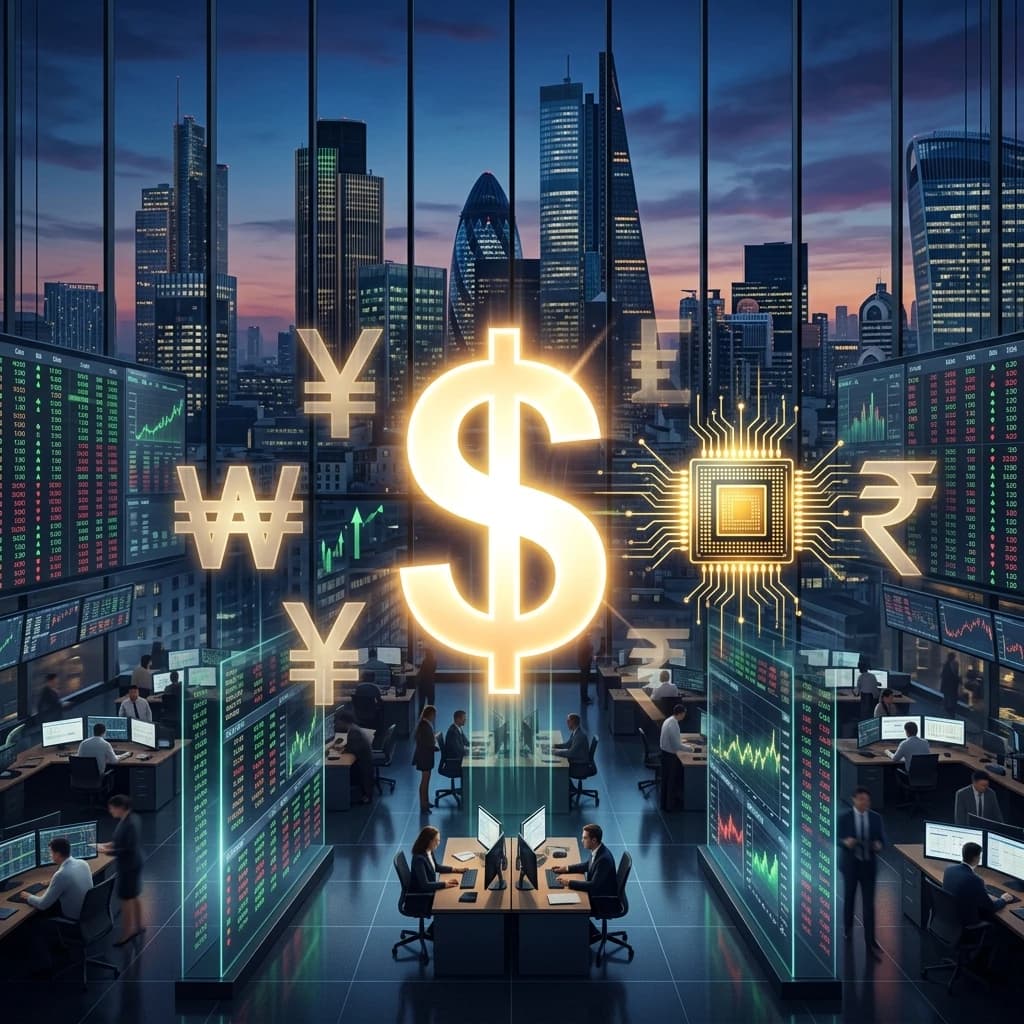
Hawkish Fed Hold, Historic BoJ Hike, and Hormuz Reopening Drive Global Market Shocks
A momentous week in global finance saw monetary policy divergence and geopolitical breakthroughs reshape market expectations. The Federal Reserve held its ground with hawkish messaging under new chair Kevin Warsh, while the Bank of Japan delivered a historic rate hike to its highest level since 1995, and optimism over a preliminary U.S.-Iran peace deal sent energy markets tumbling. Together, these three seismic developments — each representing a potential regime shift in their respective domains — created a week of extraordinary cross-asset volatility that will define the second half of 2026.
📈 The Fed's Hawkish Hold: Chair Warsh Signals Policy Shift
On June 17, 2026, the Federal Open Market Committee (FOMC) concluded its two-day meeting, voting unanimously (12–0) to maintain the federal funds rate in the 3.50%–3.75% range. This was the first meeting chaired by Kevin Warsh since taking the helm on May 22, 2026. While the rate freeze was widely expected, the accompanying economic projections and Chair Warsh's revised communication style sent ripples through equity and fixed-income markets.
Despite holding rates steady, the Fed's dot plot revealed a split committee — 9 of the 18 policymakers projected at least one additional 25 bps rate hike before year-end 2026. This hawkish bias stems from persistent underlying price pressures: core CPI remains sticky at 2.9% YoY while headline CPI sits at 4.2%, still well above the Fed's 2.0% target.
What makes this FOMC historically significant: the Warsh Communication Revolution
Chair Warsh introduced a dramatic shift in Fed communication style that contrasts sharply with his predecessor Jerome Powell's practice of detailed forward guidance. The June 17 post-meeting statement was remarkably brief — stripping out the usual language about the "appropriate pace" of rate changes and forward-looking guidance on future policy paths. Warsh's press conference was equally concise, reinforcing his well-known academic stance that the Federal Reserve should avoid predicting its own future path and focus exclusively on communicating current policy facts.
The implications of this communication shift are significant for investors:
- Old approach (Powell): Forward guidance anchored market expectations, reducing volatility but sometimes boxing the Fed into corners
- New approach (Warsh): Meeting-by-meeting data dependence increases uncertainty, widens bid-ask spreads in interest rate derivatives, and places greater weight on each individual economic data release
Following the decision, US 10-year Treasury yields ticked up to 4.15% before stabilising as the Hormuz diplomatic breakthrough (see below) provided a counterbalancing relief rally. The 2-year yield held at 4.35%, maintaining a mild yield curve inversion that continues to signal recessionary concern among fixed income market participants.
Market impact summary:
- S&P 500: -0.4% on FOMC day, recovered 0.6% next session
- 10-year Treasury: +8 bps to 4.15%
- USD DXY: +0.3% on hawkish tone, then -1.2% on Hormuz news
🇯🇵 Historic Tightening: Bank of Japan Raises Rates to 1.00%
In East Asia, the Bank of Japan (BoJ) delivered a historic policy surprise on June 16, 2026, raising its key short-term policy interest rate by 25 basis points to 1.00%. The rate hike, approved by a 7–1 majority vote (board member Asada Toichiro dissenting), marks the first rate increase since December 2025 and pushes Japan's benchmark rate to its highest level since 1995 — a 31-year high.
The decision was made under unusual circumstances: Governor Kazuo Ueda was hospitalised, leaving Deputy Governor Shinichi Uchida to steer the committee. Uchida highlighted that Japan's risk of underlying inflation exceeding the 2% target had risen significantly due to elevated import costs and the recent energy shock from the Hormuz blockade.
The BOJ normalisation journey:
| Date | Rate | Significance |
|---|---|---|
| Pre-2024 | -0.10% | Negative Interest Rate Policy (NIRP) era |
| March 2024 | 0.10% | First rate hike in 17 years — end of NIRP |
| December 2025 | 0.75% | Continued normalisation |
| June 2026 | 1.00% | 31-year high |
Japan's financial sector responded immediately. The country's three major commercial lenders — MUFG, SMBC, and Mizuho — each announced plans to raise interest rates on ordinary deposits, representing the first significant normalisation of commercial banking rates in decades. This is structurally transformative: Japanese households have kept trillions in near-zero-yield bank accounts for 30+ years; deposit rate normalisation creates incentives to move savings from banks into investment products, potentially driving a significant shift in Japanese retail investment flows.
In currency markets, the Japanese Yen strengthened to 142.50 JPY/USD — a sharp move from the 160+ levels seen earlier in June. The Nikkei 225 experienced initial volatility before closing up 0.8% on hopes of a stronger domestic banking sector and the signal that Japan's economic recovery is robust enough to absorb higher rates.
🕊️ Hormuz Breakthrough: Preliminary Peace Deal Sends Oil to Three-Month Lows
The dominant driver of broader global market optimism was the unexpected diplomatic breakthrough between the United States and Iran. On June 17, 2026, the two nations reached a preliminary memorandum of understanding (MoU) aimed at ending military and economic hostilities. A formal framework signing ceremony was scheduled for June 19 at the Bürgenstock Resort in Switzerland.
The Hormuz context: The Strait of Hormuz is the world's most critical energy transit choke point, handling roughly 20% of global petroleum consumption daily — approximately 21 million barrels per day. Iran's earlier blockade had:
- Added $15–20/barrel geopolitical risk premium to Brent crude prices
- Disrupted shipping insurance rates (war risk premiums increased 1,500%)
- Forced oil tankers to reroute around the Cape of Good Hope, adding 15–20 days and $2–3 million to voyage costs
The preliminary MoU included:
- Cessation of all military actions on all fronts
- Immediate reopening of the Strait to toll-free commercial maritime traffic
- A 60-day formal negotiation period covering sanctions relief, nuclear enrichment restrictions, and release of frozen assets
Energy markets reacted aggressively. Brent Crude plunged 5–10% during mid-week trading, hitting three-month lows near $78/barrel (from $87–90 before the deal). WTI fell to $76/barrel. The drop in oil prices immediately eased global inflation anxieties, driving relief rallies:
- FTSE 100: +1.4%
- India's Sensex/Nifty 50: +1.25%, led by energy-sensitive manufacturing and retail
- European airline stocks: +4–7% (aviation fuel costs decline directly)
- Indian FMCG sector: +2.1% (input cost relief for petroleum-linked packaging)
💡 Investor Takeaway: Three Regime Shifts and Their Portfolio Implications
The week of June 16–18, 2026, represents three simultaneous regime shifts — each with distinct portfolio implications:
-
Fed communication regime shift (Warsh style): Investors need to shift from "anchor on Fed guidance" to "trade the data." Each monthly CPI, PCE, NFP, and PPI print becomes a binary catalyst for interest rate products. This increases volatility in rate derivatives (SOFR futures, Treasury options) but creates entry opportunities for disciplined macro traders.
-
BOJ tightening regime shift: A Japan at 1.00% rates is fundamentally different from Japan at 0%. The yen carry trade — where investors borrow in low-yield JPY to fund high-yield investments globally — begins to unwind as the yen strengthens. This has global ripple effects: emerging market currencies and equities (which were partially funded by yen carry) face some redemption pressure. Indian equities should monitor yen carry unwind risks closely through Q3 2026.
-
Energy regime shift (Hormuz reopening): A structural reduction in the geopolitical oil premium is the most significant macro positive for India — a country that imports 85%+ of its crude. Each $10/bbl sustained decline in Brent crude reduces India's annual import bill by approximately ₹85,000 crore, eases CPI inflation, narrows the current account deficit, and creates RBI space to cut rates. Watch for the formal treaty signing in mid-August as the next catalyst.
📌 The Bottom Line
- monetary-policy: The Federal Reserve under Chair Kevin Warsh held rates at 3.50%–3.75% with a hawkish bias (9/18 members projecting a 2026 hike) and introduced a new communication style eliminating forward guidance — making each data release more market-moving.
- central-banking: The Bank of Japan raised its policy rate 25 bps to 1.00% — its highest since 1995 — under Deputy Governor Uchida amid Governor Ueda's hospitalisation. Japan's top three banks immediately raised deposit rates, beginning the normalisation of household savings incentives.
- energy-markets: A preliminary US-Iran MoU to reopen the Strait of Hormuz (handling 20% of global daily oil supply) sent Brent crude down 5–10% to $78/bbl, triggering global equity relief rallies and providing India's macroeconomy its biggest inflationary relief event of 2026.
📬 Stay Updated
Get global markets analysis delivered weekly. Subscribe to our free newsletter →
Disclosure: This post contains affiliate links. If you purchase through our links, we earn a small commission at no extra cost to you. We only recommend products we believe in.
Enjoyed this post?
Get our weekly digest delivered free.
Share this post:
Knowelth is reader-supported. We may earn a commission from links in this article at no extra cost to you. Read our disclosure.
Related Posts

Fed Rate Split, $1T AI Capex Surge, and Gold's $4,400 Historic High: Mid-August 2026 Global Markets Brief
Fed Rate Split, $1T AI Capex Surge, and Gold's $4,400 Historic High: Mid-August 2026 Global Markets Brief Global financial markets in mid-August 2026 are navigating a complex intersection of central b…

Fed Rate Hold Amid Hawkish Dissent, AI Cloud Earnings Boom, and Oil Surges on Hormuz Tensions
Fed Rate Hold Amid Hawkish Dissent, AI Cloud Earnings Boom, and Oil Surges on Hormuz Tensions Global financial markets are navigating a high-stakes transition period marked by central bank monetary po…

Wall Street Tech Rally, Fed Rate Outlook Softens, and Gold Holds Above $4,000 Safe-Haven Milestone
Wall Street Tech Rally, Fed Rate Outlook Softens, and Gold Holds Above $4,000 Safe-Haven Milestone Global equity markets opened August 2026 on a resilient footing, propelled by robust Q2 enterprise so…