Nifty Reclaims 24,000, RBI's Cash-First Broker Rules Take Effect, and Kotak Clinches Deutsche Bank's Retail Unit
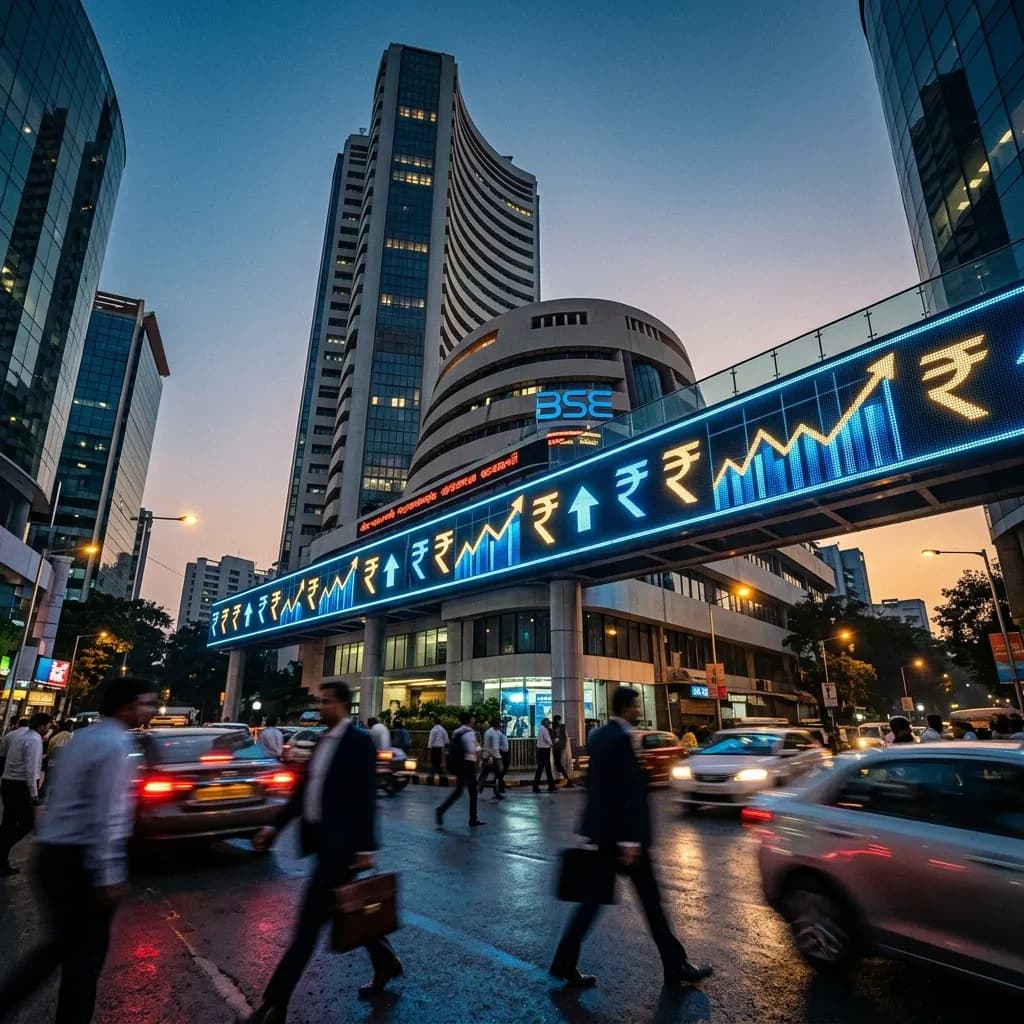
Nifty Reclaims 24,000, RBI's Cash-First Broker Rules Take Effect, and Kotak Clinches Deutsche Bank's Retail Unit
The Indian stock market snapped its two-day losing streak on July 1, 2026, as the benchmark Nifty 50 surged past the crucial 24,000 milestone during intra-day trade. A strong rebound in blue-chip equities countered the immediate impact of the Reserve Bank of India's (RBI) stringent new margin rules for broker bank guarantees, which took effect today. In corporate developments, Kotak Mahindra Bank's acquisition of Deutsche Bank's Indian retail and wealth portfolios for ₹281.7 crore signals a major consolidation in the private wealth space.
📊 Nifty Reclaims 24,000 Milestone Amid Strong Rebound
Following two consecutive sessions of losses, benchmark domestic indices witnessed a strong rebound on July 1, 2026. The Nifty 50, which had ended volatile trade on June 30 down 0.34% at 23,865.75, surged past the major psychological hurdle of 24,000 in early morning trade. The BSE Sensex, which had settled at 76,479 in the previous session, rallied over 490 points (0.65%) to trade near the 76,972 level by mid-morning.
The market recovery was propelled by significant buying interest in heavyweight banking and technology counters, which recovered from recent selling pressure. Market participants attributed the upswing to positive global cues and steady support from domestic institutional investors (DIIs). Despite initial concerns surrounding structural regulatory changes taking effect in the broader financial sector today, market sentiment remained highly resilient, keeping the benchmarks close to record territories.
Market breadth confirmed the genuine nature of the recovery. On the NSE, the advance-decline ratio improved to 1.75:1 with approximately 1,650 stocks advancing. India VIX fell 2.8% to 13.30, reflecting reduced near-term anxiety. The broader market participation — with Nifty MidCap 100 gaining 0.78% and SmallCap 100 advancing 0.95% — signals investor confidence beyond blue-chip names.
🔬 Technical Analysis: Nifty 50 Reclaims 20-Day EMA on Opening Day of Q2
The Nifty 50's reclamation of 24,000 and the 20-day EMA (~23,950) on the very first trading day of Q2 FY27 is a constructive technical signal. The index had been under the 20-day EMA for 4 consecutive sessions, building significant pent-up demand. The gap-up open and sustained hold above the 20-day EMA through the session suggests strong institutional conviction in the rebound.
RSI-14 at 48.2 remains in neutral territory — there is significant room for upside without hitting overbought conditions. The critical test will be whether the index can close above the 50-day EMA at approximately 24,200 on a sustained basis over the next few sessions.
Key technical levels:
- Immediate resistance: 24,200 (50-day EMA)
- Key support: 23,850–23,950 (20-day EMA band — must hold for bullish case)
- Major support: 23,600 (100-day EMA — structural floor)
🛡️ RBI's Tightened Broker Rules: Bank Guarantees Require 50% Cash
A major regulatory shift came into effect on July 1, 2026, as the Reserve Bank of India implemented its updated Commercial Banks – Credit Facilities Amendment Directions, 2026 (Revised). The new norms dramatically tighten bank credit extended to capital market intermediaries, including stockbrokers and proprietary trading firms.
Under the revised framework, banks are mandated to secure all bank guarantees (BGs) issued for capital market operations with 100% collateral. Crucially, for proprietary trading activities, the regulation mandates that at least 50% of the collateral must be held in the form of cash or fixed deposits (FDs). Banks are also barred from extending credit to brokers for purchasing securities on their own account. Additionally, banks must apply stricter haircuts — such as 40% — on equity shares pledged as collateral, meaning brokers must provide significantly higher security to maintain the same credit limits as before.
The practical impact of these rules is significant. Before July 1, proprietary trading desks could use non-cash instruments (bonds, shares, mutual fund units) as the majority of collateral for bank guarantees, requiring relatively modest cash reserves. Now, 50% cash or FD requirement substantially increases the cost of capital for these desks. Analysts estimate that this change could force derivatives volumes to contract by 10–15% in the short term as highly leveraged proprietary desks reduce position sizes to stay within their cash collateral limits.
The RBI's intervention is intended to address high systemic leverage and insulate bank balance sheets from market volatility — a lesson from global precedents like the 2021 Archegos Capital collapse, where broker credit facilities amplified losses dramatically. The short-term volatility from this regulatory tightening is a price worth paying for the long-term systemic stability it provides to India's financial sector.
🤝 Kotak Mahindra Bank Acquires Deutsche Bank's India Retail Footprint
In corporate developments, Kotak Mahindra Bank announced that it had entered into a definitive agreement to acquire the retail banking, affluent private banking, and wealth management businesses of Deutsche Bank AG in India. The transaction is structured as an all-cash slump sale for a total consideration of approximately ₹281.7 crore.
The acquisition includes a high-quality portfolio comprising approximately ₹29,000 crore in loans, ₹16,000 crore in deposits, and ₹10,500 crore in assets under management (AUM). The transaction will transition approximately 150,000 premium customers and transfer nearly 1,000 employees to Kotak Mahindra Bank, significantly expanding Kotak's footprint in the highly lucrative affluent private banking and wealth management segments.
The deal represents excellent value for Kotak. Acquiring ₹29,000 crore in loans and ₹16,000 crore in deposits for just ₹281.7 crore in consideration — when the typical acquisition premium for high-quality banking assets ranges from 1.2–1.5x book value — suggests that Deutsche Bank is exiting at a strategically motivated discount rather than a market-determined valuation. For Kotak, the 150,000 premium customers (typically holding net worth above ₹1 crore) represent a high-value segment that generates disproportionately higher fee income from wealth management services.
For Deutsche Bank, the divestment marks a strategic withdrawal from retail operations in India to align with its global "Hausbank" strategy — focusing exclusively on large corporate and institutional clients rather than retail consumers. The German lender will concentrate on its institutional franchises including corporate banking, investment banking, and global business services in India. The transaction is expected to be completed by September 2027, subject to regulatory clearances from the Competition Commission of India (CCI).
💡 Investor Takeaway: Two Contrasting Stories in India's Banking Sector
The July 1 banking sector developments tell two contrasting stories that investors in Indian banking stocks need to understand:
Story 1 — Consolidation accelerates: The Kotak-Deutsche deal is part of a broader trend of foreign banks scaling back retail operations in India as compliance costs rise and domestic competition intensifies. For large Indian private banks like Kotak, HDFC, and ICICI, this creates periodic acquisition opportunities to absorb premium customer portfolios at attractive valuations. Investors should monitor which foreign banks might be next to exit — Standard Chartered, HSBC, and Citibank (which sold its retail business to Axis Bank in 2023) have all been evaluating their Indian retail footprints.
Story 2 — RBI broker rules reduce short-term derivatives liquidity: The 50% cash collateral requirement will temporarily reduce derivatives market turnover. For investors in exchange businesses like NSE (unlisted) and BSE, near-term revenue from derivatives transaction fees may moderate. However, the long-term regulatory environment of reduced leverage and improved systemic stability is ultimately positive for sustainable market growth.
📌 The Bottom Line
- nifty-24000: The benchmark Nifty 50 reclaimed 24,000 and the 20-day EMA on the first day of Q2 FY27, gaining 0.65% on the Sensex on an advance-decline ratio of 1.75:1 and VIX declining to 13.30.
- rbi-broker-margin: Strict new RBI guidelines require bank guarantees for proprietary trading to be 100% collateralized with at least 50% in cash/FDs — tightening systemic leverage and reducing broker credit availability. Derivatives volumes may contract 10–15% near term.
- kotak-deutsche-deal: Kotak Mahindra Bank acquired Deutsche Bank's retail and wealth management businesses in India for ₹281.7 crore, taking over ₹29,000 crore in loans, ₹16,000 crore in deposits, ₹10,500 crore in AUM, and 150,000 premium customers.
📬 Stay Updated
Get India market analysis delivered to your inbox every trading day. Subscribe to our free newsletter →
Disclosure: This post contains affiliate links. If you purchase through our links, we earn a small commission at no extra cost to you. We only recommend products we believe in.
Enjoyed this post?
Get our weekly digest delivered free.
Share this post:
Knowelth is reader-supported. We may earn a commission from links in this article at no extra cost to you. Read our disclosure.
Related Posts
India Markets Daily: Sensex Rebounds to 78,080 as Nifty Drags, RBI Proposes Loan Reset Rules, FIIs Sell ₹1,006 Cr
India Markets Daily: Sensex Rebounds to 78,080 as Nifty Drags, RBI Proposes Loan Reset Rules, FIIs Sell ₹1,006 Cr Indian financial markets navigated a divergent trading session on August 13, 2026, as …
India Markets Update: Nifty Drops Below 24,450 Amid Oil Spike, RBI Holds Repo Rate at 5.25%, and FII Inflows Resume
India Markets Update: Nifty Drops Below 24,450 Amid Oil Spike, RBI Holds Repo Rate at 5.25%, and FII Inflows Resume Indian benchmark indices drifted lower for a second consecutive session as global en…
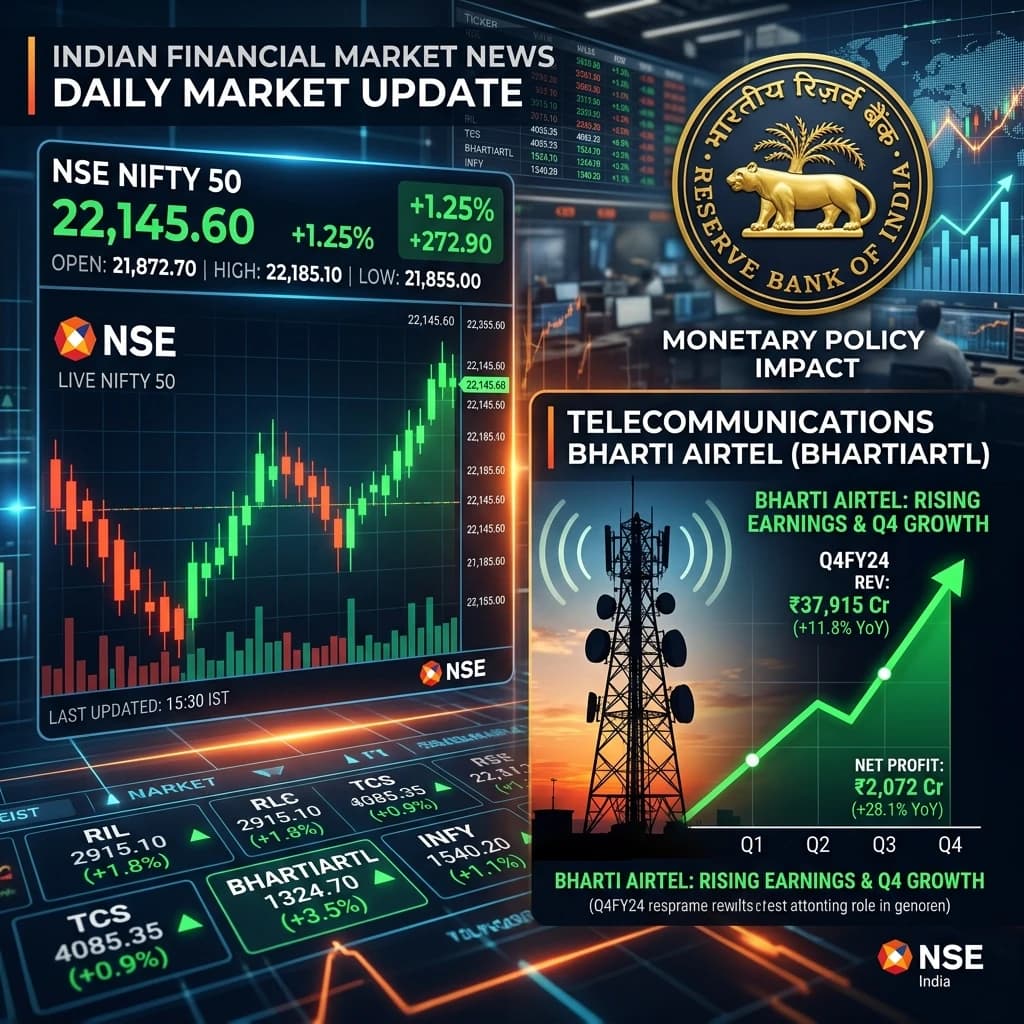
Nifty Snaps 4-Day Rally as Pre-RBI Policy Jitters & Crude Surge Trigger Profit Booking; Bharti Airtel Q1 Profit Soars 37%
Nifty Snaps 4-Day Rally as Pre-RBI Policy Jitters & Crude Surge Trigger Profit Booking; Bharti Airtel Q1 Profit Soars 37% Indian benchmark equity indices snapped their four-session winning streak on A…