IT Stocks Lead Nifty to 24,125, Tata Sons IPO Avoidance in Limbo under New RBI Rules, and RBI Expands Digital Rupee to 12 Million Users
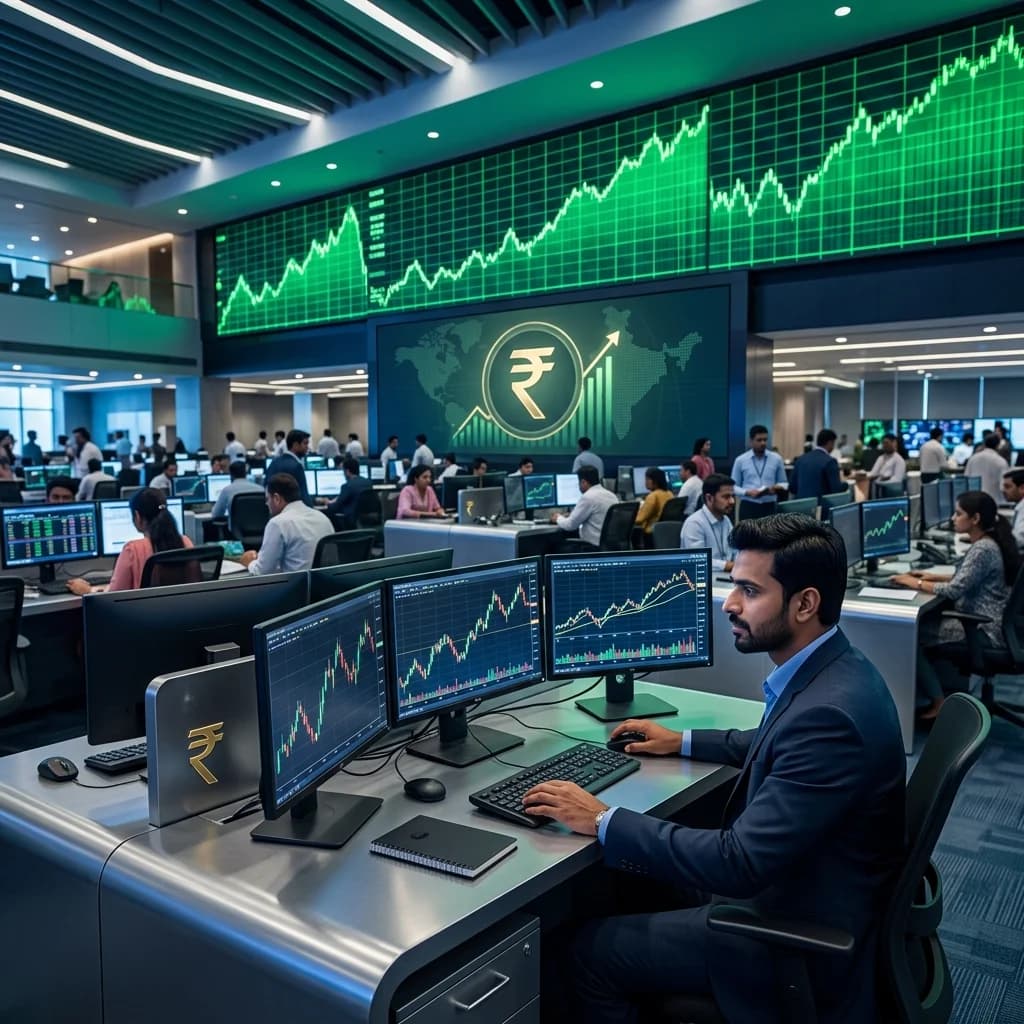
IT Stocks Lead Nifty to 24,125, Tata Sons IPO Avoidance in Limbo under New RBI Rules, and RBI Expands Digital Rupee to 12 Million Users
The Indian financial markets witnessed a strong rally on July 2, 2026, driven by a massive sector rotation into IT equities and positive global triggers, including easing crude oil prices. Beyond the stock market, major regulatory developments reshaped the corporate finance landscape, with the RBI tightening rules for upper-layer NBFCs and putting Tata Sons' IPO-avoidance plan in jeopardy. Meanwhile, RBI Governor Sanjay Malhotra announced significant milestones in India's digital currency programme.
📊 IT Sector Surges 4% to Lead Nifty 50 to 24,125.40 and Sensex to 77,322.81
The domestic stock market extended gains for the second consecutive session. The BSE Sensex closed 579 points higher (up 0.52%) at 77,322.81, while the Nifty 50 ended the day with a gain of 169 points (up 0.50%) at 24,125.40. Positive sentiment on Dalal Street was largely supported by favorable global cues, particularly the correction in international Brent crude prices, which slid to around $70 per barrel as indirect peace negotiations between the US and Iran progressed.
The information technology sector led the charge, with the Nifty IT index surging nearly 4% in a massive buying rebound — its best single-day performance in over two months. Blue-chip giants Infosys, TCS, and HCL Technologies topped the gainer charts, attracting substantial interest from investors seeking value after recent corrections. The 4% IT surge followed a 2-week period where IT stocks had lagged the broader market on concerns about sluggish global enterprise spending; the strong single-day reversal suggests that the sector's selling had become excessive relative to its earnings fundamentals.
Other sectors like metals and consumer durables also finished in the green. Banking stocks faced marginal profit-taking, with PSU lenders notably weaker. Institutional flows remained active — Domestic Institutional Investors (DIIs) continued to absorb selling pressure from Foreign Portfolio Investors (FPIs).
On the currency front, the Indian Rupee showed initial strength by appreciating 26 paise to touch 94.90 against the US Dollar in early trading, but subsequently retraced to settle in the 95.30–95.41 range as oil price optimism partially reversed in later hours.
🔬 Technical Analysis: Nifty 50 Building Momentum Toward 24,500 Target
The Nifty 50's close at 24,125.40 on July 2 represents two consecutive sessions of gains from the June 30 dip at 23,865.75 — a recovery of 260 points or 1.1% in 48 hours. The index is now back above its 20-day EMA (~23,980) and approaching the 50-day EMA (~24,200).
The IT sector's 4% single-day surge is particularly meaningful technically. IT is the Nifty 50's second-largest sector weight (approximately 13%), so a strong IT day mechanically pushes the benchmark higher and also improves sentiment for the broader market. When a major sector that has been underperforming suddenly surges on the back of positive global data (US peace talks → lower crude → improved global sentiment), it often signals a broader market re-rating.
Technical roadmap for early July:
- Immediate resistance: 24,200 (50-day EMA)
- Key target: 24,500 (Bollinger Band upper + previous swing high)
- Support: 23,980 (20-day EMA — must hold for bullish near-term structure)
🏢 Tata Sons IPO Avoidance in Limbo as RBI Tightens NBFC-UL Rules
In a major corporate governance and central banking development, Tata Sons' strategic plan to avoid a mandatory public listing has hit a significant regulatory roadblock. An update to the RBI's master directions, effective July 1, 2026, has reinstated the critical definition of "indirect receipt of public funds." Under the revised guidelines, any holding company or Core Investment Company (CIC) that has access to public funds indirectly through its listed group entities will be classified as an Upper-Layer Non-Banking Financial Company (NBFC-UL).
Why this matters for Tata Sons:
The Tata Group structure places Tata Sons as the apex holding entity, with equity stakes in multiple listed Tata Group companies (TCS, Tata Motors, Tata Steel, Titan, etc.). The previous NBFC regulations had a narrow definition of "public funds" that Tata Sons had exploited by surrendering its CIC license and restructuring direct debt to zero. The RBI's July 1 update closes this loophole by treating indirect access to group-level public fundraising as a trigger for NBFC-UL classification.
As an NBFC-UL, Tata Sons would be required to:
- Register as an NBFC with the RBI (reversing the CIC surrender)
- Comply with enhanced regulatory oversight (capital adequacy, leverage limits, disclosure requirements)
- Potentially list on a stock exchange within the timeline mandated by the NBFC-UL scale-based regulations
The Tata Sons listing, if it materialises, would be one of the largest IPOs in Indian capital market history. Tata Sons, which owns approximately 72% of Tata Consultancy Services (TCS) alone, has an intrinsic value estimated by analysts in the range of ₹10–15 lakh crore (roughly $120–180 billion). A forced listing would represent a landmark event for India's capital markets and would give retail investors direct access to the conglomerate's portfolio — currently accessible only indirectly through individual Tata Group company stocks.
🌐 RBI Governor Announces Digital Rupee Reaches 12 Million Users
Speaking on the progress of India's financial technology, RBI Governor Sanjay Malhotra announced that the digital rupee (e-Rupee) CBDC pilot has successfully reached 12 million active users — up from approximately 5 million six months earlier. The expansion represents a significant acceleration in CBDC adoption, driven by:
- Bank-led deployment: The 13 participating scheduled commercial banks (including SBI, HDFC Bank, ICICI Bank) have been actively pushing digital rupee wallets through their mobile banking apps
- Offline functionality: The RBI has piloted offline payment capabilities for the digital rupee in rural areas where internet connectivity is inconsistent — a key differentiator from existing UPI payment rails
- Merchant expansion: Digital rupee acceptance has expanded to over 250,000 merchants, up from 25,000 at the initial launch
India's CBDC journey is being watched closely by 100+ countries that are at various stages of their own CBDC research and pilots. The RBI's e-Rupee is now among the most widely deployed CBDCs globally, behind China's e-CNY (400+ million users) and ahead of the Bahamas' Sand Dollar and Jamaica's JAM-DEX.
Governor Malhotra also highlighted the steady progress of the rupee internationalisation strategy. The RBI has established bilateral trade settlement mechanisms in local currencies with key trade partners including UAE (dirham), Russia (ruble), and Malaysia (ringgit). These mechanisms reduce India's USD dependency and protect Indian importers from dollar-induced exchange rate shocks. Currently, approximately 8–10% of India's trade is settled in non-USD currencies — up from near-zero in 2021.
Cryptocurrency regulatory update: The Parliamentary Standing Committee on Finance met with senior RBI officials on July 2 to review the regulatory roadmap for Virtual Digital Assets (VDAs). The RBI reiterated concerns about decentralized private cryptocurrencies' threat to monetary policy transmission. The ICAI is being consulted on accounting, tax disclosure, and audit standards — a sign that a comprehensive crypto regulatory framework is nearing finalization, which could provide regulatory clarity for the 15–20 million crypto holders in India.
💡 Investor Takeaway: Three Key Investment Angles From Today's Developments
-
IT sector dip recovery: The 4% IT surge on July 2 signals a potential sector leadership rotation. Investors who missed the initial IT rally in June have a second chance to enter quality IT names (TCS, Infosys, HCLTech) as the sector sets up for Q1 FY27 earnings announcements in mid-July. Buy-on-dips strategy remains optimal.
-
Tata Sons regulatory saga: The NBFC-UL reclassification risk makes listed Tata Group companies more interesting as proxies for Tata Sons' underlying value. TCS, Tata Motors, and Titan are the highest-value holdings; if a Tata Sons listing eventually materialises, these stocks may see significant re-rating as the conglomerate discount narrows.
-
Digital Rupee adoption monitoring: The milestone of 12 million CBDC users represents genuine traction. Investors in companies building digital payment infrastructure — fintech, digital banking platforms, payment processors — should monitor RBI CBDC integration mandates that could create compulsory adoption catalysts.
📌 The Bottom Line
- it-sector-rally: The Nifty 50 gained 0.50% to close at 24,125.40 and Sensex climbed to 77,322.81, propelled by a 4% surge in IT stocks as Brent crude fell to $70/barrel on US-Iran peace talk progress.
- tata-sons-listing-limbo: The RBI's July 1 NBFC-UL update on "indirect receipt of public funds" puts Tata Sons back within mandatory listing requirements — potentially triggering one of India's largest-ever IPOs worth ₹10–15 lakh crore in intrinsic value.
- rbi-cbdc-internationalization: The e-Rupee CBDC pilot expanded to 12 million active users and 250,000+ merchants; trade settlement in non-USD currencies now covers 8–10% of India's trade flows; crypto regulatory framework nearing finalization.
📬 Stay Updated
Get India market analysis delivered to your inbox every trading day. Subscribe to our free newsletter →
Disclosure: This post contains affiliate links. If you purchase through our links, we earn a small commission at no extra cost to you. We only recommend products we believe in.
Enjoyed this post?
Get our weekly digest delivered free.
Share this post:
Knowelth is reader-supported. We may earn a commission from links in this article at no extra cost to you. Read our disclosure.
Related Posts
India Markets Daily: Sensex Rebounds to 78,080 as Nifty Drags, RBI Proposes Loan Reset Rules, FIIs Sell ₹1,006 Cr
India Markets Daily: Sensex Rebounds to 78,080 as Nifty Drags, RBI Proposes Loan Reset Rules, FIIs Sell ₹1,006 Cr Indian financial markets navigated a divergent trading session on August 13, 2026, as …
India Markets Update: Nifty Drops Below 24,450 Amid Oil Spike, RBI Holds Repo Rate at 5.25%, and FII Inflows Resume
India Markets Update: Nifty Drops Below 24,450 Amid Oil Spike, RBI Holds Repo Rate at 5.25%, and FII Inflows Resume Indian benchmark indices drifted lower for a second consecutive session as global en…
Nifty Snaps 4-Day Rally as Pre-RBI Policy Jitters & Crude Surge Trigger Profit Booking; Bharti Airtel Q1 Profit Soars 37%
Nifty Snaps 4-Day Rally as Pre-RBI Policy Jitters & Crude Surge Trigger Profit Booking; Bharti Airtel Q1 Profit Soars 37% Indian benchmark equity indices snapped their four-session winning streak on A…