Colossal Rock-Cut Bas-Reliefs, Zoomorphic Gupta Monoliths, and Spring-Fed Sanctums: The Stone Chronicles of Unakoti, Eran, and Tadpatri
Colossal Rock-Cut Bas-Reliefs, Zoomorphic Gupta Monoliths, and Spring-Fed Sanctums: The Stone Chronicles of Unakoti, Eran, and Tadpatri
Across the vast geographical canvas of the Indian subcontinent, ancient structural monuments and rock-cut shrines serve as permanent lithic archives of engineering prowess, political power, and material science. From the forested hills of the Northeast to the riverine plains of Central India and the dry plateaus of the Deccan, these sites reflect the deep cosmological and aesthetic aspirations of the dynasties that commissioned them.
This technical investigation explores three monumental achievements of classical Indian heritage: the 7th–9th century colossal cliff-cut rock reliefs of Unakoti in Tripura, the 5th-century monolithic zoomorphic red sandstone Varaha and Huna-Gupta inscriptions at Eran in Madhya Pradesh, and the perennial spring-fed sanctum and unfinished granite gopurams of the Bugga Ramalingeswara Temple in Tadpatri, Andhra Pradesh (Vijayanagara Empire).
🏛️ The Whispering Cliffs of Raghunandan: Unakoti's Colossal Bas-Reliefs
7th–9th Century Regional Pala-Tripuri Synthesis, 30-Foot Kal Bhairava, and Tribal-Brahmanical Iconography
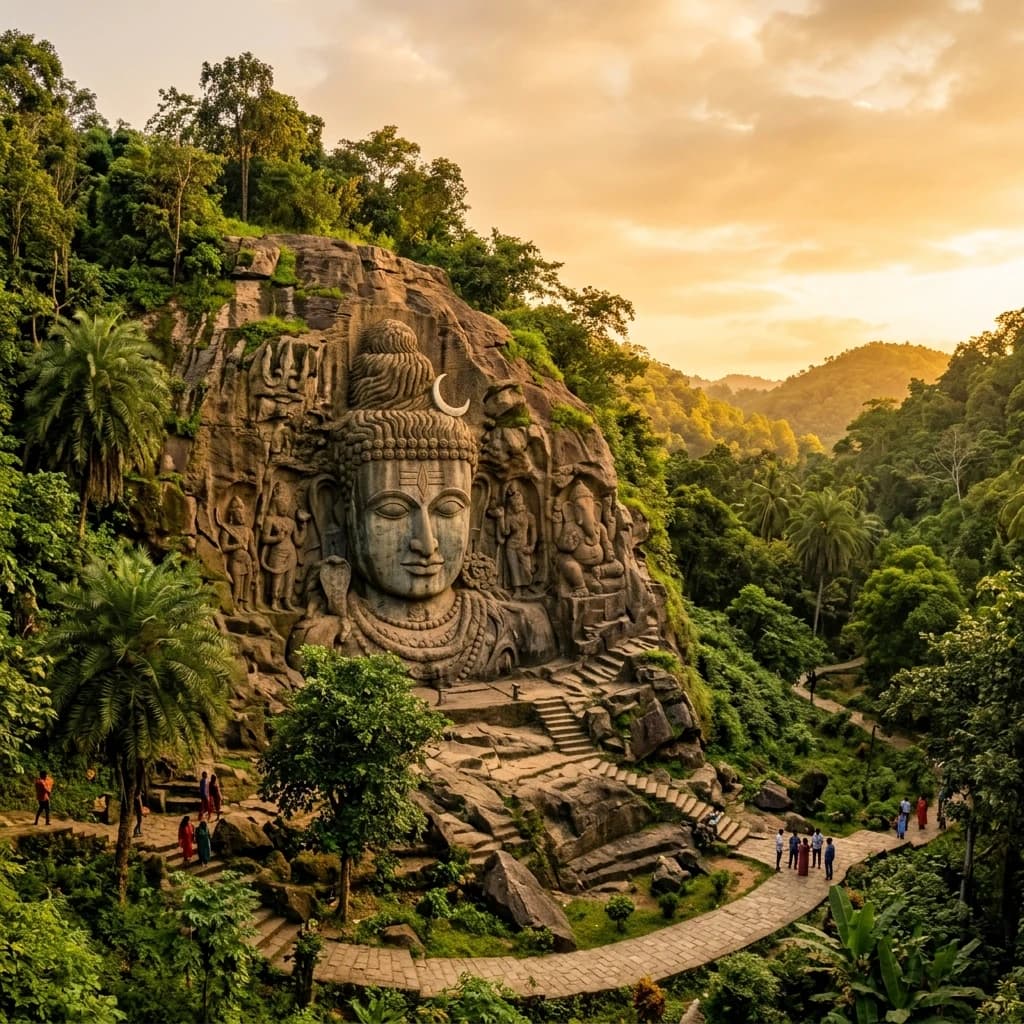
Macro-Historical Context and Northeast Shaivite Hermitage: Carved directly into the vertical sandstone bluffs of the Raghunandan Hills in Kailashahar, northern Tripura, the archaeological site of Unakoti ("One Less Than a Crore" / 9,999,999) represents the largest rock-cut relief gallery in Northeast India. Dating from the 7th to the 9th centuries CE, the sanctuary arose during an era of cultural synthesis when local Manikya and regional chieftains engaged with the expanding Pala and Harikela empires, producing a unique fusion of classical Brahmanical iconography and indigenous tribal art.
                      [Unakoti Rock-Cut Cliff Topography]
                                       │
                                       ▼
                 [Unakotiswara Kal Bhairava (Central Colossus)]
                    (30-Foot High Monolithic Vertical Relief)
                                       │
          ┌────────────────────────────┴────────────────────────────┐
          ▼                                                         ▼
[10-Foot Ornate Crown (Mukuta)]                            [Flanking Goddess Reliefs]
• High-Relief Geometric Incisions                          • Left: Durga Standing upon Lion
• Large Circular Tribal Kundalas (Earrings)                 • Right: Goddess Ganga on Makara
• Linear Beard & Mustache Engravings                       • Flowing Natural Mountain Water Conduit
          │                                                         │
          └────────────────────────────┬────────────────────────────┘
                                       │
                                       ▼
                  [Ganesha Kund & 3-Tusked Ganesha Monoliths]
Structural and Lithic Specifications:
| Architectural Metric | Unakoti Specification | Geological & Archaeological Value |
|---|---|---|
| Chronological Horizon | c. 7th – 9th Century CE | Transitional post-Gupta to early Pala regional rock art |
| Central Shiva Colossus | 30.0 Feet (9.14 Meters) Tall | Largest continuous single rock-cut head carving in Eastern India |
| Headdress Dimension | 10.0 Feet (3.05 Meters) High | Geometric tribal Mukuta exhibiting regional bamboo/textile patterns |
| Lithic Raw Medium | Soft Tertiary Sedimentary Sandstone | Easily carved cliff matrix subject to heavy monsoonal moisture weathering |
| Associated Shrines | Ganesha Kund & Ravana Cave | Monolithic elephant-headed deities, including a rare 3-tusked Ganesha |
| UNESCO Heritage Status | Tentative List (Added Dec 2022) | Recognized for exceptional civilizational and geological landscape value |
The Tribal-Classical Synthesis: The 30-foot central relief of Unakotiswara Kal Bhairava displays stylized anatomical features: flat planar facial planes, wide almond eyes, straight linear mustaches, and massive disc earrings (Kundalas). The natural stream (Kalyani Nala) cascading down the rock face was engineered into sacred water conduits (Kunds), washing over the sculpted deities before descending into the valley.
🗿 The Zoomorphic Red Sandstone Boar: The Gupta Monolith of Eran
5th-Century Imperial Gupta Cosmogony, 1,200 Micro-Figures, and Toramana Huna Epigraphy
The Frontier Mint and Garrison of Airikina: Situated on a looping bend of the Bina River in Sagar district, Madhya Pradesh, Eran (ancient Airikina or Erakina) was a vital administrative mint and military stronghold of the Imperial Gupta Empire (4th–6th century CE). Commissioned around 500–515 CE by Dhanyavishnu, the colossal zoomorphic Varaha (boar incarnation of Vishnu) is one of the greatest monolithic achievements of early classical Indian sculpture.
                      [Eran Zoomorphic Varaha Structural Matrix]
                                          │
                                          ▼
                      [Monolithic Red Sandstone Boar Body]
                       (Length: 4.25 m / 13.9 ft; Height: 3.35 m)
                                          │
          ┌───────────────────────────────┴───────────────────────────────┐
          ▼                                                               ▼
[1,200 Microscopic Carved Figures]                              [Tusk: Rescue of Goddess Bhudevi]
• Sages, Risis, Pitrs & Vidyadharas                             • Tiny Earth Goddess Clinging to Right Tusk
• 12 Concentric Horizontal Bands Across Torso                   • Cosmic Rescue from Primordial Ocean
• Solar Deity Surya on Forehead & Agni on Throat                • Monolithic Structural Balance
          │                                                               │
          └───────────────────────────────┬───────────────────────────────┘
                                          │
                                          ▼
                      [8-Line Sanskrit Epigraph of King Toramana]
Material Science and Epigraphical Records:
| Engineering Metric | Eran Varaha Specification | Epigraphical & Material Role |
|---|---|---|
| Monolithic Dimensions | Length: 4.25 m (13.9 ft); Height: 3.35 m (11.0 ft) | Carved from a single massive block of Vindhyan red sandstone |
| Cosmic Micro-Figures | Over 1,200 High-Relief Figures | Sages and deities organized in 12 precise horizontal registers across the body |
| Bhudevi Projection | Hanging from Boar's Right Tusk | Monolithic cantilever sculpted without external support strut |
| Primary Inscription | 8-Line Sanskrit in Brahmi Script | Records Dhanyavishnu erecting the shrine in Year 1 of Alchon Huna King Toramana |
| Associated Inscription | 510 CE Bhanugupta Pillar Inscription | Preserves India's earliest dated epigraphical record of Sati (Goparaja) |
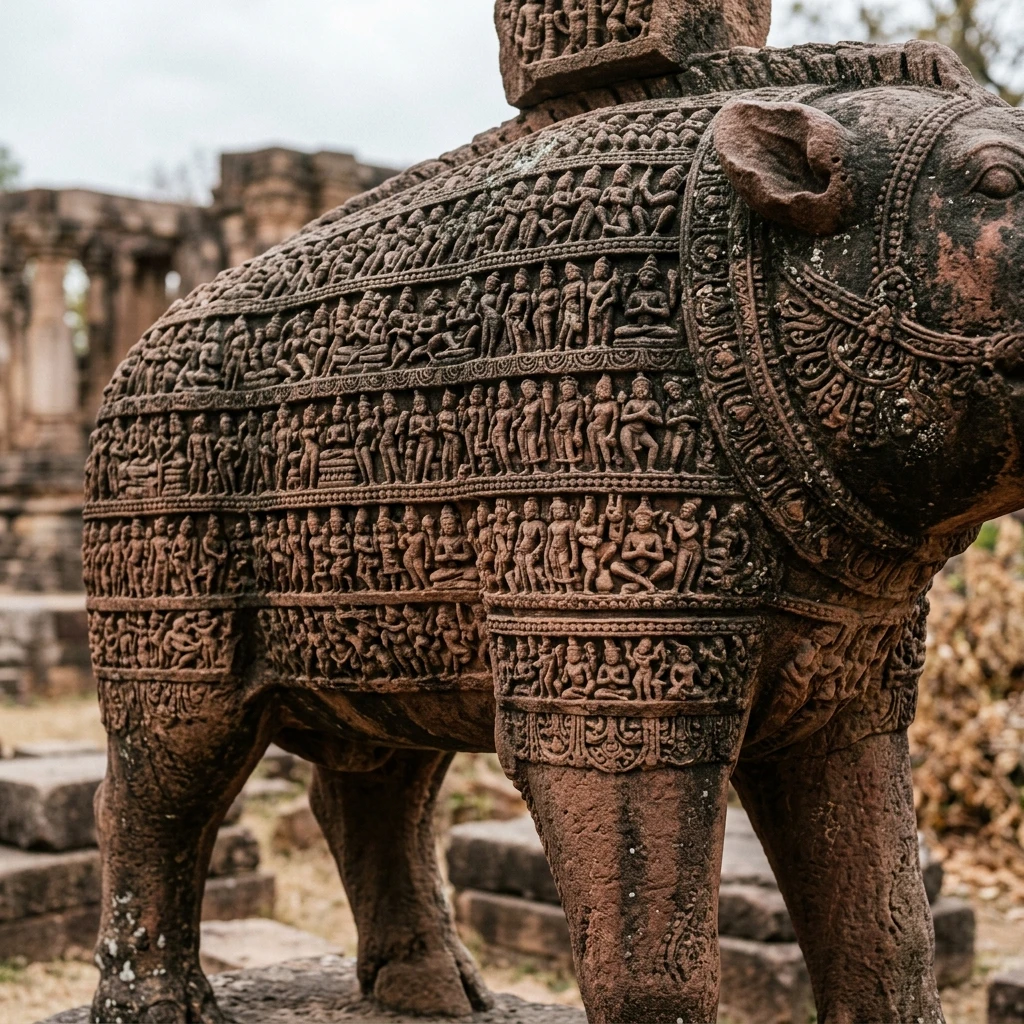
Figure 1: Intricate stone craftsmanship and architectural elements of the zoomorphic Varaha monolith at Eran.
The 500 CE Toramana Inscription and Cosmic Micro-Carvings: Carved directly on the neck and chest of the boar is an 8-line Sanskrit inscription in late Brahmi script. The inscription documents that Dhanyavishnu (younger brother of deceased governor Matrivishnu) dedicated this stone temple of Lord Varaha during the first regnal year of Maharaja Toramana, the Alchon Huna conqueror who overran Malwa following the collapse of imperial Gupta central authority.
🔱 The River Penna's Sacred Spring: Tadpatri's Bugga Ramalingeswara Temple
15th-Century Vijayanagara Hydraulic Architecture, Penna River Axis, and Polished Granite Gopurams
Pemmasani Nayaka Sovereignty in the Rayalaseema: Standing on the southern banks of the Penna River in Tadpatri, Anantapur district, Andhra Pradesh, the Bugga Ramalingeswara Temple was constructed between 1490 and 1525 CE under the patronage of Pemmasani Ramalinga Nayudu I, a legendary warrior-chieftain (Nayaka) of the Gutti-Gandikota province under Vijayanagara Emperor Saluva Narasimha Deva Raya and Krishnadevaraya.
                      [Bugga Ramalingeswara Hydraulic Schema]
                                         │
                                         ▼
                      [Subterranean Aquifer / Perennial Spring]
                       (Telugu: "Bugga" = Bubbling Fresh Spring)
                                         │
                                         ▼
                      [Garbhagriha: Swayambhu Shiva Lingam]
                       (Presiding Deity Constantly Submerged)
                                         │
          ┌──────────────────────────────┴──────────────────────────────┐
          ▼                                                               ▼
[Underground Stone Drainage Conduits]                           [Massive Unfinished Granite Gopurams]
• Channels Water into Temple Courtyard Tanks                    • Multi-Tiered Hyper-Detailed Relief Panels
• Natural Flow Discharging into Penna River                     • James Fergusson's "Finest Stone Carving"
• Western Orientation Facing the River Axis                     • Pierced Soapstone Columns & Stone Chariot
Architectural Dimensions and Sculptural Composition:
| Architectural Metric | Bugga Ramalingeswara Specification | Hydraulic / Architectural Significance |
|---|---|---|
| Perennial Spring Source | Under-Sanctum Freshwater Spring (Bugga) | Constant hydrostatic flow maintaining the Shiva Lingam in eternal ablution |
| Temple Orientation | True West-Facing (River Penna Axis) | Uncommon Shaivite orientation aligning with the flowing river current |
| Gopuram Architecture | Unfinished Granite Base Structure | Sculpted with hundreds of intricate figures from the Ramayana and Puranas |
| Lithic Raw Medium | Dense Grey Plutonic Granite & Schist | Fine-grained polished granite bases with lathe-turned soapstone pillars |
| Fergusson's Assessment | Evaluated as South India's Most Detailed | British historian James Fergusson praised the gopuram carvings above Hampi |
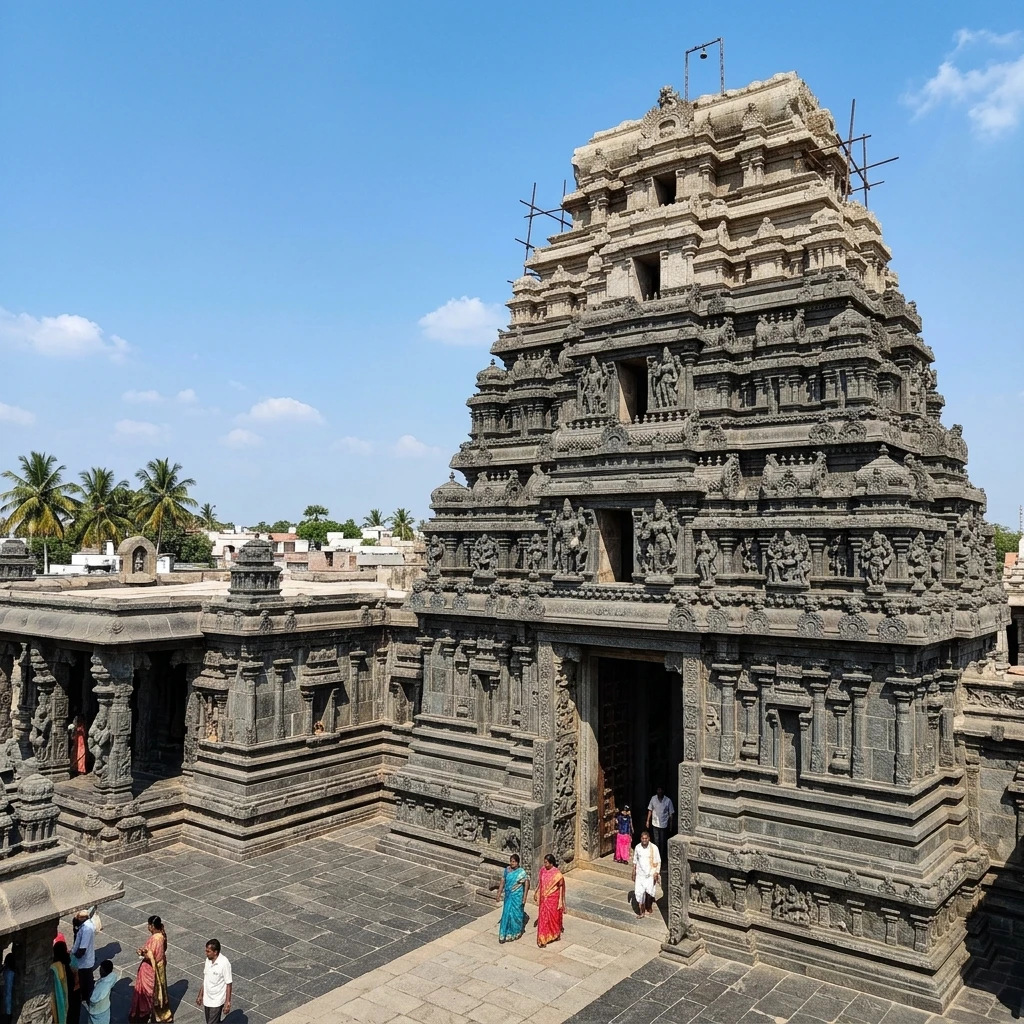
Figure 2: Architectural design and monumental structures at Bugga Ramalingeswara Temple, Tadpatri.
The Hydraulic Phenomenon and Unfinished Gopuram Masterpiece: A continuous freshwater spring emerges directly under the sanctum floor, bathing the Swayambhu Shiva Lingam in cool water before flowing through underground stone pipes into the courtyard and out to the Penna River. The massive western gopuram base is adorned with some of the most intricate stone filigree in South India, featuring multi-tiered registers of dancing Apsaras, rearing Yalis, and epic battle scenes.
📊 Comparative Architectural & Dynastic Matrix
| Parameter | Unakoti Bas-Reliefs (Tripura) | Eran Varaha Monolith (MP) | Bugga Ramalingeswara (AP) |
|---|---|---|---|
| Dynastic Patron | Regional Manikya / Pala Horizon | Gupta Empire / Huna (Toramana) | Vijayanagara (Pemmasani Nayakas) |
| Chronological Period | 7th – 9th Century CE | c. 500 – 515 CE (6th Century) | c. 1490 – 1525 CE (15th–16th c.) |
| Primary Lithic Medium | Tertiary Sedimentary Sandstone | Vindhyan Red Sandstone | Grey Plutonic Granite & Schist |
| Architectural Typology | Cliff-Cut Rock Bas-Relief Gallery | Free-Standing Zoomorphic Monolith | Spring-Fed Structural Dravidian Temple |
| Pinnacle Engineering Feat | 30-ft Kal Bhairava Head Carving | 1,200 Micro-Figures & Toramana Epigraph | Perennial Under-Sanctum Water Conduit |
| Primary Dedication | Shiva (Unakotiswara Bhairava) | Vishnu (Zoomorphic Varaha) | Shiva (Bugga Ramalingeswara) |
📌 The Bottom Line
- unakoti-bas-reliefs: A monumental 7th–9th century Shaivite rock-cut sanctuary in Tripura; features the 30-foot Unakotiswara Kal Bhairava cliff carving with a 10-foot tribal-geometric headdress, natural water conduits, and multi-armed Ganesha reliefs on the UNESCO tentative list.
- eran-gupta-varaha: A colossal 5th-century zoomorphic red sandstone monolith in Madhya Pradesh; measures 14 feet in length and preserves over 1,200 microscopic carved cosmic figures, alongside the famous 500 CE Sanskrit inscription of Huna King Toramana.
- tadpatri-ramalingeswara: A late 15th-century Vijayanagara masterpiece in Andhra Pradesh; engineered with an under-sanctum natural perennial spring (Bugga) bathing the Shiva Lingam, facing the Penna River with unfinished granite gopurams of unparalleled sculptural density.
📬 Stay Updated
Get India's heritage and history stories delivered to your inbox every week. Subscribe to our free newsletter →
Disclaimer: The information provided in this post is for educational and informational purposes only. It is not intended to be a substitute for professional historical or architectural advice.
Enjoyed this post?
Get our weekly digest delivered free.
Share this post:
Knowelth is reader-supported. We may earn a commission from links in this article at no extra cost to you. Read our disclosure.
Related Posts
Stone Chronicles of Sovereignty and Democracy: The Epigraphic Legacy of Aihole's Meguti Temple, Uttiramerur's Assembly Inscriptions, and the Royal Reliefs of Hampi's Hazara Rama
Stone Chronicles of Sovereignty and Democracy: The Epigraphic Legacy of Aihole's Meguti Temple, Uttiramerur's Assembly Inscriptions, and the Royal Reliefs of Hampi's Hazara Rama Across the diverse lan…
Monolithic Cliffs, Alpine Spires, and Chariots of Stone: The Architectural Feats of Dhamnar, Baijnath, and Melkadambur
Monolithic Cliffs, Alpine Spires, and Chariots of Stone: The Architectural Feats of Dhamnar, Baijnath, and Melkadambur Across the vast geographical expanse of the Indian subcontinent, ancient and medi…
Sacred Corridors, Interlocking Stone Chains, and Thousand-Pillar Sanctuaries: The Architectural Marvels of Rameswaram, Kanchipuram, and Moodabidri
Sacred Corridors, Interlocking Stone Chains, and Thousand-Pillar Sanctuaries: The Architectural Marvels of Rameswaram, Kanchipuram, and Moodabidri Across the Indian subcontinent, sacred architecture r…