Sacred Stone Symphonies: Unveiling Nuggihalli, Ananta Vasudeva, and Srikalahasti
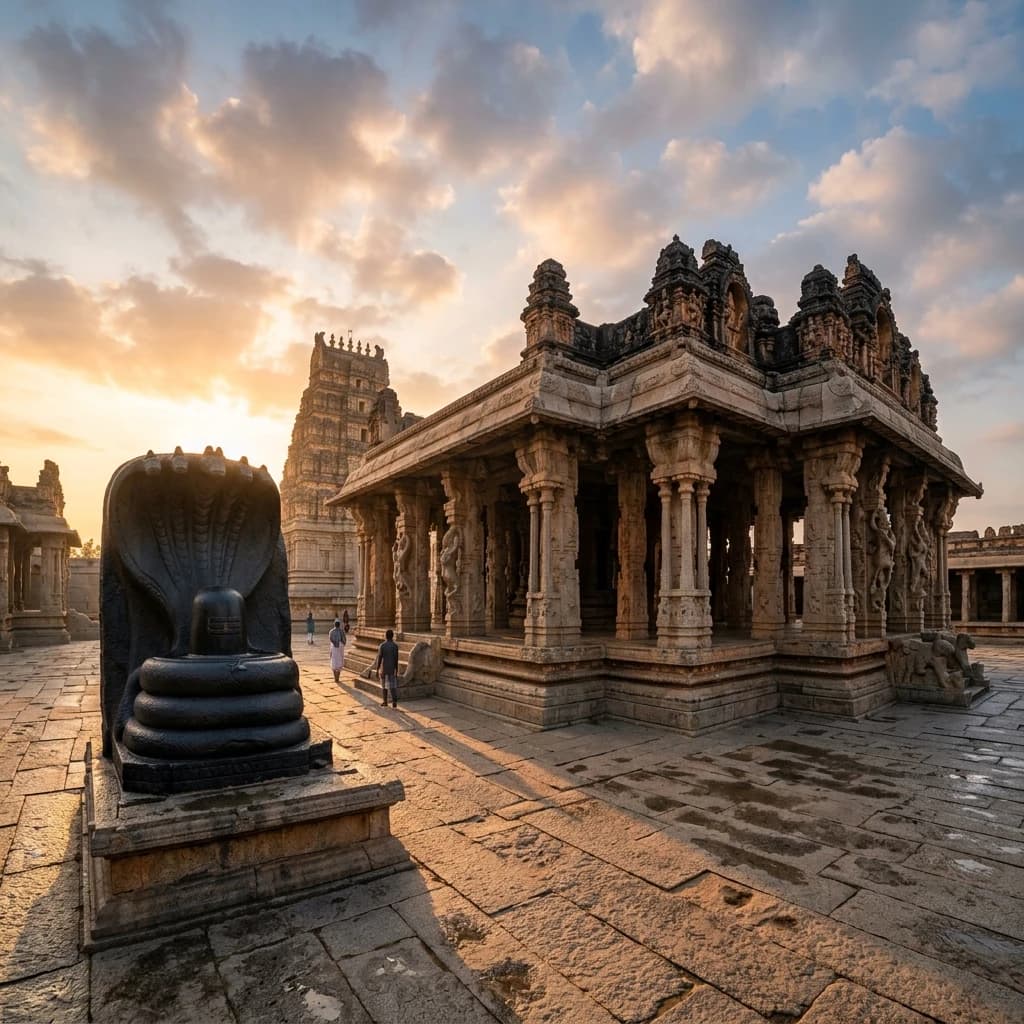
Sacred Stone Symphonies: Unveiling Nuggihalli, Ananta Vasudeva, and Srikalahasti
Across the Indian subcontinent, medieval stone temples serve as enduring lithic archives, preserving the peak of regional architectural evolution, sacred geometry, and royal epigraphy. These monuments were not merely places of worship, but monumental statement pieces where imperial dynasties carved their statecraft, geological mastery, and philosophical traditions directly into bedrock. Today, we explore three remarkable yet distinct historical wonders: the stellate soapstone sanctuary of Nuggihalli’s Lakshmi Narasimha Temple in Karnataka, the 13th-century Vaishnava Kalinga masterpiece of Ananta Vasudeva in Odisha, and the ancient elemental Dravidian complex of Srikalahasteeswara in Andhra Pradesh.
🏛️ Stellate Soapstone Splendor: Lakshmi Narasimha Temple of Nuggihalli
Tucked away in the Hassan district of Karnataka, the Lakshmi Narasimha Temple at Nuggihalli stands as an exquisite exemplar of late Hoysala architectural brilliance. Constructed in 1246 CE during the reign of King Vira Someshwara, this sacred sanctuary was commissioned by Bommanna Dandanayaka, a high-ranking military general (Dandanayaka) of the Hoysala Empire. Built entirely from chloritic schist—commonly known as soapstone—the temple showcases how Hoysala master-masons utilized a soft rock when quarried, allowing microscopic sculptural precision before hardening into enduring stone over centuries.
Architecturally, the temple follows a trikuta (three-shrine) plan resting upon a raised jagati (platform) that mimics the star-shaped contour of the vimana structures above. The central sanctum is dedicated to Lord Keshava, while the flank shrines house Lakshmi Narasimha and Venugopala. The interior navaranga (nine-bay hall) features 59 lathe-turned soapstone pillars, each polished to a mirror-like sheen, holding up vaulted ceiling panels carved with multi-petaled lotus rosettes. The outer walls are an encyclopedia of Hindu iconography, displaying a continuous band of relief panels that depict the twenty-four forms of Lord Vishnu (Chaturvimshati Murti), celestial dancers (apsaras), and scenes from the Ramayana and Mahabharata.
What elevates Nuggihalli to a site of paramount epigraphic and art historical interest is the presence of signed master sculptures. Several base panels along the exterior lower friezes bear the carved signatures of Mallitamma, the most celebrated sculptor of the Hoysala era who also contributed to the famous temples of Hosaholalu and Somanathapura. Inscriptions carved into the stone base document the establishment of Nuggihalli as an agrahara (scholarly township) named Agrahara Nuggihalli, detailing royal land grants to scholars and artisans that ensured the maintenance of this architectural jewel.
🗿 Kalinga's Vaishnava Legacy: Ananta Vasudeva Temple of Bhubaneswar
Rising majestically along the eastern bank of the sacred Bindu Sagar tank in Bhubaneswar, the Ananta Vasudeva Temple represents a rare and momentous chapter in Odishan architectural history. Built in 1258 CE by Queen Chandrika Devi, daughter of the illustrious Eastern Ganga monarch King Anangabhima III, it stands as the only major ancient temple in Bhubaneswar dedicated exclusively to Lord Vishnu. While Bhubaneswar is celebrated as the "City of Temples" dominated by Shaiva shrines like Lingaraj and Mukteshvara, Ananta Vasudeva reflects the royal Ganga dynasty's devotion to Vaishnavism following the imperial patronage of Jagannath at Puri.
Architecturally, the temple is a textbook illustration of mature Kalinga architecture, adhering strictly to the pancharatha layout along an east-west axis. The complex consists of four interconnected structures: the deula (main sanctum spire), the jagamohana (assembly hall with a pyramidal pidha roof), the nata-mandapa (dance hall), and the bhoga-mandapa (offering hall). The towering rekha deula features sharp vertical lines and subtle miniature tower replicas (urushringas) that draw the eye upward toward the copper chakra finial. Carved from fine sandstone with chlorite accents, the outer walls display continuous friezes of musicians, dancing nymphs, and high-relief icons of Krishna, Balarama, and Varaha.
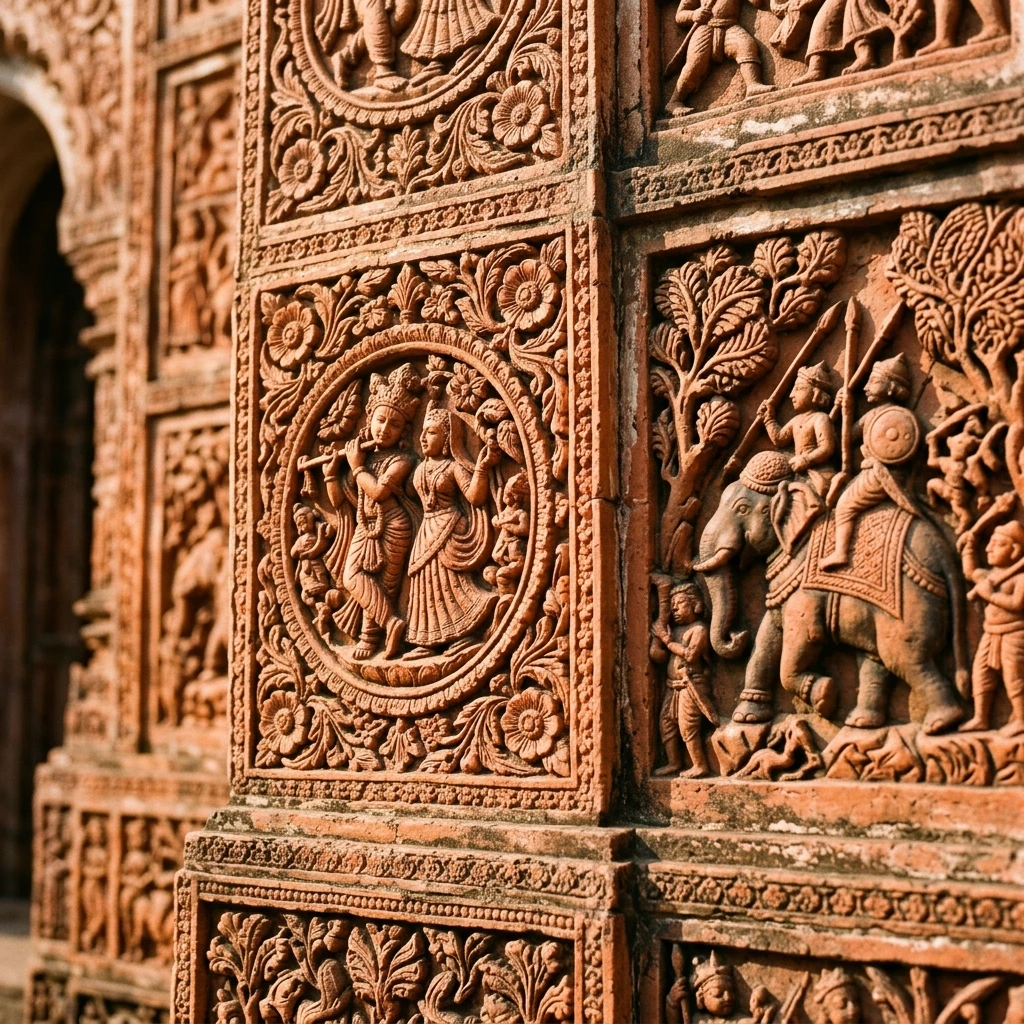
Figure 1: Intricate stone craftsmanship and architectural elements at Ananta Vasudeva Temple.
Inside the sanctum, the temple enshrines magnificent black chlorite icons of Krishna, Balarama, and Subhadra—a triad reflecting the sacred iconographical tradition of the Jagannath Temple. Epigraphically, an important Sanskrit inscription preserved at the site records Queen Chandrika's lineage, her military victories alongside her husband Paramardideva, and her solemn vow to construct a Vishnu shrine upon the sacred banks of Bindu Sagar. Beyond its architectural grandeur, Ananta Vasudeva remains famous for its ancient stone kitchen (Rosaghara), where sacred Mahaprasad meals have been prepared over wood-fired stone hearths using traditional brass vessels continuously for over 770 years.
🔱 The Elemental Breath of Stone: Srikalahasteeswara Temple
Nestled between the banks of the Swarnamukhi River and the rocky cliffs of Dakshina Kailasa hill in Andhra Pradesh, the Srikalahasteeswara Temple is one of South India's most venerated architectural landmarks. As one of the Pancha Bhoota Sthalams (temples representing the five elemental aspects of nature), Srikalahasti embodies the element of Air (Vayu). The temple's origins extend back to the Pallava dynasty in the 5th century CE, but its current structural grandeur reflects multi-layered patronage from Chola emperors like Rajendra Chola I and Kulottunga I, followed by massive expansions under the Vijayanagara Empire.
The architectural layout of Srikalahasti showcases classical Dravidian design adapted seamlessly to the rugged surrounding terrain. The complex is accessed through towering raja-gopurams (gateway towers), the most famous of which is the 120-foot hundred-pillared hall (Noorukallu Mandapam) built by Vijayanagara Emperor Sri Krishnadeva Raya in 1516 CE to commemorate his victory over the Gajapatis of Orissa. The interior pillared corridors are lined with monolithic granite columns depicting rearing yalis, royal donor portraits, and detailed relief carvings of the legend of Kannappa Nayanar—the saint who famously sacrificed his eyes out of devotion to the deity.
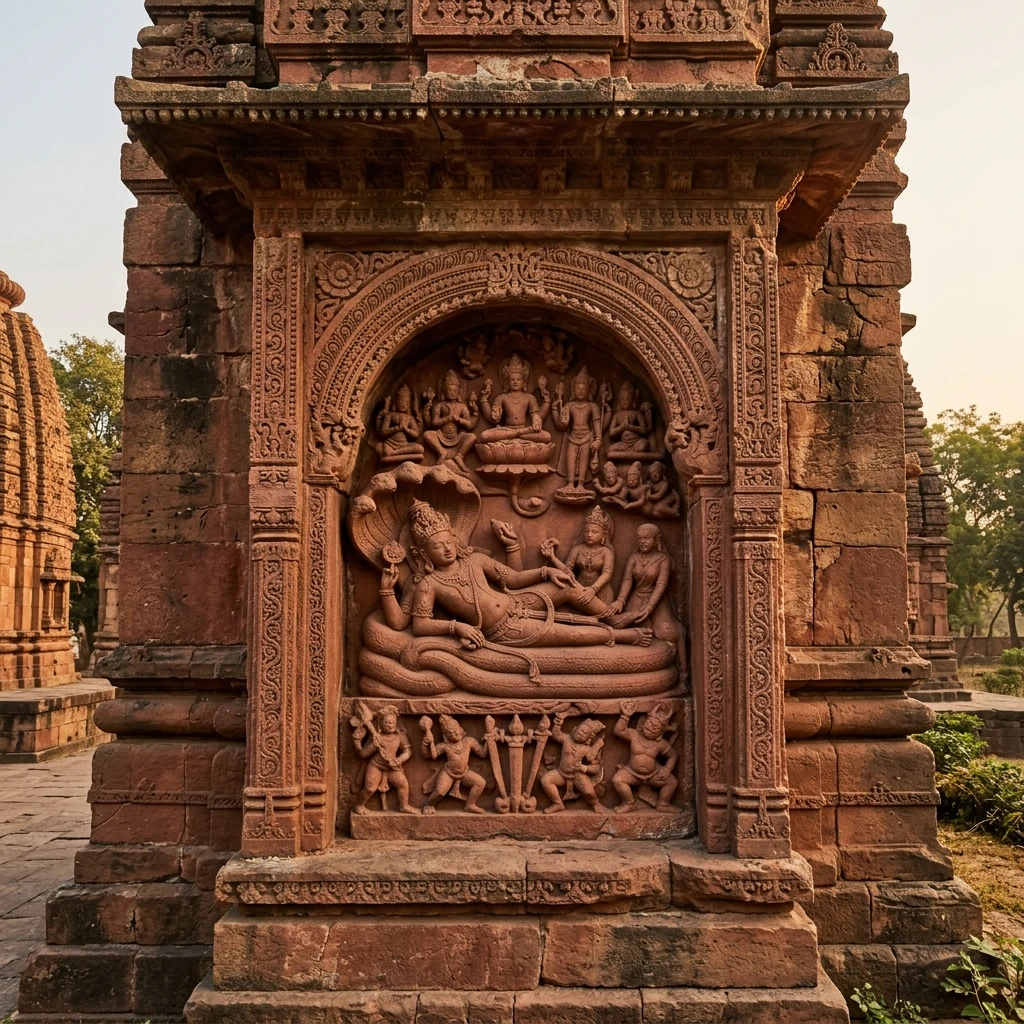
Figure 2: Architectural design and monumental structures at Srikalahasteeswara Temple.
At the heart of the inner sanctum rests an un-carved, natural stone Vayu Lingam. In an extraordinary acoustic and physical phenomenon that has fascinated observers for centuries, the ghee lamps positioned within the airtight inner sanctum flicker continuously as though touched by a soft breeze, while the lamps in the outer chamber remain perfectly still—a physical manifestation of the invisible air element. Inscriptions carved into the granite base document extensive endowments by Chola queens, tax exemptions granted to local weaver guilds, and land allocations for temple maintenance, cementing Srikalahasti as a cornerstone of medieval South Indian administrative and spiritual history.
📌 The Bottom Line
- nuggihalli-lakshmi-narasimha: A stellar 1246 CE Hoysala soapstone trikuta temple featuring mirror-polished lathe-turned pillars and signed master reliefs by the legendary sculptor Mallitamma.
- ananta-vasudeva: A 1258 CE Ganga Dynasty Vaishnava Kalinga masterpiece in Bhubaneswar featuring a soaring pancharatha spire, chlorite deities, and a 770-year-old active temple kitchen.
- srikalahasteeswara: An ancient Dravidian Vayu-elemental temple patronized by Chola and Vijayanagara monarchs, featuring Krishnadevaraya's 100-pillared hall and a self-flickering sanctuary lamp.
📬 Stay Updated
Get India's heritage and history stories delivered to your inbox every week. Subscribe to our free newsletter →
Disclosure: This post contains affiliate links. If you purchase through our links, we earn a small commission at no extra cost to you. We only recommend products we believe in.
Enjoyed this post?
Get our weekly digest delivered free.
Share this post:
Knowelth is reader-supported. We may earn a commission from links in this article at no extra cost to you. Read our disclosure.
Related Posts
Stone Chronicles of Sovereignty and Democracy: The Epigraphic Legacy of Aihole's Meguti Temple, Uttiramerur's Assembly Inscriptions, and the Royal Reliefs of Hampi's Hazara Rama
Stone Chronicles of Sovereignty and Democracy: The Epigraphic Legacy of Aihole's Meguti Temple, Uttiramerur's Assembly Inscriptions, and the Royal Reliefs of Hampi's Hazara Rama Across the diverse lan…
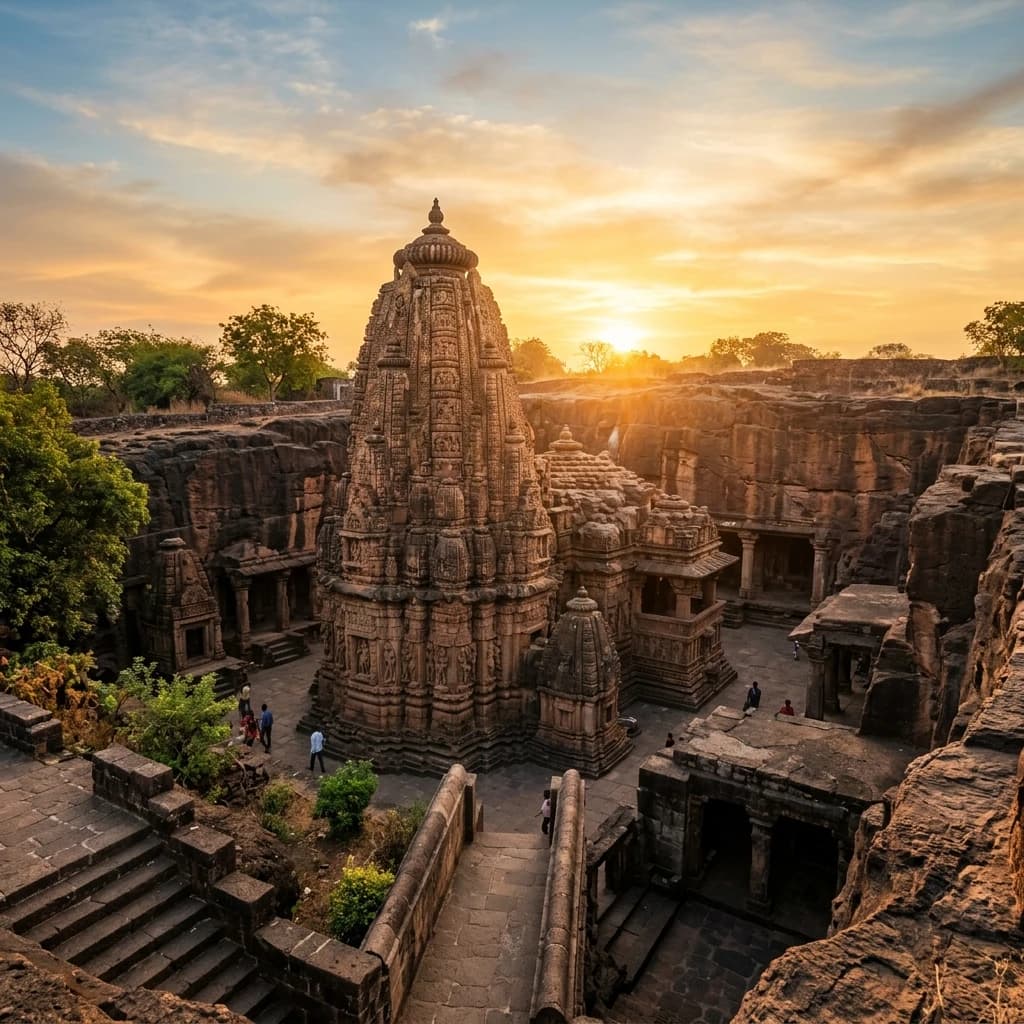
Monolithic Cliffs, Alpine Spires, and Chariots of Stone: The Architectural Feats of Dhamnar, Baijnath, and Melkadambur
Monolithic Cliffs, Alpine Spires, and Chariots of Stone: The Architectural Feats of Dhamnar, Baijnath, and Melkadambur Across the vast geographical expanse of the Indian subcontinent, ancient and medi…
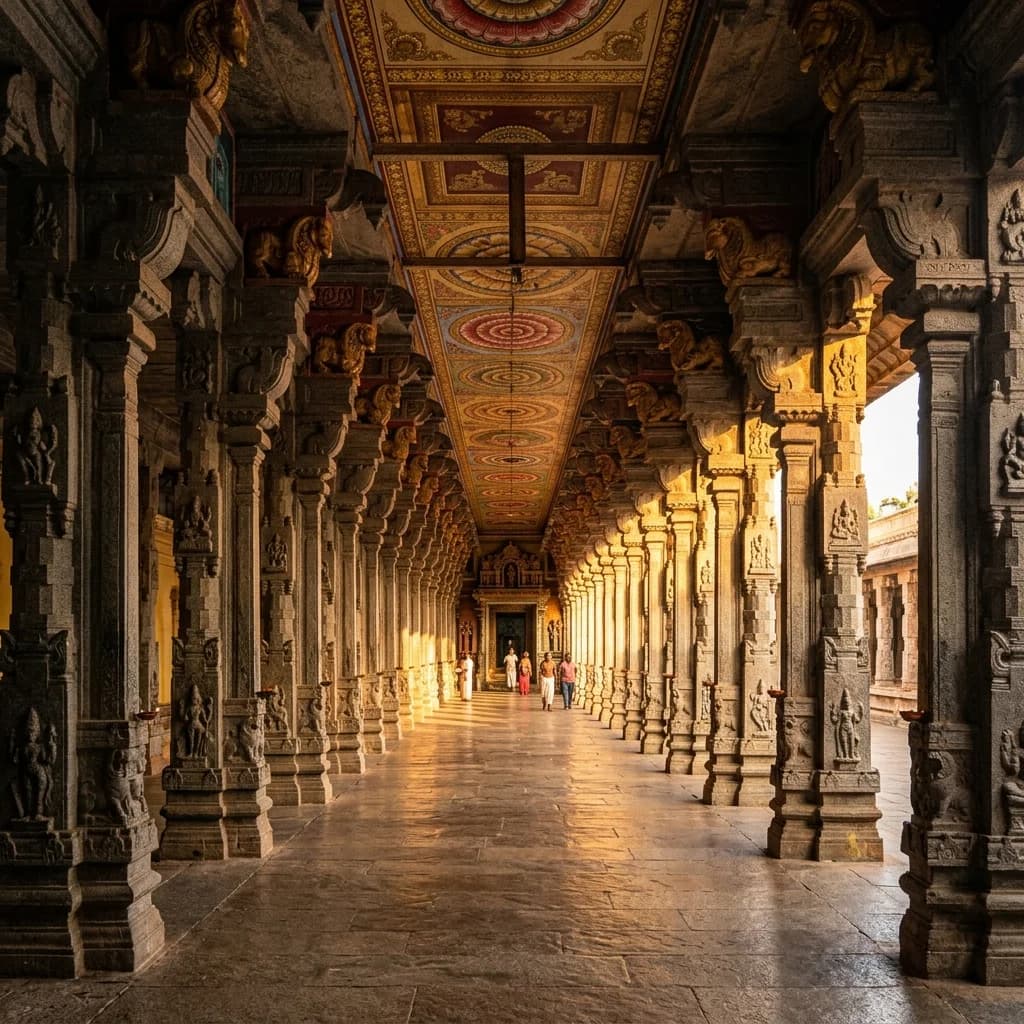
Sacred Corridors, Interlocking Stone Chains, and Thousand-Pillar Sanctuaries: The Architectural Marvels of Rameswaram, Kanchipuram, and Moodabidri
Sacred Corridors, Interlocking Stone Chains, and Thousand-Pillar Sanctuaries: The Architectural Marvels of Rameswaram, Kanchipuram, and Moodabidri Across the Indian subcontinent, the evolution of sacr…