Stone Legends: Hoysaleswara, Ellora's Kailasa, and Konark's Chariot of the Sun
Stone Legends: Hoysaleswara, Ellora's Kailasa, and Konark's Chariot of the Sun
India's ancient stone temples are far more than places of worship; they endure as living archives of imperial political triumph, advanced geological engineering, and unmatched artistic virtuosity. Across centuries, royal patrons and master guilds (viswakarmas) transformed massive basalt cliffs, soft chloritic schists, and iron-rich sandstones into structural masterworks that defied the limits of pre-industrial technology. By examining the Hoysaleswara Temple of Halebidu, the monolithic Kailasa Temple of Ellora, and the Sun Temple of Konark, we witness how three iconic dynasties carved their eternal philosophies into the bedrock of the subcontinent.
🏛️ Hoysaleswara Temple of Halebidu: The Pinnacle of Hoysala Soapstone Artistry
Rising along the shores of the historic Dwarasamudra tank in Hassan district, Karnataka, the Hoysaleswara Temple stands as the crown jewel of Hoysala architecture. Commissioned around 1121 CE during the reign of King Vishnuvardhana by wealthy merchant Ketala Devi and high official Keturamalla, the temple was dedicated to Shiva under the names Hoysaleswara and Shantaleswara. Built out of chloritic schist—commonly known as soapstone—this rock type possessed a unique mechanical property: it was remarkably soft and easy to carve when freshly quarried from subterranean seams, yet hardened significantly upon exposure to the atmosphere. This geological characteristic allowed Hoysala sculptors to achieve a level of three-dimensional depth, undercut fretwork, and intricate detail unmatched elsewhere in South Asia.
Architecturally, the Hoysaleswara Temple is designed as a dvikuta (twin-shrine complex) set upon a star-shaped, elevated stone platform known as a jagati. This stellate layout was not merely aesthetic; by alternating wide angles and projecting recesses along the outer perimeter, master architects dramatically expanded the surface area available for sculpted narrative friezes. The exterior basement walls are wrapped in eight continuous horizontal tiers of carvings. The lowest band features over 1,200 carved elephants, each individually styled to represent strength and stability, topped by bands of lions, floral scrolls, horses, mythological beasts (makaras), and scenes from the Ramayana, Mahabharata, and Bhagavata Purana. Above these friezes stand life-sized stone sculptures of deities and celestial maidens (salabhanjikas), intricately pierced with lace-like jewelry and hairpieces carved entirely in high relief.
The interior of the temple is equally revolutionary in its engineering. The central halls (navaranga) are supported by massive, lathe-turned stone pillars. Guild craftsmen mounted solid blocks of soapstone on primitive vertical turning lathes, rotating the stone against hard chisel bits to produce mirror-smooth, perfectly concentric circular grooves and bell-shaped moldings. Epigraphic inscriptions preserved on the temple walls and nearby stone stelae credit renowned master sculptors such as Dasoja, Malloja, and Ballana, who proudly signed their works. Inscribed as a UNESCO World Heritage Site in 2023 as part of the "Sacred Ensembles of the Hoysalas," Halebidu remains a testament to the aesthetic brilliance of medieval Karnataka.
🗿 Kailasa Temple at Ellora: The Excavated Monolith of the Rashtrakutas
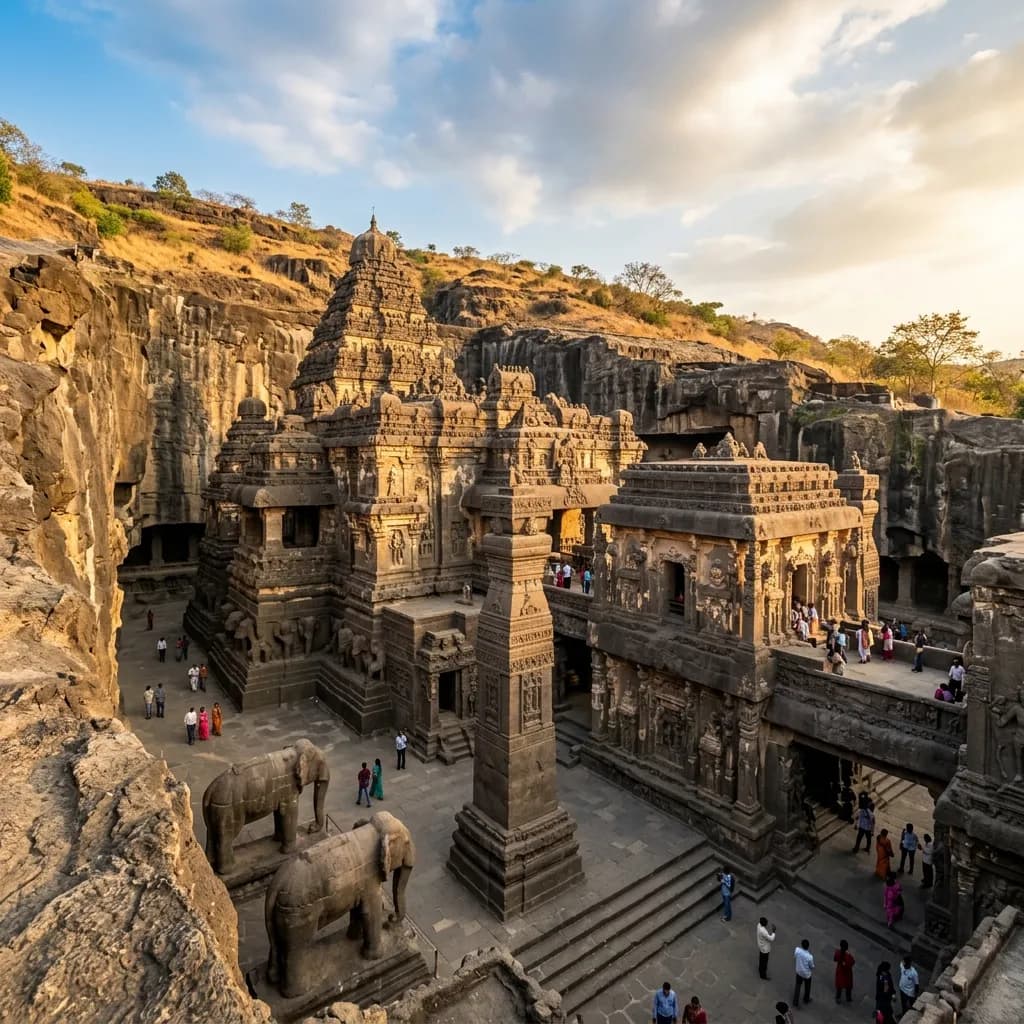
Deep within the Sahyadri hill range of Maharashtra, Cave 16 of the Ellora complex houses the Kailasa Temple—the largest monolithic rock-cut structure on Earth. Engineered during the 8th century CE under the patronage of the Rashtrakuta monarch King Krishna I (r. 756–773 CE), the temple was conceived to recreate the sacred Himalayan abode of Shiva in solid stone. As recorded in the famous Baroda copper-plate grant of Karkaraja II (c. 812 CE), contemporary observers were so astonished by its execution that even the architect reportedly marveled, asking how such a grand structure could have been brought into existence without visible joins or mortar.
Unlike conventional architectural construction which builds upward from a foundation, the Kailasa Temple was executed entirely through reverse engineering: top-down rock excavation. Guild quarrymen and sculptors began at the top of a basalt cliff, digging two parallel vertical trenches over 30 meters deep into the basalt trap of the Deccan Plateau. Working downward with hand chisels, hammers, and iron wedges, workers excavated over 200,000 tonnes of solid basalt rock without the use of scaffolding or structural timber. From this single leftover central mass of living stone, artists carved a complete multi-storeyed temple complex featuring a gateway (gopuram), a detached Nandi pavilion, a pillared assembly hall (gudhamandapa), and a 30-meter-tall multi-tiered Dravidian tower (shikhara).
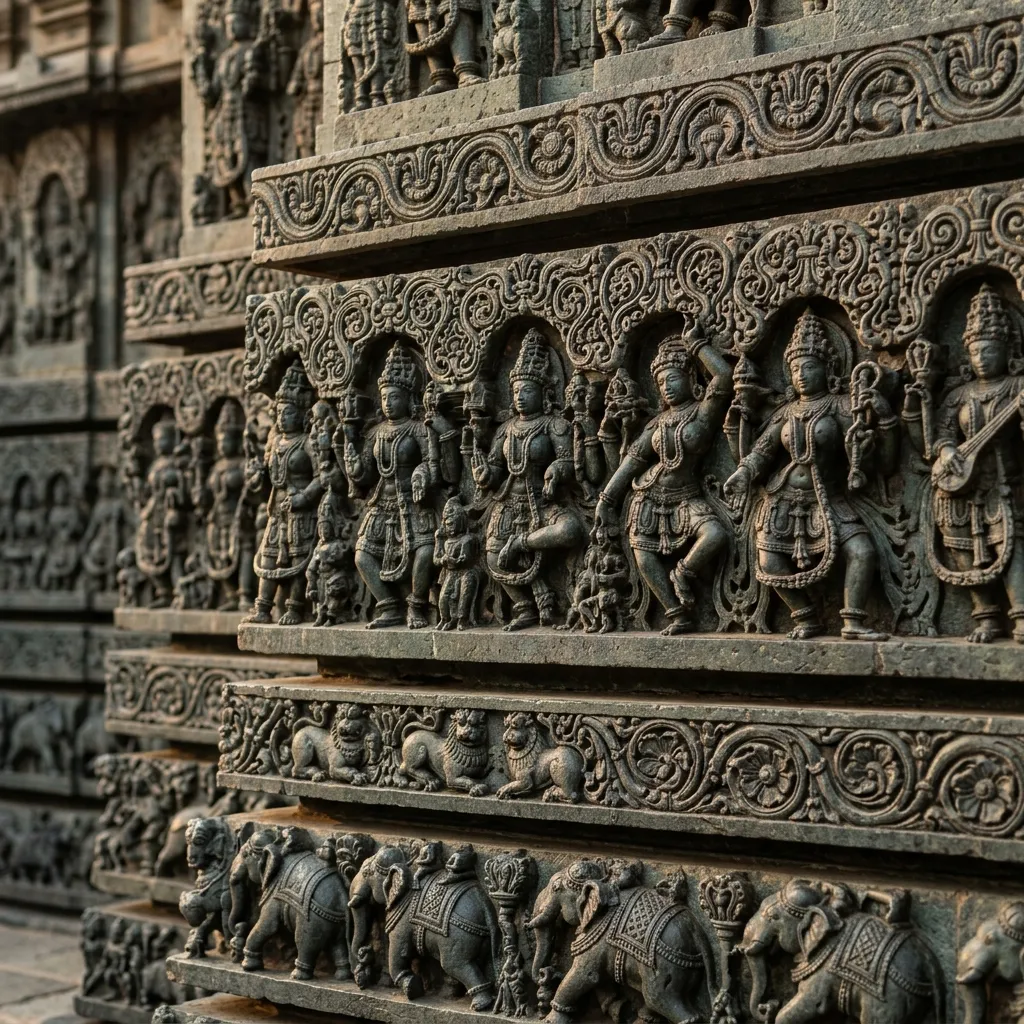
Figure 1: Intricate stone craftsmanship and architectural elements at Kailasa Temple at Ellora.
The sculpted wall surfaces of Kailasa display a monumental mastery of narrative art. The lower plinth of the main sanctuary features a colossal frieze of sculpted elephants, lions, and mythical creatures that appear to physically lift the entire temple structure upon their backs. The courtyard walls are adorned with dramatic high-relief sculptures, most famously the Ravananugraha panel—a multi-layered depiction of the demon king Ravana attempting to shake Mount Kailash, while Shiva calmly presses his toe down to stabilize the mountain. Combining Dravida architectural geometry with Northern Nagara design elements, Kailasa stands as an unmatched landmark of rock-cut civil engineering.
🛕 Sun Temple of Konark: The Chariot of Surya and Kalinga Civil Engineering
Enjoyed this post?
Get our weekly digest delivered free.
Constructed around 1250 CE along the Bay of Bengal coastline in Odisha, the Sun Temple of Konark (Arka Kshetra) represents the grand zenith of Kalinga temple architecture. Commissioned by King Narasimhadeva I of the Eastern Ganga Dynasty to commemorate military victories and honor the Sun God Surya, the entire temple was engineered in the form of a colossal celestial chariot (ratha). Positioned along an east-west axis, the monument was designed so that the first rays of the rising sun would pass directly through the main gateway and illuminate the inner sanctuary shrine.
The structural design of Konark is built upon a grand scale of symbolic and mathematical precision. The elevated platform of the temple features 24 giant stone wheels, each nearly 3 meters in diameter, carved with exquisite detail. Drawn by seven rearing stone horses symbolizing the days of the week or the seven colors of sunlight, these wheels serve a dual purpose as functioning astronomical instruments. The eight major spokes on each wheel act as sundials; by reading the shadow cast by the central axle pin on the carved rim beads, observers could calculate the precise time of day to within a fraction of a minute.
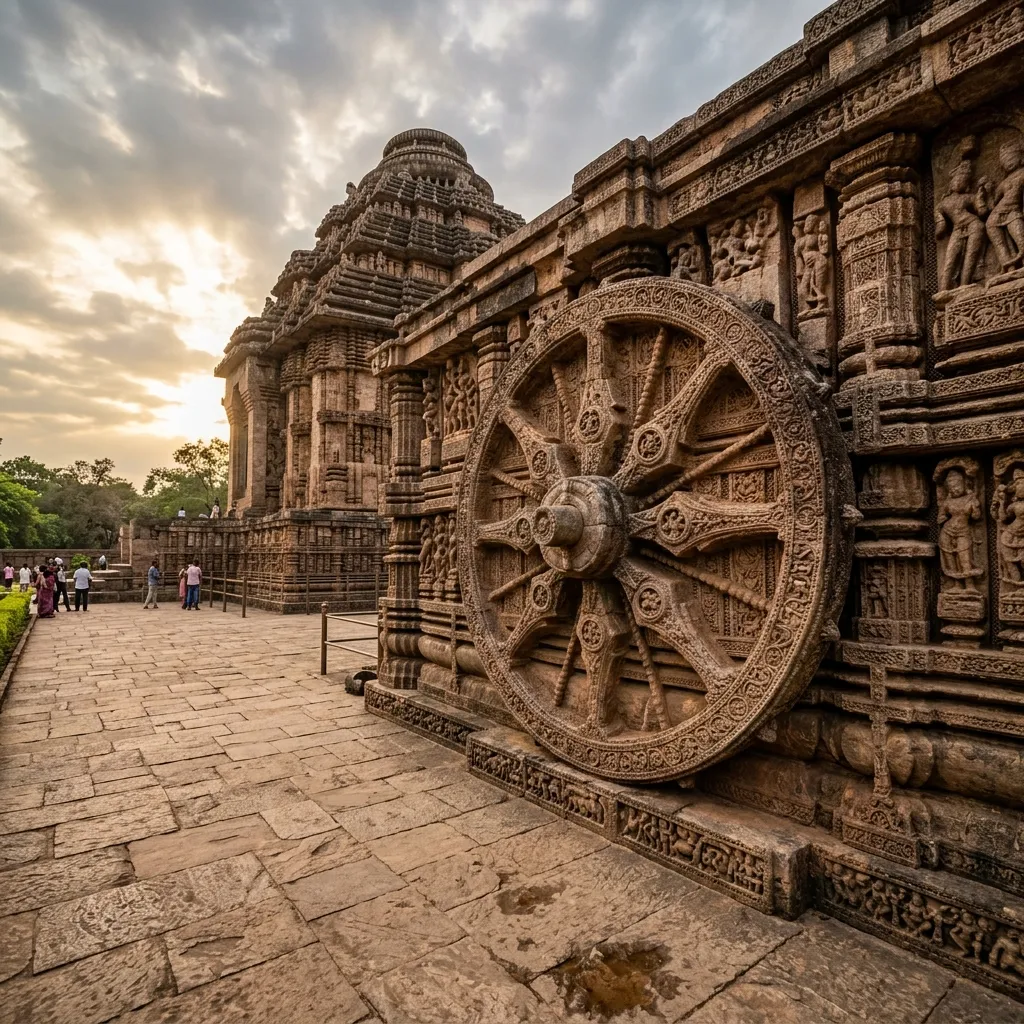
Figure 2: Architectural design and monumental structures at Sun Temple of Konark.
To support the immense structural weight of the assembly hall (Jagamohana) and the original 70-meter-high sanctuary tower (Deula), Eastern Ganga engineers employed revolutionary metallurgy and masonry techniques. Rather than relying solely on stone mortar, builders forged massive iron beams (pata)—some weighing up to 90 tonnes—to span wide ceiling openings and reinforce heavy lintels. Constructed primarily from regional khondalite sandstone and dark chlorite accents, the monument earned the moniker "Black Pagoda" from 17th-century European sailors who used its towering profile as a coastal navigational beacon. Designated a UNESCO World Heritage Site in 1984, Konark remains one of the world's most impressive achievements in ancient structural geometry.
📌 The Bottom Line
- hoysaleswara-temple: Hoysala stone masons utilized soft chloritic schist on a star-shaped plan to create South Asia's most intricate, multi-tiered narrative friezes and lathe-turned pillars.
- kailasa-temple-ellora: Rashtrakuta artisans carved the world's largest monolithic temple top-down from a single basalt cliff face, extracting over 200,000 tonnes of living rock without scaffolding.
- konark-sun-temple: Eastern Ganga engineers crafted a monumental solar chariot featuring 24 precision stone sundial wheels and forged iron lintel beams.
📫 Stay Updated
Get India's heritage and history stories delivered to your inbox every week. Subscribe to our free newsletter →
Disclosure: This post contains affiliate links. If you purchase through our links, we earn a small commission at no extra cost to you. We only recommend products we believe in.
Knowelth publishes independently researched analysis verified against primary documentation, academic journals, and official records. To report a factual inaccuracy or request a correction, please reach out via our Contact Page.
Enjoyed this post?
Get our weekly digest delivered free.
Share this post:
Knowelth is reader-supported. We may earn a commission from links in this article at no extra cost to you. Read our disclosure.
Related Posts
Stone Chronicles of Sovereignty and Democracy: The Epigraphic Legacy of Aihole's Meguti Temple, Uttiramerur's Assembly Inscriptions, and the Royal Reliefs of Hampi's Hazara Rama
Stone Chronicles of Sovereignty and Democracy: The Epigraphic Legacy of Aihole's Meguti Temple, Uttiramerur's Assembly Inscriptions, and the Royal Reliefs of Hampi's Hazara Rama Across the diverse lan…
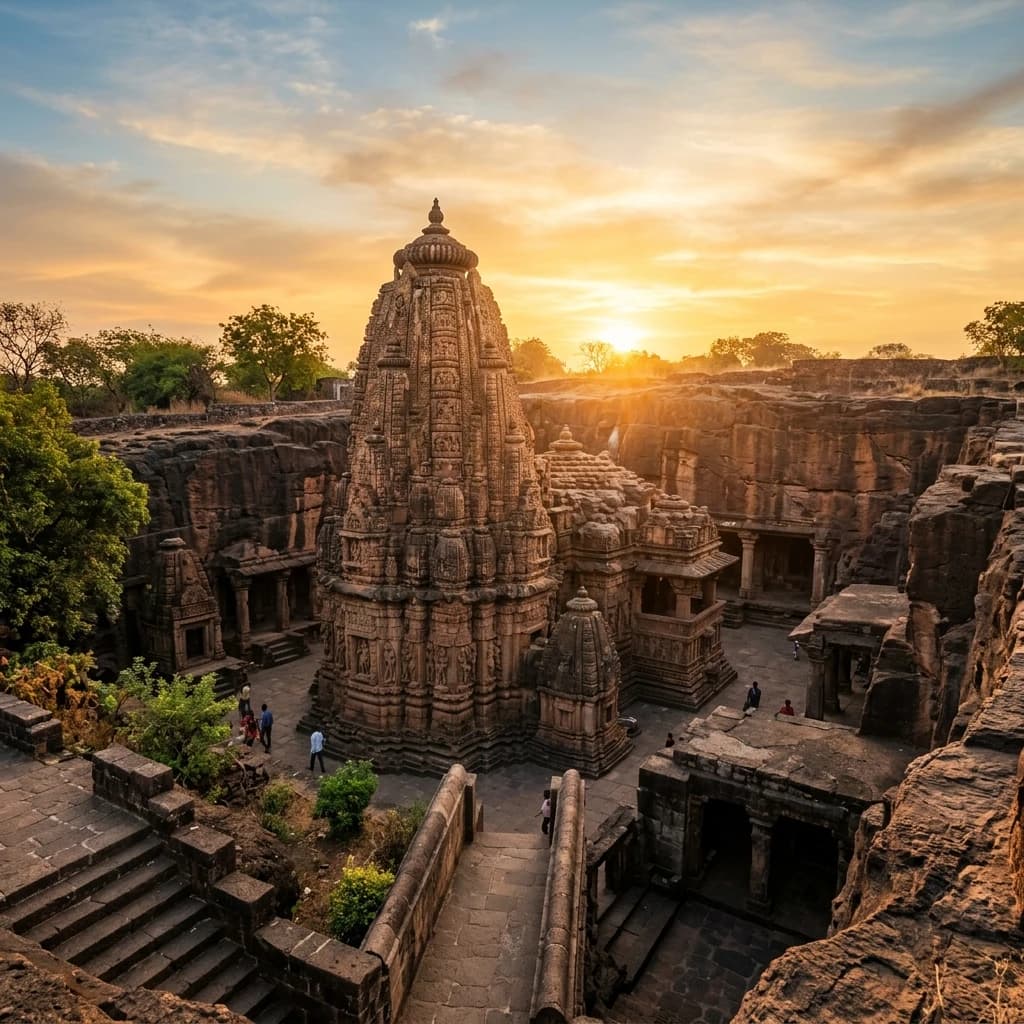
Monolithic Cliffs, Alpine Spires, and Chariots of Stone: The Architectural Feats of Dhamnar, Baijnath, and Melkadambur
Monolithic Cliffs, Alpine Spires, and Chariots of Stone: The Architectural Feats of Dhamnar, Baijnath, and Melkadambur Across the vast geographical expanse of the Indian subcontinent, ancient and medi…
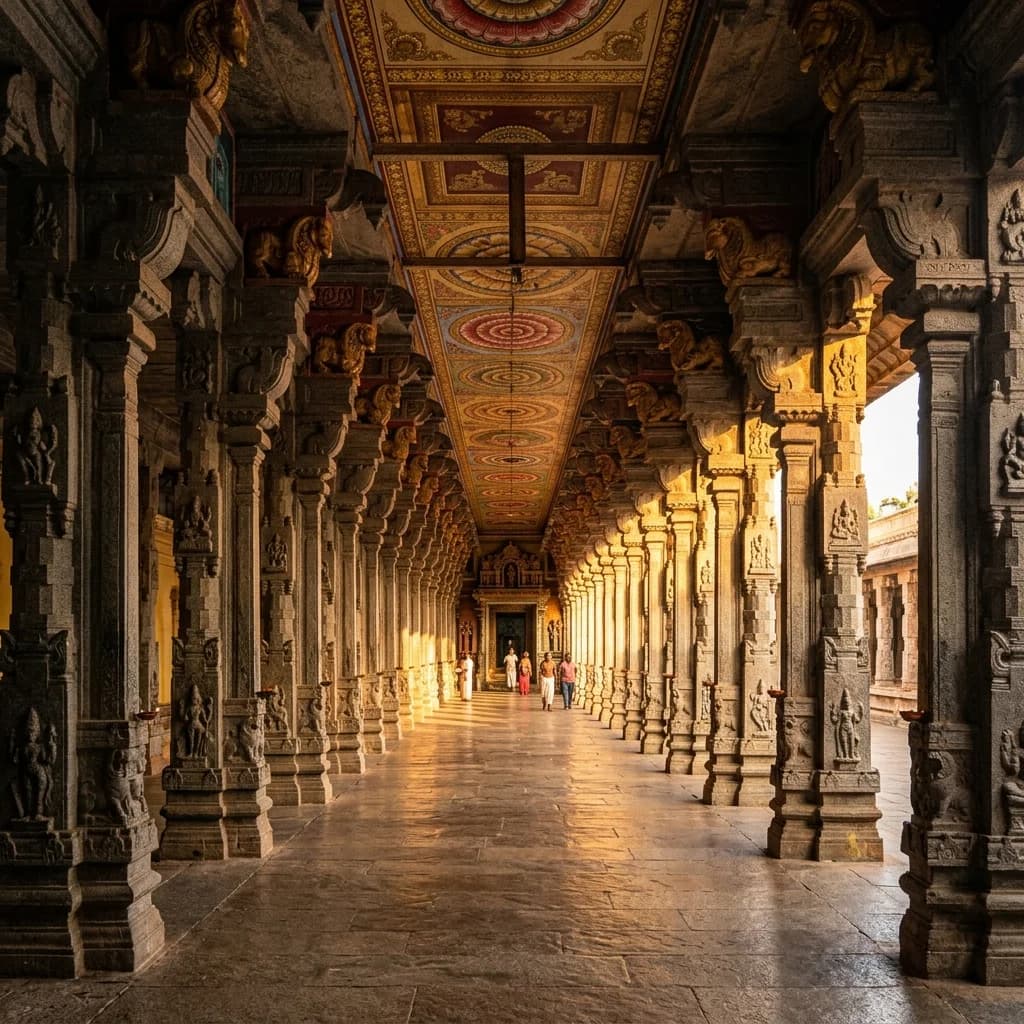
Sacred Corridors, Interlocking Stone Chains, and Thousand-Pillar Sanctuaries: The Architectural Marvels of Rameswaram, Kanchipuram, and Moodabidri
Sacred Corridors, Interlocking Stone Chains, and Thousand-Pillar Sanctuaries: The Architectural Marvels of Rameswaram, Kanchipuram, and Moodabidri Across the Indian subcontinent, sacred architecture r…