Monoliths, Chariots, and Solar Shrines: Unveiling Kailasa at Ellora, Airavatesvara at Darasuram, and Modhera Sun Temple
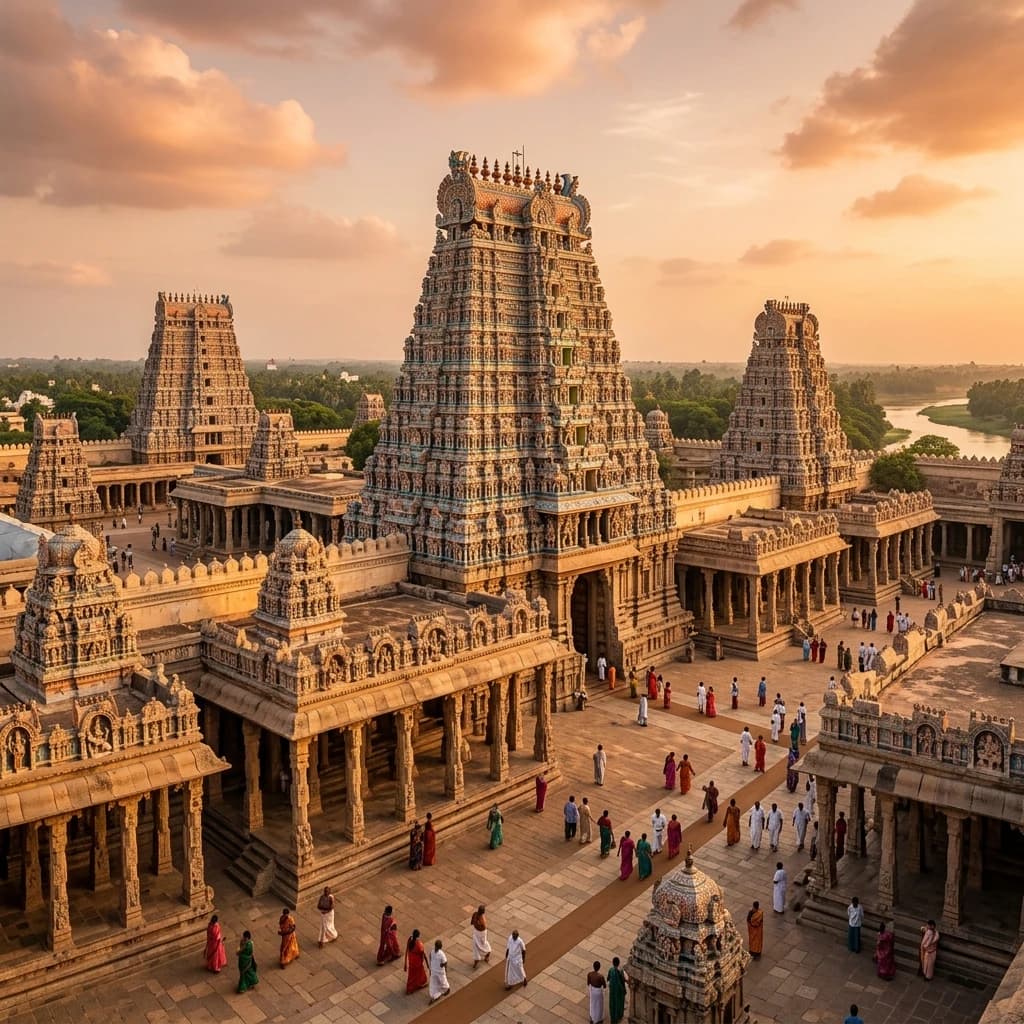
Monoliths, Chariots, and Solar Shrines: Unveiling Kailasa at Ellora, Airavatesvara at Darasuram, and Modhera Sun Temple
Across the Indian subcontinent, ancient and medieval stone sanctuaries stand not merely as places of worship, but as immortal codices of imperial ambition, mathematical precision, and rock engineering genius. From the basalt cliffs of the Western Ghats to the fertile Kaveri delta and the arid plains of Gujarat, master architects transformed raw geology into enduring masterpieces. By examining the monolithic excavation of Ellora’s Kailasa Temple, the acoustic chariot architecture of Darasuram’s Airavatesvara Temple, and the astronomical geometry of the Modhera Sun Temple, we uncover how three great Indian dynasties sculpted their spiritual and cultural legacies into eternal stone.
🏛️ Kailasa Temple of Ellora — Monolithic Rock-Cut Engineering / Rashtrakuta Dynasty
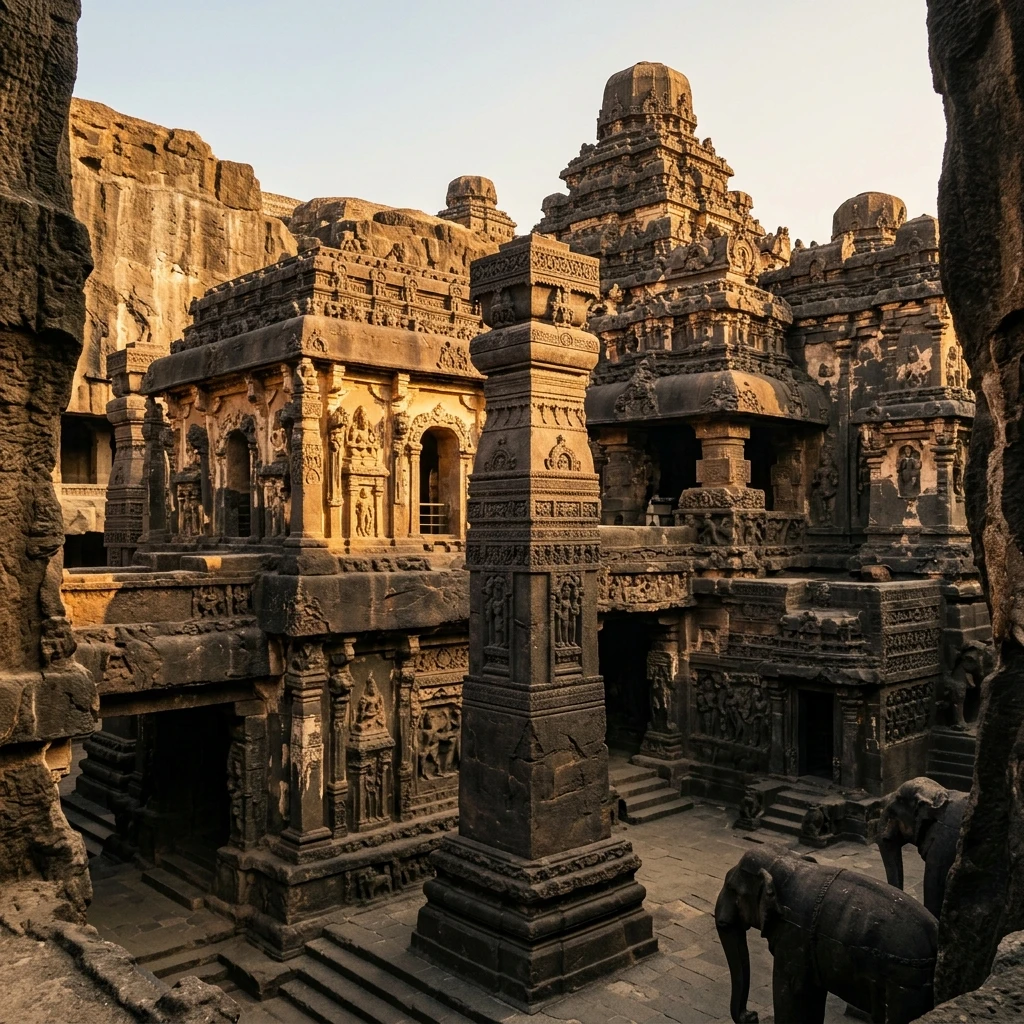
Carved into the volcanic basalt cliffs of Cave 16 at Ellora in Maharashtra, the Kailasa Temple (Kailashanatha) stands as the world's largest free-standing monolithic rock-cut structure. Commissioned in the mid-8th century CE (c. 756–773 CE) by the Rashtrakuta monarch Krishna I (also known as Kannara), the monument was conceived as a physical terrestrial manifestation of Mount Kailash, the sacred Himalayan abode of Lord Shiva. Built during an era when the Rashtrakuta Empire held hegemony over western and central India, the temple was designed to proclaim imperial power and spiritual devotion on a scale never before attempted in human history.
The engineering execution of the Kailasa Temple remains one of mankind's greatest architectural wonders. Unlike traditional stone temples constructed from bottom to top using quarried blocks, Kailasa was carved entirely top-down from a single monolithic basalt hill. Master craftspeople excavated three deep vertical trenches into the mountain, isolating a rectangular stone block measuring over 300 feet long, 175 feet wide, and 100 feet deep. Over a period spanning several decades, an estimated 200,000 tons of solid basalt rock were excavated using only iron chisels, hammers, and wooden wedges. As the masons descended, they sculpted intricate multi-storeyed halls, porticos, columns, and detailed relief panels directly from the living rock without a single structural joint or mortar line.
Architecturally, despite its location in northern Maharashtra, the Kailasa Temple adheres strictly to southern Dravidian structural canons. Its spatial layout mirrors classic southern masterpieces like the Virupaksha Temple at Pattadakal and the Kailasanathar Temple at Kanchipuram. The complex features a multi-tiered pyramidal tower (vimana) rising 96 feet high, a detached nandi mandapa, a two-storeyed entrance gateway (gopuram), two free-standing 50-foot victory pillars (dhwajasthambhas), and an surrounding open courtyard enclosed by pillared cloisters carved into the cliff face. Massive life-sized stone elephants carved around the basement plinth give the optical illusion of lifting the entire central temple complex upon their shoulders.
Sculturally, Kailasa represents the pinnacle of Indian high-relief stone carving. Among its most famous compositions is the dramatic panel depicting Ravananugraha-murti, where the demon king Ravana attempts to shake Mount Kailasa with his twenty arms, while Lord Shiva calmly stabilizes the mountain with the pressure of his big toe. Narrative friezes along the exterior base of the central hall portray continuous episodic sequences from the Ramayana, Mahabharata, and Krishna Lila, carved with extraordinary movement, anatomical accuracy, and emotional intensity.
Today, Cave 16 of Ellora is preserved as a UNESCO World Heritage Site in Chhatrapati Sambhajinagar district, Maharashtra. Best visited between October and March, the site attracts travelers, historians, and structural engineers from around the globe. Though active ritual worship ceased centuries ago, Kailasa remains an unprecedented triumph of ancient rock-cut engineering, where an entire mountain was hollowed out to reveal a sublime divine sanctuary.
🕉️ Airavatesvara Temple at Darasuram — Chariot Architecture & Acoustic Precision / Chola Dynasty
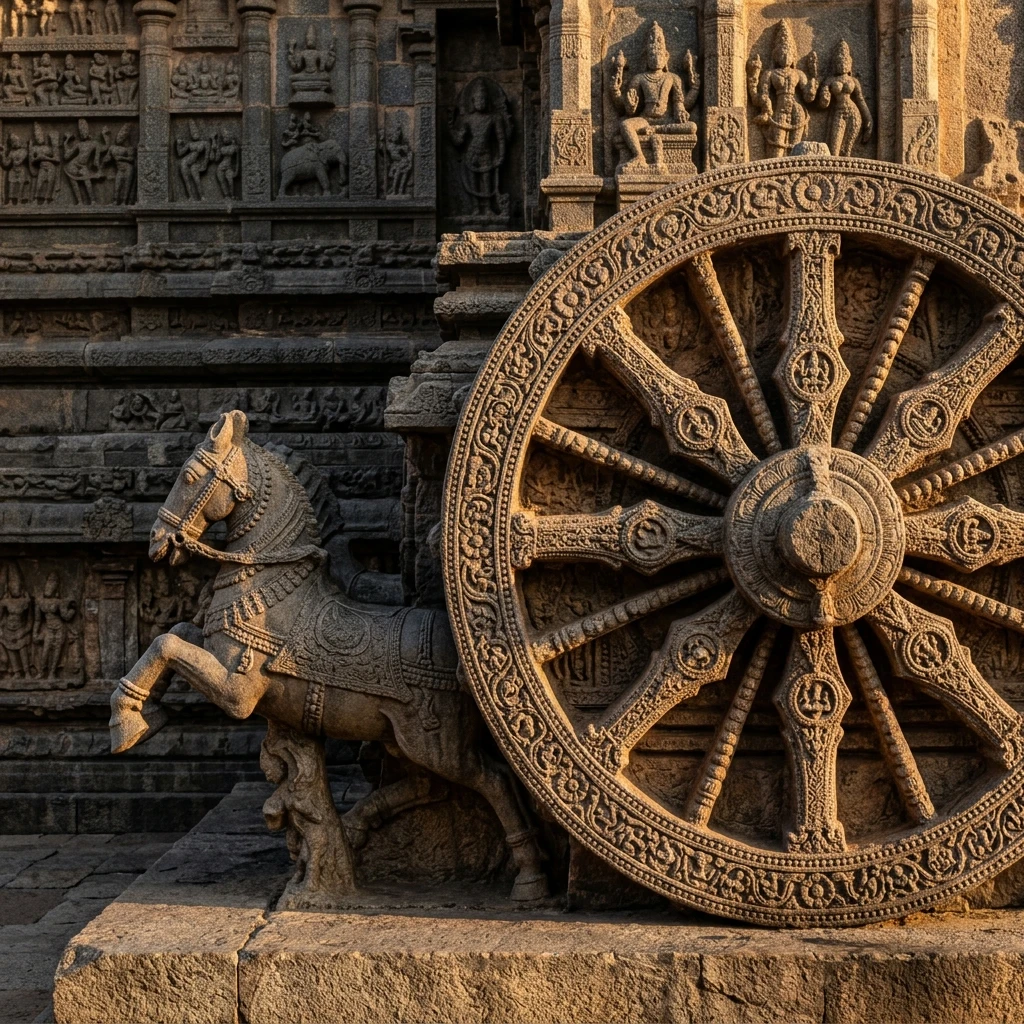
Situated in Darasuram near Kumbakonam in Tamil Nadu, the Airavatesvara Temple stands as a supreme artistic jewel of the late Imperial Chola period. Commissioned by Emperor Rajaraja Chola II between 1146 and 1172 CE, the temple represents an era when Chola architects moved away from sheer structural mass toward exquisite sculptural refinement, theatrical design concepts, and intricate miniature stone carving. Consecrated to Lord Shiva, the temple derives its name from Airavata, the white celestial elephant of Indra, who according to regional epics worshipped at this shrine to seek redemption from a sage's curse.
Architecturally, Airavatesvara is categorized in classical Chola texts as a Karakkoil—a temple crafted in the physical form of a celestial chariot (ratha). The principal assembly hall (mukha-mandapa) is sculpted to resemble a massive royal processional chariot resting on intricately carved stone wheels, complete with detailed hubs, spokes, and caparisoned horses and elephants rearing forward in mid-stride. The central tower (vimana), rising 85 feet high, features a multi-tiered pyramidal spire capped by a circular stone dome (griva and shikhara), showcasing the graceful symmetry and proportional balance characteristic of late Chola monumental art.
One of the most remarkable engineering innovations of the Airavatesvara complex is the set of "singing steps" located near the balustraded entrance (Balipeetham). Crafted from hard dark granite, these seven steps were carved with precise acoustic properties and varying material densities. When struck gently, each stone step resonates at a distinct sound frequency corresponding perfectly to the seven fundamental notes (Swaras: Sa, Re, Ga, Ma, Pa, Dha, Ni) of Indian classical music. This acoustic integration underscores the advanced metallurgical and stone-tuning knowledge possessed by 12th-century Chola master craftsmen.
In terms of sculptural detail, Airavatesvara is celebrated for its micro-carvings and narrative paneling. Surrounding the base of the sanctum is a unique 73-panel sculpted frieze that depicts the life stories, miracles, and ascetic deeds of the 63 Nayanmars (Tamil Shaivite saint-poets). Each panel is accompanied by explanatory epigraphical labels in medieval Tamil script, rendering the temple an invaluable historical document of medieval South Indian religious literature. Wall niches display delicate depictions of courtly dancers (apsaras), mythological beasts (yalis), and divine avatars carved with fluid grace in hard granite.
Recognized as one of the three "Great Living Chola Temples" by UNESCO (inscribed on the World Heritage list alongside Thanjavur and Gangaikondacholisvaram), Airavatesvara is maintained by the Archaeological Survey of India. Located just 3 kilometers from Kumbakonam, the site is best visited during the cool winter months from November to February. Surrounded by peaceful lawns, it remains an active place of pilgrimage and an enduring tribute to the artistic elegance of the Chola golden age.
🛕 Sun Temple of Modhera — Solar Geometry & Stepped Reservoirs / Solanki Dynasty
Enjoyed this post?
Get our weekly digest delivered free.
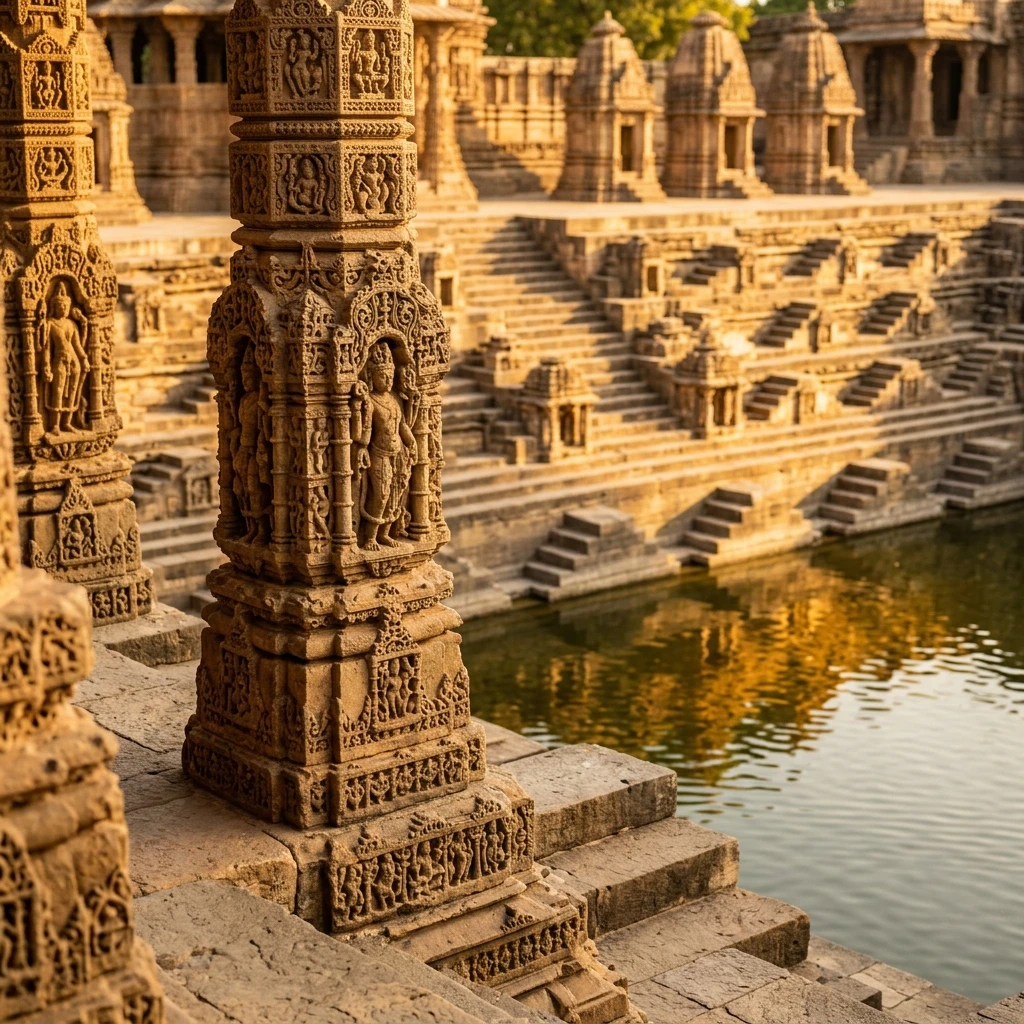
Perched on the banks of the Pushpavati River in Modhera, Gujarat, the Sun Temple stands as an extraordinary triumph of western Indian medieval architecture. Constructed in 1026–1027 CE by King Bhima I of the Chaulukya (Solanki) Dynasty, the temple was built as a dedicated sanctuary to the solar deity Surya. Erected shortly after a period of regional political turmoil, the monument served as a bold declaration of royal resurgence, cosmic order, and architectural sophistication during the golden age of Gujarati Hindu art.
The temple complex is designed in the classic Maru-Gurjara (Solanki) style and is laid out along an exact east-west astronomical axis. The site comprises three distinct, harmoniously aligned architectural components: the Surya Kunda (a grand stepped water reservoir), the Sabha Mandapa (Assembly Hall), and the Gudhamandapa (Inner Sanctum). The Surya Kunda, also known as Ramakunda, is a magnificent rectangular tank featuring intricate geometric staircases that descend to the water level. Embedded within the stepped terraces of the tank are 108 miniature shrines dedicated to various solar, Vedic, and Puranic deities, creating a striking visual rhythm of stone geometry and water reflections.
Directly above the stepped tank sits the Sabha Mandapa, an open-walled hall of magnificent proportions. Its roof is supported by 52 exquisitely carved pillars—symbolizing the 52 weeks of the solar year. Each pillar is carved from base to capital with miniature scenes from the Ramayana, Mahabharata, and Krishna Lila, along with floral garlands and dancing figures. The pillars support a breathtaking octagonal ceiling dome (rangamandapa) carved with concentric rings of lotus petals. Architecturally, the entire complex was engineered for precise solar alignment: during the vernal and autumnal equinoxes, the rising sun's first golden rays pass directly through the grand eastern gateway and Sabha Mandapa archways to penetrate the inner sanctum, illuminating the golden idol of Surya.
The sculptural iconography of Modhera provides fascinating historical insights into ancient solar worship. The exterior walls of the Gudhamandapa feature twelve distinct life-sized stone carvings of Surya, representing his twelve solar aspects (Adityas) corresponding to the twelve months of the year. Interestingly, Surya is depicted wearing long knee-high boots and an ornate waist belt (avyanga), reflecting ancient Central Asian and Iranian (Magi) artistic influences on Indian solar iconometry. The wall surfaces are further embellished with relief carvings of celestial musicians (gandharvas), erotic couples (mithunas), and elaborate floral arabesques carved into warm golden-yellow sandstone.
Today, the Sun Temple of Modhera is a protected national monument managed by the Archaeological Survey of India, located about 100 kilometers north of Ahmedabad, Gujarat. Although regular ritual worship ceased after historic invasions, the complex remains remarkably intact and hosts the annual Modhera Dance Festival every January. Best visited between October and March, Modhera stands as a timeless masterpiece of sacred geometry, astronomical engineering, and Solanki artistic brilliance.
📌 The Bottom Line
- ellora-kailasa: A towering testament to 8th-century Rashtrakuta engineering, carved top-down from a single basalt cliff as the world's largest monolithic stone temple.
- darasuram-airavatesvara: A 12th-century Chola masterpiece designed as a stone chariot with acoustic musical steps and 73 relief panels celebrating Shaivite saints.
- modhera-sun-temple: An 11th-century Solanki solar sanctuary engineered with 52 carved calendar pillars and a stepped reservoir designed for equinox solar alignment.
📫 Stay Updated
Get India's heritage and history stories delivered to your inbox every week. Subscribe to our free newsletter →
Disclosure: This post contains affiliate links. If you purchase through our links, we earn a small commission at no extra cost to you. We only recommend products we believe in.
Knowelth publishes independently researched analysis verified against primary documentation, academic journals, and official records. To report a factual inaccuracy or request a correction, please reach out via our Contact Page.
Enjoyed this post?
Get our weekly digest delivered free.
Share this post:
Knowelth is reader-supported. We may earn a commission from links in this article at no extra cost to you. Read our disclosure.
Related Posts
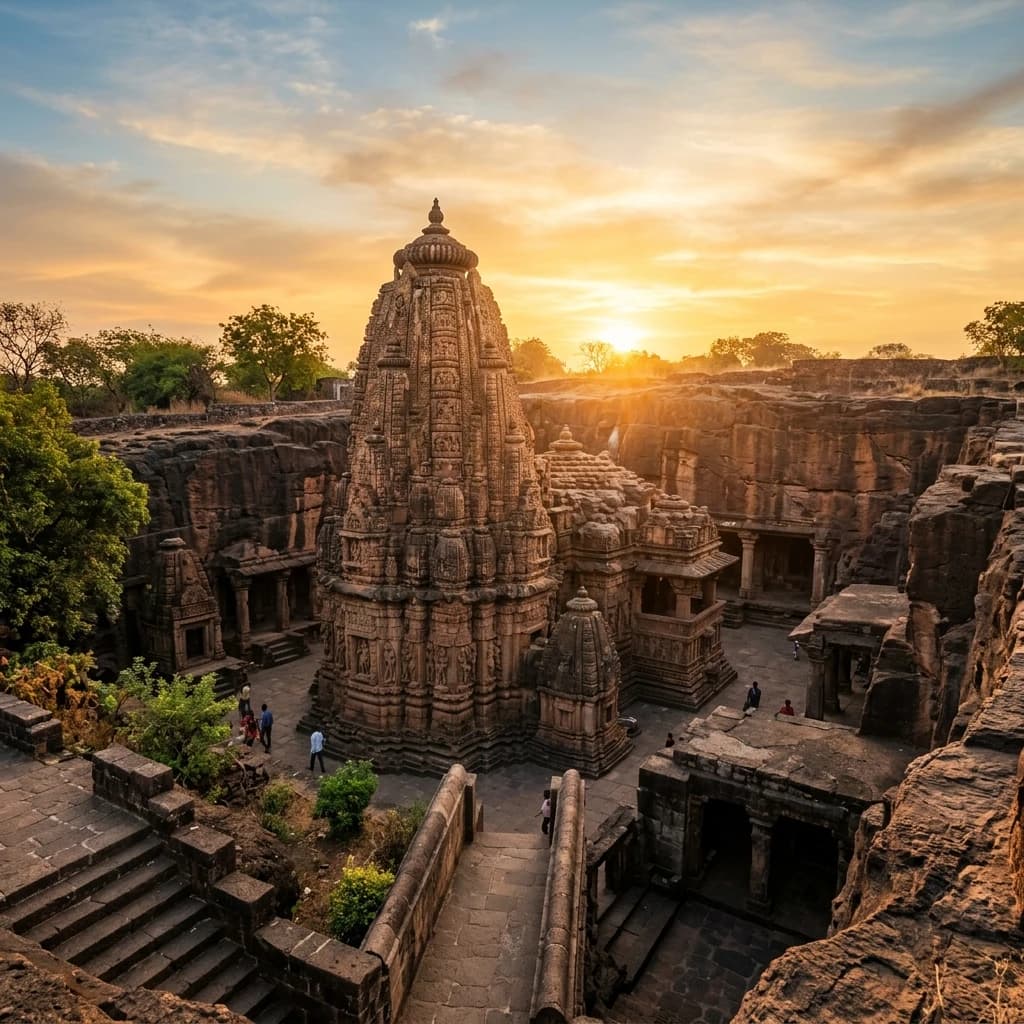
Stone Chronicles of Sovereignty and Democracy: The Epigraphic Legacy of Aihole's Meguti Temple, Uttiramerur's Assembly Inscriptions, and the Royal Reliefs of Hampi's Hazara Rama
Stone Chronicles of Sovereignty and Democracy: The Epigraphic Legacy of Aihole's Meguti Temple, Uttiramerur's Assembly Inscriptions, and the Royal Reliefs of Hampi's Hazara Rama Across the diverse lan…
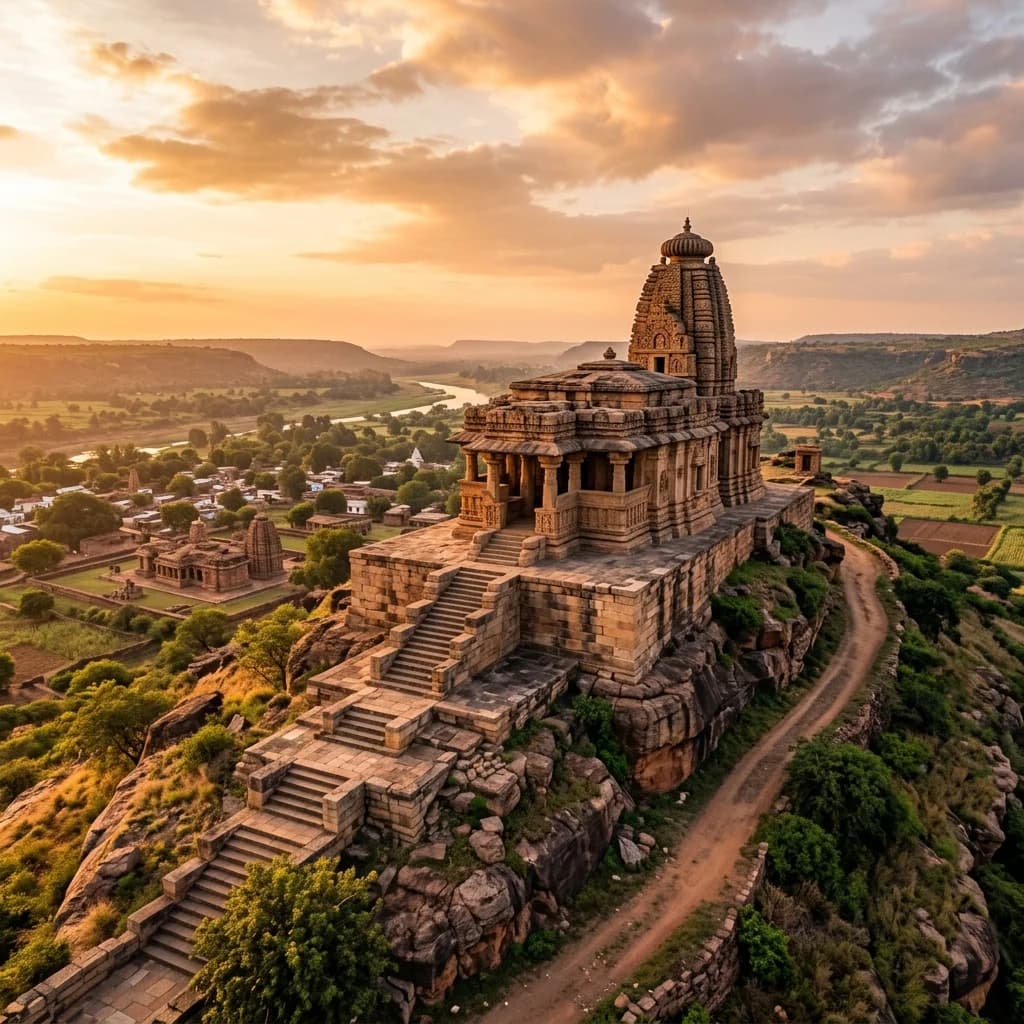
Monolithic Cliffs, Alpine Spires, and Chariots of Stone: The Architectural Feats of Dhamnar, Baijnath, and Melkadambur
Monolithic Cliffs, Alpine Spires, and Chariots of Stone: The Architectural Feats of Dhamnar, Baijnath, and Melkadambur Across the vast geographical expanse of the Indian subcontinent, ancient and medi…
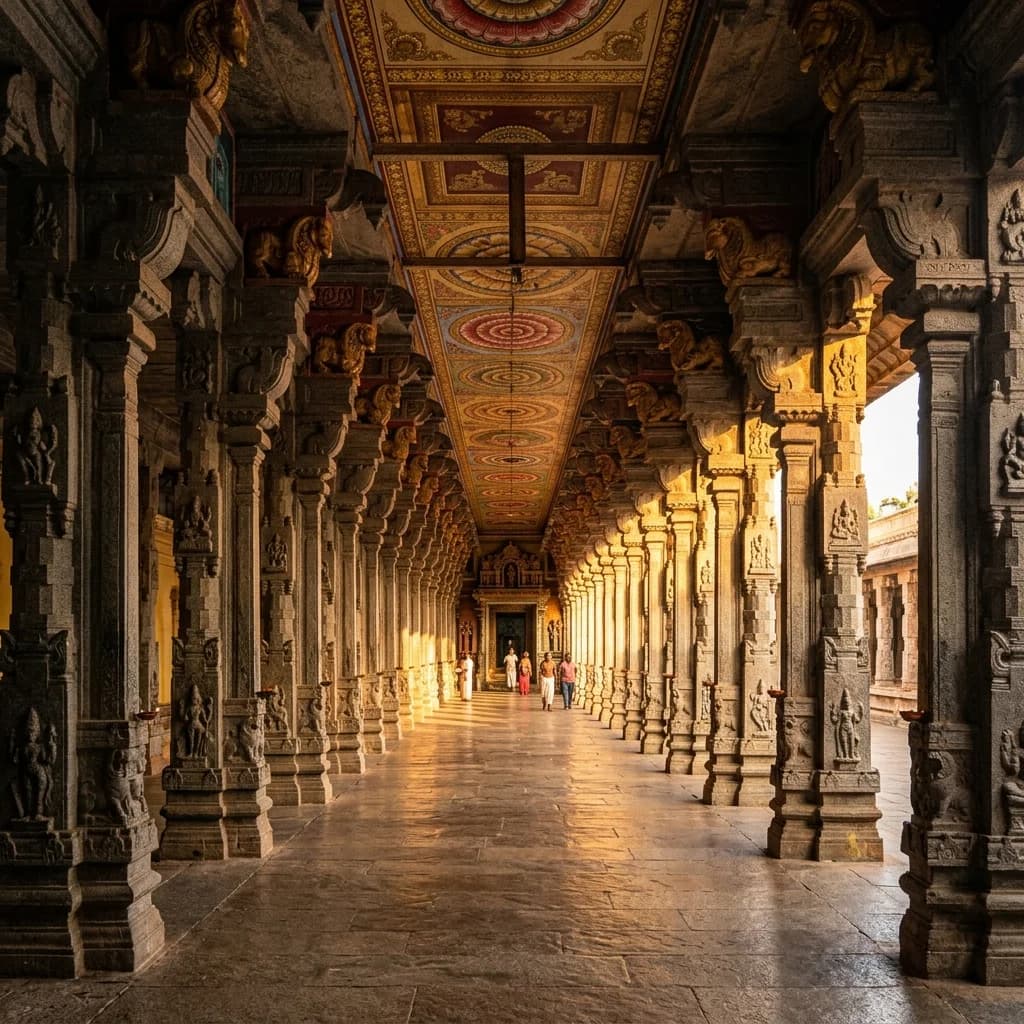
Sacred Corridors, Interlocking Stone Chains, and Thousand-Pillar Sanctuaries: The Architectural Marvels of Rameswaram, Kanchipuram, and Moodabidri
Sacred Corridors, Interlocking Stone Chains, and Thousand-Pillar Sanctuaries: The Architectural Marvels of Rameswaram, Kanchipuram, and Moodabidri Across the Indian subcontinent, sacred architecture r…