Monolithic Wonders & Sacred Geometry: The Top-Down Basalt Excavation of Kailasa Temple, Thanjavur's Shadowless Granite Tower, and Konark's Solar Chariot
Monolithic Wonders & Sacred Geometry: The Top-Down Basalt Excavation of Kailasa Temple, Thanjavur's Shadowless Granite Tower, and Konark's Solar Chariot
Across the Indian subcontinent, ancient and medieval temple architectures stand as permanent testaments to human ingenuity, advanced spatial geometry, and material science. Far beyond serving solely as sacred sanctuaries, these monumental edifices functioned as civil engineering breakthroughs, royal political statements, and astronomical observatories. Royal patrons of the Rashtrakuta, Imperial Chola, and Eastern Ganga dynasties mobilized generations of master stonemasons (Sthapatis), sculptors, and mathematicians to transform living rock into immortal art. In this architectural deep dive, we explore three distinct crown jewels of Indian heritage: the top-down monolithic basalt excavation of Kailasa Temple at Ellora (Cave 16), the colossal granite vimana of Brihadeeswarar Temple in Thanjavur, and the solar-aligned stone chariot of the Sun Temple at Konark.
🗿 The Monolithic Pinnacle: Kailasa Temple at Ellora (Cave 16)
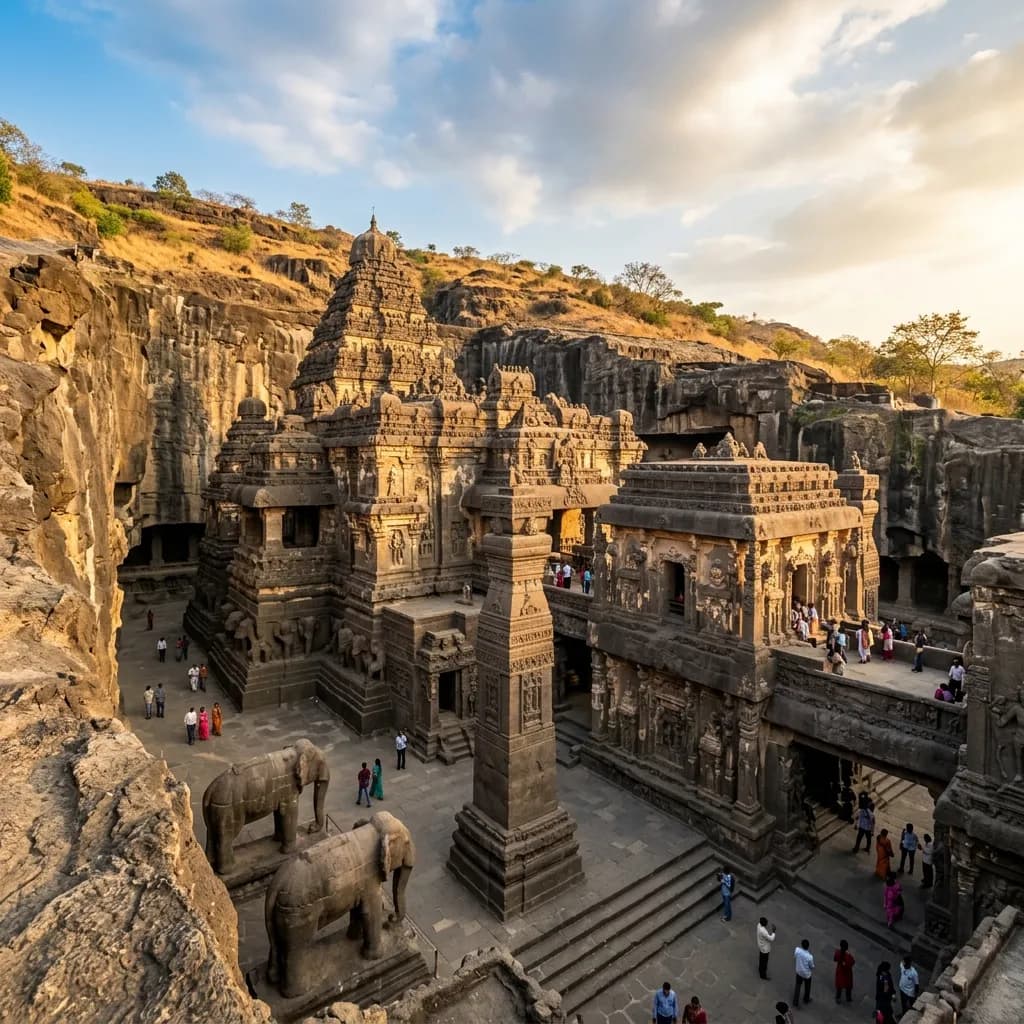
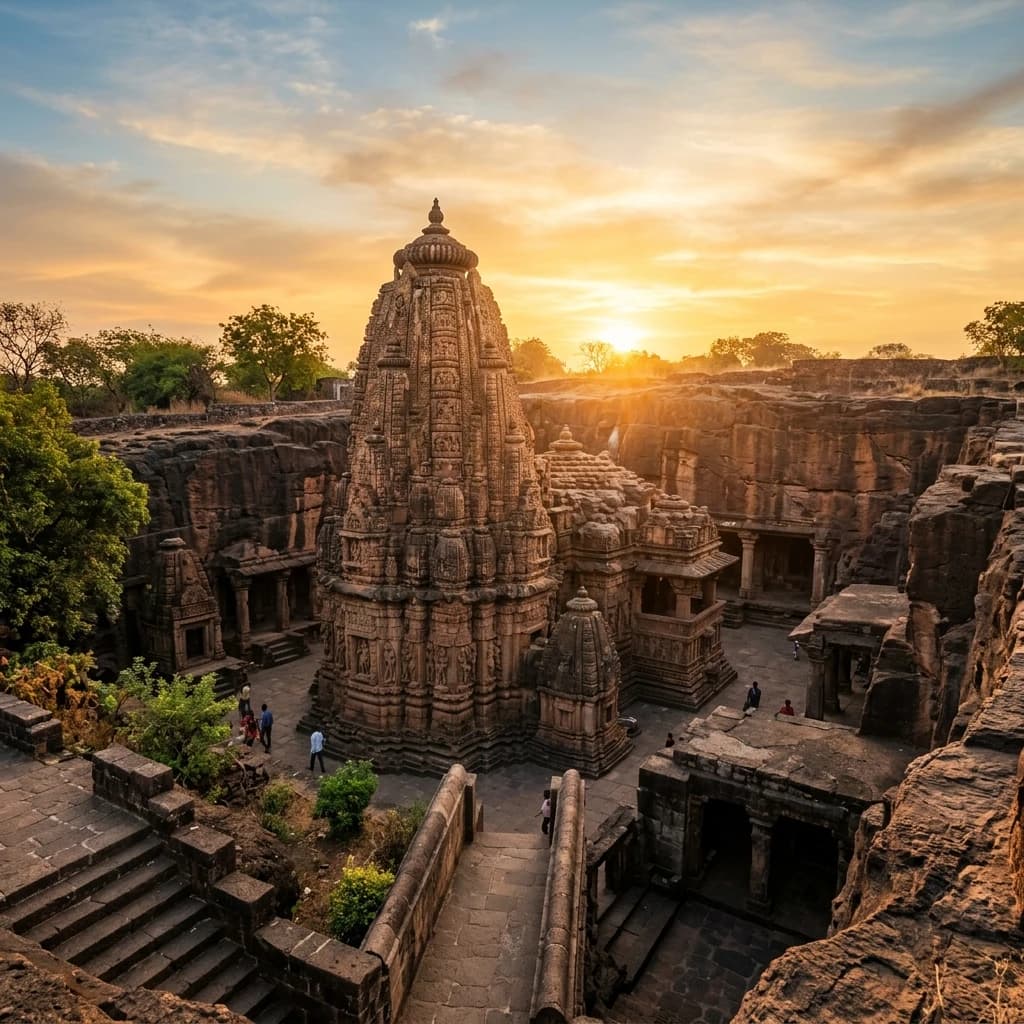
Carved directly into the vertical basalt cliffs of the Sahyadri hill range in Maharashtra, Cave 16 of Ellora—famously known as the Kailasa Temple—represents the single largest monolithic rock-cut structure on Earth. Commissioned in the 8th century CE during the reign of King Krishna I (reigned c. 756–773 CE) of the Rashtrakuta Dynasty, the temple was designed as a physical manifestation of Mount Kailash, the mythical Himalayan abode of Lord Shiva. What sets Kailasa apart from virtually all other structural and rock-cut monuments in global history is its radical excavation technique: it was not built from the ground up by assembling stone blocks, but carved entirely top-down out of a single solid basalt cliff face.
Architectural historians and structural engineers estimate that over 200,000 to 400,000 tonnes of volcanic basalt rock were manually excavated over a period of several decades using only hand chisels, hammers, and wooden wedges. Artisans began at the summit of the cliff, carving down through the bedrock to outline a massive U-shaped courtyard measuring over 86 meters long, 46 meters wide, and 33 meters deep. As workers excavated downward, sculptors simultaneously carved the intricate roof details, multi-tiered Dravidian spire (shikhara), upper pavilions, colonnaded galleries, and life-sized monolithic elephants at the base—leaving zero margin for structural error, as any broken rock or miscalculation could never be replaced.
          TOP-DOWN BASALT EXCAVATION PATTERN
          ==================================
           [Summit of Basalt Cliff]
                   |  (Top-Down Trenching)
                   v
     ┌───────────────────────────┐  <-- Upper Shikhara & Roof Sculptures
     │   Central Shrine Vimana   │      Carved First
     ├───────────────────────────┤
     │  Nandi Mandapa & Bridges  │  <-- Middle Tier Assembly Halls
     ├───────────────────────────┤
     │ Monolithic Elephants Base │  <-- Base Courtyard & Plinth Level
     └───────────────────────────┘      Excavated Last
The central sanctuary complex consists of a gateway (gopuram), a detached shrine housing the sacred bull Nandi, a grand columned assembly hall (mahamandapa), and the main sanctum (garbhagriha), all interconnected by elevated stone bridges suspended above the courtyard floor. The two-story plinth of the main temple features a dramatic, continuous frieze of colossal carved elephants, lions, and mythical beasts (Yalis) appearing to lift the entire multi-ton temple structure upon their backs. The exterior gallery walls display breathtaking bas-reliefs illustrating epic episodes from the Ramayana and Mahabharata, including the famous panel depicting Ravana attempting to shake Mount Kailash while Shiva stabilizes the mountain with his big toe.
🏛️ The Granite Titan: Brihadeeswarar Temple of Thanjavur
Located in the fertile Kaveri Delta of Tamil Nadu, the Brihadeeswarar Temple (also known as Peruvudaiyar Kovil) of Thanjavur stands as the architectural climax of Dravidian temple construction. Completed in 1010 CE by the Chola Emperor Rajaraja I to mark the 25th year of his reign, this UNESCO World Heritage Site is an absolute triumph of granite structural engineering. Standing at 63.4 meters (208 feet) tall, its central sanctuary tower (vimana) remained the tallest building in India for centuries and is constructed entirely of hard granite blocks joined together using mortarless dry-masonry interlocking techniques.
The engineering logistics of Brihadeeswarar remain a subject of intense architectural study. Granite is an exceptionally hard igneous rock that was not naturally available in the immediate alluvial terrain of Thanjavur; thousands of massive granite blocks had to be quarried and transported from sites over 50 kilometers away using fleets of elephants and river barges. At the apex of the 13-tiered pyramidal vimana rests the crown stone, known as the Kumbam or Vaikuntha Pulli. This single, octagonal granite block weighs an estimated 80 tonnes. According to historical tradition and archaeological analysis, Chola engineers constructed a massive inclined earthen ramp (saravatam) extending nearly 6 kilometers from the village of Sarapallam to roll the colossal capstone to the summit of the tower.
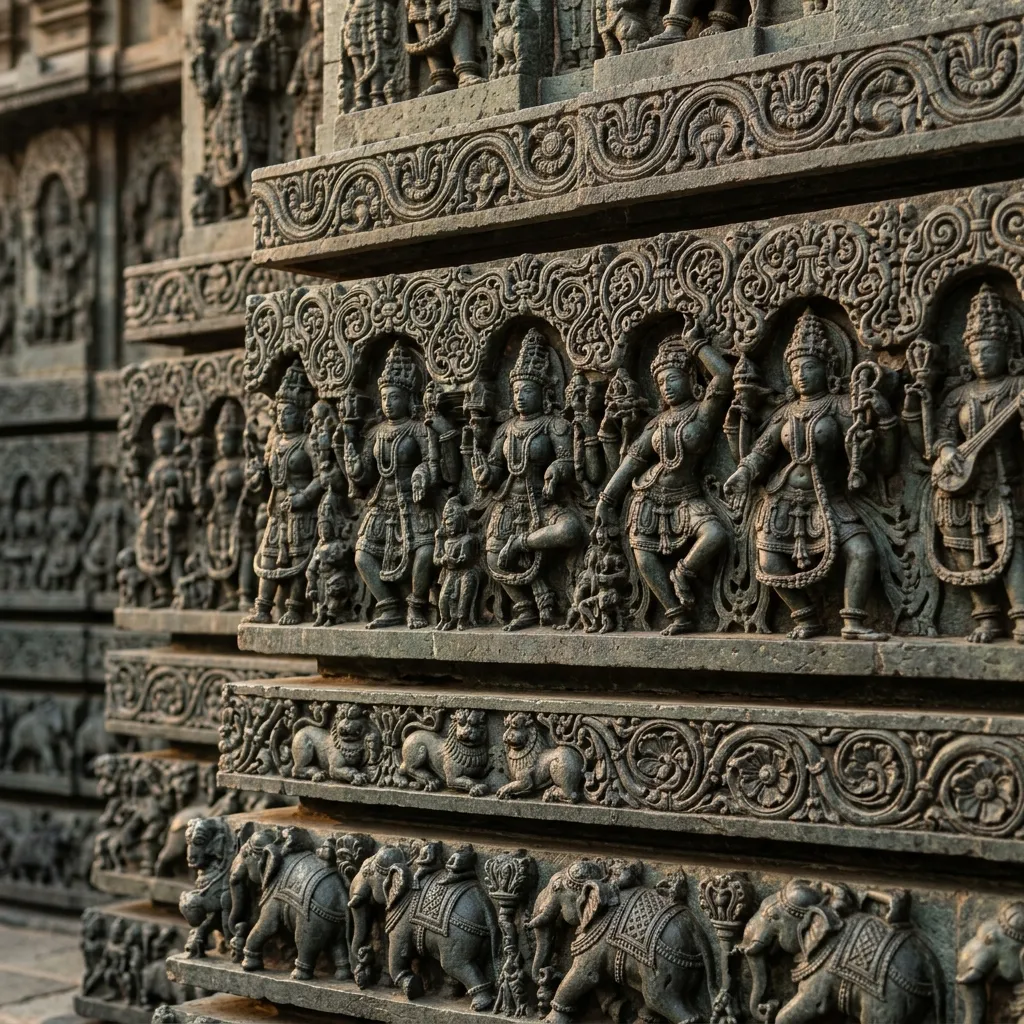
Figure 1: Intricate stone craftsmanship and architectural elements of ancient Indian rock-cut and granite temples.
The temple layout is characterized by grand spatial proportions, built within a massive rectangular enclosure measuring 240 meters by 120 meters. The entrance is marked by two towering outer gateways (gopurams)—the Keralantakan Gopuram and the Rasarasan Gopuram—adorned with expressive Chola stone sculptures. Inside the courtyard sits a monolithic Nandi statue carved from a single block of granite measuring 3.7 meters high and 4.9 meters long. The base of the main temple (adhisthana) is covered with thousands of lines of precise Tamil inscriptions (meekirthi), recording royal decrees, military expeditions, administrative grants, and the exact names, wages, and duties of hundreds of temple dancers, musicians, accountants, and bronze casters employed by the Chola state.
☀️ The Solar Chariot: Sun Temple of Konark
Enjoyed this post?
Get our weekly digest delivered free.
Perched along the Bay of Bengal coastline in Odisha, the 13th-century Sun Temple of Konark represents the absolute zenith of Kalinga temple architecture (Deula style). Commissioned around 1250 CE by King Narasimhadeva I of the Eastern Ganga Dynasty to commemorate his military victories over regional Sultanates, the temple was conceptualized as a monumental stone chariot (Ratha) carrying the Sun God, Surya, across the heavens. Crafted from dark ferruginous sandstone and green chlorite, the complex originally featured a soaring main sanctum tower (Rekha Deula) estimated to have reached 70 meters in height, alongside an intact assembly hall (Jagamohana) that rises 39 meters above the coastal plain.
The most iconic innovation of Konark lies in its exterior structural design: the elevated stone platform of the temple is mounted upon 24 intricately carved stone wheels, each measuring nearly 3 meters in diameter, pulled by a team of seven rearing stone horses symbolizing the days of the week. The wheels are not merely decorative ornaments; they are sophisticated sundials engineered with high mathematical precision. Each wheel features eight major spokes and eight minor spokes. By aligning a shadow marker at the center axle, ancient observers could tell the exact time of day down to the minute based on the position of the shadow across the carved beads along the wheel's rim.
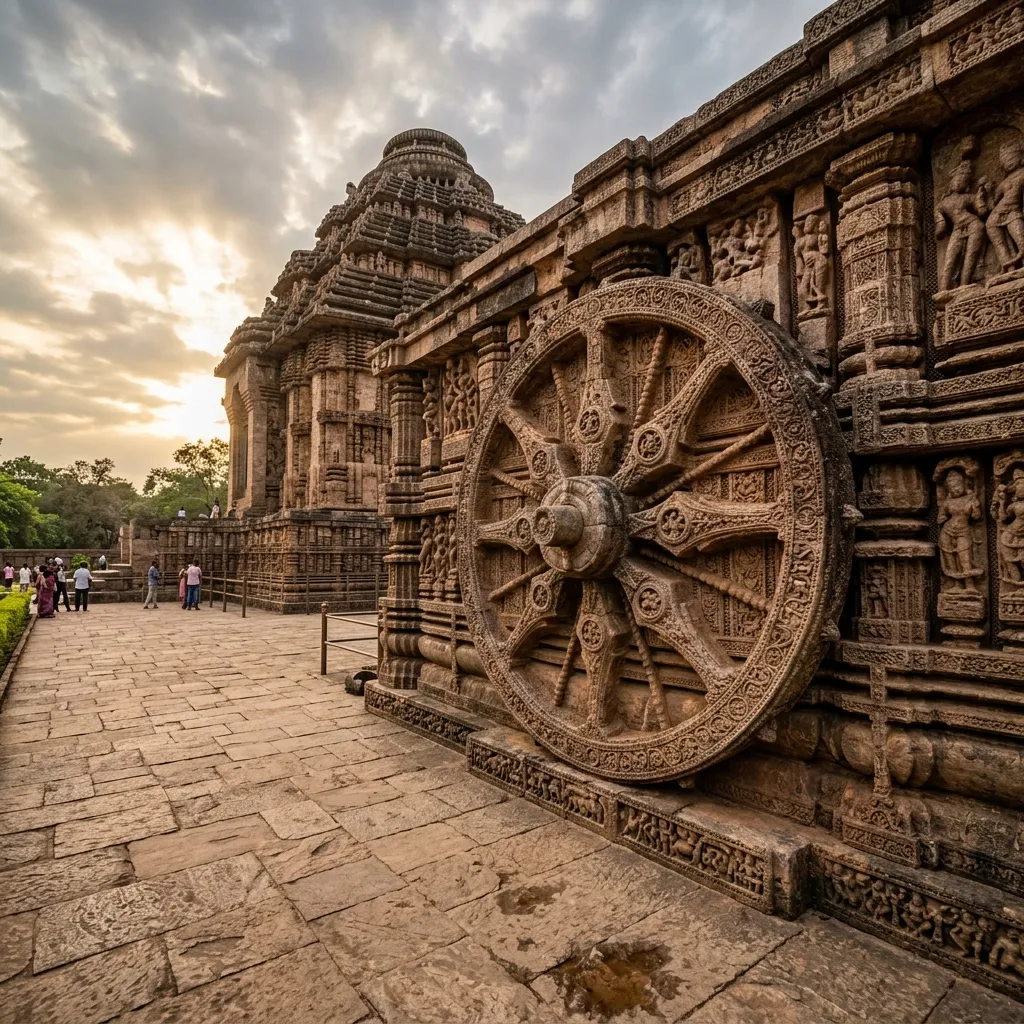
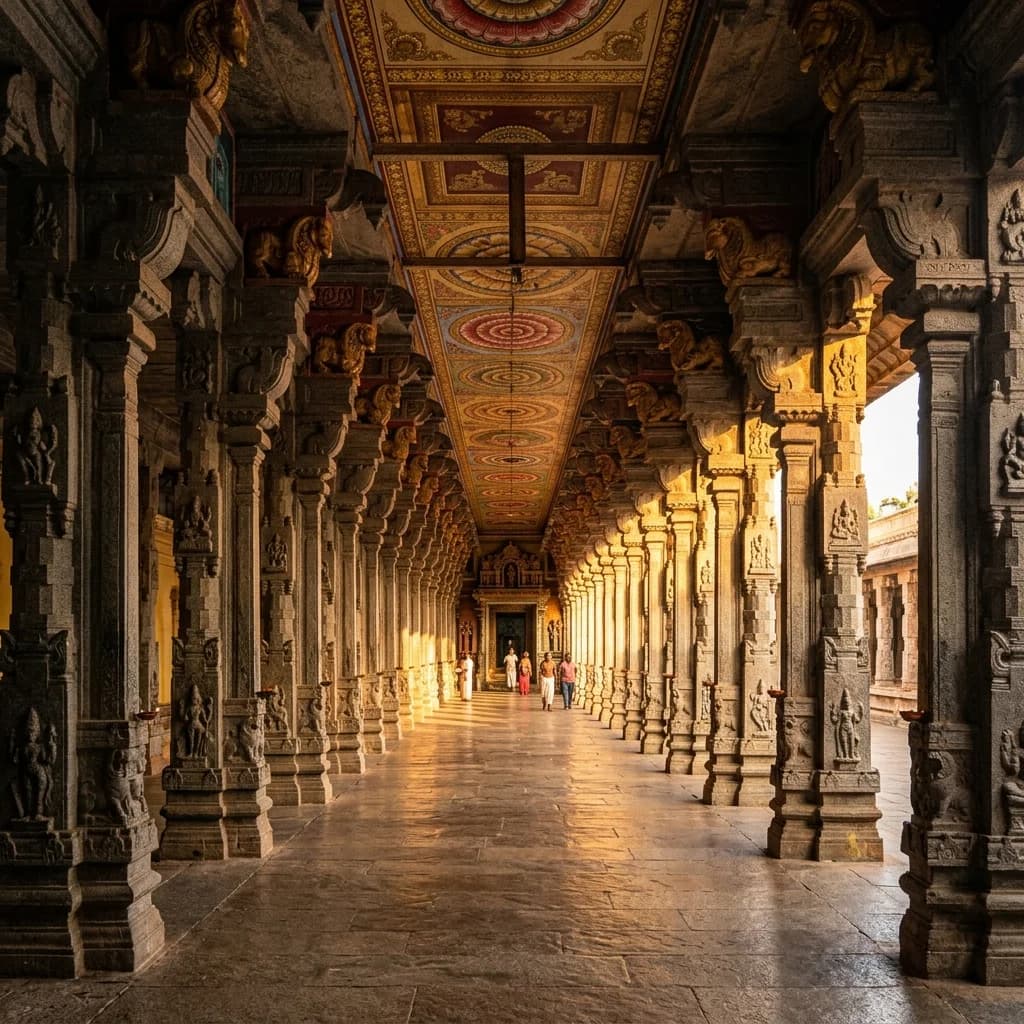
Figure 2: Architectural monumentality and stone relief carvings showcasing ancient Indian engineering prowess.
The temple's orientation is strictly synchronized with solar geometry. The primary East-West axis ensures that the first rays of the dawn sun pass directly through the main entrance gateway (Nata Mandira), illuminating the main sanctuary and the chlorite idol of Surya positioned within the inner chamber during the spring and autumn equinoxes. The outer facades of the Jagamohana and surviving plinths are completely covered in dense, expressive stone reliefs depicting courtly processions, musicians playing drums and cymbals, erotic sculptures (mithunas), real and mythical animals, and detailed scenes of medieval Odishan social life.
📌 The Bottom Line
- kailasa-temple-ellora: Excavated top-down out of a single basalt cliff face in the 8th century CE under Rashtrakuta King Krishna I, removing over 200,000 tonnes of living rock without mortar or structural joints.
- brihadeeswarar-thanjavur: Erected in 1010 CE by Chola Emperor Rajaraja I, featuring a 63.4-meter interlocking granite vimana capped by an 80-tonne monolithic stone sphere transported via a 6-km earthen ramp.
- konark-sun-temple: Designed in 1250 CE by Eastern Ganga King Narasimhadeva I as a colossal stone chariot of Surya with 24 carved sundial wheels that measure solar time with mathematical accuracy.
Knowelth publishes independently researched analysis verified against primary documentation, academic journals, and official records. To report a factual inaccuracy or request a correction, please reach out via our Contact Page.
Enjoyed this post?
Get our weekly digest delivered free.
Share this post:
Knowelth is reader-supported. We may earn a commission from links in this article at no extra cost to you. Read our disclosure.
Related Posts
Stone Chronicles of Sovereignty and Democracy: The Epigraphic Legacy of Aihole's Meguti Temple, Uttiramerur's Assembly Inscriptions, and the Royal Reliefs of Hampi's Hazara Rama
Stone Chronicles of Sovereignty and Democracy: The Epigraphic Legacy of Aihole's Meguti Temple, Uttiramerur's Assembly Inscriptions, and the Royal Reliefs of Hampi's Hazara Rama Across the diverse lan…
Monolithic Cliffs, Alpine Spires, and Chariots of Stone: The Architectural Feats of Dhamnar, Baijnath, and Melkadambur
Monolithic Cliffs, Alpine Spires, and Chariots of Stone: The Architectural Feats of Dhamnar, Baijnath, and Melkadambur Across the vast geographical expanse of the Indian subcontinent, ancient and medi…
Sacred Corridors, Interlocking Stone Chains, and Thousand-Pillar Sanctuaries: The Architectural Marvels of Rameswaram, Kanchipuram, and Moodabidri
Sacred Corridors, Interlocking Stone Chains, and Thousand-Pillar Sanctuaries: The Architectural Marvels of Rameswaram, Kanchipuram, and Moodabidri Across the Indian subcontinent, sacred architecture r…