HDFC Bank Post-Merger Synergies: Net Interest Margin Expansion, Deposit Mobilization, and Long-Term Valuation Re-Rating
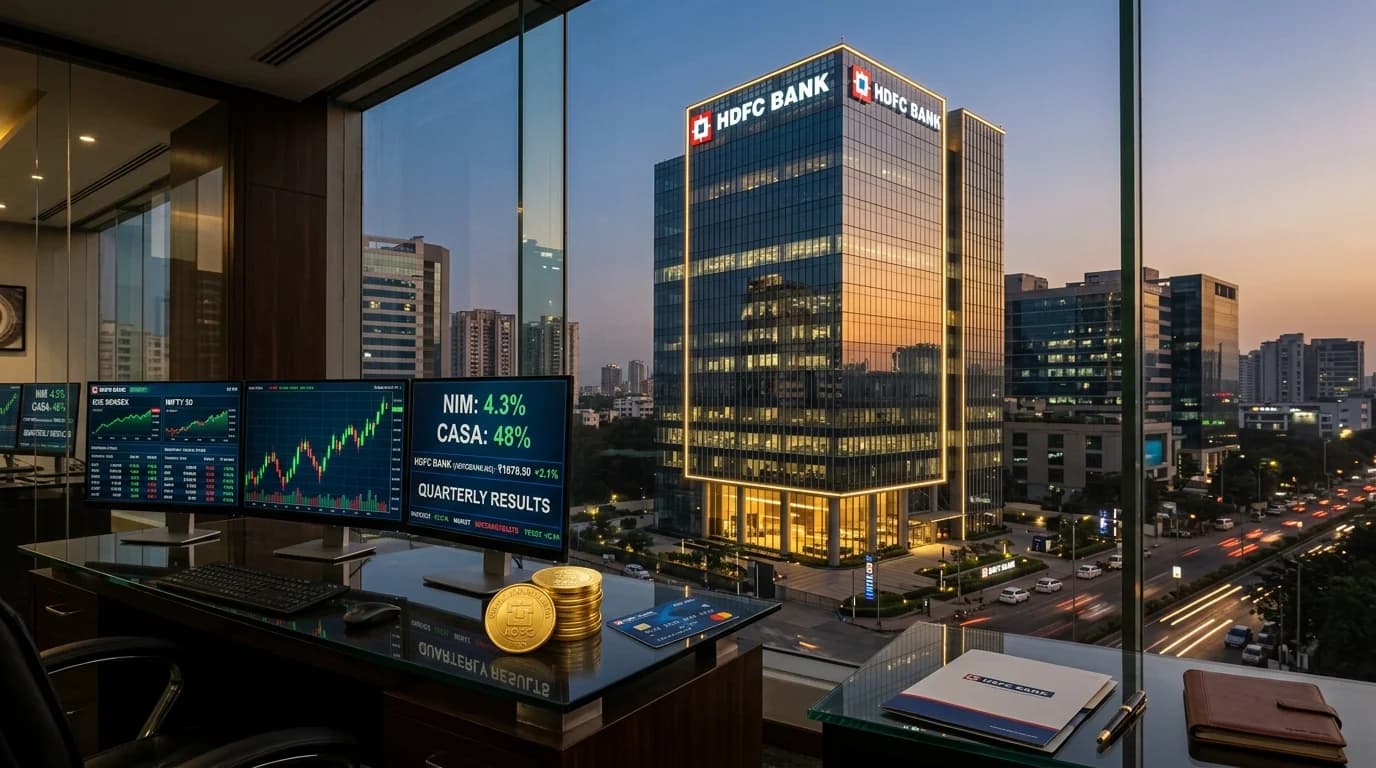
HDFC Bank Post-Merger Synergies: Net Interest Margin Expansion, Deposit Mobilization, and Long-Term Valuation Re-Rating
The merger of Housing Development Finance Corporation (HDFC Ltd) into HDFC Bank represents the most consequential structural transformation in modern Indian banking history. By creating a unified financial conglomerate commanding over ₹25 lakh crore in total assets and serving more than 100 million retail and corporate clients, the consolidated entity has redefined systemic liquidity dynamics, domestic credit transmission, and institutional portfolio weighting on Dalal Street.
Following the initial period of balance sheet assimilation, marked by temporary compression in Net Interest Margins (NIM) and elevated regulatory liquidity buffer requirements (CRR and SLR on inherited borrowings), the bank is entering a decisive secondary phase: operational synergy monetization. Through cross-selling retail liability products to millions of exclusive mortgage borrowers, optimizing cost-to-income ratios via digital distribution, and systematically replacing high-cost wholesale liabilities with granular retail Current Account and Savings Account (CASA) deposits, HDFC Bank is establishing the foundations for a multi-year valuation re-rating.
+---------------------------------------------------------------------------------------------------+
|                     HDFC BANK POST-MERGER DEPOSIT & MARGIN EXPANSION PIPELINE                     |
+---------------------------------------------------------------------------------------------------+
                                                  │
         ┌────────────────────────────────────────┼────────────────────────────────────────┐
         ▼                                        ▼                                        ▼
+──────────────────────────+             +──────────────────────────+             +──────────────────────────+
|  LIABILITY MOBILIZATION  |             | MORTGAGE CROSS-SELL ENG. |             | BALANCE SHEET OPTIMIZATION|
| • 1,500+ New Branches/Yr |             | • 70%+ Mortgage Cross-Sell|            | • High-Cost Debt Runoff  |
| • Granular Retail CASA   |             | • Bundled Insurance & MF |             | • LCR Buffer Normalization|
| • Digital Onboarding 2.0 |             | • Consumer Credit Cards  |             | • Asset Yield Re-Pricing  |
+──────────────────────────+             +──────────────────────────+             +──────────────────────────+
         │                                        │                                        │
         └────────────────────────────────────────┼────────────────────────────────────────┘
                                                  ▼
+---------------------------------------------------------------------------------------------------+
| SYNTHESIS: Structural NIM Rebound from 3.45% Toward 3.85% Driving Sustained ROA / ROE Expansion   |
+---------------------------------------------------------------------------------------------------+
🏛️ 1. Macro-Context: Balance Sheet Harmonization & Regulatory Absorption
To understand the long-term investment thesis for HDFC Bank, investors must analyze the operational friction created during the initial merger consummation. HDFC Ltd operated primarily as a non-banking housing finance company funded through long-term corporate bonds, offshore commercial borrowings, and term deposits. Upon integration, HDFC Bank was required to maintain mandatory Cash Reserve Ratio (CRR) and Statutory Liquidity Ratio (SLR) buffers across the entire inherited balance sheet, temporarily diluting yield on earning assets.
Over the past four quarters, management has executed a disciplined balance sheet transition. By allowing expensive wholesale borrowings to run off at maturity while simultaneously aggressively expanding its physical branch footprint across semi-urban and rural hinterlands, the bank has steadily rebuilt its granular retail deposit engine.
+---------------------------------------------------------------------------------------------------+
|                        MORTGAGE CUSTOMER CROSS-SELLING TRANSMISSION ARCHITECTURE                  |
+---------------------------------------------------------------------------------------------------+
 Inherited HDFC Ltd Mortgage Book (₹7.5L Cr+) ──► 70% Non-HDFC Bank Account Holders (Pre-Merger)
                                                               │
                                ┌──────────────────────────────┘
                                ▼
 [Automated CRM Branch Deployment] ──► [Pre-Approved Salary Accounts + Credit Cards + Wealth Assets]
                                                               │
                                ┌──────────────────────────────┘
                                ▼
 [Granular Low-Cost CASA Capture] ──► [Blended Cost of Funds Drops 45–60 bps] ──► [NIM Expansion]
+---------------------------------------------------------------------------------------------------+
The systemic advantage lies in customer tenure. Home loan borrowers exhibit the lowest credit default rates and highest brand stickiness across all retail credit segments. By establishing primary banking relationships with these borrowers through automated salary accounts and wealth management offerings, HDFC Bank transforms a static mortgage asset into an active, multi-product lifetime value relationship.
📊 2. Deep-Dive Financial Engineering & Metrics Analysis
A rigorous examination of HDFC Bank's income statement and balance sheet reveals accelerating momentum in core banking parameters. As retail deposit accretion outpaces wholesale credit expansion, the credit-to-deposit (CD) ratio is systematically normalizing from post-merger peaks toward management's target band of 84%–86%.
+---------------------------------------------------------------------------------------------------+
|                         HDFC BANK CONSOLIDATED KEY FINANCIAL METRICS                              |
+---------------------------------------------------------------------------------------------------+
| Parameter / Metric           | FY24 (Reported)       | FY25 (Actual)         | FY26E (Projected)  |
+------------------------------+-----------------------+-----------------------+--------------------+
| Total Advances (₹ Lakh Cr)   | 24.87                 | 28.12                 | 32.20              |
| Total Deposits (₹ Lakh Cr)   | 23.80                 | 27.65                 | 32.40              |
| CASA Ratio (%)               | 38.2%                 | 39.8%                 | 42.1%              |
| Net Interest Margin (NIM %)  | 3.44%                 | 3.62%                 | 3.82%              |
| Cost to Income Ratio (%)     | 40.8%                 | 38.9%                 | 37.4%              |
| Gross NPA Ratio (%)          | 1.24%                 | 1.18%                 | 1.10%              |
| Net NPA Ratio (%)            | 0.33%                 | 0.30%                 | 0.26%              |
| Return on Assets (ROA %)     | 1.90%                 | 2.05%                 | 2.18%              |
| Return on Equity (ROE %)     | 15.4%                 | 16.8%                 | 18.2%              |
| Capital Adequacy (CAR %)     | 18.8%                 | 19.4%                 | 19.8%              |
+---------------------------------------------------------------------------------------------------+
The expansion in Net Interest Margin from 3.44% toward 3.82% represents the primary catalyst for earnings growth. Each 10-basis-point expansion in consolidated NIM contributes approximately ₹2,600 crore in additional annual Net Interest Income (NII), translating directly into post-tax profitability without requiring incremental risk capital.
🔍 3. Comparative Matrix: Private Banking Sector Positioning
To evaluate HDFC Bank’s competitive moat, we compare its structural positioning against its primary domestic private banking peers: ICICI Bank, Axis Bank, and Kotak Mahindra Bank.
+---------------------------------------------------------------------------------------------------+
|                        INDIAN PRIVATE SECTOR MEGA-BANKS COMPARATIVE MATRIX                        |
+---------------------------------------------------------------------------------------------------+
| Feature / Metric       | HDFC Bank             | ICICI Bank           | Axis Bank            | Kotak Bank           |
+------------------------+-----------------------+----------------------+----------------------+----------------------+
| Total Assets (₹ L Cr)  | ~26.5                 | ~18.2                | ~14.8                | ~6.5                 |
| Market Share (Loans)   | 21.2% (Leader)        | 14.5%                | 11.8%                | 5.4%                 |
| Mortgage Book Share    | 54% of Retail Loans   | 34% of Retail Loans  | 30% of Retail Loans  | 28% of Retail Loans  |
| Branch Network Size    | 8,800+                | 6,500+               | 5,300+               | 1,900+               |
| Tech Architecture      | Core Banking 2.0 Hybrid| iMobile Enterprise  | Open Banking Stack   | 811 Core Modernized  |
| 3-Yr EPS CAGR (Proj.)  | 17.5%                 | 15.2%                | 14.8%                | 13.9%                |
| Price to Book (P/B)    | 2.45x                 | 3.10x                | 1.95x                | 2.65x                |
+---------------------------------------------------------------------------------------------------+
While ICICI Bank traded at a valuation premium throughout 2024–2025 due to rapid NIM expansion and superior near-term return metrics, HDFC Bank's massive scale, distribution lead, and depressed price-to-book multiple (2.45x vs historical 10-year average of 3.6x) create an asymmetric risk-reward profile for long-term institutional allocators.
📈 4. Technical Architecture: Branch Distribution & Digital Stack
HDFC Bank’s operational efficiency is underpinned by its modernized "Core Banking 2.0" digital architecture. By decoupling front-end customer interaction microservices from legacy transaction processing backends, the bank processes over 85 million digital transactions daily with 99.99% system availability.
+---------------------------------------------------------------------------------------------------+
|                         HDFC BANK ENTERPRISE DIGITAL ARCHITECTURE                                 |
+---------------------------------------------------------------------------------------------------+
 [Client Channels: Mobile, Web, Branch, Corporate API Gateway]
                              │
                              ▼
 [API Management Layer: Real-Time Tokenization & Identity Gateway]
                              │
         ┌────────────────────┴────────────────────┐
         ▼                                         ▼
 [Microservices Ecosystem]               [Real-Time Analytics & Fraud Shield]
 • Instant KYC / Video Verification      • Graph Neural Network Fraud Detection
 • Pre-Approved Loan Underwriting Engine • Behavioral Risk Scoring Engine
 • Cross-Sell Recommendation Matrix      • Dynamic Credit Limit Adjuster
         │                                         │
         └────────────────────┬────────────────────┘
                              ▼
 [Distributed Core Banking Engine (High-Throughput Ledger & Settlement)]
+---------------------------------------------------------------------------------------------------+
This digital infrastructure enables the bank to approve and disburse personal loans, credit cards, and micro-business credit lines in under 120 seconds for pre-approved customers, driving customer acquisition costs down by 42% relative to traditional branch-based workflows.
📌 The Bottom Line & Actionable Takeaways
+---------------------------------------------------------------------------------------------------+
|                              TOPIC SLUG ALIGNED STRATEGIC TAKEAWAYS                               |
+---------------------------------------------------------------------------------------------------+
| Topic Slug                     | Core Actionable Investment Takeaway                              |
+--------------------------------+------------------------------------------------------------------+
| hdfc-bank-valuation            | Accumulate during consolidation; multiple re-rating target 3.2x P/B|
| net-interest-margin-expansion  | NIM inflection to drive 17%+ EPS CAGR across FY26–FY28.          |
| deposit-mobilization-strategy  | Branch expansion of 1,500 units/yr captures dominant retail CASA.|
| banking-sector-analysis        | Mega-cap banking consolidation favors leaders with AAA funding.  |
| indian-equities-research       | Core portfolio anchor stock for long-term compounding in Nifty 50|
+---------------------------------------------------------------------------------------------------+
💡 Portfolio Allocation Strategy:
- Accumulation Range: ₹1,580 – ₹1,680 per share.
- Medium-Term Target (24–36 Months): ₹2,350 – ₹2,500 (implying a 42%–52% upside potential as ROE crosses 18%).
- Key Downside Risks to Monitor: Persistent systemic deposit competition elevating funding costs; sudden spikes in unsecured retail slippages; regulatory increases in risk weights on personal credit.
📫 Subscribe to India Equities Deep Dives
Get institutional-grade equity research, corporate governance breakdowns, and valuation models delivered directly to your inbox every week.
Subscribe to Knowelth Markets Brief →
Disclosure: This analysis is published purely for informational and educational purposes and does not constitute financial, investment, or legal advice. If you purchase through our links, Knowelth may earn an affiliate commission at no additional cost to you.
Enjoyed this post?
Get our weekly digest delivered free.
Share this post:
Knowelth is reader-supported. We may earn a commission from links in this article at no extra cost to you. Read our disclosure.
Related Posts

ITC Limited Demerger Analysis: Hotel Business Value Unlocking, FMCG Operating Leverage, and Cash Flow Yield
ITC Limited Demerger Analysis: Hotel Business Value Unlocking, FMCG Operating Leverage, and Cash Flow Yield ITC Limited, one of India’s foremost multi-business conglomerates operating across consumer …
Bharti Airtel Equity Analysis: 5G Network Monetization, ARPU Scaling Past ₹230, and Nxtra AI Data Center Expansion
Bharti Airtel Equity Analysis: 5G Network Monetization, ARPU Scaling Past ₹230, and Nxtra AI Data Center Expansion Bharti Airtel Limited, one of the world's leading telecommunications and digital comm…
SIP vs Lump-Sum: The 20-Year Mathematical Truth for Indian Investors
SIP vs Lump-Sum: The 20-Year Mathematical Truth for Indian Investors Every market cycle in India sparks the exact same debate among retail investors, mutual fund distributors, chartered accountants, a…