Nifty Hits 24,270 on Softer US Jobs Data, SEBI Imposes CUSPA Auto-Pledge Rules, and FIIs Inject ₹1,355 Crore
Nifty Hits 24,270 on Softer US Jobs Data, SEBI Imposes CUSPA Auto-Pledge Rules, and FIIs Inject ₹1,355 Crore
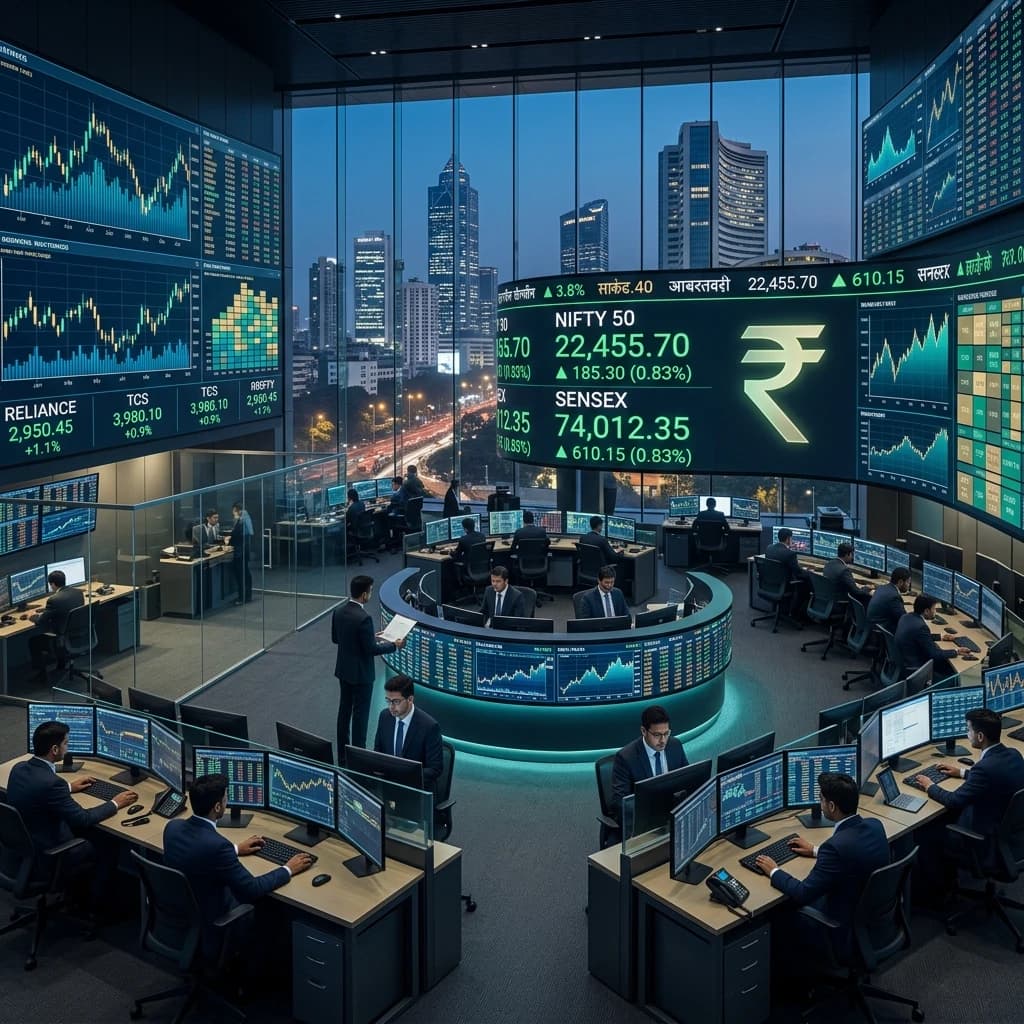
The Indian financial markets closed the first week of July on a positive note, securing their third consecutive daily gain on July 3, 2026, as cooling U.S. labor market data eased concerns over prolonged monetary tightening. Beneath the optimistic equity indices, stockbrokers braced for a major structural change after the Securities and Exchange Board of India (SEBI) released a sweeping new circular revising the handling of client-unpaid securities. Meanwhile, institutional dynamics saw a significant pivot, with Foreign Institutional Investors (FIIs) returning as net buyers to the cash segment.
📊 Nifty and Sensex Secure Third Day of Gains Led by IT and Soft US Jobs Data
Domestic benchmark indices extended their winning streak on Friday, July 3, 2026, supported by positive global cues and robust buying in heavyweights. The NSE Nifty 50 advanced by 95.15 points, or 0.39%, to settle at a fresh high of 24,270.85. Similarly, the 30-share BSE Sensex gained 261.79 points, or 0.34%, closing the session at 77,763.91. Market breadth favored gainers, reflecting a healthy risk-on sentiment across broader markets.
The primary driver of Friday's rally was a softer-than-expected jobs report from the United States, which showed a cooling labor market. June 2026 US non-farm payrolls came in at 145,000 — below the consensus estimate of 185,000 — and the US unemployment rate ticked up to 4.1%. This macroeconomic print reinforced investor expectations that the Federal Reserve might initiate interest rate cuts sooner than previously anticipated. The prospect of easing global interest rates triggered buying across rate-sensitive and export-oriented sectors, particularly technology and real estate.
The Nifty IT index led the charge, rising 1.76%, with major IT giants like Tata Consultancy Services (TCS), Infosys, and HCLTech registering solid gains. The linkage between US labor market softness and Indian IT stocks is well-established: when the US economy slows modestly (but doesn't enter recession), US enterprises continue IT spending while the Fed begins to ease — a "Goldilocks" scenario for Indian IT companies that earn the majority of their revenue from US clients.
The banking sector lagged, keeping broader benchmarks in check. The Nifty Bank index ended the day lower by 0.16% at 57,938.50, weighed down by public sector lenders facing short-term margin pressures. The Indian Rupee remained stable in the 95.23–95.29 range against the US Dollar, which further anchored investor confidence.
🔬 Technical Analysis: Nifty at 24,270 — Breaking Into New Monthly High Territory
The Nifty 50's close at 24,270.85 represents a new high for July 2026 and the highest close since the May 2026 peak. The index is now operating decisively above all major moving averages:
- 20-day EMA: ~23,980 (price is 1.2% above)
- 50-day EMA: ~24,050 (price is 0.9% above)
- 100-day EMA: ~23,750 (price is 2.2% above)
- 200-day EMA: ~23,850 (price is 1.8% above)
This "price above all EMAs" alignment is the most bullish technical structure an index can exhibit. The RSI-14 stands at 55.8 — firmly in bullish territory without being overbought. The next meaningful resistance for the Nifty 50 is at 24,500, which coincides with the upper Bollinger Band and the July 2026 pre-correction swing high.
🛡️ SEBI Mandates Auto-Pledge for Unpaid Securities to Curb Broker Misuse
In a major regulatory overhaul designed to safeguard retail client assets, SEBI on July 3, 2026, issued a landmark circular revising the operational guidelines for unpaid client securities. Under the new CUSPA (Client Unpaid Securities Pledgee Account) framework, if a client fails to pay for purchased securities outside the Margin Trading Facility, the Trading Member (TM) will no longer be allowed to hold these shares in their own accounts.
Instead, the securities will be credited directly to the client's demat account and automatically pledged in favor of the broker's CUSPA — a ring-fenced account maintained by the clearing corporation, not the broker itself. The key investor protection elements are:
- 5-day resolution window: Clients have exactly five trading days from pay-out to either pay for the securities or authorise their sale.
- Auto-liquidation: If the client doesn't respond within 5 days, the broker must liquidate the pledged securities in the open market. Proceeds first recover the broker's dues; any surplus is credited to the client's account.
- No broker misuse: The securities cannot be used by the broker for proprietary trading, margin lending, or pledge to any other party while they are in CUSPA status.
- Client notification: Brokers must communicate the CUSPA policy in writing to all clients before implementation.
This circular directly addresses a pattern of abuse that surfaced during multiple broker insolvencies in 2019–2024, where client securities worth thousands of crores were found pledged to bank lenders without client knowledge. SEBI's CUSPA framework creates an immutable chain of custody, ensuring that retail investors' share purchases are protected even if their broker faces financial distress.
The phased implementation — operational procedures three months after exchange guidelines are issued, remaining clauses in six months — gives brokers adequate time to rebuild their settlement infrastructure.
💸 Institutional Pivot: FIIs Return with ₹1,355 Crore Inflow as DIIs Book Profits
The institutional flow dynamic underwent a complete reversal on July 3, 2026, as foreign portfolio managers turned aggressive buyers while domestic mutual funds and insurers chose to book profits. According to provisional exchange data, Foreign Institutional Investors (FIIs) recorded net inflows of ₹1,355.33 crore in the cash segment — the largest single-day FII net buy in over two weeks.
This influx of foreign capital was catalysed by the cooling U.S. labor market data, which renewed global risk appetite for emerging market equities. India, with its GDP growth rate of 7%+, improving fiscal trajectory, and stable macro fundamentals, typically sees above-average FII inflows relative to EM peers during global risk-on episodes.
Conversely, Domestic Institutional Investors (DIIs) emerged as net sellers, registering a net outflow of ₹1,953.89 crore. DIIs, who have been the primary pillar of the domestic market rally over the last few quarters, trimmed positions in overvalued mid-cap and large-cap segments to lock in gains. This is standard institutional portfolio rebalancing behaviour — domestic funds accumulate on dips and book profits at highs, while simultaneously receiving new SIP inflows (₹23,000+ crore monthly) that need to be deployed on subsequent pullbacks.
The FII/DII institutional swap on July 3 represents a total flip from July 2, where DIIs had pumped in ₹3,159.20 crore while FIIs had pulled out ₹1,140.50 crore. The return of FIIs as net buyers is seen as a critical validation of the rally's sustainability — markets can sustain multi-session winning streaks primarily on DII support, but a genuine trend continuation typically requires FII participation.
💡 Investor Takeaway: US Jobs Data + FII Return = Near-Term Bullish Setup
The confluence of three events on July 3 — soft US jobs data, FII net buying, and the Nifty 50 closing at a new monthly high — creates a constructive near-term setup:
Why this matters for the next 2 weeks:
- Soft US labor data increases the probability of a September 2026 Fed rate cut → weaker USD → stronger EM currencies and equities
- FII return to buying from sustained selling is a significant sentiment shift — it typically precedes a 3–5% rally in the Nifty 50 if macro conditions hold
- Pre-earnings season optimism: TCS Q1 FY27 results on July 10 are expected to be strong (driven by AI contract wins), which would catalyse further IT sector re-rating
Sectors to watch for the next 2 weeks:
- IT (overweight): Direct beneficiary of soft US labor data, Fed cut expectations, and strong TCS earnings template
- Real estate (overweight): Rate cut expectations boost affordability; domestic DII flows support sector
- Banking (neutral): Wait for HDFC Bank Q1 results in mid-July before adding exposure
📌 The Bottom Line
- nifty-sensex-rally: The NSE Nifty 50 rose 0.39% to a new monthly high of 24,270.85 on soft US non-farm payrolls (145K vs. 185K est.), led by Nifty IT's 1.76% gain. All major EMAs are now below the index — a textbook bullish alignment.
- sebi-unpaid-securities: SEBI's CUSPA framework mandates auto-pledging of unpaid client securities in a ring-fenced account with a strict 5-day resolution window, blocking broker misuse and protecting retail investors in insolvency scenarios.
- fii-dii-flows: FIIs became net buyers injecting ₹1,355.33 crore (the largest single-day FII net buy in 2+ weeks), while DIIs booked profits at ₹1,953.89 crore — a classic pattern indicating institutional consensus that the market is at attractive levels for foreign capital.
📬 Stay Updated
Get India market analysis delivered to your inbox every trading day. Subscribe to our free newsletter →
Disclosure: This post contains affiliate links. If you purchase through our links, we earn a small commission at no extra cost to you. We only recommend products we believe in.
Enjoyed this post?
Get our weekly digest delivered free.
Share this post:
Knowelth is reader-supported. We may earn a commission from links in this article at no extra cost to you. Read our disclosure.
Related Posts
India Markets Daily: Sensex Rebounds to 78,080 as Nifty Drags, RBI Proposes Loan Reset Rules, FIIs Sell ₹1,006 Cr
India Markets Daily: Sensex Rebounds to 78,080 as Nifty Drags, RBI Proposes Loan Reset Rules, FIIs Sell ₹1,006 Cr Indian financial markets navigated a divergent trading session on August 13, 2026, as …
India Markets Update: Nifty Drops Below 24,450 Amid Oil Spike, RBI Holds Repo Rate at 5.25%, and FII Inflows Resume
India Markets Update: Nifty Drops Below 24,450 Amid Oil Spike, RBI Holds Repo Rate at 5.25%, and FII Inflows Resume Indian benchmark indices drifted lower for a second consecutive session as global en…

Nifty Snaps 4-Day Rally as Pre-RBI Policy Jitters & Crude Surge Trigger Profit Booking; Bharti Airtel Q1 Profit Soars 37%
Nifty Snaps 4-Day Rally as Pre-RBI Policy Jitters & Crude Surge Trigger Profit Booking; Bharti Airtel Q1 Profit Soars 37% Indian benchmark equity indices snapped their four-session winning streak on A…