Sagittarius A* Cosmic Wind, Siri's Gemini-Powered Rebirth, and SpaceX's Historic Nasdaq Debut
Sagittarius A* Cosmic Wind, Siri's Gemini-Powered Rebirth, and SpaceX's Historic Nasdaq Debut
Welcome to today's second digest, where we examine the dynamics of galactic center outflows, the massive corporate alliances redefining consumer artificial intelligence, and the market aftermath of the largest public listing in financial history. Today, we cover the landmark observation of a cosmic wind emanating from the Milky Way's supermassive black hole, Apple's blockbuster WWDC integration of Google's Gemini into Siri, and the trading debut of SpaceX on the Nasdaq exchange under the ticker SPCX. Here are the key stories you need to know today, June 15, 2026.
🔬 Science: Galactic Outflows and Black Hole Dynamics
ALMA Maps Persistent Cosmic Wind Carving Cavity Around Sagittarius A*
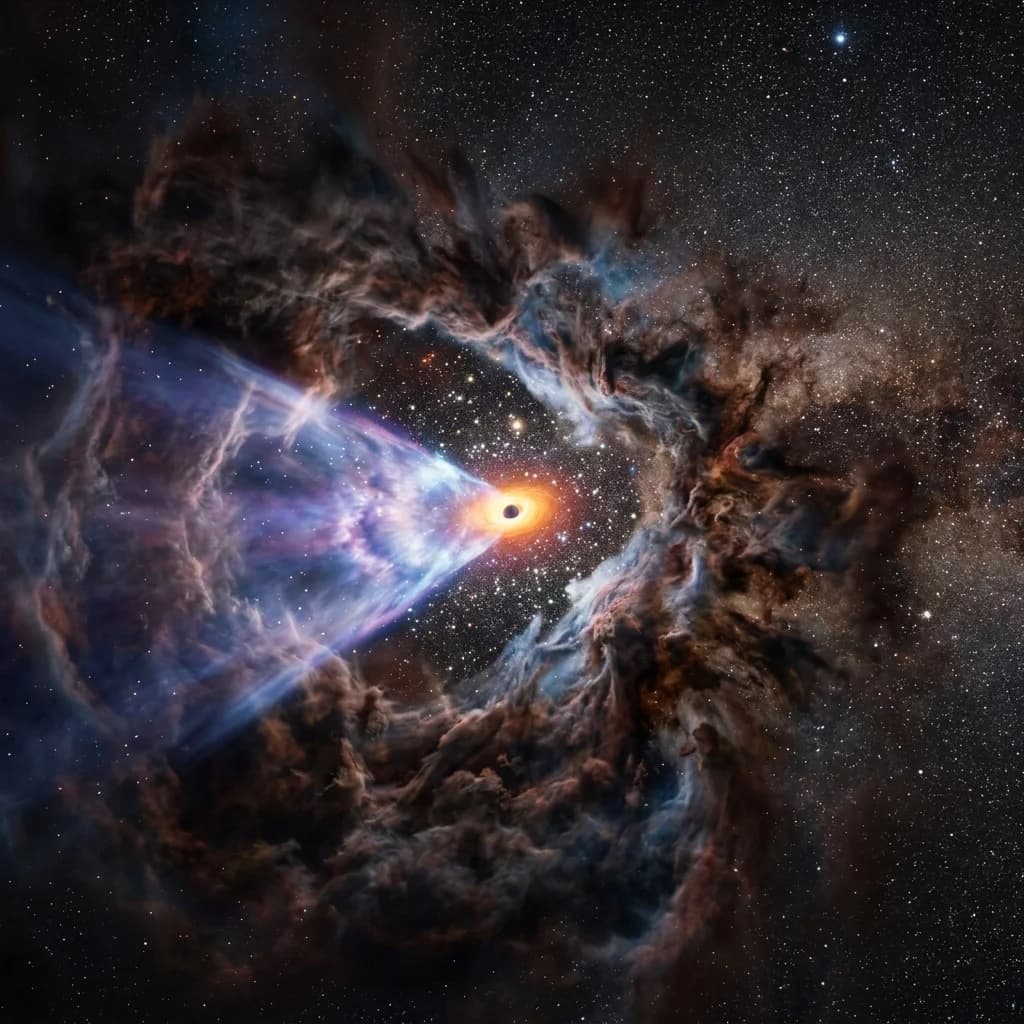
In a major milestone for observational astrophysics, researchers have successfully mapped the first direct evidence of a persistent cosmic wind blowing from Sagittarius A* (Sgr A*), the supermassive black hole at the center of the Milky Way. Using the Atacama Large Millimeter/submillimeter Array (ALMA) in Chile, astronomers analyzed the distribution of cold carbon monoxide gas within a few light-years of the galactic center. By developing advanced modeling techniques to subtract the intense, disruptive radio glare of the black hole itself, the team identified a giant, cone-shaped cavity carved into the surrounding molecular clouds. This cavity, which is filled with hot, thin X-ray-emitting gas detected by NASA’s Chandra X-ray Observatory, represents the unmistakable physical imprint of the black hole's outflows.
Unlike active galactic nuclei (AGN) in distant galaxies that blast massive, high-velocity plasma jets into intergalactic space, Sgr A* exists in a relatively quiet, quiescent state. The detected wind acts more like a gentle, steady galactic breeze, offering scientists a rare opportunity to study the baseline behavior of typical supermassive black holes. Published in The Astrophysical Journal Letters, the study concludes a five-year investigation that involved over 100 hours of telescope observations. These findings are crucial for refining models of galactic feedback, showing how even quiet black holes can slowly regulate star formation by blowing away the cold gas reservoirs necessary to birth new stars, thereby directly shaping the long-term evolution of their host galaxies.
💻 Technology: Consumer AI and Ecosystem Keynotes
Apple Rebuilds Siri AI Powered by Google's 1.2-Trillion-Parameter Gemini Model
At its Worldwide Developers Conference (WWDC) 2026, Apple announced a ground-up reconstruction of its virtual assistant, Siri AI, utilizing a custom 1.2-trillion-parameter Gemini model licensed from Google in a deal valued at approximately $1 billion annually. To maintain Apple’s strict user privacy guarantees, the system utilizes a tiered, privacy-first processing architecture. Routine tasks are handled locally by Apple's on-device foundation models. More complex requests are routed to Apple's Private Cloud Compute infrastructure. The heaviest reasoning and global knowledge queries are sent to Google Cloud, where they run within secure, hardware-encrypted environments—leveraging Nvidia’s confidential computing capabilities on Blackwell GPU architectures—ensuring that data remains stateless and is never retained or used to train Google's models.
This partnership marks a dramatic shift in Apple’s artificial intelligence strategy, accelerating its transition into the competitive "agentic" software space. The rebuilt Siri AI now features a highly conversational interface, cross-application operational capabilities, and deep contextual awareness of personal user data. Industry analysts note that this licensing agreement allows Apple to bypass the massive capital expenditure required to train an ultra-large-scale model from scratch, while simultaneously cementing Google’s position as the premier cloud intelligence provider. The announcement also carries historical weight as the final WWDC keynote delivered by Tim Cook, ahead of John Ternus taking the reins as CEO on September 1, 2026.
📈 Market: Private-to-Public Transitions and Space Valuations
SpaceX Debuts on Nasdaq as SPCX, Reaching $2.1 Trillion in Historic Pop
In the most anticipated public offering in financial history, SpaceX officially began trading on the Nasdaq exchange on Friday, June 12, under the ticker symbol SPCX. The company priced its initial public offering at $135 per share, raising $75 billion and establishing an initial valuation of $1.75 trillion. Driven by a massive wave of retail demand—spurred by SpaceX’s unusual decision to reserve up to 30% of the float for individual investors—and intense institutional bidding, the stock opened at $152 and climbed steadily to close its first day of trading at $160 per share. This 18.5% pop pushed the aerospace giant's market capitalization past $2.1 trillion, ranking it among the most valuable companies on the planet.
The public listing consolidates SpaceX's core Falcon launch and Starship development divisions, the Starlink satellite internet constellation, and the recently integrated xAI artificial intelligence venture. While some corporate governance advocates raised concerns over the dual-class share structure, which leaves Elon Musk with roughly 85% of shareholder voting power despite the public float, the market's reception was overwhelmingly positive. The blockbuster debut injected strong upward momentum into the broader technology and industrial indices, helping to stabilize equity markets after a volatile week dominated by geopolitical tensions in the Middle East and concerns over energy-driven global inflation.
The Bottom Line
- Science: Astronomers utilize ALMA and Chandra observations to map a persistent cosmic wind blowing from Sagittarius A*, proving how quiet supermassive black holes regulate star formation by carving out nearby cold gas.
- Technology: Apple partners with Google to rebuild Siri AI using a custom 1.2-trillion-parameter Gemini model, deploying a tiered, privacy-first cloud architecture to enable secure, agentic workflows.
- Market: SpaceX makes a historic debut on the Nasdaq under SPCX, closing at $160 per share to reach a $2.1 trillion valuation as massive retail and institutional demand absorbs the record-breaking IPO.
Enjoyed this post?
Get our weekly digest delivered free.
Share this post:
📌 Disclosure: This post may contain affiliate links. If you make a purchase through our links, we may earn a commission at no extra cost to you. We only recommend products we believe in. See our Affiliate Disclosure.
Related Posts

U.S.-Iran Military Escalation, 3.2-Billion-Year-Old Enzymes Reconstructed, and Apple's $30 Billion U.S. Chip Deal
U.S.-Iran Military Escalation, 3.2-Billion-Year-Old Enzymes Reconstructed, and Apple's $30 Billion U.S. Chip Deal A dramatic military escalation in the Middle East has disrupted global energy markets,…

NATO Summit in Ankara, Saudi Arabia's Historic Crude Oil Price Slashes, and World's First Sub-1 GHz Massive MIMO 5G Network
NATO Summit in Ankara, Saudi Arabia's Historic Crude Oil Price Slashes, and World's First Sub-1 GHz Massive MIMO 5G Network July 7, 2026, represents a landmark day for international security allian…

UN AI Governance Summit, ISRO PSLV Resumption, and Norway's Historic World Cup Triumph
UN AI Governance Summit, ISRO PSLV Resumption, and Norway's Historic World Cup Triumph On July 6, 2026, the global landscape reflects a dynamic convergence of international policy, technological br…