Black Hole Stars, Grid-Scale Sodium-Ion Batteries, and Chair Warsh's FOMC Debut
Black Hole Stars, Grid-Scale Sodium-Ion Batteries, and Chair Warsh's FOMC Debut
Welcome to today's digest, where we analyze the intersections of cosmic-scale structural formation, grid-scale energy transitions, and the macroeconomic changes reshaping global financial markets. Today, we cover the cosmological model of "black hole stars" explaining early universe black hole growth, Peak Energy's partnership to deploy sodium-ion batteries for grid storage, and the opening session of the Federal Reserve's FOMC meeting under new Chairman Kevin Warsh. Here are the key stories you need to know today, June 16, 2026.
🔬 Science: Cosmological Structures and Dark Matter
Black Hole Stars Offer Solution to Early Universe Growth Paradox
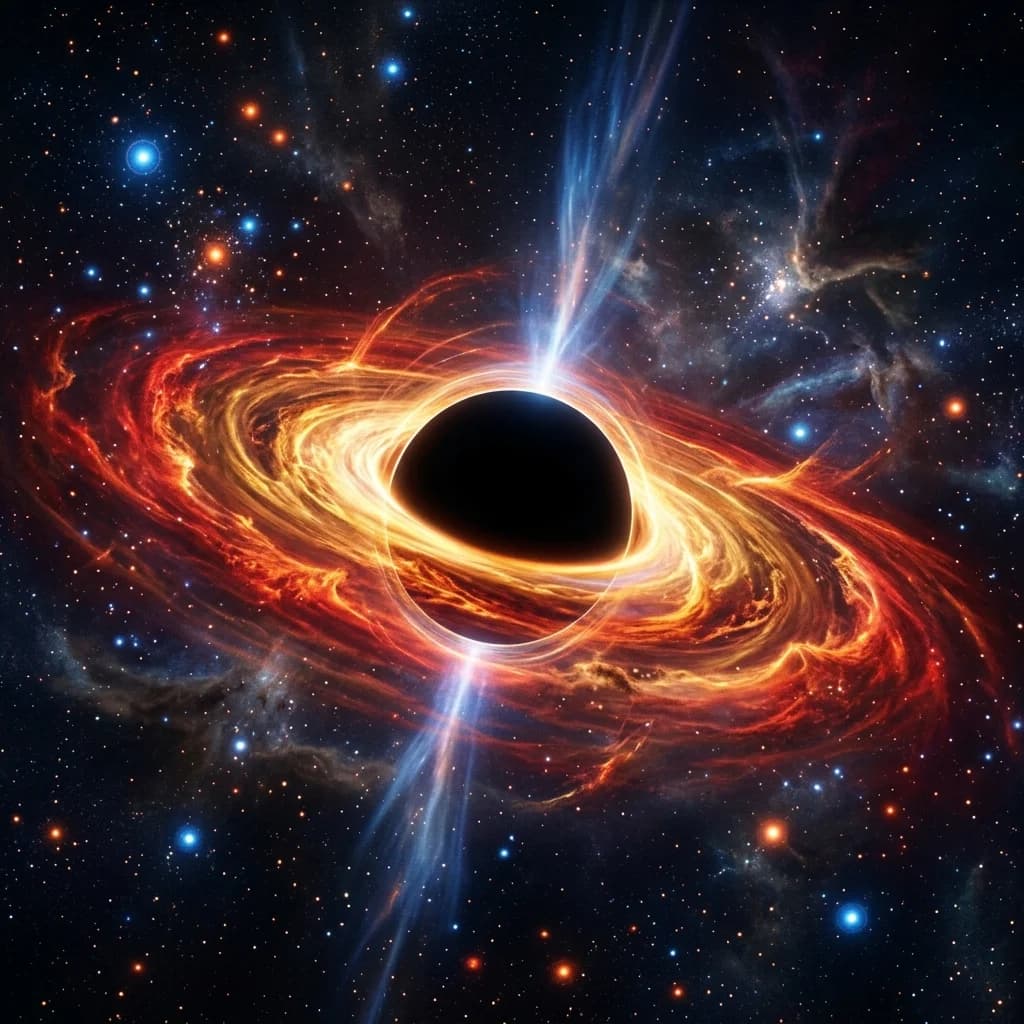
In a major advancement for observational cosmology, researchers have proposed the "black hole star" (or "quasi-star") model to explain how supermassive black holes in the early universe grew so large, so quickly. Recent observations from the James Webb Space Telescope (JWST) have revealed massive black holes existing just a few hundred million years after the Big Bang, challenging standard theories of stellar-remnant accretion. The direct-collapse model suggests that giant gas clouds collapsed directly into black holes, which were then enveloped by massive, cooling stellar envelopes that continuously fed the central singularity at rates exceeding the standard Eddington limit.
This framework resolves a significant cosmological paradox, demonstrating that these early supermassive black holes did not evolve from small stellar remnants but formed concurrently with the first generation of stars. Astrophyisicists suggest that these cocooned black holes would radiate heavily in the infrared spectrum, which aligns with the enigmatic "little red dots" detected in deep space. Published in a prominent astrophysical journal, these findings reframe the understanding of early galactic feedback loops, demonstrating how these primordial structures influenced surrounding gas to shape the architecture of the modern universe.
💻 Technology: Grid-Scale Storage and Energy Security
Sodium-Ion Battery Partnerships Target Data Center Grid Integration
Addressing the increasing power demands of hyperscale computing facilities, Peak Energy has entered a strategic partnership to develop and deploy sodium-ion battery cells for grid-scale energy storage. While lithium-ion batteries remain the standard for consumer electronics and electric vehicles, their high cost, supply chain vulnerabilities, and thermal stability risks make them less ideal for massive, stationary applications. Sodium-ion battery chemistry utilizes abundant sodium minerals to offer a safer, more sustainable alternative that is highly stable across diverse operational temperatures.
The partnership aims to build modular, megawatt-class storage units situated adjacent to major data centers and clean energy generation sites. These installations will act as critical buffers, absorbing surplus power during low-demand periods and discharging it to support intensive compute clusters during peak hours. By eliminating dependency on imported cobalt, nickel, and lithium, the initiative aims to build resilient energy infrastructure for the high-performance computing sector. Industry analysts suggest that large-scale sodium-ion deployment could represent a major breakthrough in making AI data centers grid-compatible and operationally carbon-neutral.
📈 Market: Central Bank Policy and Macro Trends
Chair Warsh Commences First FOMC Meeting Amid Rate Uncertainty
The Federal Open Market Committee (FOMC) has officially commenced its two-day policy meeting, marking the debut of Kevin Warsh as Federal Reserve Chairman. Financial markets remained highly cautious, with bond yields stabilizing near multi-month highs as investors adjusted portfolios for a prolonged period of high borrowing costs. Driven by headline inflation running at a persistent 4.2% annual rate, market participants have discounted any near-term rate cuts, focusing instead on the Fed's qualitative policy guidance and statement language.
Speculation is rising on Wall Street that Chairman Warsh will use his inaugural meeting to introduce significant changes to the Federal Reserve's communication strategy. Analysts expect the central bank to begin phasing out the individual rate projections known as the "dot plot" in favor of scenario-based qualitative guidance. Such a shift is intended to reduce the short-term market volatility associated with individual rate projections while providing clearer pathways under varying inflation and labor market conditions. Equity indices remained range-bound throughout the session, reflecting the high stakes of this policy transition.
The Bottom Line
- Science: The "black hole star" hypothesis explains how primordial supermassive black holes grew rapidly by feeding on giant stellar gas envelopes, solving a major early universe cosmological paradox.
- Technology: Peak Energy partners to deploy sodium-ion batteries for grid-scale data center storage, providing a safer and more sustainable alternative to lithium-ion chemistry.
- Market: The Federal Reserve begins its June meeting under Chairman Kevin Warsh, with persistent inflation cementing expectations of a steady benchmark rate and potential communication reforms.
Enjoyed this post?
Get our weekly digest delivered free.
Share this post:
📌 Disclosure: This post may contain affiliate links. If you make a purchase through our links, we may earn a commission at no extra cost to you. We only recommend products we believe in. See our Affiliate Disclosure.
Related Posts

U.S.-Iran Military Escalation, 3.2-Billion-Year-Old Enzymes Reconstructed, and Apple's $30 Billion U.S. Chip Deal
U.S.-Iran Military Escalation, 3.2-Billion-Year-Old Enzymes Reconstructed, and Apple's $30 Billion U.S. Chip Deal A dramatic military escalation in the Middle East has disrupted global energy markets,…
NATO Summit in Ankara, Saudi Arabia's Historic Crude Oil Price Slashes, and World's First Sub-1 GHz Massive MIMO 5G Network
NATO Summit in Ankara, Saudi Arabia's Historic Crude Oil Price Slashes, and World's First Sub-1 GHz Massive MIMO 5G Network July 7, 2026, represents a landmark day for international security allian…

UN AI Governance Summit, ISRO PSLV Resumption, and Norway's Historic World Cup Triumph
UN AI Governance Summit, ISRO PSLV Resumption, and Norway's Historic World Cup Triumph On July 6, 2026, the global landscape reflects a dynamic convergence of international policy, technological br…