Topological Superconductors, Autonomous DevSecOps Swarms, and the Fed's Qualitative Rally
Topological Superconductors, Autonomous DevSecOps Swarms, and the Fed's Qualitative Rally
Welcome to today's digest, where we bridge the gap between quantum material discoveries, the automation of software engineering pipelines, and the macroeconomic adjustments redefining global finance. Today, we cover the landmark observation of topological superconductivity in Kagome lattice metals, the enterprise roll-out of fully autonomous AI developer swarms that manage end-to-end software lifecycles, and the global market rally following the Federal Reserve's retirement of the dot plot. Here are the key stories you need to know today, June 18, 2026.
🔬 Science: Topological Quantum Materials
Topological Superconductivity Observed in Kagome Lattice Metals
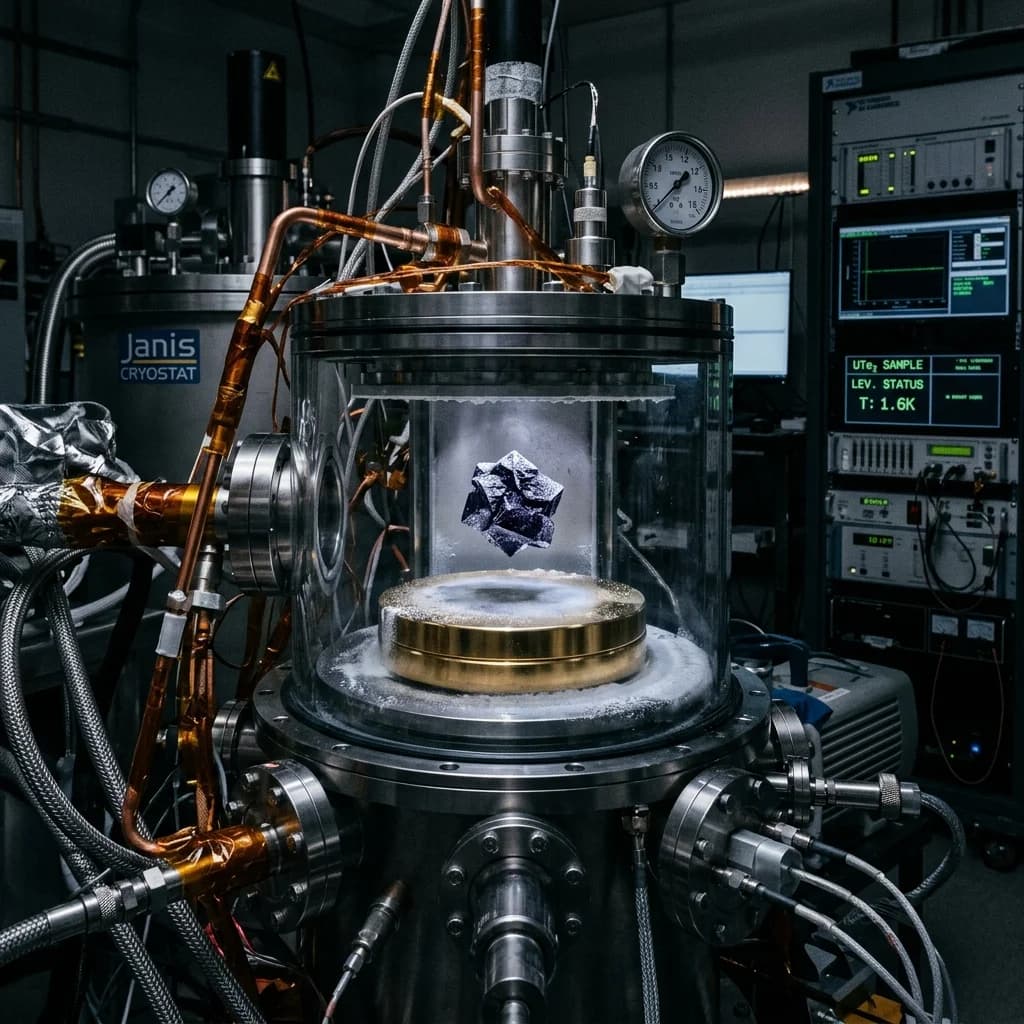
In a major milestone for condensed matter physics, a collaborative team of researchers has observed direct evidence of topological superconductivity in a new class of Kagome lattice metals. By stacking atomically thin sheets of transition metals into a corner-sharing triangular network, physicists created a quantum state where electrons exhibit both topological order and zero-resistance electrical conductivity at relatively high temperatures. This unique phase of matter, long theorized but notoriously difficult to isolate, creates robust edge states that are naturally protected from environmental disturbances.
The discovery holds profound implications for the future of quantum computing. One of the greatest challenges in building scalable quantum processors is qubits' susceptibility to decoherence—where external noise destroys quantum information. By using these topologically protected edge states to store quantum information as Majorana zero modes, researchers can build qubits that are inherently fault-tolerant. This breakthrough brings the scientific community significantly closer to realizing practical, room-temperature quantum computation, paving the way for revolutionary advances in cryptography, materials discovery, and molecular modeling.
💻 Technology: Enterprise AI Swarms
Autonomous AI Developer Swarms Redefine Software Engineering Pipelines
Enterprise software development is entering a new era of automation as technology providers launch the first commercial platforms featuring autonomous, cooperating AI agent swarms. Moving beyond simple AI coding assistants that generate snippets of text, these platforms orchestrate multiple specialized agents—such as product managers, software architects, QA engineers, and security auditors—that collaborate to handle complete software development life cycles (SDLC). The agents communicate via structured protocols, continuously review each other's work, and run self-correcting debug loops to deploy production-ready applications.
This transition addresses a critical bottleneck in modern DevSecOps pipelines. By utilizing agent swarms, enterprises can automate repetitive engineering tasks like code refactoring, database migrations, and vulnerability patching with minimal human supervision. Once a user story is submitted, the architect agent maps the system design, the developer agent generates the code, the QA agent writes and runs unit tests, and the security agent performs real-time scanning. This collaborative approach reduces development cycles from weeks to minutes, allowing human engineers to pivot toward high-level system design and strategic IT integration.
📈 Market: Qualitative Macro Policy Shifts
Global Stock Markets Stage a Broad Rally on Fed's Qualitative Guidance
Global financial markets staged a significant rally today as investors processed the Federal Reserve's historic decision to retire the quarterly "dot plot" in favor of qualitative, scenario-based guidance. Major stock indices, including the S&P 500, the Nasdaq, and India's Nifty 50, closed higher, reflecting widespread relief across the financial sector. Analysts attribute the positive market sentiment to a reduction in the artificial volatility previously caused by individual governors' rate projections, which often led to premature speculation and sudden yield spikes.
With the federal funds rate held steady at 3.50%–3.75%, the 10-year U.S. Treasury yield stabilized around 4.10%, driving a rotation of capital back into mid-cap growth stocks and emerging markets. The Federal Reserve's new scenario-based framework provides corporate treasurers and portfolio managers with a clearer, more holistic view of the central bank's policy pathways under different inflation and growth conditions. By reducing the noise of short-term interest rate speculation, the policy pivot has injected long-term stability into debt and equity markets, establishing a more predictable environment for capital allocation.
The Bottom Line
- Science: Physicists discover topological superconductivity in Kagome lattice metals, offering a path to build fault-tolerant qubits protected from quantum decoherence.
- Technology: Tech providers deploy autonomous AI developer swarms that manage end-to-end software lifecycles, compressing DevSecOps timelines and reducing human intervention.
- Market: Equity and debt markets rally globally as investors embrace the Federal Reserve's retirement of the dot plot and transition to qualitative, scenario-based guidance.
Enjoyed this post?
Get our weekly digest delivered free.
Share this post:
📌 Disclosure: This post may contain affiliate links. If you make a purchase through our links, we may earn a commission at no extra cost to you. We only recommend products we believe in. See our Affiliate Disclosure.
Related Posts

U.S.-Iran Military Escalation, 3.2-Billion-Year-Old Enzymes Reconstructed, and Apple's $30 Billion U.S. Chip Deal
U.S.-Iran Military Escalation, 3.2-Billion-Year-Old Enzymes Reconstructed, and Apple's $30 Billion U.S. Chip Deal A dramatic military escalation in the Middle East has disrupted global energy markets,…

NATO Summit in Ankara, Saudi Arabia's Historic Crude Oil Price Slashes, and World's First Sub-1 GHz Massive MIMO 5G Network
NATO Summit in Ankara, Saudi Arabia's Historic Crude Oil Price Slashes, and World's First Sub-1 GHz Massive MIMO 5G Network July 7, 2026, represents a landmark day for international security allian…

UN AI Governance Summit, ISRO PSLV Resumption, and Norway's Historic World Cup Triumph
UN AI Governance Summit, ISRO PSLV Resumption, and Norway's Historic World Cup Triumph On July 6, 2026, the global landscape reflects a dynamic convergence of international policy, technological br…