Interpretable Materials AI, e-Sankhyiki MCP Server, and India's $45 Billion Space Corridor
Interpretable Materials AI, e-Sankhyiki MCP Server, and India's $45 Billion Space Corridor
Welcome to today's digest, where we analyze the intersections of explainable artificial intelligence, modern digital public infrastructure, and the scaling of sovereign space ecosystems. Today, we cover the Institute of Science Tokyo's "white-box" machine learning model for materials design, India's MoSPI statistical overhaul utilizing e-Sankhyiki MCP servers, and the projected expansion of the Indian space corridor to $45 billion. Here are the key stories you need to know today, June 20, 2026.
🔬 Science: Materials AI and Bio-Optic Skeletal Arrays
Interpretable Machine Learning Deciphers Complex Materials Chemistry
In a major milestone for materials chemistry, researchers at the Institute of Science Tokyo published a study on June 15, 2026, introducing a novel machine learning model designed to translate complex "black-box" neural networks into interpretable structure-property relationships. Traditionally, predicting the optical spectra and crystalline properties of new semiconductors or solar cells using deep learning has yielded high accuracy but little explainable insight. By forcing the neural network to output mathematical relationships that map directly to physical laws and crystal field parameters, the team has bridged the gap between raw prediction and scientific understanding, providing material scientists with a "white-box" framework to guide the synthesis of next-generation optoelectronic devices.
Complementing this computational breakthrough, reticular chemistry led by Nobel laureate Omar Yaghi has achieved a significant milestone in synthesizing highly porous 3D structures from nanographene. By engineering a custom prism-shaped molecule, HBC-LA12, Yaghi’s team created reticular materials with record-breaking surface areas that offer exceptional capabilities for ultra-dense hydrogen storage and clean fuel containment. In tandem with Tokyo’s explainable AI models, which can now model and predict the gas-adsorption and thermal properties of these porous nanostructures, this reticular milestone marks a major step toward designing tailored materials for the clean energy economy.
Marine Skeletal Structures Inspire Next-Generation Solar Capture Arrays
Biomimetic engineering has received a major boost from a study published on June 14, 2026, revealing that the chocolate-chip sea star (Protoreaster nodosus) possesses skeletal structures that act as highly efficient natural optical fibers. The research demonstrated that the sea star’s skin contains cone-shaped calcitic microstructures that channel approximately 70% of ambient sunlight directly to photoreceptors located deep within its arms. By avoiding the light scattering and energy losses that typically plague artificial light-guiding materials, this organic optic array allows the organism to navigate and respond to predators in dim, benthic environments.
This discovery offers new design pathways for solar energy capture and telecommunications. Traditional solar panels suffer from efficiency degradation when sunlight strikes them at oblique angles, necessitating expensive mechanical tracking systems. By replicating the sea star's calcitic microstructures, materials engineers can construct passive, light-redirecting coatings that bend incoming light toward active photovoltaic cells regardless of the sun's position. This biomimetic approach could significantly increase the daily yield of stationary solar panels and inspire more resilient, flexible fiber-optic cables for harsh subsea environments.
💻 Technology: Edge Workstations and Sovereign Governance AI
High-Performance Workstation Silicon Scales Local Agentic Computing
As autonomous AI agents take over multi-turn programming, complex document execution, and real-time business logic optimization, developers are shifting workloads from cloud hyperscalers to local hardware. Powering this shift is the upcoming release of AMD’s Ryzen AI Max PRO 400 Series ("Gorgon Halo") workstation processors. These advanced chipsets are engineered to run models with up to 300 billion parameters locally, supported by a massive 192GB of unified LPDDR5X memory. By eliminating the high network latency, recurring API costs, and data privacy risks associated with cloud-dependent systems, these workstations enable organizations to deploy private, offline agent swarms that operate with total data sovereignty.
This push for hardware-level security is matched at the geopolitical level by the formal adoption of the India-France Innovation Roadmap 2030, signed on June 14, 2026, at the "Bharat Innovates" summit in Nice. A central pillar of this bilateral framework is the creation of a Joint Working Group on Trusted AI, which will coordinate governance, ethical standards, and joint research. By linking research clusters in Kanpur and Nice, the agreement establishes a secure digital corridor that facilitates the exchange of open-source models and ensures that AI deployments remain aligned with democratic values, data protection laws, and national security interests.
India's MoSPI Modernizes National Statistical Architecture with Sovereign AI
In a pioneering move for digital public infrastructure, India's Ministry of Statistics and Programme Implementation (MoSPI) has integrated artificial intelligence and machine learning at the core of its national data systems. Deployed through the newly established Data Innovation Lab (DI Lab), the ministry has launched six active AI/ML use cases under its Capacity Development Scheme. These include Natural Language Processing (NLP) tools to categorize industries using NIC codes, automated legacy document extraction systems, and intelligent chatbots to assist field survey enumerators. This modernization significantly increases the speed and accuracy of national data collection, feeding directly into macroeconomic policy decisions.
Crucially, MoSPI has introduced a beta version of a Model Context Protocol (MCP) server for its e-Sankhyiki Portal. This open-source standard allows researchers, economists, and public policy analysts to directly query official government datasets using their own local AI agents and large language models without downloading massive datasets. By standardizing machine-readable formats and ensuring "security by design," the portal bridges the gap between public administration and modern data science. Furthermore, in alignment with the UN System of National Accounts (SNA) 2025 framework, MoSPI is establishing guidelines to recognize data as a formal economic asset in GDP calculations, reflecting the tangible value of India's growing digital economy.
📈 Market: Space Corridors and Regulatory Code Revisions
The New Space Economy: India’s $45 Billion Orbital Corridor and Artemis III Mobilization
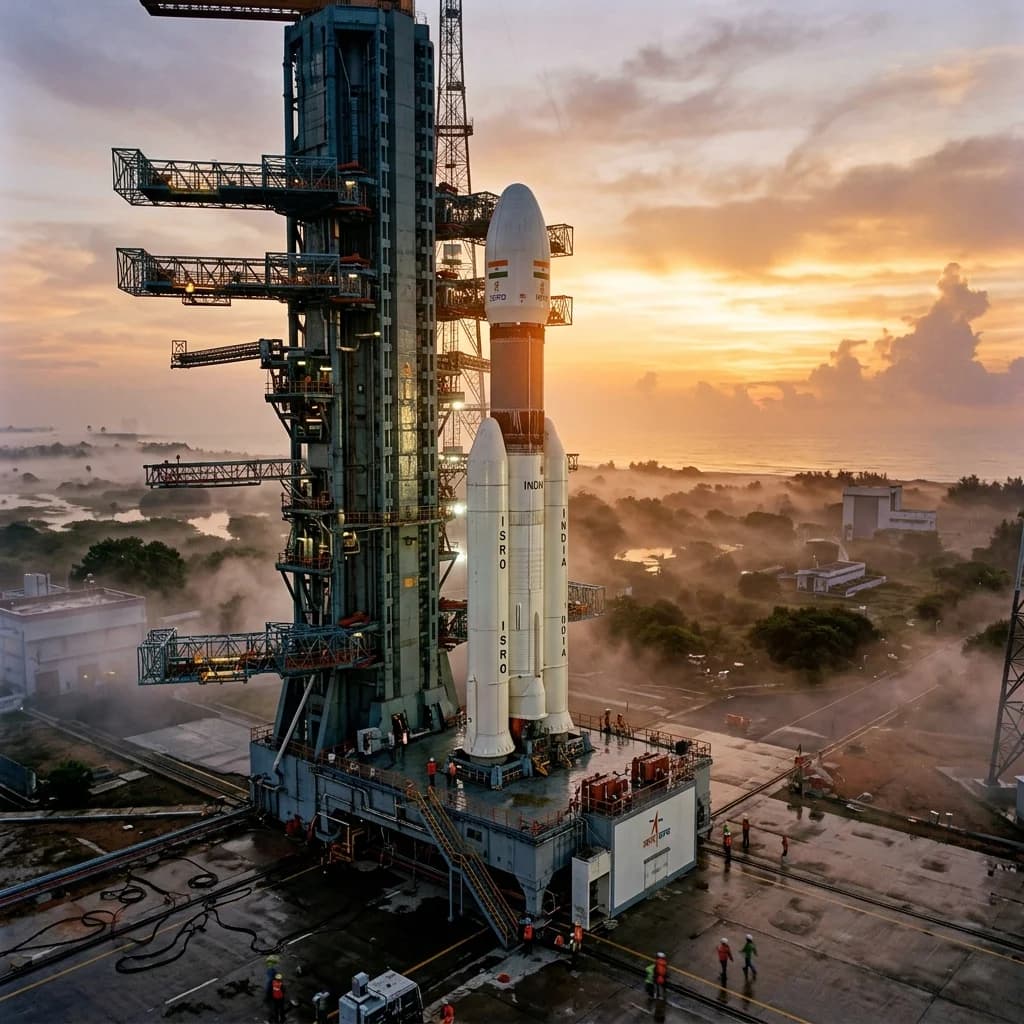
The commercial space economy is transitioning from exploratory milestones to a mature sector integrated with global capital markets. Highlighting this rapid expansion, Union Minister Dr. Jitendra Singh announced on June 14, 2026, that India’s space economy is projected to grow from its current $9 billion valuation to between $40 billion and $45 billion over the next decade. This growth is driven by the deregulation of the satellite launch sector, a surge in private aerospace startups, and intensive preparations for ISRO's uncrewed Gaganyaan-1 (G1) test flight. This expansion establishes India as a leading provider of low-cost, high-reliability orbital services.
Simultaneously, international space programs are mobilizing resources to support long-term lunar operations. Following NASA's official crew announcement on June 9, the selected astronauts for the Artemis III mission—Commander Randy Bresnik, Pilot Luca Parmitano, and Mission Specialists Andre Douglas and Frank Rubio—have begun active training. Although the 2027 mission has been restructured as a low Earth orbit (LEO) demonstration, it remains a critical step for validating orbital docking, fuel transfers, and landing systems. These space milestones, combined with SpaceX’s recent historic IPO on the Nasdaq under the ticker SPCX, are drawing massive institutional capital to the aerospace sector, cementing its position as a high-growth investment theme.
Macroeconomic Safeguards: Securities Markets Code Revisions and Mid-June Economic Pulse
On the regulatory front, India is taking significant strides to reduce legal fragmentation and boost investor confidence. The Securities Markets Code (SMC) Bill, 2025, which consolidates the legacy Securities Contracts (Regulation) Act of 1956, the SEBI Act of 1992, and the Depositories Act of 1996, is undergoing active legislative review. In mid-June 2026, the Parliamentary Standing Committee on Finance accepted several key revisions to the draft code. Most notably, the timeline for completing complex securities investigations has been extended from 180 days to 365 days to tackle algorithmic manipulation and insider trading, while SEBI’s regulatory autonomy has been reinforced by requiring its recommendation before the central government can supersede market infrastructure boards.
These legislative updates coincide with positive macroeconomic indicators and environmental developments. India's retail inflation settled comfortably at 3.9% in mid-June, matching the Reserve Bank of India's medium-term target band. While the Southwest monsoon has progressed steadily, the India Meteorological Department is closely monitoring an intensifying El Niño pattern in the Pacific Ocean that could affect rainfall distribution in late summer. Additionally, the Indian Coast Guard and naval partners successfully rescued 14 crew members from a distressed dhow off the coast of Oman, highlighting the nation's maritime security capabilities. These events demonstrate a highly organized, resilient economic environment that continues to support India's projected 6.6% annual GDP growth.
The Bottom Line
- Science: The Tokyo Institute of Science's "white-box" machine learning model deciphers black-box neural networks for materials design, while the skeletal structure of the chocolate-chip sea star inspires new light-guiding pathways for solar capture arrays.
- Technology: AMD’s Gorgon Halo processors enable local execution of 300-billion-parameter AI models, as India's MoSPI modernizes its statistical systems with six active AI use cases and an e-Sankhyiki MCP server.
- Market: India's space economy is projected to scale to $45 billion as Artemis III training begins, supported by structural governance reforms including SEBI-backed revisions to the Securities Markets Code Bill.
Enjoyed this post?
Get our weekly digest delivered free.
Share this post:
📌 Disclosure: This post may contain affiliate links. If you make a purchase through our links, we may earn a commission at no extra cost to you. We only recommend products we believe in. See our Affiliate Disclosure.
Related Posts

U.S.-Iran Military Escalation, 3.2-Billion-Year-Old Enzymes Reconstructed, and Apple's $30 Billion U.S. Chip Deal
U.S.-Iran Military Escalation, 3.2-Billion-Year-Old Enzymes Reconstructed, and Apple's $30 Billion U.S. Chip Deal A dramatic military escalation in the Middle East has disrupted global energy markets,…

NATO Summit in Ankara, Saudi Arabia's Historic Crude Oil Price Slashes, and World's First Sub-1 GHz Massive MIMO 5G Network
NATO Summit in Ankara, Saudi Arabia's Historic Crude Oil Price Slashes, and World's First Sub-1 GHz Massive MIMO 5G Network July 7, 2026, represents a landmark day for international security allian…
UN AI Governance Summit, ISRO PSLV Resumption, and Norway's Historic World Cup Triumph
UN AI Governance Summit, ISRO PSLV Resumption, and Norway's Historic World Cup Triumph On July 6, 2026, the global landscape reflects a dynamic convergence of international policy, technological br…