India's Diplomatic Frontiers, Monetary Stance, and Political Alignments in Mid-June 2026
India's Diplomatic Frontiers, Monetary Stance, and Political Alignments in Mid-June 2026
As mid-June 2026 sets in, India is navigating a complex landscape of global diplomacy, domestic economic pressures, and evolving political alignments. From high-level bilateral summits in Europe to the central banking chambers in Mumbai and coalition strategy rooms in New Delhi, the nation is actively shaping its policy responses to both international opportunities and local challenges.
In this update, we explore the core developments defining India's current trajectory: the Prime Minister's upcoming European tour, the Reserve Bank of India's cautious monetary policy stance, energy import strategies amidst pricing pressures, and the opposition alliance's structured roadmap.
1. Diplomatic Frontiers: G7 Summit & Slovak Bilateral Pivot
Prime Minister Narendra Modi is scheduled to embark on a high-stakes diplomatic visit to France and Slovakia from June 13 to 18, 2026. This tour represents a key effort to strengthen ties with Central Europe and present India's perspective at the highest levels of global governance.
graph TD
    A[PM Modi's European Tour: June 13-18, 2026] --> B[Nice, France: June 13-14]
    A --> C[Bratislava, Slovakia: June 14-16]
    A --> D[Évian-les-Bains, France: June 16-17]

    B --> B1[Meetings with President Macron]
    B --> B2[Inaugurating "Bharat Innovates" Event]

    C --> C1[First Indian PM Visit since 1993]
    C --> C2[Defense & Technology Cooperation]

    D --> D1[52nd G7 Summit Outreach Sessions]
    D --> D2[Representing the Global South]
Key Highlights of the Itinerary:
- Bilateral Visit to France (June 13–14): PM Modi will visit Nice for bilateral discussions with President Emmanuel Macron. A key focus will be the inauguration of the "Bharat Innovates" showcase, promoting Indian deeptech and clean energy startups to European investors.
- State Visit to Slovakia (June 14–16): Marking the first visit by an Indian Prime Minister to the Slovak Republic since 1993, this bilateral leg aims to deepen defense manufacturing, supply chain partnerships, and engineering collaborations.
- 52nd G7 Summit in Évian-les-Bains (June 16–17): India will participate as a partner country in the G7 outreach sessions. This marks India’s 13th participation at a G7 Summit and PM Modi’s seventh consecutive attendance, focusing on global challenges like digital public infrastructure (DPI), climate finance, and artificial intelligence governance.
2. Economic & Monetary Stance: RBI Holds Repo Rate Amid Inflation Risks
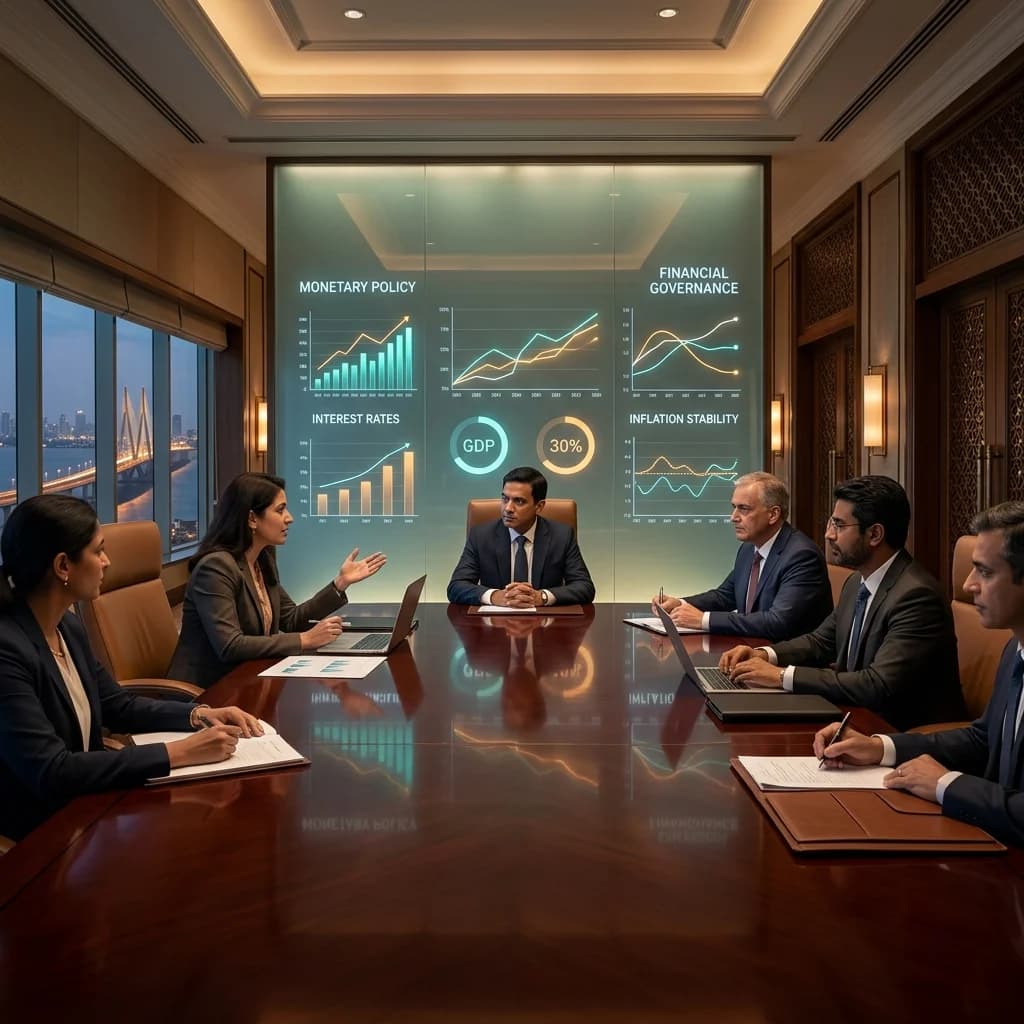
On the economic front, the Reserve Bank of India’s (RBI) Monetary Policy Committee (MPC) concluded its review on June 5, 2026, opting for a cautious policy stance in the face of global uncertainties.
Monetary Policy Outcomes
- Repo Rate Unchanged: The MPC unanimously decided to keep the benchmark repo rate unchanged at 5.25%, maintaining its "neutral" monetary policy stance.
- Inflation Forecast Raised: Citing volatile crude oil prices and supply chain disruptions driven by West Asian conflicts, the RBI raised its FY27 CPI inflation projection to 5.1% (up from the previous 4.6% estimate).
- Growth Projections: The real GDP growth forecast for FY27 was moderated slightly to 6.6% (down from the earlier 6.9% forecast).
Governor Sanjay Malhotra emphasized that while core inflation remains manageable, external supply shocks necessitate a vigilant and data-driven approach to maintain macroeconomic stability.
Stock Market Resilience
Despite the central bank's cautious outlook, Indian equity markets showed significant resilience. On June 12, 2026, the Sensex and Nifty staged a sharp recovery—with the Sensex gaining over 900 points in early trade—buoyed by positive global cues, favorable foreign institutional investment (FII) rules, and hopes of easing geopolitical tensions in West Asia.
3. Energy & Oil Dynamics: Defending Strategic Imports Amid Retail Price Hikes
India continues to manage the delicate balance between domestic consumer pricing and global energy procurement, marked by a sharp rise in Russian oil imports alongside domestic fuel price hikes.
Ramping Up Russian Crude
By early June 2026, India's imports of Russian crude oil surged to 2.0–2.5 million barrels per day, up from 1.05 million barrels per day in February 2026. External Affairs Minister S. Jaishankar strongly defended these purchases, stating that India’s energy decisions are guided strictly by national interest, affordability, and energy security. Jaishankar noted that India’s consistent procurement has played a key role in stabilizing global energy markets.
Retail LPG Price Hikes
To account for higher international import costs, state-run oil marketing companies announced price adjustments:
- Domestic LPG: Effective June 7, 2026, the price of a 14.2 kg domestic LPG cylinder was increased by ₹29, bringing the rate in Delhi to ₹942 per cylinder. This is the second hike in three months, following a ₹60 increase in March.
- Commercial LPG: The price of 19 kg commercial cylinders rose by ₹42 on June 1, 2026.
Mid-June 2026 Key Events Summary
| Sector | Key Development | Date / Period | Major Impact / Outlook |
|---|---|---|---|
| Foreign Policy | PM Modi's tour to France (Nice, Évian) & Slovakia | June 13–18, 2026 | First Slovak PM visit since 1993; G7 Summit partner country participation. |
| Monetary Policy | RBI holds benchmark repo rate at 5.25% | June 5, 2026 | FY27 inflation projection raised to 5.1%; GDP forecast set at 6.6%. |
| Financial Markets | Stock market rally (Sensex up 900+ points) | June 12, 2026 | Sharp recovery driven by global cues and foreign institutional inflows. |
| Energy & Oil | Russian crude imports rise to 2–2.5M bpd | Early June 2026 | Strong defense of import strategy; domestic LPG hiked by ₹29 on June 7. |
| Domestic Politics | INDIA bloc strategy meeting in New Delhi | June 8, 2026 | Bi-monthly meeting cycle established; next meeting on August 8 in Hyderabad. |
4. Political Alignments: INDIA Janbandhan Establishes Strategy Roadmap
In domestic politics, the opposition coalition—popularly known as the INDIA janbandhan—convened a strategy meeting at the Constitution Club of India in New Delhi on June 8, 2026, to formalize their joint roadmap.
Key Decisions and Developments:
- Structured Alliance Coordination: To build persistent coordination, the bloc agreed to hold regular meetings once every two months. The next strategy session is scheduled for August 8, 2026, in Hyderabad.
- Alliance Dynamics: Representatives from 25 political parties attended the meeting, with leaders from Congress, TMC, SP, and RJD present in person, while Shiv Sena (UBT) and JMM leaders joined virtually. However, the DMK and AAP did not participate, highlighting ongoing coordination challenges.
- Joint Policy Actions: The bloc reached a consensus to write a collective letter to the Chief Justice of India regarding electoral integrity and demanded the resignation of the Union Education Minister following controversies surrounding recent national examinations (NEET-UG and CBSE).
Conclusion: Balancing Global Integration and Domestic Challenges
India in mid-June 2026 is demonstrating a multi-faceted approach to growth and governance. By asserting its strategic autonomy in energy procurement, engaging actively in high-level European diplomacy, and maintaining a cautious monetary stance to counter global headwinds, the country is working to insulate its domestic economy from international volatility. Meanwhile, the institutionalization of the opposition alliance points to a vibrant, highly contested democratic landscape heading into the second half of the year.
Enjoyed this post?
Get our weekly digest delivered free.
Share this post:
📌 Disclosure: This post may contain affiliate links. If you make a purchase through our links, we may earn a commission at no extra cost to you. We only recommend products we believe in. See our Affiliate Disclosure.
Related Posts
PM Modi Consolidates Indonesia and Australia Ties as ISRO and Skyroot Propel Indian Space Innovation
PM Modi Consolidates Indonesia and Australia Ties as ISRO and Skyroot Propel Indian Space Innovation July 9, 2026, marks a pivotal moment for India as it reinforces its diplomatic and economic footpri…
Cosmoserve Space Announces Debris Removal Mission, MHA Designates 23 Terrorists Under UAPA, and UPI Transactions Grow 35% Year-on-Year
Cosmoserve Space Announces Debris Removal Mission, MHA Designates 23 Terrorists Under UAPA, and UPI Transactions Grow 35% Year-on-Year July 7, 2026, marks another day of pivotal advancements for In…
IITs Launch Joint Cybersecurity Degree, I&B Ministry Issues Telegram Piracy Ultimatum, and Guwahati Hosts BRICS Anti-Drug Summit
IITs Launch Joint Cybersecurity Degree, I&B Ministry Issues Telegram Piracy Ultimatum, and Guwahati Hosts BRICS Anti-Drug Summit July 6, 2026, showcases India's decisive strides in digital educatio…