India Unveils ₹1.27 Lakh Crore Semiconductor Mission Phase 2 to Secure Strategic Tech Sovereignty

India Unveils ₹1.27 Lakh Crore Semiconductor Mission Phase 2 to Secure Strategic Tech Sovereignty
In a landmark policy push aimed at transforming the country into a global technology superpower, the Government of India has officially launched Phase 2 of the India Semiconductor Mission (ISM 2.0). Backed by a expanded budgetary commitment of ₹1.27 lakh crore ($15.2 billion), the second phase signals a decisive evolution in New Delhi's industrial strategy—transitioning from foundational packaging and assembly plants to commercial-scale silicon fabrication, domestic equipment manufacturing, raw material purification, and advanced chip design intellectual property (IP).
Coming on the heels of major operational milestones achieved during Phase 1—including the commissioning of pilot Outsourced Semiconductor Assembly and Test (OSAT) facilities in Sanand, Gujarat, and commercial assembly setups in Assam—ISM 2.0 addresses the deeper, high-capital layers of the global semiconductor value chain. As global supply chains remain vulnerable to geopolitical volatility and regional concentration, India's multi-billion-dollar commitment underscores an urgent national imperative: securing technology sovereignty while capturing a significant share of the global $1-trillion semiconductor economy projected for 2030.
📰 What Happened: Key Details
The Cabinet Committee on Economic Affairs (CCEA), chaired by the Prime Minister, formally approved the financial architecture and policy directives for the India Semiconductor Mission Phase 2. Building upon the initial ₹76,000-crore outlay announced in late 2021, ISM 2.0 introduces expanded capital expenditure subsidies, targeted raw material production incentives, and dedicated public-private research partnerships designed to plug critical gaps in India’s high-tech manufacturing ecosystem.
Core Pillars of ISM Phase 2
- Commercial Silicon & Compound Fab Expansion: While ISM Phase 1 succeeded in attracting major packaging players and foundational chip foundries, ISM 2.0 shifts primary fiscal focus toward 28-nanometer (nm) and sub-28nm commercial logic fabrication plants, as well as specialized compound semiconductors (Gallium Nitride [GaN] and Silicon Carbide [SiC]) crucial for electric vehicles (EVs), renewable power grids, and 5G/6G telecom towers.
- Upstream Equipment & Materials Ecosystem: Recognizing that silicon fabs cannot run without a resilient supply chain of ultra-pure chemicals, electronic-grade gases, photoresists, and high-precision quartz components, ISM 2.0 establishes a dedicated ₹22,000-crore incentive scheme to encourage global and domestic material suppliers to set up chemical synthesis and purification infrastructure inside India.
- Modernization of Semiconductor Laboratory (SCL), Mohali: The flagship public-sector SCL Mohali is set to undergo a comprehensive ₹10,000-crore structural revamp, transforming it into a world-class R&D fab and commercial prototyping facility operated under a public-private partnership (PPP) model in collaboration with leading academic institutions and global research consortia.
- Design-Linked Incentive (DLI) 2.0 & RISC-V Acceleration: The design incentive program has been expanded to support over 100 domestic fabless chip design startups. Special emphasis has been placed on indigenous open-source RISC-V processor architectures (such as the Shakti and Vega series developed by IIT Madras and C-DAC), aiming to reduce dependency on proprietary instruction set architectures (ISAs) controlled by foreign entities.
- Talent Factory & Academic Integration: To meet the soaring global demand for VLSI (Very Large Scale Integration) design and fab operations engineers, ISM 2.0 integrates over 150 universities and technical institutions into a standardized, hands-on chip design and cleanroom engineering curriculum, targeting the graduation of 85,000 industry-ready semiconductor professionals over the next five years.
🇮🇳 The National Impact: Why It Matters for India
Semiconductors have replaced oil as the primary strategic currency of the 21st-century global economy. From modern defense systems, smart guided missiles, and satellite communications to everyday consumer electronics, automotive engine control units (ECUs), smart meters, and artificial intelligence data centers, microchips are the invisible backbone of modern economic productivity.
For India, achieving domestic self-reliance in microelectronics is not merely an economic objective; it is a foundational pillar of national security, industrial competitiveness, and digital sovereignty.
                  ┌──────────────────────────────────────────────┐
                  │    INDIA SEMICONDUCTOR MISSION 2.0 (ISM)     │
                  └──────────────────────┬───────────────────────┘
                                         │
       ┌─────────────────────────────────┼─────────────────────────────────┐
       ▼                                 ▼                                 ▼
┌──────────────┐                 ┌──────────────┐                 ┌──────────────┐
│  STRATEGIC   │                 │   ECONOMIC   │                 │   DIGITAL    │
│  AUTONOMY    │                 │ LEAPFROGGING │                 │ SOVEREIGNTY  │
└──────┬───────┘                 └──────┬───────┘                 └──────┬───────┘
       │                                 │                                 │
  • Eliminates                      • Shifts from                     • Powers DPI,
    single-origin                     low-margin                        AI clusters,
    import risks                      assembly to high-                 5G/6G & Defense
  • Secures defense                   value IP & Fabs                   systems with
    & telecom grids                 • Creates 100k+                     indigenous
                                      high-tech jobs                    RISC-V chips
1. Eliminating Single-Geography Import Risks
India currently imports more than 90% of its microchip requirements, with a heavy concentration of purchases originating from East Asian manufacturing hubs. Any cross-strait conflict or regional disruption poses an existential threat to India's automotive sector, electronics manufacturing industry, and national defense grid. Domestic fabrication and packaging capabilities create an indispensable strategic buffer against external shocks.
2. Upgrading Electronics Manufacturing (Make in India to Design in India)
India's electronics manufacturing output has expanded exponentially over the past decade, driven by mobile phone assembly and home appliance manufacturing under the Production Linked Incentive (PLI) schemes. However, domestic value addition has historically been capped at 18–25% due to the necessity of importing high-value internal components—chiefly microprocessors, memory chips, and power management ICs. By fabricating and packaging chips domestically, India can boost local electronics value addition to over 60%, drastically improving trade balance figures.
3. Securing Digital Public Infrastructure & National Security
As India doubles down on its world-leading Digital Public Infrastructure (DPI)—including UPI, Aadhaar, DigiLocker, and national health stacks—the hardware securing these digital networks must be verified and tamper-proof. Hardware-level backdoor vulnerabilities in imported silicon present severe cybersecurity risks. Indigenous chip designs manufactured in trusted domestic foundries ensure end-to-end hardware security for critical national infrastructure and military hardware.
📊 Key Numbers & Data Breakdown
The structural expansion from ISM Phase 1 to Phase 2 represents a major quantitative and qualitative leap in public capital allocation. Below is an analytical breakdown of the fiscal metrics, projected outputs, and sector allocations.
| Program Metric | ISM Phase 1 (2021–2025) | ISM Phase 2 (2026–2030) | Growth / Expansion |
|---|---|---|---|
| Total Fiscal Outlay | ₹76,000 Crore ($10.0B) | ₹1,27,000 Crore ($15.2B) | +67.1% Fiscal Expansion |
| Primary Focus Area | OSAT / ATMP & Pilot Fabs | Commercial Fabs & Materials | Deep-Tech Structural Shift |
| Capital Subsidy Rate | Up to 50% Capex Support | 50% Capex + OpEx De-risking | Enhanced Incentive Guarantee |
| Upstream Chemical/Gas Allocation | Minimal / Ad-hoc | ₹22,000 Crore ($2.64B) | Dedicated Supply Chain Subsidies |
| SCL Mohali Upgrade Budget | ₹1,000 Crore | ₹10,000 Crore ($1.20B) | 10x Scale Research Modernization |
| Target Skilled Workforce | 20,000 Engineers | 85,000 Specialized Engineers | +325% Workforce Scaling |
| Target Domestic Market Share (2030) | < 10% Local Sourcing | > 40% Local Sourcing | Strategic Import Substitution |
Expected Market & Economic Trajectory
- Domestic Market Demand Growth: India's semiconductor consumption is projected to rise from $38 billion in 2023 to $110 billion by 2030, driven by rapid adoption of electric mobility, smart consumer appliances, 5G enterprise devices, and industrial automation.
- Direct & Indirect Employment Impact: ISM 2.0 is estimated to generate over 100,000 direct high-tech engineering jobs across cleanroom operations, wafer fab maintenance, chemical processing, and VLSI circuit design, along with an estimated 350,000 indirect support jobs in logistics, specialized construction, and hazardous waste management.
- Regional High-Tech Hubs: Fiscal support is distributed across strategic industrial nodes, including the Dholera Special Investment Region (SIR) and Sanand in Gujarat, Sriperumbudur in Tamil Nadu, the Electronics City complex in Karnataka, and Jagiroad in Assam.
🔮 What Happens Next?
While the policy directives and financial outlays under ISM Phase 2 are robust, successful implementation over the next half-decade will depend on overcoming several intricate operational, structural, and geopolitical hurdles.
1. Overcoming Infrastructure Bottlenecks
Commercial wafer fabrication plants are among the most demanding industrial facilities on Earth. A single advanced 300mm wafer fab requires 15 to 20 million liters of ultra-pure water (UPW) daily and an uninterrupted, zero-fluctuation power supply running 24/7/365. A millisecond voltage drop can spoil an entire wafer batch worth millions of dollars. State governments hosting these fabs must deliver ironclad infrastructure guarantees, supported by dedicated dual-grid power lines and advanced reverse-osmosis water recycling plants.
2. Navigating Global Supply Chain Geopolitics
India is entering the advanced semiconductor landscape at a time of intense global tech competition. The United States (via the CHIPS Act), the European Union, Japan, and South Korea are all deploying hundreds of billions of dollars in state subsidies to onshore chip manufacturing. To compete effectively, New Delhi must leverage bilateral agreements—such as the US-India Initiative on Critical and Emerging Technology (iCET) and India-EU Trade and Technology Council frameworks—to secure seamless access to restricted lithography equipment (EUV/DUV machinery) and specialized chemical exports.
3. Fostering a Sustainable Domestic Startup & IP Ecosystem
Capital subsidies alone cannot sustain a long-term semiconductor revolution without indigenous Intellectual Property (IP). Policy analysts emphasize that India must avoid becoming merely a low-margin manufacturing destination for foreign corporations. State funds under the Design-Linked Incentive (DLI) scheme must actively back risk-taking domestic startups focused on custom AI accelerators, power electronics for renewable grids, and automotive microcontrollers.
The Road Ahead
India's Semiconductor Mission Phase 2 is a bold statement of national ambition. By committing ₹1.27 lakh crore to build a resilient, end-to-end semiconductor ecosystem, India has signaled that it will no longer remain a passive consumer of foreign microchips. If executed with precision, transparency, and sustained infrastructural support, ISM 2.0 will not only protect India's national security interests but will firmly establish the nation as an indispensable third pillar of the global high-technology economy.
Enjoyed this post?
Get our weekly digest delivered free.
Share this post:
Knowelth is reader-supported. We may earn a commission from links in this article at no extra cost to you. Read our disclosure.
Related Posts

India Today: Space Economy PLI Push, Tech GCC Hiring Surge, and Fast-Track Courts for Exam Leaks
India Today: Space Economy PLI Push, Tech GCC Hiring Surge, and Fast-Track Courts for Exam Leaks India's push for global dominance across high-tech industries and robust institutional governance takes…
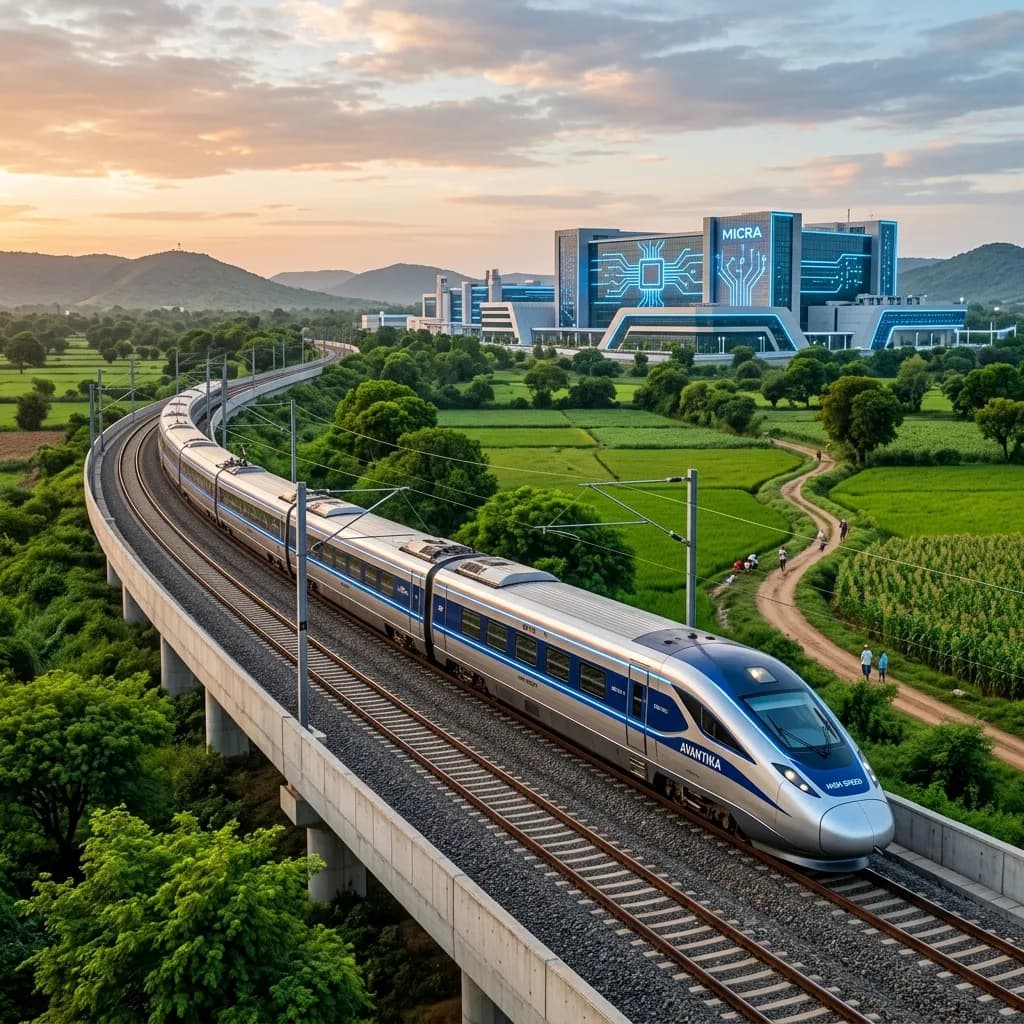
India Launches First Hydrogen Train, Greenlights ₹1.27 Lakh Crore Semicon 2.0, and PV Sindhu Reaches Japan Open Semifinals
India Launches First Hydrogen Train, Greenlights ₹1.27 Lakh Crore Semicon 2.0, and PV Sindhu Reaches Japan Open Semifinals On July 17, 2026, India recorded a historic day across clean energy transport…

India’s Gaganyaan Mission Achieves Key Safety Milestones, NIA Pursues Hafiz Saeed Trial in Absentia, and Meerut Emerges as Multi-Sport Manufacturing Hub
India’s Gaganyaan Mission Achieves Key Safety Milestones, NIA Pursues Hafiz Saeed Trial in Absentia, and Meerut Emerges as Multi-Sport Manufacturing Hub On July 15, 2026, India witnessed critical adva…