SCOTUS Transgender Sports Ruling, Fed Independence, and Unity Reactor Criticality
SCOTUS Transgender Sports Ruling, Fed Independence, and Unity Reactor Criticality
The legal, financial, and technological landscapes of the United States experienced major shifts today as key federal institutions and energy projects hit critical milestones. A landmark Supreme Court ruling on transgender athletes has redefined state regulatory boundaries, while Federal Reserve Chair Kevin Warsh took a firm stand on central bank independence. Simultaneously, the Department of Energy announced a major leap forward in advanced nuclear power with the successful startup of a new microreactor.
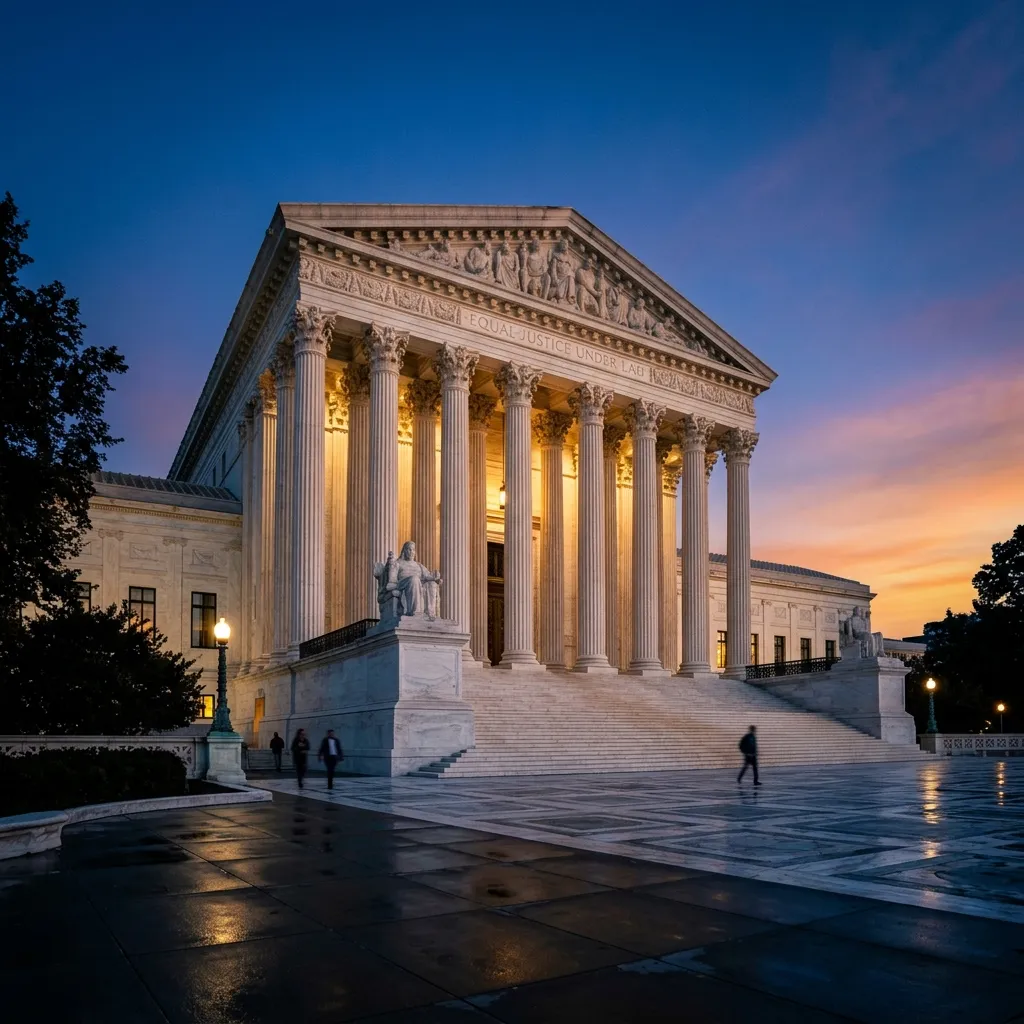
🇺🇸 Supreme Court Upholds State Bans on Transgender Athletes in Female Sports
In a highly anticipated 6–3 decision, the Supreme Court of the United States ruled that states possess the constitutional authority to prohibit transgender women and girls from participating on female sports teams. The majority opinion clarified that the Constitution does not require educational institutions to base eligibility on gender identity rather than biological sex. Chief Justice John Roberts, writing for the majority, emphasized that Title IX and the Equal Protection Clause do not strip states of the power to make distinctions based on biological sex in athletic competitions.
The ruling represents a major victory for conservative state lawmakers who have passed athletic restrictions in recent years. Dissenting justices, led by Sonia Sotomayor, argued that the decision undermines civil rights protections for transgender individuals and could lead to broader discrimination in educational environments. The ruling resolves a fractured network of federal appeals court decisions, establishing a uniform legal standard nationwide and setting the stage for intense legislative debates ahead of the upcoming midterm elections.
🏦 Fed Chair Kevin Warsh Defends Independence Against Rate-Cut Demands
Speaking at the European Central Bank’s annual forum in Sintra, Portugal, newly appointed Federal Reserve Chair Kevin Warsh issued a strong defense of the U.S. central bank's political autonomy. Facing public calls from the administration and congressional leaders for aggressive interest rate cuts, Warsh asserted that the Federal Reserve must remain insulated from electoral politics to effectively curb persistent inflation. The U.S. economy has faced headwinds, with inflation hitting 4.2% earlier this year, prompting the Fed to maintain a restrictive monetary stance.
Warsh emphasized that the Fed's primary mandate is price stability and that policy decisions will be guided strictly by economic data, not political cycles. The remarks signal a potential standoff between the central bank and the executive branch, as the administration argues that lower rates are necessary to sustain manufacturing growth. Economists note that Warsh's firm position is intended to reassure global financial markets of the stability and credibility of the U.S. dollar, even as domestic political pressure mounts.
⚛️ DOE's "Unity" Reactor Reaches Criticality in Advanced Nuclear Milestone
The U.S. Department of Energy (DOE) officially announced that Deployable Energy's "Unity" demonstration microreactor has successfully achieved criticality. This milestone marks the fulfillment of a high-priority presidential directive to have three unique, advanced microreactor designs achieve criticality by July 4, 2026. The "Unity" reactor utilizes high-assay low-enriched uranium (HALEU) and a novel passive cooling system designed to prevent meltdowns even under catastrophic failure conditions.
As a zero-emission energy source, advanced microreactors represent a cornerstone of the federal government’s dual strategy to bolster national energy security and meet ambitious climate goals. The Unity reactor's compact, modular design allows it to be transported via truck or shipping container, making it ideal for deployment in remote military bases, disaster areas, or microgrids. Commercial developers expect the success of the Unity project to accelerate regulatory approval for utility-scale deployment of next-generation nuclear reactors across the United States within the decade.
📌 The Bottom Line
- scotus-sports-ruling: The Supreme Court ruled 6–3 that states have the constitutional authority to ban transgender athletes from female sports teams, establishing a new national precedent.
- fed-independence: Federal Reserve Chair Kevin Warsh robustly defended the central bank's political independence, resisting administration pressure for interest rate cuts.
- unity-reactor-criticality: The DOE's Unity microreactor successfully achieved criticality, marking a significant milestone for advanced, modular nuclear energy in the U.S.
Enjoyed this post?
Get our weekly digest delivered free.
Share this post:
📌 Disclosure: This post may contain affiliate links. If you make a purchase through our links, we may earn a commission at no extra cost to you. We only recommend products we believe in. See our Affiliate Disclosure.
Related Posts
Fed Hawkish Shift Sparks Affordability Concerns, US Restricts Frontier AI, and Trump Seeks Syria Terror Delisting
Fed Hawkish Shift Sparks Affordability Concerns, US Restricts Frontier AI, and Trump Seeks Syria Terror Delisting The United States is navigating critical transitions across economic, technological, a…

US Strikes Iran After Ceasefire Collapses, Apple-Broadcom Unveil $30B Silicon Deal, and Deere Settles Right-to-Repair
US Strikes Iran After Ceasefire Collapses, Apple-Broadcom Unveil $30B Silicon Deal, and Deere Settles Right-to-Repair The United States faces a pivotal day marked by severe geopolitical escalation in …
US World Cup Defeat, Raman Sworn In at NIST, and Congressional Visit to Taiwan
US World Cup Defeat, Raman Sworn In at NIST, and Congressional Visit to Taiwan The United States has experienced a whirlwind 24 hours across sports, national technology policy, and international di…