Week in Review: US-Iran Blockade, India-UK CETA, Synthetic Cell Division, and Market Crosscurrents — July 11–17, 2026
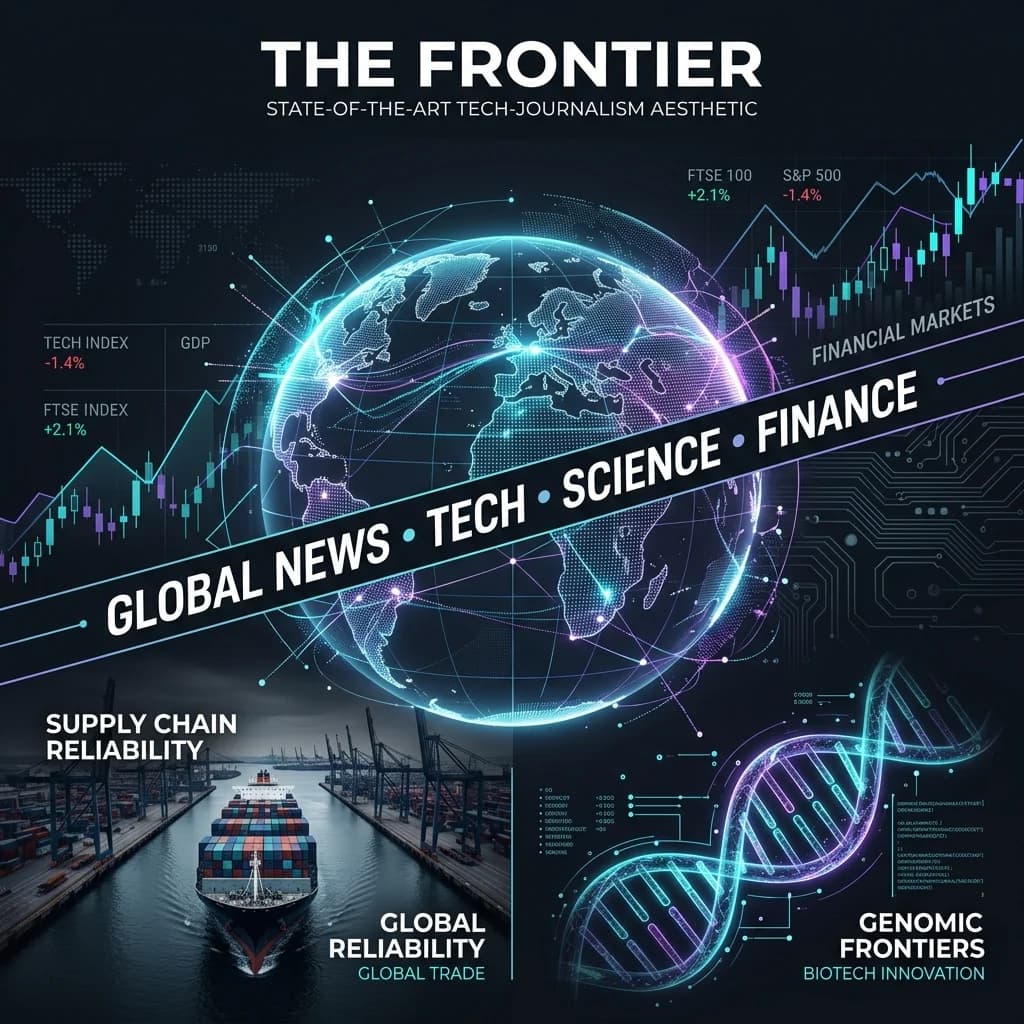
Week in Review: US-Iran Blockade, India-UK CETA, Synthetic Cell Division, and Market Crosscurrents — July 11–17, 2026
A week of sharp escalations, landmark agreements, and fundamental scientific breakthroughs reshaped the global landscape. In geopolitics, the Strait of Hormuz descended into crisis as the United States initiated a maritime blockade on major Iranian ports and launched heavy airstrikes along the Iranian coastline following cruise missile strikes on UAE-flagged oil tankers. In economic diplomacy, the historic India-UK Comprehensive Economic and Trade Agreement (CETA) entered into force, opening duty-free access for nearly all Indian exports to the UK. In fundamental science, researchers achieved a major milestone in synthetic biology with the creation of "SpudCell," a synthetic cell capable of growth, genome replication, and division. Meanwhile, global financial markets navigated macro crosscurrents, marked by robust U.S. retail sales, cooling inflation, and a major correction in semiconductor and artificial intelligence stocks.
🌍 Geopolitical Crisis: US-Iran Blockade and Coastal Airstrikes Escalate Middle East Conflict
The Strait of Hormuz witnessed a severe escalation of military hostilities this week. Following cruise missile strikes on two UAE-flagged oil tankers—the Mombasa and the Al Bahiyah—in the southern shipping lane of the Strait of Hormuz within Omani territorial waters on July 13–14, the United States responded aggressively. The attack on the Mombasa resulted in the death of an Indian crew member and left eight other crew members injured (including six Indian nationals and two Ukrainian nationals), leading India to summon the Iranian deputy envoy Mohammad Javad Hosseini.
In response, U.S. President Donald Trump declared the June peace MoU nullified by Tehran's actions. The U.S. military initiated six consecutive nights of heavy airstrikes targeting Iranian military command hubs, coastal defense systems, and missile batteries in Bandar Abbas, Bushehr, Jask, and Konarak. In a major escalation, the U.S. Navy also initiated a maritime blockade, intercepting and boarding commercial vessels bound for major Iranian ports. To finance the naval escort operations, the Trump administration proposed a controversial 20% security transit fee on all commercial cargo transiting the Strait of Hormuz.
Iran's Islamic Revolutionary Guard Corps (IRGC) retaliated with drone and missile salvos targeting regional military installations hosting American forces, including Ali Al Salem Air Base in Kuwait, the Fifth Fleet Headquarters in Bahrain, and al-Azraq Air Base in Jordan (where Jordanian air defenses intercepted three incoming missiles). Energy markets responded to the threat of a wider war, with Brent Crude futures spiking to trade near $84 per barrel. For a comprehensive analysis of the conflict, read the U.S.-Iran Blockade and Strikes and the Strait of Hormuz Blockade.
🤖 The Economics and Infrastructure of AI: Anthropic's Token Billing and Big Tech's Carbon Crisis
The technology sector this week faced structural shifts in pricing models, regulatory pressure, and the environmental footprint of artificial intelligence. Anthropic initiated a major industry pivot by transitioning its flagship Claude Fable 5 model to a credit-based token billing system ($10 per million input tokens and $50 per million output tokens). This transition signals the "Death of the Flat-Rate Brain," acknowledging that reasoning-class models using compute-at-inference-time paradigms—such as Monte Carlo tree searches and reinforcement learning loops—consume massive compute resources that make flat-rate subscription models economically unsustainable. Explore this pricing shift in Anthropic's Token Billing.
Concurrently, Palantir CEO Alex Karp warned that the AI-driven wealth disparity is "America's biggest problem," as the tech sector moves rapidly toward agentic workflows that concentrate wealth and displace traditional labor. Read Karp's warning in the U.S. Retail and Technology Report.
Adding to these pressures, the environmental cost of the AI boom was laid bare as Amazon, Google, and Microsoft reported sharp surges in carbon emissions driven by the energy and cooling demands of high-density data centers. The surge has forced utility companies across the United States to delay the scheduled retirement of coal and natural gas power plants to prevent grid failures, exposing a deep conflict between Big Tech's climate pledges and its compute demands. Learn more in the Tech Carbon Crisis Report.
🔬 Scientific Frontiers: Genetically Encoded Synthetic Cell Division and Interstellar Sugars
In fundamental science, researchers achieved milestones that expand our understanding of life's origin and boundaries. A team led by synthetic biologist Kate Adamala at the University of Minnesota announced the creation of "SpudCell"—a synthetic cell-like liposome capable of feeding, growing, replicating its 90k bp genome, and undergoing genetically encoded division. Unlike biological cells that rely on a complex protein cytoskeleton (like FtsZ or actin) to divide, SpudCell divides via surface protein crowding and membrane tension, demonstrating a simpler path for self-replication that could have operated in primordial cells. Read about this breakthrough in Synthetic Cell Division.
In astrochemistry, astronomers utilizing the ALMA telescope array made the first-ever detection of the complex four-carbon chiral sugar erythrulose in the interstellar medium (specifically in the star-forming region Sagittarius B2). This discovery of a key prebiotic sugar in interstellar space provides vital clues regarding how the molecular building blocks of life formed before planets were even assembled. Check out the details in the Interstellar Sugar Discovery.
In medical science, Revolution Medicines announced results from a Phase 1/2 clinical trial of daraxonrasib (RMC-6236), a first-in-class multi-selective RAS(ON) inhibitor "molecular glue." The therapeutic agent demonstrated a near-doubling of overall survival in patients with advanced, previously treated RAS-mutant pancreatic cancer, offering a rare therapeutic breakthrough for one of oncology's most lethal malignancies. Read the clinical results in the Daraxonrasib Pancreatic Cancer Trial.
📈 Economic Crosscurrents: June Deflation, Record VC Inflows, and TCS Earnings Strength
Global and domestic financial markets navigated conflicting economic signals, balancing geopolitical energy shocks with tech-driven growth. The IMF's July World Economic Outlook projected steady global growth at 3.0% for 2026, describing a "crosscurrents" economic environment where geopolitical oil supply shocks are offset by the productivity gains of the technology boom. Read the IMF July Outlook.
In the United States, macroeconomic indicators showed diverging trends. June Retail Sales jumped 9.4% year-over-year, demonstrating consumer resilience. Simultaneously, the June CPI showed its first monthly drop since 2020, with core inflation cooling to 2.6% year-over-year, prompting newly appointed Fed Chair Kevin Warsh to promise a policy regime change to stabilize price expectations. In private markets, U.S. venture capital deployed a record-breaking $412.7 billion in the first half of 2026, with a staggering 86% ($355.9 billion) concentrated in AI and deeptech infrastructure, and exit values dominated by SpaceX's $1.7 trillion Q2 IPO.
In India, the benchmark Nifty 50 reclaimed the 24,200 mark, and the Sensex surged past 78,000, supported by record foreign exchange reserves of $674.19 billion and stellar Q1 FY27 earnings from Tata Consultancy Services (TCS). TCS reported a ₹13,349 crore net profit, a $9.5 billion Total Contract Value (TCV) order book, and an annualized AI run rate of $2.6 billion, demonstrating robust corporate health. Read the Nifty Reclaims 24,200 Report and the Sensex 78,000 Surge.
🇮🇳 India Focus: Landmark UK Trade Deal, Stratospheric Satellite Program, and Gaganyaan Milestones
India combined trade expansions with major strategic and aerospace advancements this week. On July 15, the landmark India-UK Comprehensive Economic and Trade Agreement (CETA) entered into force, granting duty-free access to nearly 99% of Indian exports to the United Kingdom, which is projected to double bilateral trade to ₹3.5 lakh crore ($36 billion) by 2030.
To bolster national security and stratospheric connectivity, the Indian government launched a ₹15,000-crore High Altitude Pseudo Satellite (AS-HAPS) program to develop solar-powered, lightweight stratospheric vessels capable of staying aloft for months to provide telecom and border surveillance. Read about the trade deal and HAPS program in the India-UK CETA and HAPS Launch.
In space exploration, ISRO successfully validated three critical safety systems for the Gaganyaan crewed mission: the Crew Module Uprighting System (CMUS), the Umbilical Separation System, and the Apex Cover Separation System, clearing major hurdles for India's upcoming human spaceflight. Concurrently, the National Investigation Agency (NIA) special court initiated proceedings to try Lashkar-e-Taiba founder Hafiz Saeed in absentia under the newly implemented Bharatiya Nagarik Suraksha Sanhita (BNSS), marking a new era of legal accountability. Read the Gaganyaan and Hafiz Saeed Trial Report.
Finally, Ayurvedic medicine received rigorous clinical validation. Collaborative studies by the ICMR and CCRAS published clinical evidence confirming the therapeutic efficacy of classical formulations: Drakshavaleha proved equivalent to standard iron-folic acid in treating anemia with fewer side effects; Ayush-82 demonstrated excellent glycemic regulation in Type 2 diabetes; and Ayush-64 was validated as an effective antiviral and respiratory defense. Explore the clinical trials in the Clinical Validation of Ayurveda.
📌 Week at a Glance
| Category | Story | Key Takeaway |
|---|---|---|
| World | U.S.-Iran Naval Blockade | A U.S. naval blockade and coastal strikes escalate conflict following tanker attacks in the Strait of Hormuz; Brent crude rises to $84. |
| Tech | AI Metered Billing & Carbon Crisis | Anthropic shifts Claude Fable 5 to token billing, ending flat-rate AI; data center power needs trigger a surge in emissions. |
| Science | SpudCell & Interstellar Sugar | "SpudCell" achieves synthetic cell division without a cytoskeleton; chiral sugar erythrulose detected in molecular cloud Sagittarius B2. |
| Markets | Record VC Exits & TCS Earnings | US VC hits record $412.7B in H1, dominated by SpaceX's IPO; TCS reports a ₹13,349 Cr profit with a $2.6B AI run rate. |
| India | India-UK CETA & AS-HAPS | The India-UK trade pact enters into force; ₹15,000-crore stratospheric satellite program launched; Gaganyaan safety systems qualified. |
Next week: The United States Navy begins escorting commercial vessels under the proposed 20% cargo protection fee, while diplomatic representatives gather in Jordan to defuse Middle East tensions. In the technology sector, developers adapt to credit-based token billing models for reasoning engines as GPU capacity expansions face rising carbon constraints. In India, trade bodies begin leveraging the newly active India-UK CETA, and ISRO prepares for the next phase of Gaganyaan abort tests.
Enjoyed this post?
Get our weekly digest delivered free.
Share this post:
Knowelth is reader-supported. We may earn a commission from links in this article at no extra cost to you. Read our disclosure.
Related Posts
Week in Review: SpaceX's $60B Cursor Acquisition, Strait of Hormuz Reopening, and Nvidia's $5T Peak — June 12–18, 2026
Week in Review: SpaceX's $60B Cursor Acquisition, Strait of Hormuz Reopening, and Nvidia's $5T Peak — June 12–18, 2026 A transformative week in global affairs saw corporate consolidation, diplomati…