Science Unlocked: Semaglutide Conquers Brain TB, Record 28% Tandem Solar Cells, and How DNA Damage Builds the Brain
Science Unlocked: Semaglutide Conquers Brain TB, Record 28% Tandem Solar Cells, and How DNA Damage Builds the Brain
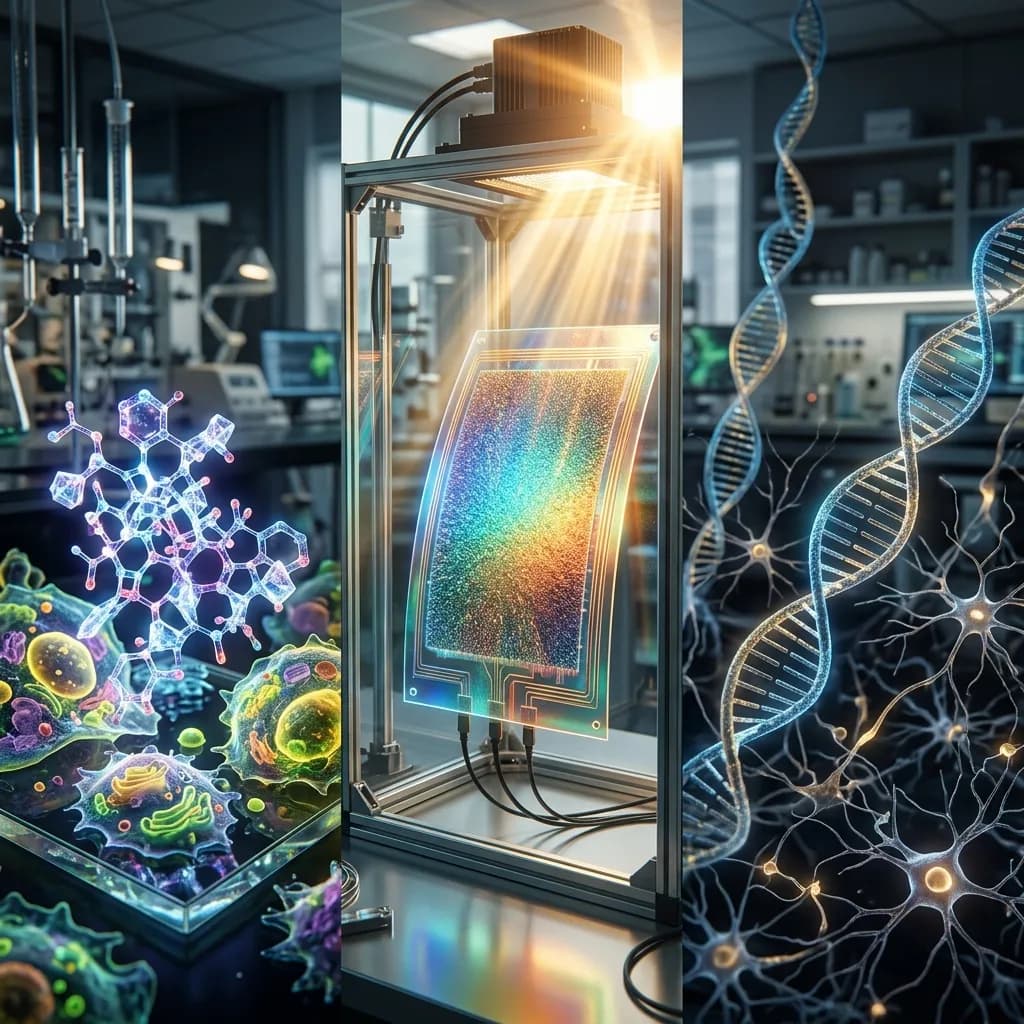
From re-engineering metabolic therapeutics for infectious neurology to breaking efficiency barriers in clean energy harvesting, peer-reviewed research across global laboratories continues to redefine what is possible. This week, landmark discoveries span targeted host-directed therapies for brain infections, record-breaking perovskite-organic photovoltaic architectures, and fundamental insights into how neural circuits construct themselves through programmed DNA breakage. Together, these findings highlight how interdisciplinary science is tackling critical global health, energy transition, and developmental neurobiology challenges.
🔬 Semaglutide Repurposed to Tame Fatal Brain Inflammation in Tuberculous Meningitis
Tuberculous meningitis (TBM) represents the most lethal and debilitating clinical presentation of Mycobacterium tuberculosis infection. Even with aggressive multidrug antibiotic regimens, up to half of all affected patients succumb to the disease or suffer severe, irreversible neurological damage. The primary culprit behind this catastrophic morbidity is not solely the bacterial pathogen itself, but rather the host's uncontrolled, hyper-inflammatory immune response within the enclosed space of the central nervous system. For decades, clinicians have relied on high-dose corticosteroids to quell this intracranial neuroinflammation, yet steroid resistance, systemic immunosuppression, and inconsistent patient outcomes have long demanded a more precise therapeutic strategy.
In a pioneering study published in Nature Communications (July 21, 2026), an international team of researchers led by scientists at Cincinnati Children’s Hospital Medical Center demonstrated that the widely prescribed GLP-1 receptor agonist semaglutide acts as a potent host-directed therapeutic capable of dampening neuroinflammation in TBM. Utilizing sophisticated multi-model preclinical platforms, the investigators evaluated metabolic and immunological pathways triggered during central nervous system tuberculosis. They discovered that activating GLP-1 receptors on microglial and endothelial populations significantly reshaped local cytokine networks, halting the cascade of cytotoxic immune cell infiltration without impairing the host's ability to clear bacteria.
Remarkably, semaglutide direct head-to-head comparisons revealed that GLP-1 receptor activation suppressed intracranial inflammatory tissue injury far more effectively than traditional corticosteroids. By downregulating key pro-inflammatory transcription factors and preserving blood-brain barrier integrity, the metabolic drug prevented cerebral edema and ischemia. This host-directed approach shifts the treatment paradigm from solely trying to kill bacteria to actively protecting neurovascular tissue from the collateral damage of immune responses.
The real-world implications of this discovery are immense. Because semaglutide is already FDA-approved and manufactured globally at scale for diabetes and obesity management, clinical translation into infectious disease protocols could proceed rapidly. Moving forward, clinical trials are being prepared to evaluate semaglutide as an adjunctive co-therapy alongside standard anti-tubercular drug cocktails, potentially saving tens of thousands of lives annually across high-TB-burden developing nations.
☀️ Perovskite-Organic Tandem Solar Cells Shatter Efficiency Records at 28%
As global demand for clean energy intensifies, traditional single-junction silicon solar cells are rapidly approaching their theoretical thermodynamic efficiency limits (around 29.4%). To surpass these constraints, photovoltaic researchers have focused on multi-junction tandem solar cells, which stack materials with complementary bandgaps to absorb different segments of the solar spectrum. However, pairing metal-halide perovskites with organic semiconductors has historically proven challenging due to electrical losses at the interfacial contact layers and degradation under environmental heat and humidity.
Publishing in Nature (July 2026), a research collaboration led by materials scientists at The Hong Kong Polytechnic University and international energy consortia announced a major milestone: a certified steady-state power conversion efficiency of 28.04% for perovskite-organic tandem photovoltaics. The team engineered a novel dual-junction architecture featuring a wide-bandgap perovskite top cell designed to absorb high-energy ultraviolet and visible photons, paired with a narrow-bandgap organic bottom cell optimized to capture near-infrared radiation.
The core technical breakthrough lies in the development of a self-assembled amphiphilic molecular monolayer at the heterojunction interface. This ultra-thin molecular buffer layer resolved mismatched energetic levels between the perovskite and organic sub-cells, reducing non-radiative recombination losses to near zero. Furthermore, the team incorporated nanoscale amorphization techniques that stabilized the perovskite crystal lattice under severe reverse-bias stress and thermal fluctuations, allowing the module to retain over 90% of its initial efficiency after thousands of hours of accelerated operation.
This 28.04% efficiency record demonstrates that perovskite-organic tandems can compete directly with silicon-perovskite hybrids while offering unique physical advantages, including lightweight flexibility and low-temperature roll-to-roll manufacturing compatibility. As pilot-scale fabrication lines begin testing these molecularly engineered interfaces, flexible high-efficiency solar films could soon be integrated into building facades, electric vehicles, and portable energy storage systems worldwide.
🧬 Programmed DNA Breaks Uncovered as the Architect of Neural Wiring
For decades, double-strand breaks (DSBs) in genomic DNA have been viewed almost exclusively as catastrophic events—hallmarks of genetic mutation, radiation exposure, or cellular senescence that cells must immediately arrest to prevent cancer. However, a landmark neurodevelopmental study published in Nature (July 2026) has upended this fundamental biological consensus by demonstrating that controlled, severe DNA double-strand breaks are actually a mandatory, natural feature of brain formation.
Investigating how embryonic cortical neurons migrate and establish intricate brain circuits, researchers tracked newborn neurons as they navigated through dense cellular environments during cerebral cortex development. Using ultra-high-resolution live imaging and single-cell genomic sequencing, the scientists observed that migrating neurons routinely experience localized mechanical deformation that induces targeted DSBs in specific regulatory regions of their genome. Far from being accidental harm, these genomic breaks act as critical molecular signals that switch on precise developmental gene cascades required for neuronal maturation.
The team uncovered a specialized enzymatic repair machinery operating inside developing neurons that immediately resolves these physiological DSBs without causing chromosomal rearrangements. This fast-acting repair mechanism ensures that genes governing axon guidance and synaptic arborization are selectively opened and transcribed precisely at the moment when migrating neurons arrive at their final cortical layer destinations. When the researchers experimentally blocked these routine DNA breaks or their repair pathways, neurons lost their navigational fidelity and failed to form functional synaptic connections.
Understanding that controlled genomic damage is an essential driver of neural circuit wiring opens brand-new avenues in developmental neuroscience and neurodegenerative disease research. Misregulation of this physiological DNA break-and-repair cycle may underlie neurodevelopmental conditions such as autism spectrum disorders and microcephaly. Moreover, studying how young neurons rapidly repair DSBs without inducing cell death could inspire new therapeutic strategies for enhancing genomic repair in aging neurons affected by Alzheimer’s or ALS.
📌 The Bottom Line
- semaglutide-tb-meningitis: GLP-1 receptor agonist semaglutide outperforms corticosteroids as a host-directed therapy, suppressing fatal brain inflammation in tuberculous meningitis.
- perovskite-organic-solar-record: Novel molecular interface engineering achieves a record 28.04% steady-state efficiency in flexible perovskite-organic tandem solar cells.
- neural-dna-repair-breakthrough: Controlled double-strand DNA breaks discovered as a mandatory biological process that directs migrating neurons to build functional brain circuits.
📬 Stay Updated
Get the week's most important research breakthroughs delivered to your inbox. Subscribe to our free newsletter →
Disclosure: This post contains affiliate links. If you purchase through our links, we earn a small commission at no extra cost to you. We only recommend products we believe in.
Enjoyed this post?
Get our weekly digest delivered free.
Share this post:
Knowelth is reader-supported. We may earn a commission from links in this article at no extra cost to you. Read our disclosure.
Related Posts

Targeted Protein Degrader Rewrites Leukemia Drug Sensitivity, Oxytocin Selectively Modulates Low Trust, and Siberian Permafrost Methane Surge Doubles
Targeted Protein Degrader Rewrites Leukemia Drug Sensitivity, Oxytocin Selectively Modulates Low Trust, and Siberian Permafrost Methane Surge Doubles Scientific discovery rarely moves in a single dire…
Global Research Breakthroughs: HCMI Patient Cancer Organoids, Ultra-Durable Nanochannel Fuel Cells, and 567-Million-Year-Old Deep-Ocean Fossils
Global Research Breakthroughs: HCMI Patient Cancer Organoids, Ultra-Durable Nanochannel Fuel Cells, and 567-Million-Year-Old Deep-Ocean Fossils Across biology, materials physics, and evolutionary pale…
Tumour Organoid Vulnerability Map, 567M-Year-Old Ediacaran Fossils, and NIH's TrialGPT AI Breakthrough
Tumour Organoid Vulnerability Map, 567M-Year-Old Ediacaran Fossils, and NIH's TrialGPT AI Breakthrough Three landmark studies published in the first week of August 2026 span the full breadth of modern…