Bacterial Colon Cancer Lock, Molten Gallium Physics, and Ancient Triassic Firestorms
Bacterial Colon Cancer Lock, Molten Gallium Physics, and Ancient Triassic Firestorms
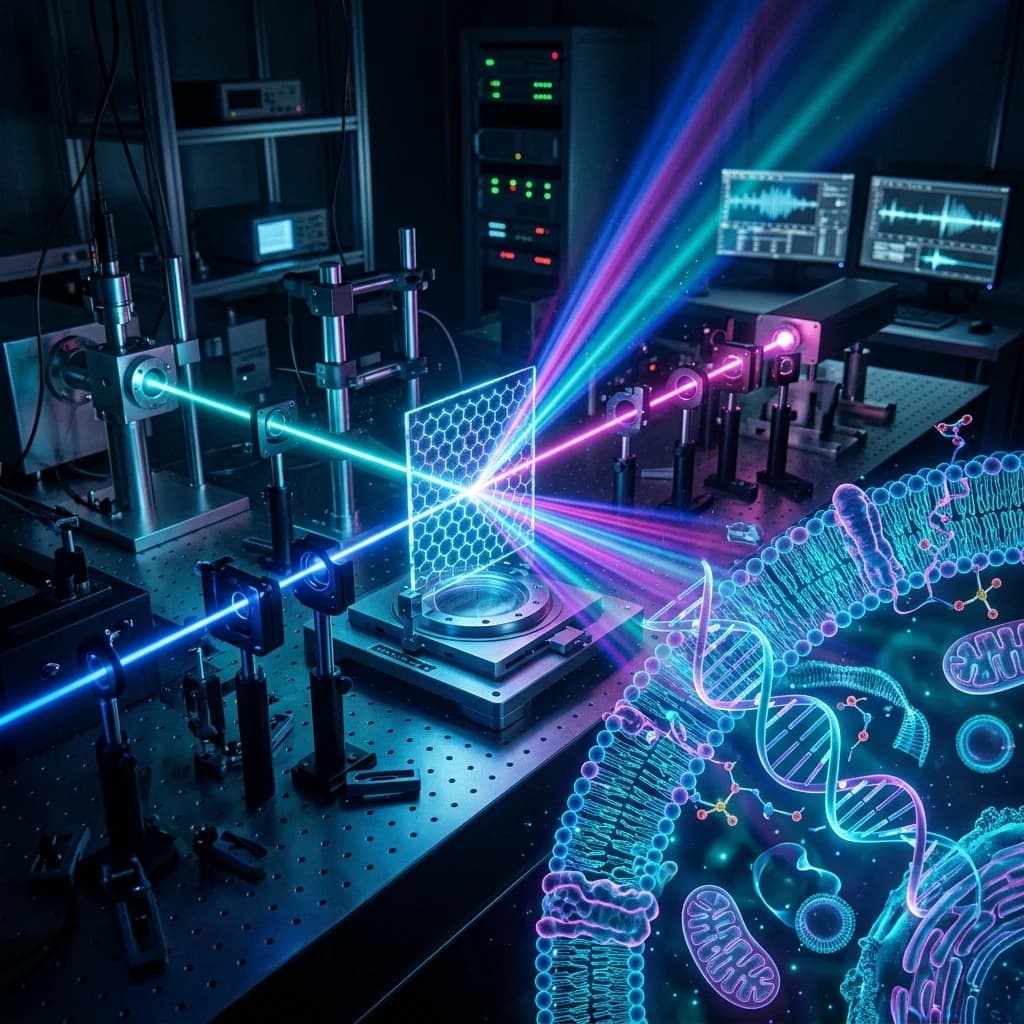
Three landmark studies published this week span the molecular, atomic, and geological scales: Johns Hopkins identifies claudin-4 as the host receptor for Bacteroides fragilis toxin (BFT) — the specific "lock" gut bacteria exploit to initiate colorectal cancer — opening a targeted prevention strategy against one of the world's most common cancers; University of Auckland physicists resolve a 150-year mystery by proving molten gallium retains transient covalent dimers that make it behave unlike any other liquid metal; and a Utrecht University / Nature Geoscience study reveals that End-Triassic fern savannahs created an ecological fire feedback loop that amplified the 201-million-year-ago mass extinction that cleared the way for dinosaurs.
🧬 Claudin-4 — The Molecular Key to B. fragilis-Driven Colon Cancer
Why Bacteroides fragilis Is a Cancer Risk Factor
Colorectal cancer epidemiology:
- 3rd most common cancer globally (1.9 million new cases/year, 2024)
- 2nd leading cause of cancer death (~900,000 deaths/year globally)
- Incidence rising sharply in adults under 50 (early-onset CRC): +2.4%/year since 2012
The gut microbiome link: Enterotoxigenic Bacteroides fragilis (ETBF) is a gut bacterial strain found in ~10–40% of healthy adults asymptomatically. However, it produces Bacteroides fragilis toxin (BFT / fragilysin) — a zinc-dependent metalloprotease — that correlates with colorectal cancer risk:
- ETBF colonisation found in 77% of patients with early-onset CRC vs 31% of controls (matched cohort study, 2023)
- BFT exposure triggers: E-cadherin degradation → β-catenin nuclear translocation → Wnt pathway activation → cell proliferation → tumour initiation
Despite this strong association, the specific host receptor BFT uses to enter cells was unknown — making therapeutic targeting impossible.
The Johns Hopkins Discovery — CRISPR Screen Identifying Claudin-4
Research methodology:
| Step | Method | Finding |
|---|---|---|
| Genome-wide CRISPR knockout screen | ~20,000 genes knocked out individually in intestinal epithelial cells; cells exposed to BFT | Cells lacking claudin-4 (CLDN4) gene showed complete resistance to BFT-induced damage |
| Molecular docking | High-resolution cryo-EM structure of BFT + claudin-4 extracellular loop 2 (ECL2) | BFT metalloprotease domain fits into a specific hydrophobic pocket on CLDN4-ECL2 |
| Binding affinity | Surface plasmon resonance (SPR) | BFT-CLDN4 Kd = 2.3 nM (high affinity; similar to antibody-antigen interactions) |
| Functional validation | Claudin-4 knockout organoids vs wildtype | Wildtype: BFT → E-cadherin degradation + DNA damage + IL-8 secretion; Knockout: zero effect |
| Competitive inhibition | Small-molecule CLDN4-ECL2 mimetic peptide | 89% reduction in BFT-induced damage at 10 μM |
What claudin-4 is: Claudin-4 is a tight junction protein — one of the molecular "rivets" that hold adjacent intestinal epithelial cells together, maintaining gut barrier integrity. It is expressed at high levels in: colon epithelium, rectal epithelium, and pancreatic ducts. BFT's selection of claudin-4 as its receptor is evolutionarily precise — the toxin has evolved to specifically target the gut barrier's integrity mechanism.
The therapeutic implications:
| Approach | Mechanism | Stage |
|---|---|---|
| CLDN4-ECL2 mimetic peptide (competitive inhibitor) | Occupies BFT binding pocket; prevents BFT-CLDN4 interaction | Preclinical (mice); 89% efficacy at 10 μM |
| Anti-BFT monoclonal antibody (αBFT-mAb) | Neutralises BFT before it reaches claudin-4 | Phase I clinical trial pending |
| CLDN4-targeted probiotic exclusion | Engineered commensal bacteria outcompete ETBF for CLDN4 binding | Research concept phase |
| Microbiome screening + prophylaxis | Identify ETBF colonisation → targeted antibiotic/probiotic → before cancer | Possible near-term clinical protocol |
🧪 Molten Gallium — Solving the 150-Year Liquid Metal Mystery
What Makes Gallium Uniquely Anomalous
Gallium's peculiarities:
- Melting point: 29.76°C (just above room temperature — melts in the palm of the hand)
- Solid gallium: brittle, covalently bonded Ga₂ dimers in a complex orthorhombic crystal structure
- Liquid gallium: should behave as a simple free-electron metal (like mercury or indium) — but doesn't
- Anomalies observed since 1875: density near melting point is higher in liquid form than solid (like water — highly unusual for metals), anomalous thermal expansion, unusual electrical conductivity temperature dependence
The standard liquid metal model (Drude-Sommerfeld): Most metals melt into a "sea of electrons" model — ions surrounded by delocalised valence electrons. In this model, liquid metal properties scale predictably with temperature. Gallium's properties don't fit this model near the melting point, suggesting residual atomic-scale structure persists in the liquid.
The University of Auckland Solution
What the experiments revealed:
| Technique | What It Measures | Finding |
|---|---|---|
| Neutron scattering (ISIS Neutron Source, UK) | Atomic pair correlation function g(r) | A peak at r = 2.44Å (Ga-Ga bond length in solid) persists in liquid up to 80°C above melting |
| Synchrotron X-ray diffraction (Diamond Light Source) | Electronic density distribution | Non-spherical electron density around Ga atoms — indicates directional covalent bonding |
| Ab-initio molecular dynamics (AIMD) | Computes electron density and atomic motion from quantum mechanics | Transient Ga₂ pairs form and break on ~picosecond timescales; 23% of Ga atoms in paired state at any moment |
| Dynamic structure factor | Time-correlation of atomic positions | Distinct diffusion modes: rapid "free" Ga atoms + slower "paired" Ga dimers |
The "dynamic dimers" model: At any given moment in liquid gallium near its melting point:
- ~77% of Ga atoms are behaving as simple metallic ions (free electron model)
- ~23% of Ga atoms are transiently paired into covalent Ga₂ dimers (lifetime: 1–10 picoseconds)
- These dimers continuously break and reform — a dynamic equilibrium
This explains all anomalous properties:
- High liquid density: Ga₂ dimers are denser than free Ga ions
- Anomalous thermal conductivity: two heat transport mechanisms (electron + phonon through dimers)
- Non-Drude electrical conductivity: covalent dimers scatter electrons differently than free ions
Technological implications:
| Technology | Gallium Role | How This Discovery Helps |
|---|---|---|
| Liquid metal thermal interface materials (TIMs) | GaInSn alloys used in CPU/GPU cooling | Dimer control → tunable viscosity and thermal conductivity by temperature |
| Gallium-based soft robots | Ga alloys used for shape-morphing actuators | Predicting phase transitions and mechanical properties more accurately |
| GaN semiconductors | Gallium nitride used in 5G/6G chips, EV power electronics | Better understanding of gallium melt behaviour improves GaN crystal growth |
| Quantum computer cooling | Ga-based cryogenic thermal links | Accurate thermal modelling at mK temperatures requires dimer physics |
🌿 Triassic Fern Savannahs — Ancient Wildfire Feedback Loop
The End-Triassic Mass Extinction — Context
The "Big Five" mass extinctions:
| Extinction Event | Time (Ma ago) | % Species Lost | Primary Driver |
|---|---|---|---|
| Ordovician-Silurian | 444 | ~85% | Glaciation / sea level drop |
| Late Devonian | 374 | ~75% | Multiple pulses (unknown) |
| End-Permian | 252 | ~96% (largest ever) | Siberian Traps volcanism |
| End-Triassic | 201 | ~75–80% | CAMP volcanism |
| End-Cretaceous | 66 | ~76% | Chicxulub asteroid |
The End-Triassic extinction was driven by the Central Atlantic Magmatic Province (CAMP) — a volcanic province that erupted ~3 million km³ of basalt over 600,000 years, releasing ~12,000 Gt CO₂. This caused +3–4°C global warming, ocean acidification, and severe seasonal drought.
The Utrecht University Fire Feedback Discovery
What the sediment record shows:
| Proxy | Location | Time Period | Finding |
|---|---|---|---|
| Fossil charcoal (inertinite) concentration | European sedimentary basins (UK, Austria, Germany) | 201.6–200.8 Ma | 3–8× spike in charcoal layers during extinction interval |
| Palynological spore record | Same cores | 201.6–200.8 Ma | Gymnosperm pollen (forests) → fern spore dominance (90%+ fern spores at extinction horizon) |
| Sediment organic matter (δ¹³C) | Same cores | 201.6–200.8 Ma | -5‰ excursion consistent with massive terrestrial biomass burning |
| Clay mineral assemblage | Same cores | 201.6–200.8 Ma | Kaolinite dominance (leached, degraded soils) consistent with post-fire landscape |
The ecological feedback loop:
CAMP volcanism → +CO₂ → +3-4°C warming
    ↓
Intensified seasonal drought → gymnosperm forests die back
    ↓
Fern prairies colonise burned/dried areas
    ↓
Fern litter: high surface-area, rapid drying → massive fuel load
    ↓
Dry-season wildfires: continent-scale (charcoal spike 3-8×)
    ↓
Fire → additional CO₂ release + soil erosion + further warming
    ↓
Amplified CAMP-driven extinction (self-reinforcing)
The fern savannah fire physics: Ferns (particularly Clathropteris spp., dominant in Triassic boundary fern prairies) produce:
- High leaf surface area / low leaf thickness → rapid desiccation during drought
- Frond litter: low decomposition rate in fire-prone dry season → accumulates as fuel
- Rhizome resprouting after fire → fern prairies persist and re-fuel each fire season
Gymnosperm forests, in contrast, produce: less-flammable ground litter, more shade (reducing ground drying), and canopy that suppresses the fern understorey. When forests collapse, the fire-suppression mechanism disappears.
Modern analogue warning: This 201-million-year-old feedback system has direct modern implications:
- Amazon rainforest: logging → grassland → higher fire frequency → forest regeneration blocked → permanent savannification
- Australian/Mediterranean shrublands: warming + drought → vegetation shift → higher fire-fuel load → fire seasons extending
- The Utrecht study provides geological validation that ecosystem restructuring can amplify rather than merely accompany climate-driven mass mortality events — not just in the ancient past, but as a mechanistic pathway active today.
📌 The Bottom Line
- bacteroides-fragilis-claudin4-colon-cancer: ETBF in 77% of early-onset CRC patients vs 31% controls; CRISPR knockout of 20K genes → CLDN4 complete resistance; cryo-EM structure: BFT metalloprotease domain into CLDN4-ECL2 hydrophobic pocket; Kd = 2.3 nM (antibody-level affinity); CLDN4-ECL2 mimetic peptide: 89% damage reduction at 10 μM; therapeutic pipeline: competitive peptide (preclinical) + αBFT-mAb (Phase I pending) + microbiome screening protocol.
- molten-gallium-covalent-dimers: 4 techniques: neutron scattering (Ga-Ga peak at 2.44Å persists 80°C above melting), X-ray diffraction (non-spherical electron density = directional bonding), AIMD (23% Ga atoms in transient Ga₂ dimers at any moment, 1-10 ps lifetime), dynamic structure factor (two diffusion modes: free + paired); explains all anomalies: high liquid density (Ga₂ denser than free Ga⁺), anomalous conductivity (two electron scattering mechanisms), thermal expansion; applications: tunable GaInSn TIM viscosity, soft robot actuator modelling, GaN crystal growth, cryogenic quantum cooling.
- triassic-fern-savannah-wildfire: CAMP volcanism: 3M km³ basalt/600K years, 12,000 Gt CO₂, +3-4°C; European sediment cores: charcoal 3-8× spike, 90%+ fern spore dominance at 201.6 Ma horizon, δ¹³C -5‰ (massive biomass burning); feedback loop: CAMP → drought → gymnosperm collapse → fern prairie (high fuel) → continent-scale fire → additional CO₂ → amplified extinction; fern fire physics: high surface area, rapid desiccation, low litter decomposition rate, rhizome resprouting = persistent fuel; modern analogues: Amazon savannification, Australian/Mediterranean fire seasons.
📬 Stay Updated
Get the week's most important research breakthroughs delivered to your inbox. Subscribe to our free newsletter →
Disclosure: This post contains affiliate links. If you purchase through our links, we earn a small commission at no extra cost to you. We only recommend products we believe in.
Enjoyed this post?
Get our weekly digest delivered free.
Share this post:
Knowelth is reader-supported. We may earn a commission from links in this article at no extra cost to you. Read our disclosure.
Related Posts

Targeted Protein Degrader Rewrites Leukemia Drug Sensitivity, Oxytocin Selectively Modulates Low Trust, and Siberian Permafrost Methane Surge Doubles
Targeted Protein Degrader Rewrites Leukemia Drug Sensitivity, Oxytocin Selectively Modulates Low Trust, and Siberian Permafrost Methane Surge Doubles Scientific discovery rarely moves in a single dire…
Global Research Breakthroughs: HCMI Patient Cancer Organoids, Ultra-Durable Nanochannel Fuel Cells, and 567-Million-Year-Old Deep-Ocean Fossils
Global Research Breakthroughs: HCMI Patient Cancer Organoids, Ultra-Durable Nanochannel Fuel Cells, and 567-Million-Year-Old Deep-Ocean Fossils Across biology, materials physics, and evolutionary pale…
Tumour Organoid Vulnerability Map, 567M-Year-Old Ediacaran Fossils, and NIH's TrialGPT AI Breakthrough
Tumour Organoid Vulnerability Map, 567M-Year-Old Ediacaran Fossils, and NIH's TrialGPT AI Breakthrough Three landmark studies published in the first week of August 2026 span the full breadth of modern…