From Synthetic Black Hole Energy to Solar Carbon Capture and 90% CRISPR Precision: 3 Science Breakthroughs Shaking 2026
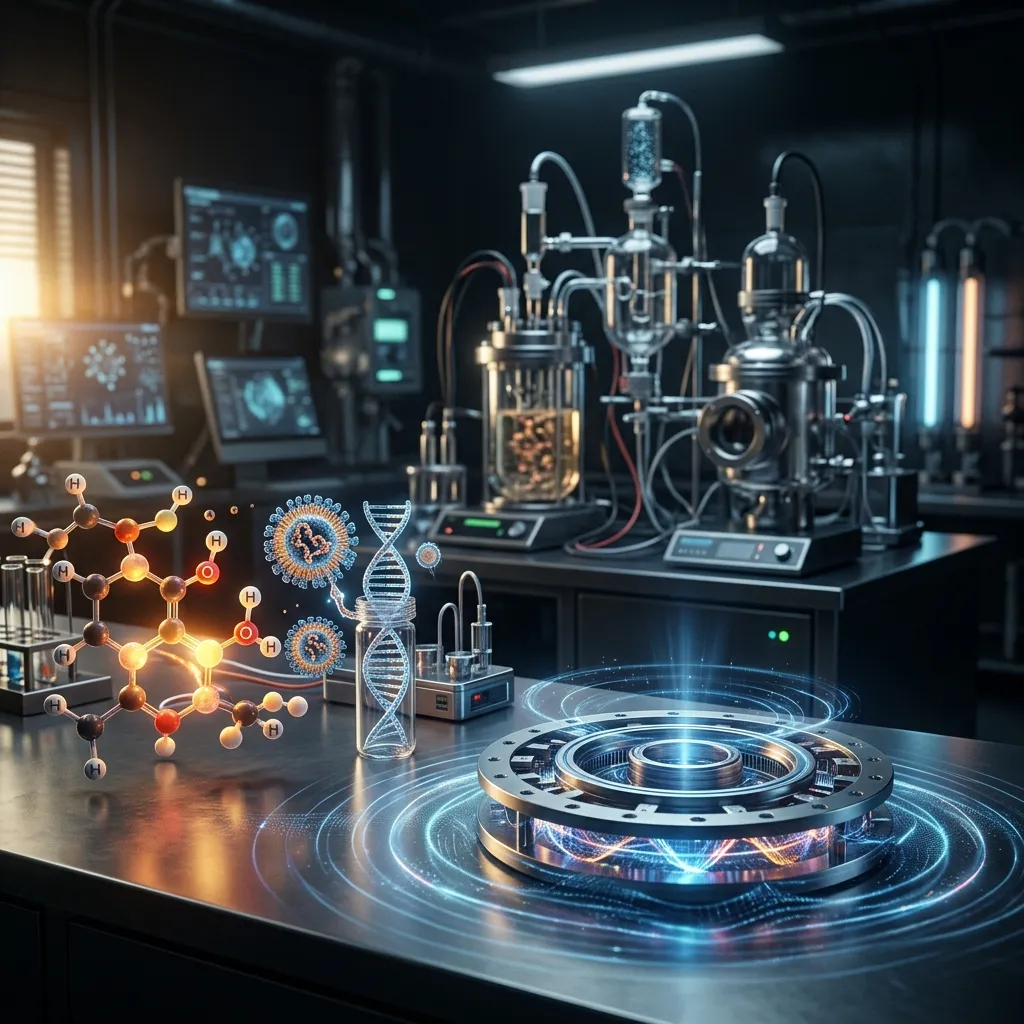
From Synthetic Black Hole Energy to Solar Carbon Capture and 90% CRISPR Precision: 3 Science Breakthroughs Shaking 2026
Humanity's frontier of knowledge is expanding at an astonishing pace, pushing beyond theoretical physics, sustainable chemistry, and molecular medicine. This week's featured scientific breakthroughs demonstrate how turning deep theoretical concepts into laboratory realities can unlock cleaner energy, efficient carbon removal, and pinpoint genetic cures. From extracting rotational energy using synthetic black hole physics to harvesting carbon dioxide directly with sunlight, these discoveries represent major leaps forward for global science.
🌀 Recreating Black Hole Physics on a Benchtop: Energy Extraction via Synthetic Rotation
For over half a century, one of theoretical astrophysics' most tantalizing ideas remained confined to equations and cosmic gedankenexperiments: the Penrose Process and Zel'dovich Superradiance. First conceptualized by Sir Roger Penrose in 1969 and expanded by Yakov Zel'dovich in 1971, the theory posited that energy could be extracted from a rapidly spinning black hole's ergosphere—the region of space-time dragged along by extreme gravity. If a physical object or wave interacts with this rotating region at sufficient speeds, it emerges with more energy than it entered. However, testing this phenomenon experimentally seemed impossible because mechanical objects cannot be physically spun fast enough without disintegrating under centrifugal stress.
In a landmark study published in Nature, researchers at the Advanced Science Research Center at the CUNY Graduate Center (CUNY ASRC) bypassed physical motion altogether by developing a system based on synthetic rotation. Led by a multidisciplinary team of optical physicists and electrical engineers, the researchers constructed a stationary radio-frequency platform using a ring-shaped array of electronic micro-resonators. Instead of spinning physical matter, the team modulated the electrical properties of the resonators in a rapid, precisely timed sequence. This created a traveling electromagnetic phase pattern—a virtual spin—that mimics the space-time dragging of a Kerr black hole ergosphere without moving a single mechanical component.
When incoming radio frequency waves were passed through this synthetically rotating environment, they interacted with the time-engineered phase gradient, harvested energy from the system, and emerged visibly amplified. The experiment confirmed that superradiance—amplification driven by angular momentum—can be engineered and harnessed on a laboratory benchtop. Analogous to how a surfer catches energy from a fast-moving oceanic wave, the electromagnetic signals absorbed energy directly from the synthetic rotational field.
The implications of this breakthrough stretch far beyond fundamental physics. By establishing a controllable framework for wave amplification without moving parts, the CUNY ASRC team has unlocked potential applications in high-efficiency wireless telecommunications, advanced optical isolators, and non-reciprocal photonics. Furthermore, this platform provides astrophysicists with a terrestrial testbed to model extreme relativistic phenomena—allowing researchers to investigate black hole thermodynamics and quantum gravity dynamics directly inside a laboratory setting.
☀️ Harnessing Sunlight for Carbon Capture: Harvard's Photobase Revolution
Direct Air Capture (DAC) is widely recognized as an essential technology for mitigating global climate change, yet existing industrial sorbents suffer from a major economic handicap: energy intensity. Standard chemical systems rely on thermal regeneration, requiring heating sorbent materials to temperatures between 100°C and 900°C to release trapped carbon dioxide ($CO_2$). This heavy thermal requirement makes widespread deployment costly and carbon-intensive unless powered by abundant zero-carbon heat sources.
Addressing this challenge, a team of chemists at Harvard University, led by Assistant Professor Richard Y. Liu alongside collaborator Daniel G. Nocera, introduced a solar-powered alternative in Nature Chemistry. The researchers engineered a novel class of organic molecules known as fluorenyl photobases. These light-sensitive molecules serve as molecular switches that alter their basicity dynamically when exposed to light. When ambient sunlight strikes the photobases, they undergo a rapid electronic transformation that generates hydroxide ($OH^-$) ions in solution. These hydroxide ions aggressively bind ambient carbon dioxide molecules, converting them into dissolved bicarbonate.
The true breakthrough lies in the system's complete photoreversibility. When the light source is removed or modulated, the photobase reverts to its original ground state, lowering the pH of the solution by nearly six full units and prompting the bound $CO_2$ to release as pure gas. Unlike conventional systems that demand high-grade thermal power, Harvard's photobase technology utilizes sunlight as the direct driver for both capture and release phases. The reaction operates efficiently in aqueous environments, remains stable in the presence of oxygen, and functions continuously across multiple solar charge-discharge cycles.
By eliminating thermal regeneration penalties, fluorenyl photobases could drastically alter the unit economics of direct carbon removal. The technology provides a scalable blueprint for solar-driven carbon capture farms where sunlight directly drives ambient atmospheric scrubbing during peak daylight hours. Beyond direct air capture, these photoreversible aqueous systems offer new possibilities for solar chemical manufacturing, industrial gas purification, and sustainable water treatment networks.
🧬 Supercharging Gene Editing: Modified Nanoparticles Push CRISPR Efficiency to 90%
While CRISPR-Cas gene editing has transformed biological research and enabled landmark therapies for blood disorders, in vivo delivery—delivering genetic editors precisely into targeted human tissues—remains one of medicine's greatest hurdles. Standard lipid nanoparticles (LNPs), which earned global prominence as mRNA carriers for COVID-19 vaccines, often struggle to navigate complex cellular barriers or release their molecular payloads efficiently inside target cells, limiting therapeutic editing efficiencies in living organisms.
Recent peer-reviewed findings published across Science Translational Medicine and Nature Medicine highlight a breakthrough in LNP formulation that dramatically enhances gene editing delivery. Researchers engineered next-generation LNPs by incorporating a specialized trio of amino acid modifications into the lipid matrix. This subtle chemical modification significantly alters how the nanoparticle interacts with cell membranes and endosomes—the internal compartments that frequently trap and degrade genetic cargo before it reaches the cell nucleus.
In laboratory trials and preclinical models, the amino-acid-enhanced LNPs boosted intracellular mRNA delivery up to 20-fold compared to conventional formulations. When paired with compact CRISPR enzymes (such as miniature Cas12f variants) and advanced base editors—which swap individual DNA base pairs without double-stranded DNA cuts—the system achieved in vivo editing efficiencies reaching up to 90%. Think of traditional LNPs as standard delivery vans navigating crowded city streets; these engineered nanoparticles act as high-speed express lanes that bypass cellular checkpoints and deliver editing machinery straight to the target location.
This dramatic leap in delivery efficiency clears critical technical roadblocks for in vivo genomic therapeutics. High-efficiency base editing opens new avenues for treating inherited cardiovascular diseases, hepatic metabolic conditions, and pediatric genetic disorders with single-dose treatments. By combining improved mRNA stability with higher delivery precision, researchers are moving closer to off-the-shelf, non-viral gene therapies that can be administered safely, rapidly, and at lower costs worldwide.
📌 The Bottom Line
- black-hole-energy-extraction: CUNY ASRC scientists successfully demonstrated Penrose-Zel'dovich wave amplification using synthetic rotation on a laboratory benchtop, opening new horizons for quantum photonics and extreme astrophysics.
- sunlight-carbon-capture: Harvard chemists created photoreversible fluorenyl photobases that capture and release atmospheric $CO_2$ using sunlight alone, eliminating the heavy thermal energy penalties of traditional Direct Air Capture.
- crispr-mrna-nanoparticle-delivery: Next-generation amino-acid-modified lipid nanoparticles boosted mRNA delivery 20-fold and pushed in vivo CRISPR base editing efficiency to 90%, accelerating the future of non-viral gene therapy.
📬 Stay Updated
Get the week's most important research breakthroughs delivered to your inbox. Subscribe to our free newsletter →
Disclosure: This post contains affiliate links. If you purchase through our links, we earn a small commission at no extra cost to you. We only recommend products we believe in.
Enjoyed this post?
Get our weekly digest delivered free.
Share this post:
Knowelth is reader-supported. We may earn a commission from links in this article at no extra cost to you. Read our disclosure.
Related Posts

Targeted Protein Degrader Rewrites Leukemia Drug Sensitivity, Oxytocin Selectively Modulates Low Trust, and Siberian Permafrost Methane Surge Doubles
Targeted Protein Degrader Rewrites Leukemia Drug Sensitivity, Oxytocin Selectively Modulates Low Trust, and Siberian Permafrost Methane Surge Doubles Scientific discovery rarely moves in a single dire…
Global Research Breakthroughs: HCMI Patient Cancer Organoids, Ultra-Durable Nanochannel Fuel Cells, and 567-Million-Year-Old Deep-Ocean Fossils
Global Research Breakthroughs: HCMI Patient Cancer Organoids, Ultra-Durable Nanochannel Fuel Cells, and 567-Million-Year-Old Deep-Ocean Fossils Across biology, materials physics, and evolutionary pale…
Tumour Organoid Vulnerability Map, 567M-Year-Old Ediacaran Fossils, and NIH's TrialGPT AI Breakthrough
Tumour Organoid Vulnerability Map, 567M-Year-Old Ediacaran Fossils, and NIH's TrialGPT AI Breakthrough Three landmark studies published in the first week of August 2026 span the full breadth of modern…