Lethal Cancer Mechanisms, Sleep-Memory Circuits, and Low-Energy Carbon Capture: Three Major Breakthroughs
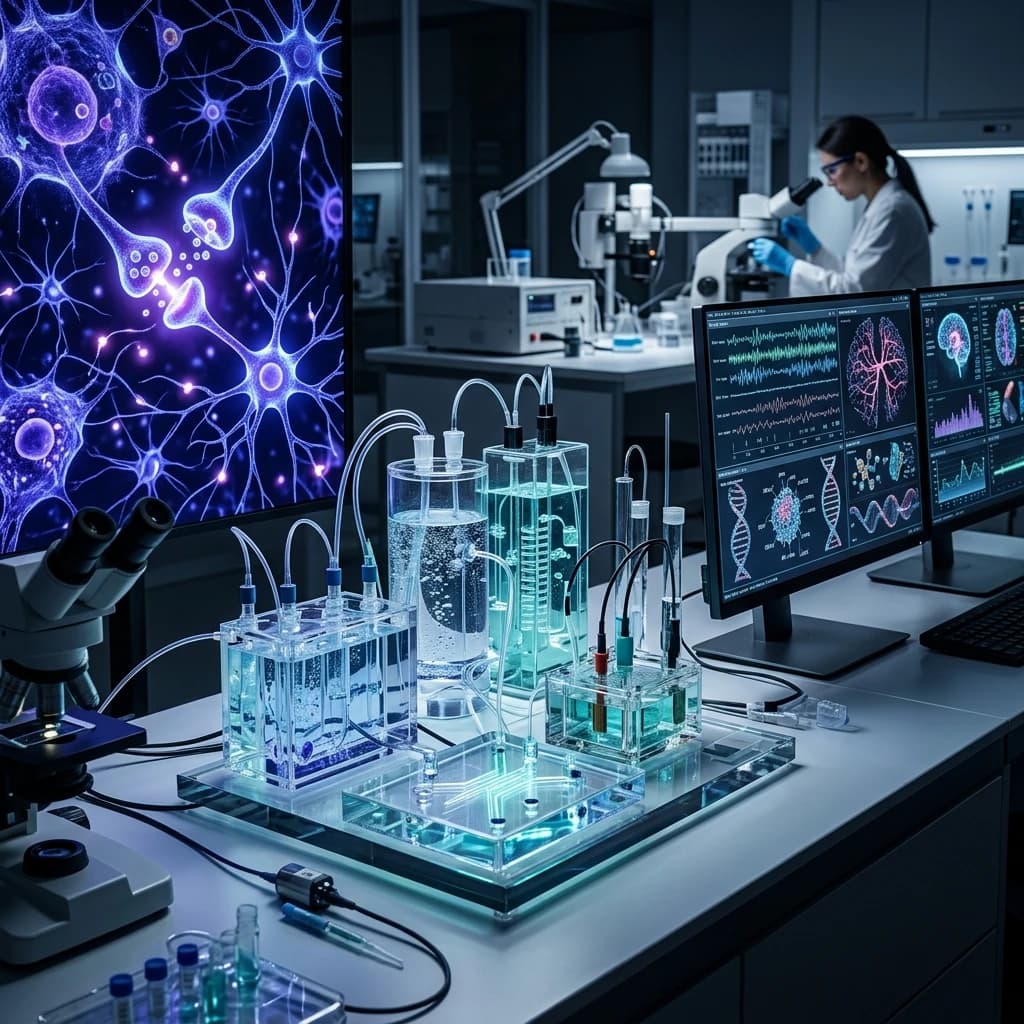
Lethal Cancer Mechanisms, Sleep-Memory Circuits, and Low-Energy Carbon Capture: Three Major Breakthroughs
Scientific discovery rarely moves in a straight line, but this week's peer-reviewed literature delivers pivotal shifts across three vastly different domains of human inquiry. From unraveling the systemic mechanism behind cancer mortality to mapping the neural engine that solidifies our memories during sleep, and engineering an ocean-inspired solution to atmospheric carbon, researchers are pushing the boundaries of what is possible. Here is a deep dive into three landmark studies reshaping medicine, neuroscience, and climate technology.
🩸 Uncovering Cancer's Lethal Secret: How Circulating Tumor Cells Drive Fatal Vascular Clots
For decades, the standard medical consensus surrounding terminal cancer held that death was primarily caused by localized organ failure—tumors invading and destroying critical liver, lung, or brain tissue until vital functions ceased. However, a groundbreaking study published in Nature Medicine by a multidisciplinary team at UT Southwestern Medical Center has uncovered a previously hidden driver of cancer mortality: macrovascular infiltration.
The researchers discovered that as advanced tumors shed circulating tumor cells (CTCs) into the bloodstream, these cells do not merely float passively or settle in distant organs. Instead, specific aggressive CTC sub-clusters act as biological catalysts for acute, widespread intravascular blood clotting inside major systemic blood vessels. These massive clot networks block vital blood flow, inducing rapid multiorgan ischemia and systemic organ collapse long before localized tumor growth itself becomes fatal.
To capture this fleeting phenomenon, the research team established an innovative rapid warm post-mortem autopsy protocol. By analyzing patient tissues within hours of death using single-cell RNA sequencing and high-resolution intravascular imaging, scientists identified transient micro-thrombi enriched with CTCs that rapidly dissolve during standard post-mortem procedures. The genetic profiling revealed that these circulating tumor cells hyper-express specific cell-surface adhesion proteins and tissue factors, essentially hijacking the body's natural blood clotting machinery to construct protective vascular shields around themselves.
This discovery fundamentally reshapes how clinical oncology approaches late-stage patient care. Rather than relying exclusively on cytotoxic chemotherapy or tumor debulking when cancer reaches an advanced stage, oncologists can now integrate targeted anti-thrombotic agents and monoclonal antibodies that block CTC adhesion markers. By preventing systemic vascular occlusion, clinicians may soon be able to avert acute organ collapse, turning previously fatal vascular complications into manageable chronic conditions and significantly extending patient survival.
🧠 Decoding the Brain's Sleep-Memory Engine: A Three-Way Circuit That Locks In Learning
We have long known that a good night's rest is essential for learning, but the exact mechanical architecture that transforms fleeting daily experiences into enduring memories has remained elusive. Writing in Nature Communications, neuroscientists have mapped a critical tripartite neural circuit—connecting the orbitofrontal cortex (OFC), the thalamus, and the hippocampus—that acts as the brain's central processing unit for memory consolidation during deep, non-REM sleep.
The human brain processes vast amounts of sensory information while awake, temporarily storing these memory traces in the hippocampus like a temporary scratchpad. During sleep, this newly identified three-way network initiates a synchronized electrical dance. The thalamus acts as a pacemaker, generating slow sleep spindles that align with high-frequency "sharp-wave ripples" from the hippocampus and delta oscillations in the orbitofrontal cortex. This precise cross-talk ensures that memory representations are systematically replayed and etched into the cortex for long-term storage.
To uncover this delicate orchestration, researchers utilized high-density multi-electrode arrays alongside closed-loop optogenetics in animal models. By monitoring thousands of individual neurons simultaneously across all three brain regions, the team observed that memory transfer relies on millisecond-precise timing. When the scientists used targeted pulses of light to selectively silence thalamic relay neurons for just a fraction of a second during hippocampal ripples, the synchronization collapsed—and the subjects lost the ability to retain tasks learned earlier that day.
The clinical implications of mapping this sleep-memory engine are profound. Cognitive decline in neurodegenerative diseases like Alzheimer's, as well as memory deficits in temporal lobe epilepsy, are strongly linked to fragmented sleep architecture and disrupted oscillatory coupling. With this precise circuit map in hand, bioengineers and neuro-clinicians can now design non-invasive, closed-loop transcranial electrical stimulation devices tailored to reinforce thalamocortical oscillations during sleep, offering a novel non-pharmacological strategy to preserve cognitive function in aging and neurologically impaired populations.
🌊 Battery-Powered Ocean Capture: Extracting Atmospheric CO2 with Saltwater Chemistry
Enjoyed this post?
Get our weekly digest delivered free.
Direct Air Capture (DAC) technology is widely recognized as a critical tool for achieving net-zero emissions, yet conventional DAC facilities face a glaring bottleneck: immense energy consumption. Traditional systems rely on thermal sorbents that must be heated to temperatures as high as 900°C to release trapped carbon dioxide. A revolutionary study published in Environmental Science & Technology introduces a low-energy, battery-like electrochemical cell that harvests atmospheric $CO_2$ using natural ocean saltwater chemistry and electric current.
Developed by a team of chemical and environmental engineers, the system operates on a principle similar to a rechargeable battery, utilizing an alternating voltage potential across a specialized bipolar membrane cell filled with saline solution. When ambient air is bubbled through the cell, an initial low-voltage charge induces a localized alkaline environment that rapidly converts gaseous $CO_2$ into dissolved bicarbonate ions. Reversing the electrical polarity then lowers the pH, causing the dissolved carbon to instantly outgas as pure, concentrated carbon dioxide gas suitable for geological sequestration or synthetic fuel production.
What sets this ocean-inspired process apart is its remarkable thermal efficiency. By completely eliminating the need for high-temperature boilers or steam regeneration cycles, the electrochemical system reduces the overall energy input required per ton of captured $CO_2$ by more than 60%. Furthermore, because the system utilizes natural seawater components as its primary electrolyte, it avoids the hazardous chemical degradation associated with traditional amine solvents.
As global efforts to scale carbon removal gather momentum, this electrochemical breakthrough offers a pragmatic, cost-effective blueprint for climate engineering. Ocean-adjacent facilities powered directly by intermittent renewable energy—such as offshore wind or coastal solar arrays—can operate these modular cells dynamically, ramping carbon capture up or down based on grid demand. By harmonizing green electricity with marine chemistry, scientists have brought gigaton-scale atmospheric carbon extraction one step closer to reality.
📌 The Bottom Line
- cancer-thrombosis: Rapid autopsy protocols reveal that circulating tumor cells trigger systemic intravascular thrombosis, shifting cancer treatment paradigms toward vascular protection.
- sleep-memory-circuits: A synchronized orbitofrontal-thalamic-hippocampal network consolidates daytime learning during sleep, offering therapeutic targets for memory disorders.
- seawater-carbon-capture: An electrochemical cell uses natural saltwater chemistry and electric swings to harvest atmospheric carbon dioxide at a fraction of thermal DAC energy costs.
📫 Stay Updated
Get the week's most important research breakthroughs delivered to your inbox. Subscribe to our free newsletter →
Disclosure: This post contains affiliate links. If you purchase through our links, we earn a small commission at no extra cost to you. We only recommend products we believe in.
Knowelth publishes independently researched analysis verified against primary documentation, academic journals, and official records. To report a factual inaccuracy or request a correction, please reach out via our Contact Page.
Enjoyed this post?
Get our weekly digest delivered free.
Share this post:
Knowelth is reader-supported. We may earn a commission from links in this article at no extra cost to you. Read our disclosure.
Related Posts
Targeted Protein Degrader Rewrites Leukemia Drug Sensitivity, Oxytocin Selectively Modulates Low Trust, and Siberian Permafrost Methane Surge Doubles
Targeted Protein Degrader Rewrites Leukemia Drug Sensitivity, Oxytocin Selectively Modulates Low Trust, and Siberian Permafrost Methane Surge Doubles Scientific discovery rarely moves in a single dire…
Global Research Breakthroughs: HCMI Patient Cancer Organoids, Ultra-Durable Nanochannel Fuel Cells, and 567-Million-Year-Old Deep-Ocean Fossils
Global Research Breakthroughs: HCMI Patient Cancer Organoids, Ultra-Durable Nanochannel Fuel Cells, and 567-Million-Year-Old Deep-Ocean Fossils Across biology, materials physics, and evolutionary pale…
Tumour Organoid Vulnerability Map, 567M-Year-Old Ediacaran Fossils, and NIH's TrialGPT AI Breakthrough
Tumour Organoid Vulnerability Map, 567M-Year-Old Ediacaran Fossils, and NIH's TrialGPT AI Breakthrough Three landmark studies published in the first week of August 2026 span the full breadth of modern…