Nuclear Fusion: Physics Definition, Lawson Criterion, Deuterium-Tritium Reaction, Tokamaks vs Stellarators & Net Energy Gain ($Q > 1$)
Nuclear Fusion: Physics Definition, Lawson Criterion, Deuterium-Tritium Reaction, Tokamaks vs Stellarators & Net Energy Gain ($Q > 1$)
Last updated: August 14, 2026 | 13-minute read
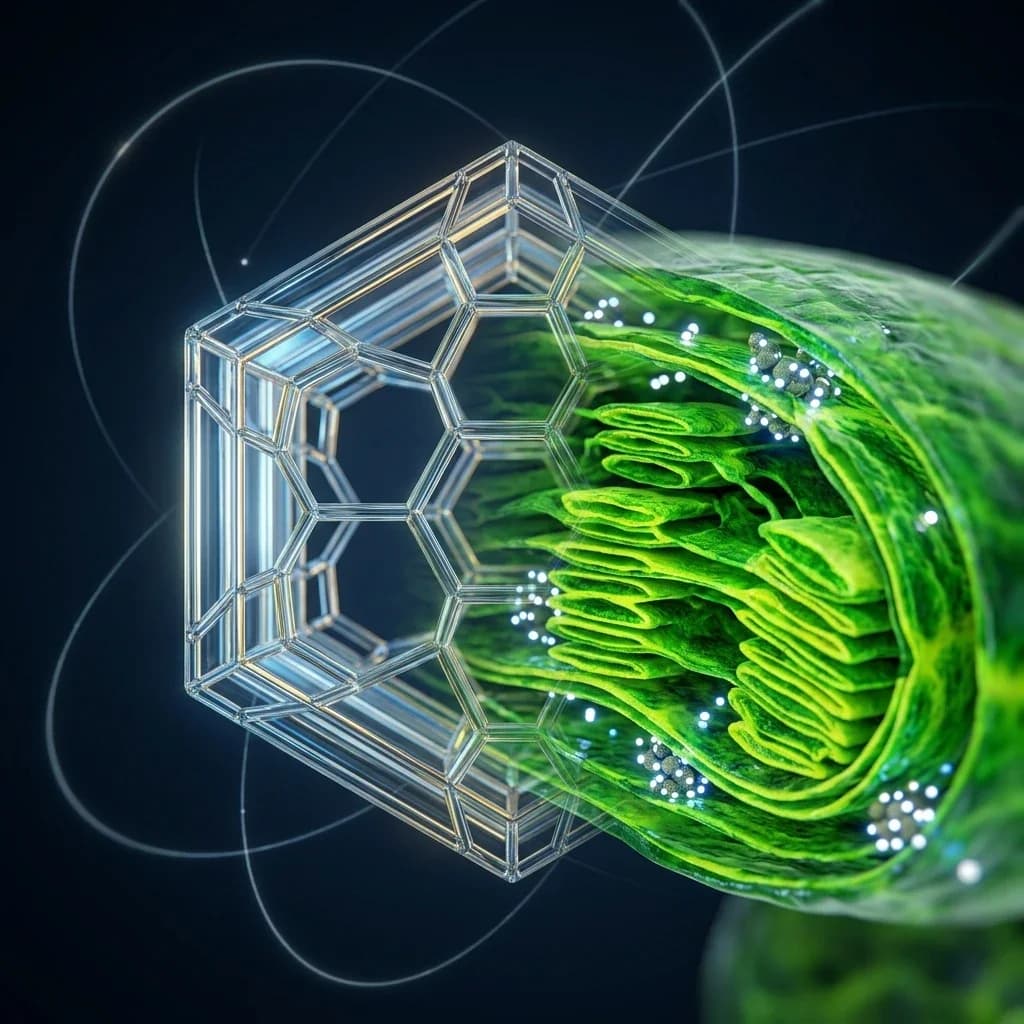
Definition: Nuclear Fusion is the fundamental nuclear reaction that powers stars, wherein two light atomic nuclei (typically isotopes of hydrogen: Deuterium and Tritium) overcome the electrostatic Coulomb barrier at extreme temperatures ($>100\text{ to }150\text{ Million }^\circ\text{C}$) to fuse into a single heavier nucleus (Helium-4) and a high-energy neutron, releasing vast quantities of clean binding energy governed by Einstein's mass-energy equivalence ($E = \Delta m \cdot c^2$).
+---------------------------------------------------------------------------------------------------+
|                        NUCLEAR FUSION DEUTERIUM-TRITIUM (D-T) ENERGY ENGINE                       |
+---------------------------------------------------------------------------------------------------+
                                                  │
         ┌────────────────────────────────────────┼────────────────────────────────────────┐
         ▼                                        ▼                                        ▼
+──────────────────────────+             +──────────────────────────+             +──────────────────────────+
| DEUTERIUM ($^2\text{H}$) |             | TRITIUM ($^3\text{H}$)   |             | HIGH-ENERGY PRODUCTS     |
| • Abundant in Seawater   |             | • Bred from Lithium      |             | • Alpha Particle ($^4\text|
| • 1 Proton + 1 Neutron   |             | • 1 Proton + 2 Neutrons  |               He$, 3.5 MeV)            |
| • Inexhaustible Supply   |             | • Low-Activity Isotope   |             | • Neutron ($n$, 14.1 MeV)|
+──────────────────────────+             +──────────────────────────+             +──────────────────────────+
         │                                        │                                        │
         └────────────────────────────────────────┼────────────────────────────────────────┘
                                                  ▼
+---------------------------------------------------------------------------------------------------+
| REACTION: $^2_1\text{H} + ^3_1\text{H} \longrightarrow ^4_2\text{He}\,(3.5\,\text{MeV}) + n\,(14.1\,\text{MeV}) + 17.6\,\text{MeV}$ |
+---------------------------------------------------------------------------------------------------+
⚛️ 1. Theoretical Physics: The Lawson Criterion & Triple Product
For self-sustaining nuclear fusion to occur in a terrestrial reactor, the hot plasma must satisfy the Lawson Criterion, expressed quantitatively as the Fusion Triple Product:
$$\text{Triple Product} = n \cdot T \cdot \tau_E \ge 3 \times 10^{21} \text{ keV}\cdot\text{s}\cdot\text{m}^{-3}$$
Where:
- $n =$ Plasma ion density (particles per cubic meter).
- $T =$ Plasma ion temperature (measured in kilo-electronvolts, $\text{keV}$; $1\text{ keV} \approx 11.6 \text{ Million Kelvin}$).
- $\tau_E =$ Energy confinement time (the rate at which thermal energy escapes the magnetic confinement envelope).
+---------------------------------------------------------------------------------------------------+
|                           THE THREE PILLARS OF PLASMA CONFINEMENT                                 |
+---------------------------------------------------------------------------------------------------+
 [Plasma Density ($n$)] ──► Pack hydrogen isotopes sufficiently close together
             │
             ▼
 [Plasma Temperature ($T$)] ──► Heat to 150,000,000°C to overcome electrostatic Coulomb repulsion
             │
             ▼
 [Confinement Time ($\tau_E$)] ──► Hold plasma stable using high-field superconducting magnets
             │
             ▼
 [Ignition & Net Power Generation: Alpha particles self-heat the plasma continuously]
+---------------------------------------------------------------------------------------------------+
🧲 2. Magnetic Confinement Architecture: Tokamaks vs Stellarators
Terrestrial fusion designs rely primarily on powerful magnetic fields to confine superheated ionized plasma away from physical reactor walls:
+---------------------------------------------------------------------------------------------------+
|                         TOKAMAK VS STELLARATOR STRUCTURAL BENCHMARK                               |
+---------------------------------------------------------------------------------------------------+
| Feature / Parameter          | Tokamak (e.g., ITER / SPARC / STEP)| Stellarator (e.g., Wendelstein 7-X)|
+------------------------------+------------------------------------+------------------------------------+
| Magnetic Field Geometry      | Axisymmetric Toroidal Doughnut     | Complex Twisted 3D Modular Coils   |
| Plasma Current Drive         | Induced central transformer current| Zero internal net plasma current   |
| Operation Mode               | Pulsed (challenging steady-state)  | Inherently Continuous Steady-State |
| Plasma Stability Risk        | Susceptible to Disruption Crashes  | Immune to current-driven disruption|
| Engineering Complexity       | High (Symmetrical coils)          | Extreme (Requires supercomputing)  |
| Highest Triple Product Achiev| 🏆 State-of-the-Art Leader (ITER)  | Rapidly advancing efficiency       |
+---------------------------------------------------------------------------------------------------+
⚡ 3. The Quest for Scientific Net Energy Gain ($Q > 1$)
The performance of a fusion reactor is measured by its Energy Gain Factor ($Q$): $$Q = \frac{P_{\text{fusion output}}}{P_{\text{heating input}}}$$
- $Q = 1.0$ (Scientific Breakeven): Total thermal fusion power generated equals the external power injected to heat the plasma.
- $Q = 10.0$ (ITER Target): Injecting 50 MW of input thermal power to generate 500 MW of gross fusion power.
- $Q = \infty$ (Ignition): The self-heating from alpha particles maintains the fusion burn continuously without requiring any external heating power.
+---------------------------------------------------------------------------------------------------+
|                           THE FUSION ENERGY HARVESTING CYCLE                                      |
+---------------------------------------------------------------------------------------------------+
 D-T Fusion Reaction in Vacuum Vessel
                 │
                 ▼
 [14.1 MeV Fast Neutrons Penetrate First Wall into Lithium Breeding Blanket]
                 │
         ┌───────┴──────────────────────────────────────────────┐
         ▼                                                      ▼
 [Neutrons Heat Liquid Coolant / Salts to 600°C]       [Neutron Strikes Lithium ($^6\text{Li} + n \to ^4\text{He} + ^3\text{H}$)]
                 │                                                      │
                 ▼                                                      ▼
 [Drives Supercritical Steam Turbines ──► Clean Grid Electricity]   [Breeds Fresh Tritium Fuel in Closed Loop!]
+---------------------------------------------------------------------------------------------------+
📌 The Bottom Line & Actionable Scientific Takeaways
+---------------------------------------------------------------------------------------------------+
|                              TOPIC SLUG ALIGNED ACTIONABLE TAKEAWAYS                              |
+---------------------------------------------------------------------------------------------------+
| Topic Slug                           | Core Actionable Physics Takeaway                           |
+--------------------------------------+------------------------------------------------------------+
| nuclear-fusion-physics-definition    | Fusion merges light nuclei; produces zero long-lived waste.|
| lawson-criterion-triple-product      | Triple product ($n \cdot T \cdot \tau_E$) defines ignition |
| deuterium-tritium-plasma-reaction    | D-T offers the lowest required ignition temperature (~15keV|
| tokamak-vs-stellarator-magnetic-confinement| Tokamaks lead in raw power; stellarators in continuous burn|
| net-energy-gain-q-factor             | Commercial fusion power requires $Q > 20$ for grid viabilit|
+---------------------------------------------------------------------------------------------------+
📫 Subscribe to Frontier Physics & Energy Insights
Get peer-reviewed fusion plasma physics breakdowns, superconductor technology audits, and deep-tech energy roadmaps delivered to your inbox weekly.
Enjoyed this post?
Get our weekly digest delivered free.
Share this post:
Knowelth is reader-supported. We may earn a commission from links in this article at no extra cost to you. Read our disclosure.
Related Posts

Epigenetics: Scientific Definition, Molecular Mechanisms, DNA Methylation, Histone Modification & Lifestyle Gene Expression
Epigenetics: Scientific Definition, Molecular Mechanisms, DNA Methylation, Histone Modification & Lifestyle Gene Expression Last updated: August 12, 2026 | 13-minute read Definition: Epigenetics (from…

Total Expense Ratio (TER): Definition, Mutual Fund Fee Calculation, Direct vs Regular Plan Drag & 30-Year Compounding Wealth Loss
Total Expense Ratio (TER): Definition, Mutual Fund Fee Calculation, Direct vs Regular Plan Drag & 30-Year Compounding Wealth Loss Last updated: August 10, 2026 | 12-minute read Definition: Total Expen…

Systematic Withdrawal Plan (SWP): Definition, Mutual Fund Cash-Flow Mechanics, Tax Efficiency vs Dividends & Safe Withdrawal Rates
Systematic Withdrawal Plan (SWP): Definition, Mutual Fund Cash-Flow Mechanics, Tax Efficiency vs Dividends & Safe Withdrawal Rates Last updated: August 07, 2026 | 12-minute read Definition: A Systemat…