Adani Ports (APSEZ): Mundra Infrastructure & The Transshipment Moat
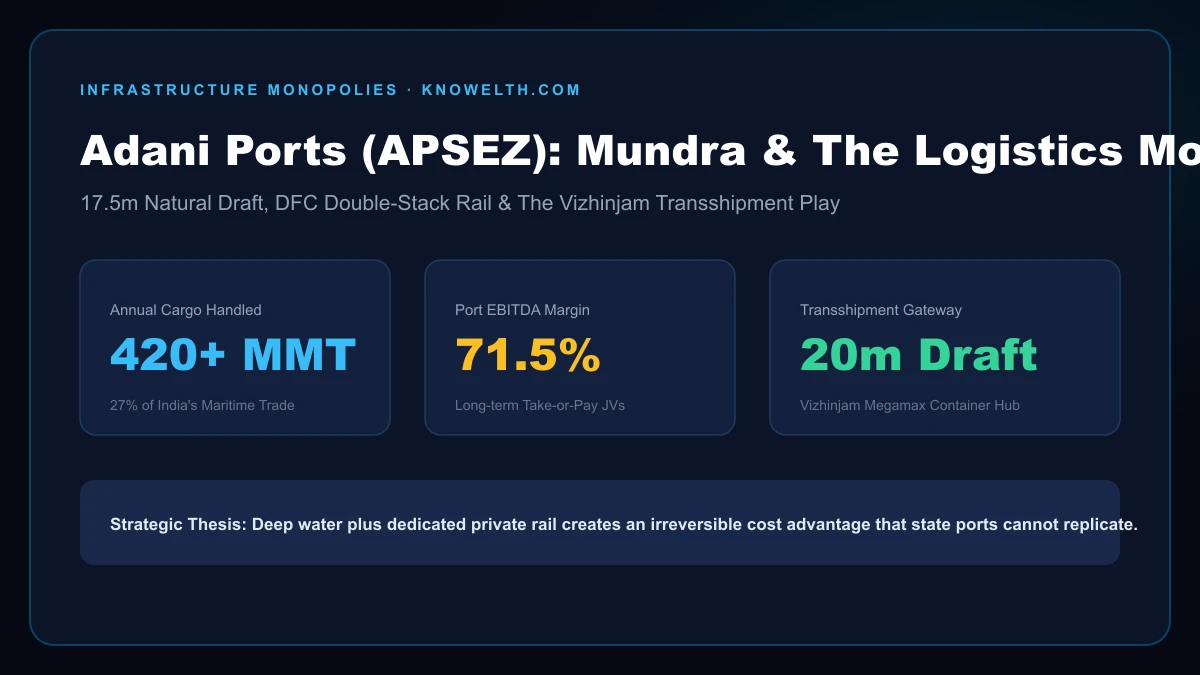
The Logistics Monolith: How APSEZ Built India's Unassailable Maritime Infrastructure Moat
Executive Summary: Over the past two decades, Adani Ports and Special Economic Zone Limited (APSEZ) has executed the most aggressive and strategically coherent infrastructure buildout in modern Indian corporate history. From a desolate, cyclone-battered mudflat in the Gulf of Kutch in 1998, flagship Mundra Port has grown into India's single largest commercial port—handling over 180 Million Metric Tonnes (MMT) of cargo annually, while the broader APSEZ network commands 420+ MMT across 15 domestic ports, capturing a dominant 27% market share of India's total maritime trade. By coupling a non-replicable deep-water natural draft with private rail connectivity, multi-modal logistics parks, and long-term "Take-or-Pay" contracts with global shipping alliances (MSC, CMA CGM), APSEZ has engineered a wide economic moat generating >70% port EBITDA margins. With the commissioning of the Vizhinjam Deepwater Seaport in Kerala to cannibalize Sri Lanka's Colombo transshipment monopoly and international acquisitions in Haifa and Colombo, APSEZ has transitioned from a domestic port landlord into an integrated global supply chain titan.
The Intermodal Rail Moat: A port without hinterland evacuation infrastructure is merely a bottleneck. APSEZ’s most underappreciated competitive advantage is not its seaside quays, but its inland logistics network. APSEZ owns India's largest private railway line (a 72 km private track connecting Mundra to the national grid) and operates 120+ container trains. Because Mundra connects directly to the Western Dedicated Freight Corridor (WDFC), it runs double-stacked container trains carrying 180 TEUs per trip straight into the consumption centers of NCR, Haryana, and Punjab—slashing transit time from 70 hours to under 24 hours and undercutting government major ports (like JNPA and Mumbai Port) on total landed logistics cost.
+---------------------------------------------------------------------------------------------------+
|                        APSEZ INTEGRATED MARITIME & LOGISTICS VALUE CHAIN                          |
+---------------------------------------------------------------------------------------------------+
                                                  │
          ┌───────────────────────────────────────┼───────────────────────────────────────┐
          ▼                                       ▼                                       ▼
 ┌────────────────────────┐             ┌────────────────────────┐             ┌────────────────────────┐
 │   Deep-Water Ports     │             │  Inland Logistics &    │             │ Global Gateway Ports   │
 │   & Coastal Terminals  │             │  Intermodal Rail Hubs  │             │ & Transshipment Hubs   │
 ├────────────────────────┤             ├────────────────────────┤             ├────────────────────────┤
 │ • Mundra: 180+ MMT     │             │ • 120+ Container Trains│             │ • Vizhinjam (Kerala):  │
 │ • Dhamra (Odisha)      │────────────►│ • 12 Multi-Modal Parks │────────────►│   20m Natural Draft    │
 │ • Krishnapatnam (AP)   │             │ • 1.6M sq.ft Warehouses│             │ • Haifa Port (Israel)  │
 │ • Gangavaram & Hazira  │             │ • Grain Silos & Cold   │             │ • CWIT Terminal        │
 │ • 27% National Share   │             │   Storage Chain        │             │   (Colombo, Lanka)     │
 └────────────────────────┘             └────────────────────────┘             └────────────────────────┘
          │                                       │                                       │
          └───────────────────────────────────────┼───────────────────────────────────────┘
                                                  ▼
                        [ 70%+ PORT EBITDA MARGINS · FREE CASH FLOW YIELD ]
1. The Genesis: The Geography & Engineering Physics of Mundra
In the early 1990s, Indian maritime trade was shackled by bureaucratic Major Port Trusts (Kolkata, Mumbai, Chennai, and Jawaharlal Nehru Port Trust - JNPA). These state-administered facilities suffered from shallow tidal drafts (10 to 12 metres), chronic labor strikes, archaic pre-slotted crane operations, and average vessel turnaround times exceeding 4 to 6 days.
Gautam Adani recognized a geographic anomaly in the Gulf of Kutch in Gujarat: Mundra.
                        DRAFT DEPTH VS VESSEL CAPABILITY

   Port Type              Natural Draft (Meters)    Vessel Capacity Accommodated
   ─────────────────────────────────────────────────────────────────────────────
   Kolkata / Haldia       ~8.5m - 9.5m              Feeder ships only (< 2,500 TEU)
   JNPA (Mumbai)          ~14.0m - 15.0m            Neo-Panamax (10,000 - 14,000 TEU)
   MUNDRA (APSEZ)         ~17.5m                    Ultra Large Container Vessels (18,000+ TEU)
   VIZHINJAM (APSEZ)      ~20.0m                    Megamax ULCV (24,000+ TEU & Capesize)
   ─────────────────────────────────────────────────────────────────────────────
1. The Natural Deep-Water Advantage
Unlike riverine or silted delta ports that require perpetual capital dredging, Mundra possesses a natural deep-water draft of 17.5 metres. This allows massive Capesize dry bulk carriers (displacing 150,000+ DWT) and Ultra-Large Container Vessels (ULCVs) to dock directly alongside the berths without lighterage—the expensive and hazardous process of transferring cargo to smaller barges in open sea before entering port.
2. Proximity to the Industrial Northern Hinterland
India's economic geography is skewed: more than 50% of India's manufacturing and consumption GDP originates from the landlocked northern and northwestern states (Delhi-NCR, Haryana, Punjab, Rajasthan, and western Uttar Pradesh). Mundra is geographically 250 to 300 kilometers closer to Delhi than JNPA (Mumbai), translating into massive fuel, toll, and time savings for containerized exporters and importers.
3. All-Weather, 24/7 Operations
Sheltered within the Gulf of Kutch, Mundra experiences minimal wave action during the violent Southwest monsoon months. While open-sea anchorages along the western seaboard face berth closures and mooring halts between June and August, Mundra maintains an uninterrupted, 365-day operating cycle.
2. The Four Pillars of APSEZ's Economic Moat
What makes APSEZ an unassailable financial fortress? It is not merely owning waterfront land, but orchestrating four interlocking economic engines:
                      THE APSEZ COMPETITIVE MOAT ARCHITECTURE

                     ┌────────────────────────────────────────┐
                     │       Deep-Water Waterfront Draft      │
                     │  17.5m at Mundra · 20m at Vizhinjam    │
                     └───────────────────┬────────────────────┘
                                         │
        ┌────────────────────────────────┼────────────────────────────────┐
        ▼                                ▼                                ▼
 ┌──────────────┐                 ┌──────────────┐                 ┌──────────────┐
 │ Intermodal   │                 │ Take-or-Pay  │                 │ Turnaround   │
 │ Rail Synergy │                 │ Master JV    │                 │ Velocity     │
 │ Private DFC  │                 │ Contracts    │                 │ < 24 Hours   │
 │ Connectivity │                 │ (MSC/CMA CGM)│                 │ Crane Rates  │
 └──────────────┘                 └──────────────┘                 └──────────────┘
Pillar 1: High Asset Turnaround Velocity
In commercial shipping, a container ship burning low-sulfur marine fuel costs between $50,000 and $120,000 per day in charter hire. Every hour spent idling at an outer anchorage destroys the shipping line’s profitability.
APSEZ invested billions in post-Panamax twin-lift ship-to-shore (STS) gantry cranes and automated terminal operating systems (TOS):
- Average Vessel Turnaround Time (TRT): At Mundra, turnaround is under 24 hours (and as low as 14 hours for medium container vessels).
- Comparison: Major government trust ports historically averaged 48 to 72 hours.
- Because shipping lines minimize dwell time, global shipping alliances voluntarily divert their flagship Asia-Europe and Middle East services directly to Mundra.
Pillar 2: "Take-or-Pay" Joint Venture Partnerships
APSEZ insulated its revenue model from volatile global macroeconomic shipping cycles through strategic terminal joint ventures:
- Adani International Container Terminal (AICTPL): A 50:50 joint venture with Terminal Investment Limited (TIL), the terminal operating arm of Mediterranean Shipping Company (MSC)—the world's largest container shipping liner.
- Adani CMA Mundra Terminal (ACMTPL): A joint venture with France’s CMA CGM—the third-largest ocean carrier globally.
Under these long-term agreements (often 30 years), the global liners guarantee minimum cargo throughput volumes under a strict "Take-or-Pay" clause: if global trade slumps and container volumes drop, the shipping line must still pay APSEZ the contracted handling tariff for the reserved volume. This financial mechanism guarantees cash-flow stability and underpins an operating EBITDA margin exceeding 70% in port operations.
Pillar 3: Intermodal Logistics & DFC Hegemony
Through its wholly owned subsidiary Adani Logistics Limited (ALL), APSEZ does not stop at the seaside gate:
- Operates 120+ container freight trains running on private license.
- Controls 12 Multi-Modal Logistics Parks (MMLPs) located at critical inland consumption hubs: Patli (Gurugram), Kilaraipur (Ludhiana), Nagpur, Kanech, and Malur (Bengaluru).
- When the Western Dedicated Freight Corridor (WDFC) became fully operational connecting Dadri/Sanand to Mundra, APSEZ became the primary beneficiary. Double-stacked container trains carry twice the payload per locomotive, reducing carbon footprint by 75% and cutting rail freight costs by ~25-30% compared to traditional Indian Railways rakes.
Pillar 4: Pan-Indian Port Clustering
APSEZ systematically acquired non-major private ports along both coasts to eliminate regional geographic vulnerability:
- Western Coast: Mundra, Hazira, Dahej, Tuna, Dighi, Mormugao terminal, and Vizhinjam.
- Eastern Coast: Dhamra (Odisha), Krishnapatnam (Andhra Pradesh), Gangavaram (Andhra Pradesh), Karaikal (Puducherry), Kattupalli, and Ennore terminal (Tamil Nadu).
By operating on both maritime coasts, APSEZ offers national multi-terminal contracts to multinational conglomerates (Tata Steel, Maruti Suzuki, ArcelorMittal, Indian Oil), capturing the client's domestic coastal movements and foreign import/export flows under a single corporate billing umbrella.
3. Vizhinjam Seaport: Breaking the Colombo Transshipment Monopoly
Enjoyed this post?
Get our weekly digest delivered free.
The ultimate crown jewel of APSEZ’s long-term maritime thesis is the Vizhinjam International Deepwater Multipurpose Seaport in Thiruvananthapuram, Kerala.
+---------------------------------------------------------------------------------------------------+
|                        INDIAN TRANSSHIPMENT LEAKAGE CANNIBALIZATION                               |
+---------------------------------------------------------------------------------------------------+
|                                                                                                   |
|  HISTORICAL SCENARIO:                                                                             |
|  Indian Cargo (Chennai/Vizag/Kochi) ──► Feeder Boat ──► COLOMBO / SINGAPORE ──► Mother Vessel      |
|  • Extra Deviation Cost: $180 - $250 per TEU                                                      |
|  • Foreign Exchange Drain: Over ₹2,500 Crore ($300M+) annually paid to Sri Lankan terminals        |
|  • Time Delay: 4 to 7 Days in feeder transshipment dwell                                          |
|                                                                                                   |
|  APSEZ VIZHINJAM PARADIGM:                                                                        |
|  Mother Vessel Docks Directly at Vizhinjam (20m Natural Draft, 10 NM from Suez-Malacca Line)      |
|  • Feeder cargo gathered directly along Indian coast                                              |
|  • Zero foreign currency outflow; lower logistics friction                                        |
|                                                                                                   |
+---------------------------------------------------------------------------------------------------+
The Strategic Rationale of Vizhinjam:
- Zero Dredging 20-Metre Draft: Vizhinjam is one of the extraordinarily rare locations on planet Earth where a natural water depth of 20 metres exists just one nautical mile from the shoreline. It requires virtually zero recurring maintenance dredging to dock the world's largest container ships—such as the MSC Irina (24,346 TEU, 400 metres long, drawing 16.5m of water).
- Proximity to the Global Trunk Route: Vizhinjam lies merely 10 nautical miles from the international East-West shipping channel connecting the Suez Canal to the Malacca Strait, carrying one-third of global maritime container traffic. Ships deviate by less than 45 minutes to berth at Vizhinjam, compared to hours or days required to enter traditional coastal ports.
- Reclaiming Indian Transshipment: Historically, nearly 75% of India’s container transshipment cargo was routed through foreign hub ports—principally Colombo Port in Sri Lanka (accounting for ~45%), followed by Singapore and Port Klang in Malaysia. By commissioning Phase 1 of Vizhinjam, APSEZ directly captures this lucrative transshipment throughput on Indian soil, retaining millions of dollars in terminal handling charges within the domestic economy.
4. Financial Deep-Dive: Cash Flows, Capex & Deleveraging
A core critique frequently leveled against the Adani Group by global short-sellers (such as the January 2023 Hindenburg report) centered on aggressive debt-fueled expansion and leverage. However, a granular dissection of APSEZ's financial statements reveals that it is the cash-generating industrial anchor of the entire conglomerate:
                            APSEZ FINANCIAL PERFORMANCE (FY21 - FY25)

   Metric                    FY21        FY22        FY23        FY24        FY25 (E)
   ───────────────────────────────────────────────────────────────────────────────────
   Cargo Volume (MMT)        247 MMT     312 MMT     339 MMT     420 MMT     460 MMT
   Consolidated Revenue      ₹12,550 Cr  ₹15,934 Cr  ₹20,852 Cr  ₹26,711 Cr  ₹31,500 Cr
   Port EBITDA Margin        70.2%       70.0%       70.8%       71.5%       72.0%
   Consolidated Net PAT      ₹4,995 Cr   ₹4,795 Cr   ₹5,310 Cr   ₹8,104 Cr   ₹9,850 Cr
   Net Debt / EBITDA         3.3x        3.4x        3.1x        2.3x        2.1x
   ───────────────────────────────────────────────────────────────────────────────────
Financial Resilience Attributes:
- Deleveraging Trajectory: Through disciplined operational cash conversion, APSEZ brought its Net Debt to EBITDA ratio down from 3.4x in FY22 to 2.3x in FY24, comfortably within investment-grade corporate credit thresholds.
- Foreign Currency Matching: Approximately 30% to 35% of APSEZ’s port revenues are naturally pegged to the US Dollar (terminal handling tariffs for container transshipment and EXIM marine services). This provides an organic foreign exchange hedge against its Dollar-denominated overseas green bonds.
- Free Cash Flow Conversion: Because basic civil infrastructure (breakwaters, berths, reclaimed quays) possesses useful asset lifespans exceeding 50 to 60 years with minimal maintenance capex, mature ports like Mundra and Hazira act as annuity cash machines, funding expansion into logistics parks and global acquisitions out of internal accruals.
5. Strategic Risks & Headwinds
Despite its structural dominance, APSEZ operates in a complex geopolitical and environmental landscape with three notable risk vectors:
- Geopolitical Vulnerabilities in Global Outposts: APSEZ's $1.2 Billion acquisition of Haifa Port in Israel exposes the firm to Middle Eastern conflict escalations, shipping disruptions in the Red Sea (Houthi anti-ship missile attacks), and political instability along the planned India-Middle East-Europe Economic Corridor (IMEC).
- Climate Change & Extreme Weather in the Gulf of Kutch: The Arabian Sea has witnessed an increasing frequency of severe cyclonic storms (e.g., Cyclone Biparjoy in June 2023). While Mundra’s engineering breakwaters withstood Biparjoy with zero structural damage, repeated climate events risk temporary cargo shutdowns and insurance premium inflation.
- Regulatory Scrutiny on Antitrust Concentration: Controlling 27% of national cargo volume and over 50% of container handling on the western seaboard inevitably attracts regulatory scrutiny from the Competition Commission of India (CCI) and cargo tariff oversight bodies, limiting scope for aggressive tariff hikes.
6. Conclusion: The Infrastructure Monopoly of Modern India
In the pantheon of global infrastructure assets, few enterprises hold a commercial position as impregnable as Adani Ports and Special Economic Zone.
Just as the Canadian Pacific Railway unified North American commerce in the 19th century, APSEZ has bound India's industrial heartland to the sea through deep-water berths, private railway corridors, and automated transshipment hubs. As India marches toward a $5 Trillion economy and targets $1 Trillion in merchandise exports by 2030, virtually every container of electronics, ton of solar panels, and bushel of grain moving through the nation's supply chains must pay a commercial toll to the logistics monolith Gautam Adani constructed on the mudflats of Mundra.
The insights, business case studies, and financial data presented on Knowelth are strictly for educational and strategic research purposes only. Knowelth and its authors are not SEBI-registered investment advisors or research analysts. Nothing published herein should be construed as personalized investment advice or a recommendation to buy or sell securities. Investments in the securities market are subject to market risks. Please conduct your own due diligence or consult a SEBI-registered financial planner before making investment decisions. Read our Editorial Policy.
Enjoyed this post?
Get our weekly digest delivered free.
Share this post:
Knowelth is reader-supported. We may earn a commission from links in this article at no extra cost to you. Read our disclosure.
Related Posts
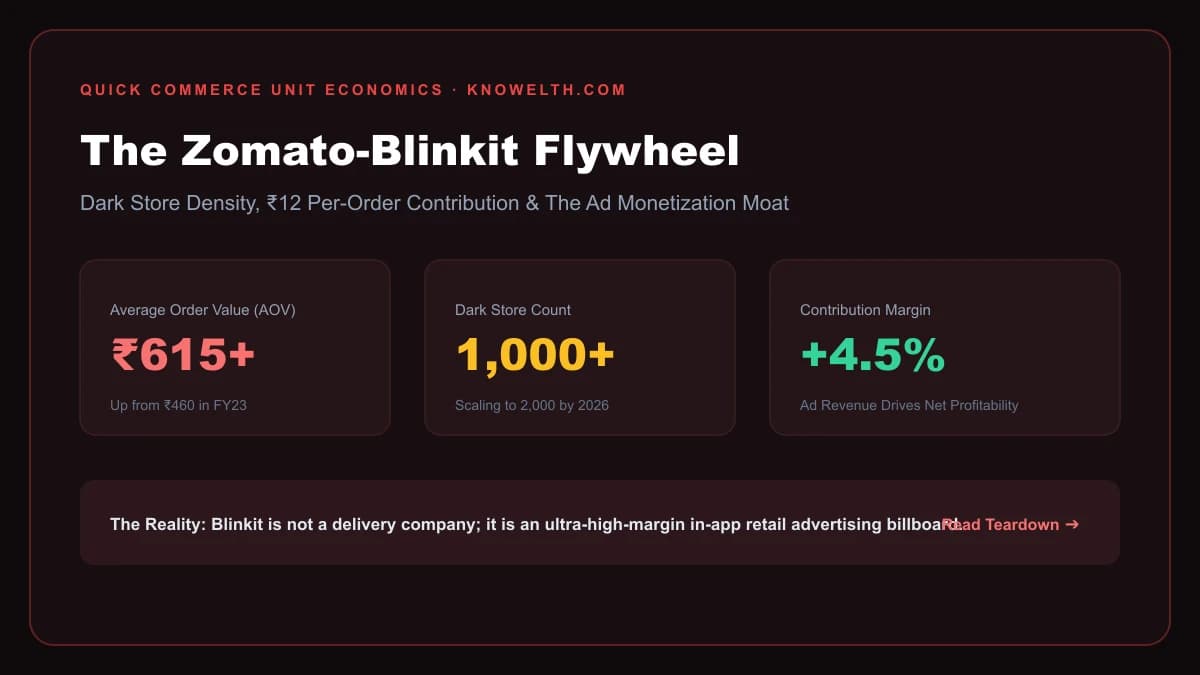
Zomato-Blinkit: Quick Commerce Unit Economics
The Zomato-Blinkit Flywheel: The Unit Economics of 10-Minute Quick Commerce in India Quick Summary: When Zomato acquired distressed grocery delivery platform Blinkit (formerly Grofers) in mid-2022 for…
Case Study: How an Independent Content Creator Built a $100,000 ARR Niche Financial Media Business with Zero Paid Ads
Case Study: How an Independent Content Creator Built a $100,000 ARR Niche Financial Media Business with Zero Paid Ads Quick Summary: In January 2024, Siddharth, an independent financial analyst and…
Case Study: Navigating the 2020 COVID Market Crash — How Asymmetric Rebalancing and Cash Deployment Delivered a 36% 4-Year CAGR
Case Study: Navigating the 2020 COVID Market Crash — How Asymmetric Rebalancing and Cash Deployment Delivered a 36% 4-Year CAGR Quick Summary: In March 2020, as the global COVID-19 pandemic unfolde…