Ayurvedic Orthopedics and Energetics: Clinical Trials Validate Shallaki, Shilajit, and Moringa
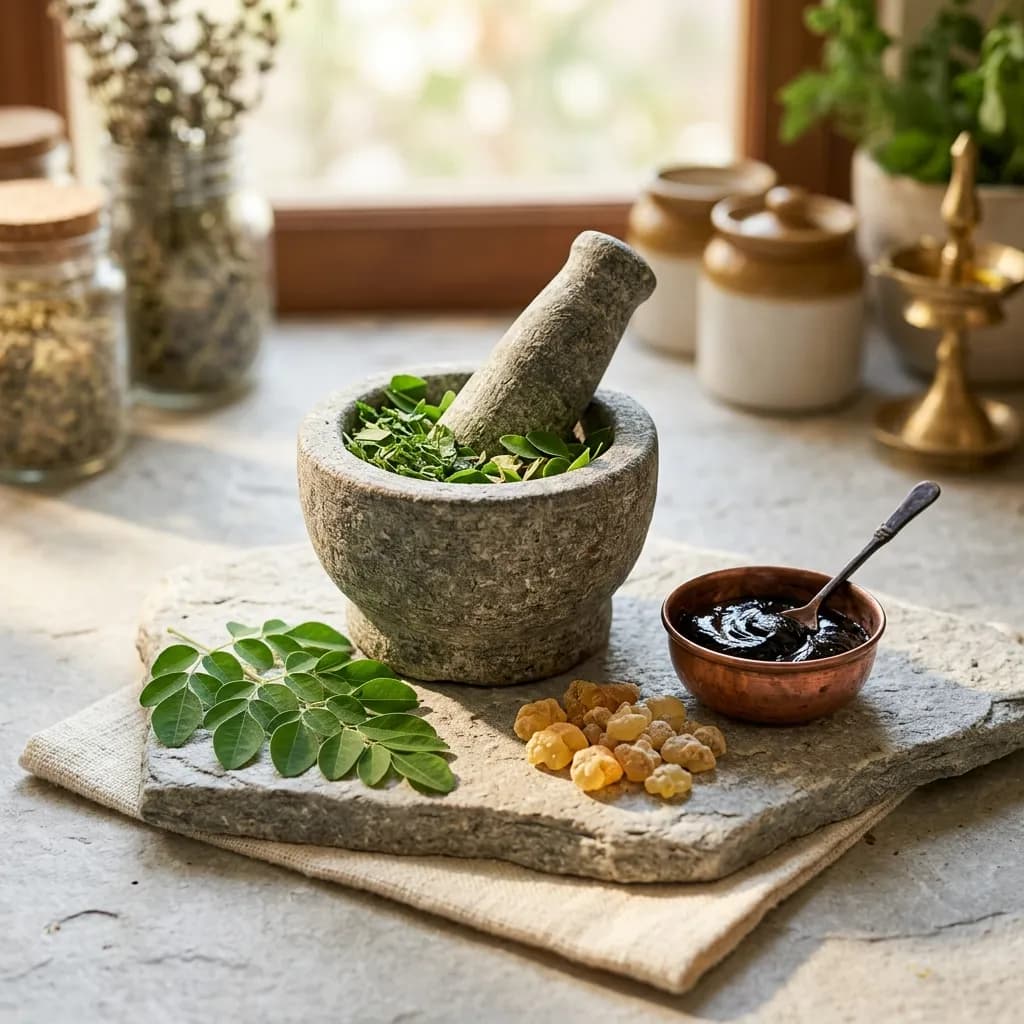
Ayurvedic Orthopedics and Energetics: Clinical Trials Validate Shallaki, Shilajit, and Moringa
As modern clinical trials increasingly seek to validate traditional phytotherapies, ancient Ayurvedic herbs are finding their rightful place in evidence-based medicine. This week, we explore how recent peer-reviewed studies are confirming the therapeutic efficacy of three cornerstone remedies: Shallaki, Shilajit, and Moringa. By bridging traditional energetics with contemporary pharmacology, these trials provide robust pathways for supporting joint health, cellular energy, and metabolic resilience.
🌿 Shallaki & Joint Health: Restoring Mobility and Cartilage Preservation
Shallaki (Boswellia serrata), the fragrant gum resin harvested from the Boswellia tree, has long been a cornerstone of Ayurvedic orthopedics. In traditional pharmacology, it is categorized as a powerful herb for Sandhi Vata (osteoarthritis) and musculoskeletal pain. Shallaki is characterized by its Tikta (bitter), Kashaya (astringent), and Madhura (sweet) tastes (Rasas); Laghu (light) and Ruksha (dry) attributes (Gunas); and Ushna Veerya (heating potency). This unique thermodynamic profile enables it to digest Ama (toxic, undigested metabolic waste) that accumulates in the joint spaces, clear the micro-channels (Srotas), and pacify both Vata and Kapha doshas, thereby restoring the joint's natural lubrication and structural integrity.
Recent clinical trials published in late 2025 and early 2026 have provided robust evidence supporting these classical indications. A randomized, double-blind, placebo-controlled study evaluated the efficacy of BOSMAX® (a standardized Boswellia serrata extract) in adults experiencing mild-to-moderate knee osteoarthritis. Over a 90-day period, daily supplementation led to a statistically significant decrease in pain scores on the Visual Analog Scale (VAS) and marked improvements in joint stiffness and functional mobility as measured by the WOMAC index. Additionally, a 2026 multicenter clinical trial showed that a combination of Boswellia serrata and Cissus quadrangularis (known in Ayurveda as Asthisamharaka, the bone-setter) significantly accelerated bone fracture healing and reduced localized pain in patients recovering from distal radius fractures, highlighting Shallaki's role in tissue regeneration.
At the molecular level, Shallaki’s therapeutic activity is driven by its rich concentration of boswellic acids, particularly 3-O-acetyl-11-keto-beta-boswellic acid (AKBA). Unlike conventional non-steroidal anti-inflammatory drugs (NSAIDs) that non-selectively inhibit COX enzymes and often cause gastrointestinal irritation, AKBA is a highly selective inhibitor of the 5-lipoxygenase (5-LOX) enzyme. By blocking 5-LOX, Shallaki halts the synthesis of pro-inflammatory leukotrienes, which are major drivers of cartilage degradation and synovial inflammation. This targeted mechanism of action, combined with the Ministry of Ayush's 2026 ABIHR initiative to compile FDA-compliant safety dossiers for Shallaki, confirms that this ancient resin is a safe and highly effective alternative for long-term joint health.
⚡ Shilajit & Mitochondrial Vitality: Cellular Energy and Physical Performance
Shilajit (Asphaltum punjabianum), a mineral-rich organic pitch exuded from Himalayan rocks during warm summer months, is revered in Ayurveda as a premier Rasayana (rejuvenative tonic). Classically termed a Prithvi Rasayana (earthly rejuvenator), Shilajit is composed of humic substances, minerals, and organic compounds. It exhibits Katu, Tikta, Kashaya, and Madhura tastes, a Katuka Vipaka (pungent post-digestive effect), and an Ushna Veerya (heating potency). In traditional therapeutics, it is utilized to stimulate Agni (metabolic fire), scrape away deep-seated toxins (Lekhana), and act as a Yogavahi—an agent that enhances the absorption, systemic delivery, and bioavailability of other co-administered herbs and nutrients.
Modern research in 2025 and 2026 has focused heavily on verifying Shilajit's ability to enhance physical performance and cellular energy. A 28-day open-label pilot study (registered as CTRI/2025/08/092294) evaluated the effects of daily purified Shilajit resin supplementation in healthy, active adults. The study demonstrated significant increases in muscle strength (assessed via the 1-repetition maximum leg press), enhanced muscle endurance, and an elevated VO₂ max, alongside a notable decrease in perceived exertion and muscle fatigue. Crucially, research in 2026 has also focused on the "purity problem," developing advanced purification techniques to eliminate heavy metals (such as lead and thallium) commonly found in raw pitch, while designing new Shilajit-phospholipid complexes that vastly improve its lipophilicity and gastrointestinal absorption.
The molecular pathways behind Shilajit's energy-boosting properties are driven by its high concentration of fulvic acid and dibenzo-alpha-pyrones (DBPs). Fulvic acid acts as an active electron carrier, facilitating the transport of electrons within the mitochondrial electron transport chain (ETC) to optimize the synthesis of adenosine triphosphate (ATP), the body's primary cellular energy currency. Simultaneously, DBPs act as key systemic antioxidants that localize within the mitochondrial membrane, neutralizing free radicals generated during strenuous physical activity or metabolic stress. By protecting the mitochondria from oxidative damage and promoting ATP synthesis, Shilajit rebuilds Ojas (vital energy) and rejuvenates the Dhatus (tissues) at the most fundamental cellular level.
🍃 Shigru (Moringa): Metabolic Regulation and Systemic Anti-Inflammatory Action
Moringa (Moringa oleifera), known in classical Ayurvedic literature as Shigru (meaning "having the properties of arrow/penetrating sharp"), is a fast-growing deciduous tree native to the Indian subcontinent. In traditional pharmacology, Shigru is categorized by its Katu (pungent) and Tikta (bitter) tastes; Laghu (light), Ruksha (dry), and Teekshna (sharp/penetrating) qualities; and Ushna Veerya (heating potency). These attributes make Shigru highly effective at pacifying both Kapha and Vata doshas. It acts as a powerful Deepana (digestive stimulant) and Pachana (carminative) that clears metabolic stagnation, reduces systemic swelling, and purifies the blood (Rakta Shodhana).
Recent clinical trials published in 2025 and 2026 have validated Shigru's traditional use in metabolic and systemic inflammatory disorders. A phase II, double-blind, randomized controlled trial (NCT07194577) investigated the efficacy of dehydrated Moringa leaf powder in patients diagnosed with metabolic syndrome. The study reported significant reductions in fasting blood glucose, glycated hemoglobin (HbA1c), and systolic blood pressure, alongside improved lipid profiles (reductions in LDL and triglycerides). Furthermore, a clinical trial registered in May 2026 demonstrated that Moringa supplementation significantly reduced the frequency and severity of symptoms in migraine patients by modulating systemic oxidative stress, while another active trial (NCT06875947) highlighted Moringa leaf powder as an effective, non-constipating natural remedy for iron-deficiency anemia in pregnant women.
At the cellular level, Moringa’s multi-systemic benefits are attributed to its dense profile of bioactive isothiocyanates, chlorogenic acid, and quercetin. Isothiocyanates have been shown to inhibit the activation of the NF-kB transcription factor, thereby downregulating the expression of pro-inflammatory enzymes (such as iNOS and COX-2) and cytokines (including TNF-alpha and IL-6). Chlorogenic acid modulates glucose metabolism by slowing down glucose absorption in the small intestine and inhibiting hepatic gluconeogenesis, while quercetin exerts potent antioxidant and vasodilatory effects that protect the cardiovascular endothelium. By curbing chronic low-grade inflammation and regulating blood sugar, Moringa reinforces the metabolic fire (Agni) and prevents the systemic accumulation of Ama.
📌 The Bottom Line
- shallaki-joint-health: Clinical trials in 2025–2026 show that standardized Shallaki extract significantly reduces pain, improves joint mobility in osteoarthritis, and accelerates bone fracture healing.
- shilajit-mitochondrial-energy: A 2025 clinical study demonstrates that purified Shilajit resin enhances muscle strength, endurance, and VO2 max by boosting mitochondrial ATP production and cellular energy.
- shigru-metabolic-synergy: Modern trials validate Moringa leaf powder as an effective therapeutic agent for metabolic syndrome, migraines, and anemia, due to its powerful anti-inflammatory isothiocyanates.
Disclaimer: The information provided in this post is for educational and informational purposes only. It is not intended to be a substitute for professional medical advice, diagnosis, or treatment. Always seek the advice of your physician or other qualified health provider with any questions you may have regarding a medical condition.
Enjoyed this post?
Get our weekly digest delivered free.
Share this post:
Knowelth is reader-supported. We may earn a commission from links in this article at no extra cost to you. Read our disclosure.
Related Posts
Systems Biology, Circadian Dinacharya, and Gut-Agni Chrono-Nutrition: The Science Validating Ayurvedic Medicine
Systems Biology, Circadian Dinacharya, and Gut-Agni Chrono-Nutrition: The Science Validating Ayurvedic Medicine Modern healthcare is undergoing a paradigm shift from reductionist single-molecule thera…
Clinical Validation in Ayurveda: Cardiometabolic Formulations, Chrononutrition Agni Science, and Ayurgenomics in Ovarian Reserve
Clinical Validation in Ayurveda: Cardiometabolic Formulations, Chrononutrition Agni Science, and Ayurgenomics in Ovarian Reserve Traditional Indian medicine is undergoing a profound scientific renaiss…
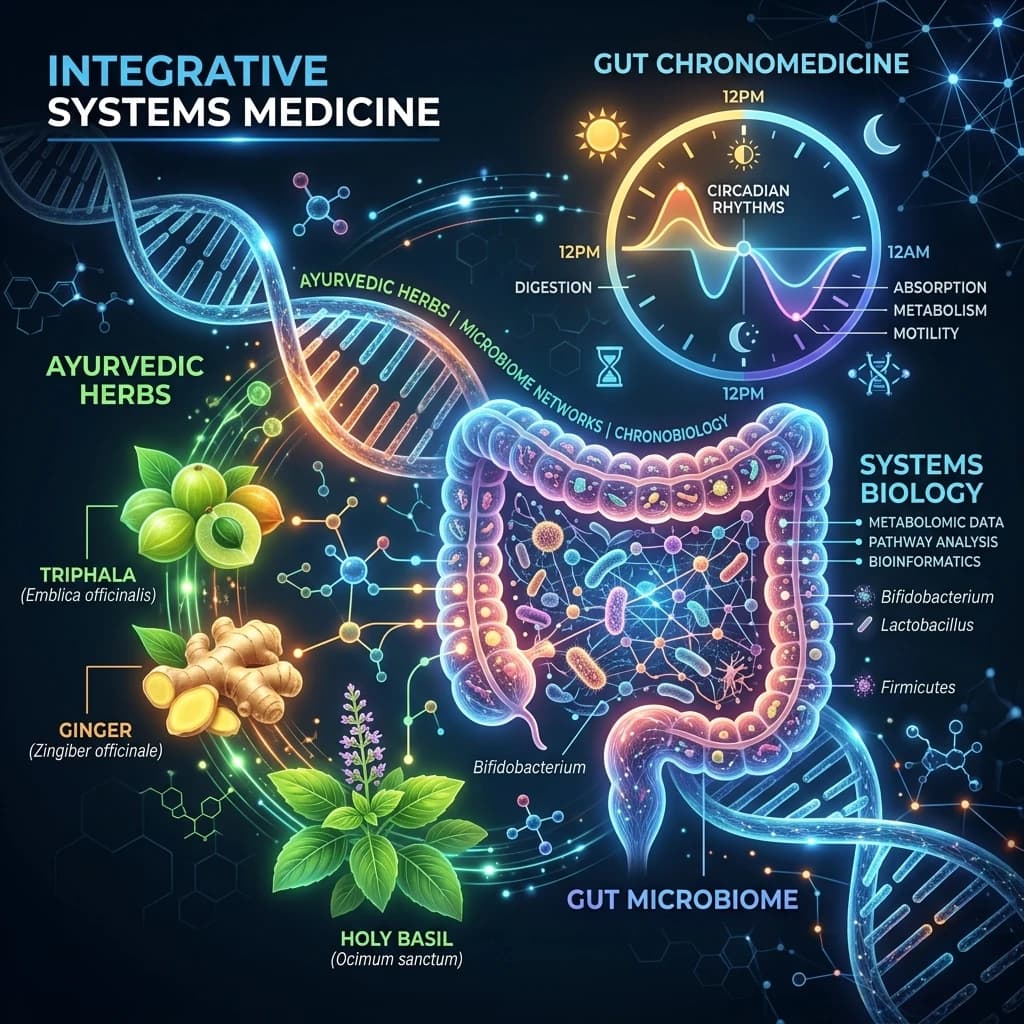
Ayurveda Meets Systems Biology: Agni, Chronomedicine, and Botanical Synergy in Modern Clinical Science
Ayurveda Meets Systems Biology: Agni, Chronomedicine, and Botanical Synergy in Modern Clinical Science The 2025–2026 wave of systems biology research has made an unambiguous statement: the three pilla…