Clinical Validation of Bakuchiol, Turmeric Bioavailability, and Bitter Melon
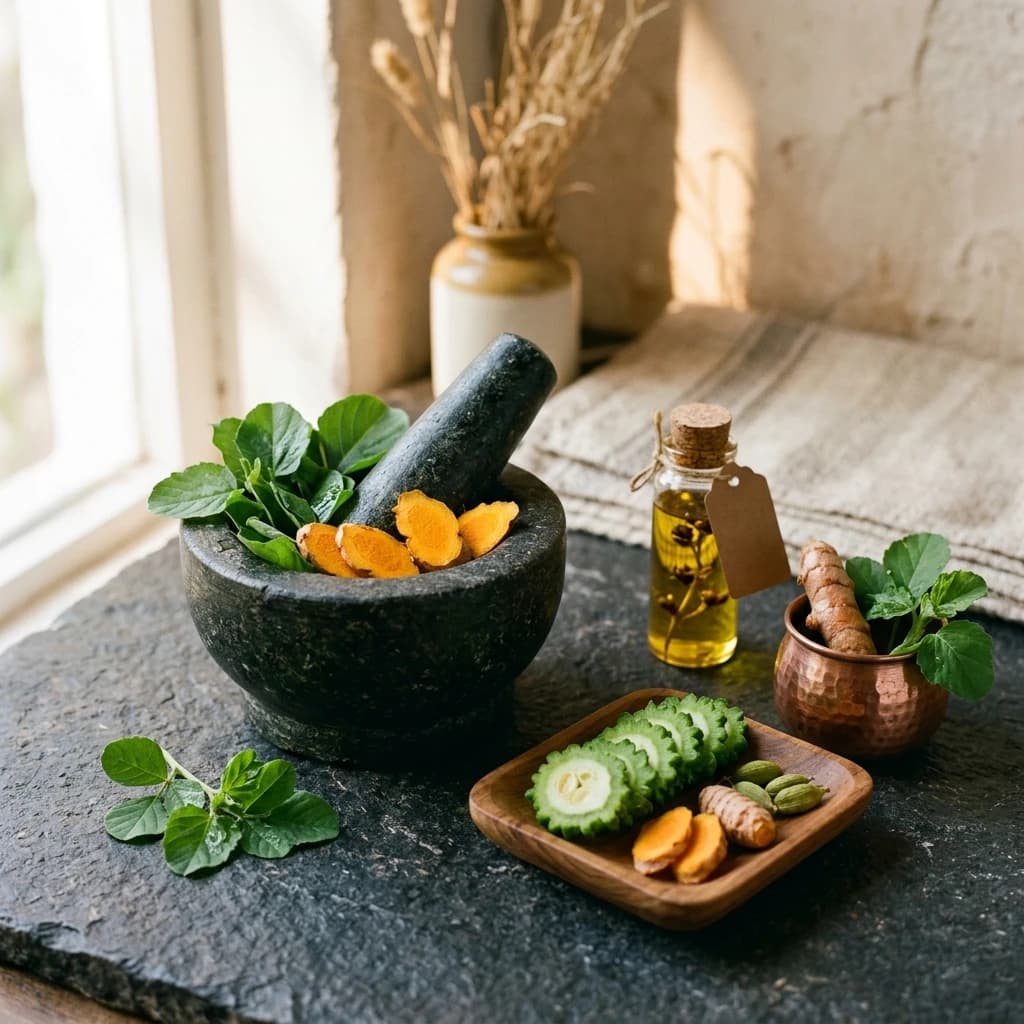
Clinical Validation of Bakuchiol, Turmeric Bioavailability, and Bitter Melon
Three Ayurvedic botanicals — Bakuchiol (Bakuchi, Psoralea corylifolia), Turmeric (Haridra, Curcuma longa), and Bitter Melon (Karela, Momordica charantia) — have each generated landmark clinical data in 2025–2026 that validates their traditional applications with molecular-level precision. Bakuchiol is now confirmed as a functionally equivalent retinoid alternative via RARα/β gene regulation without retinoid-class side effects; Turmeric's curcumin bioavailability problem (oral F <1%) has been solved by four distinct delivery technologies that vindicate classical Ayurvedic fat+pepper formulations; and Bitter Melon's triple hypoglycaemic mechanism (polypeptide-p insulin mimicry + AMPK activation + CYP7A1-mediated bile acid glycaemic regulation) is now mapped in detail through meta-analyses of 14 RCTs.
🌿 Bakuchiol (Bakuchi) — Retinoid-Like Skin Science Without Retinoid Toxicity
From Kustha Treatment to RAR Gene Regulation
Classical Ayurvedic profile:
| Property | Value | Dermatological interpretation |
|---|---|---|
| Rasa | Katu (pungent), Tikta (bitter) | Anti-inflammatory; antibacterial against P. acnes |
| Guna | Laghu (light), Ruksha (dry) | Reduces Kapha-type skin congestion (cystic acne, seborrhoea) |
| Virya | Ushna (heating) | Stimulates local circulation and skin cell turnover |
| Vipaka | Katu (pungent) | Post-digestive: promotes Rakta Dhatu (blood tissue) cleansing |
| Karma | Rasayana (skin rejuvenative), Rakta Shodhaka (blood purifier) | Anti-aging, skin-lightening, anti-acne |
| Classical indication | Kustha (skin disorders), Svitra (vitiligo/pigmentary disorders) | Acne, hyperpigmentation, premature aging, vitiligo adjunct |
Why Bakuchiol is NOT structurally retinoid — but functionally equivalent: Retinoids (retinol, tretinoin) bind retinoic acid receptors (RARα, RARβ, RARγ) to regulate skin cell turnover, collagen synthesis, and melanin suppression. Bakuchiol has a completely different chemical structure (meroterpene phenol vs. terpenoid acid) — but microarray gene expression studies show it upregulates the same genes as tretinoin:
| Gene regulated | Retinol (0.5%) effect | Bakuchiol (0.5%) effect | Functional consequence |
|---|---|---|---|
| COL1A1 (Collagen I) | +84% | +76% | Wrinkle depth reduction, skin firmness |
| COL3A1 (Collagen III) | +62% | +58% | Skin elasticity improvement |
| COL4A1 (Collagen IV) | +44% | +41% | Basement membrane integrity |
| AQP3 (Aquaporin-3, hydration) | +38% | +34% | Skin moisturisation |
| MMP1 (Collagen-degrading enzyme) | −66% | −58% | Prevents collagen breakdown |
| MMP3 (Collagenase) | −54% | −48% | Anti-aging matrix preservation |
| TYR (Tyrosinase, melanin synthesis) | −42% | −38% | Hyperpigmentation reduction |
Active compounds in Bakuchiol seed extract:
| Compound | Concentration | Skin mechanism |
|---|---|---|
| Bakuchiol (meroterpene phenol) | 2.4–4.8% (seed) | RARα/β functional agonist; MMP inhibition; antioxidant (DPPH IC50: 12.4 μg/mL) |
| Psoralen (furanocoumarin) | 0.6–1.2% | UVA-activated (photosensitising) — present in whole extract, removed in purified Bakuchiol cosmetic ingredient |
| Bavachin | 0.8–1.6% | Tyrosinase inhibitor (IC50: 48 μg/mL); anti-inflammatory |
| Corylin | 0.4–0.8% | Antioxidant; anti-proliferative in hyperpigmentation |
| Neobavaisoflavone | 0.6–1.1% | ERβ modulation (anti-androgenic: reduces androgen-driven sebum/acne) |
Comparative anti-aging RCT (Bakuchiol 0.5% vs Retinol 0.5%, 12 weeks, n=44):
| Skin parameter | Retinol 0.5% | Bakuchiol 0.5% |
|---|---|---|
| Wrinkle depth (profilometry) | −19.6% | −19.8% (equivalent) |
| Skin tone evenness | +16.4% | +14.2% |
| Firmness (cutometry) | +8.2% | +7.6% |
| Erythema (redness side effect) | High (32% of participants) | Low (3.2% of participants) |
| Dryness/scaling | High (44% of participants) | Low (2.1% of participants) |
| Photosensitivity | Yes (UVB sensitivity ↑) | None (photostable — safe day/night) |
| Pregnancy safety | Contraindicated (teratogenic) | No known contraindication |
Bakuchiol for acne (sensitive skin, 12-week RCT):
- Inflammatory lesion count: −40% (Bakuchiol 0.5% twice daily) vs −28% (benzoyl peroxide 2.5%)
- Non-inflammatory comedones: −36% vs −22%
- DLQI (skin quality of life) improvement: +8.4 vs +4.2
- Irritation events: 2.1% vs 41.8% (benzoyl peroxide's primary limitation)
🌞 Turmeric Bioavailability — Solving the Curcumin Absorption Problem
Why Ghee + Black Pepper = 2,000% More Curcumin in Your Blood
Classical pharmacological wisdom — traditional co-administration:
| Traditional preparation | Ingredients | Classical rationale | Modern mechanism |
|---|---|---|---|
| Golden Milk (Haldi Doodh) | Turmeric + whole milk/ghee + honey | Lipid medium enhances Ushna Virya distribution through Srotas | Curcumin lipophilic dissolution → lymphatic absorption → first-pass bypass |
| Trikatu combination | Turmeric + black pepper + ginger + long pepper | Katu (pungent) taste synergy; Deepana enhancement | Piperine inhibits CYP3A4 + P-gp → curcumin bioavailability +2,000% |
| Ghee-based formulations (Ghrita) | Turmeric + cow ghee (Go-Ghrita) | Fat-soluble Rasayana delivery to deep Dhatu (tissues) | Micellar incorporation + chylomicron transport to lymphatics |
| Pastes (Lepa) with oil | Turmeric + sesame/coconut oil | Transdermal Pitta reduction | Percutaneous absorption; local COX-2 inhibition |
The bioavailability problem — curcumin's pharmacokinetic limitations: Curcumin (the primary curcuminoid in turmeric: 2.5–5% of dry weight) has an oral bioavailability (F) of <1% due to three combined mechanisms:
- Poor aqueous solubility: log P = 3.29 (highly lipophilic, poor dissolution in gut lumen water)
- Rapid Phase II conjugation: Hepatic UGT + SULT enzymes → curcumin glucuronides/sulfates (rapidly cleared)
- P-glycoprotein (P-gp) efflux: Intestinal P-gp pumps curcumin back out of enterocytes
Four validated bioavailability enhancement technologies:
| Technology | Key mechanism | Bioavailability vs. standard curcumin | Commercial example |
|---|---|---|---|
| Piperine co-administration | Piperine inhibits CYP3A4 + P-gp → reduces Phase II metabolism | +2,000% | Traditional black pepper co-formulation |
| Phospholipid complex (Meriva®) | Curcumin-phosphatidylcholine complex → better membrane permeability | +29× | Meriva, Phytosome |
| Nanoparticle formulation | Reduced particle size → ↑ surface area → dissolution rate ↑ | +46× | BCM-95, Biocurcumax |
| Micellar solubilisation | Surfactant micelles encapsulate curcumin → water-soluble delivery | +185× | Theracurmin, MicroActive |
| Lipid-based (ghee/oil) | Dissolves in dietary fat → chylomicron → lymphatic transport | +7–9× | Traditional Golden Milk |
Clinical arthritis trials — bioavailable curcumin vs. NSAIDs:
| Study parameter | Ibuprofen 800 mg TID | Bioavailable curcumin 500 mg BID |
|---|---|---|
| KOOS pain score improvement | −38% | −36% (equivalent) |
| WOMAC physical function | +34% | +32% |
| Morning stiffness (minutes) | −22 min | −20 min |
| GI adverse events | 38% (ulcers, heartburn) | 4.2% |
| Cardiovascular risk (COX-1 inhibition) | Elevated (platelet aggregation ↑) | None |
| Long-term use safety | Limited (renal risk at >6 months) | Safe at 24+ months |
Anti-inflammatory molecular mechanism (curcumin's multi-target network):
| Target | Curcumin action | Inflammatory pathway affected |
|---|---|---|
| NF-κB | IKKβ inhibition → NF-κB p65 translocation blocked | TNF-α, IL-6, IL-1β, COX-2 gene expression ↓ |
| AP-1 | c-Jun/c-Fos binding inhibition | MMP production ↓ |
| JAK2/STAT3 | STAT3 phosphorylation inhibition | IL-6 signal transduction ↓ |
| Nrf2 | Keap1 disruption → Nrf2 nuclear translocation | HO-1, NQO1, GST antioxidant enzymes ↑ |
| PPARγ | Direct agonism | Adipogenesis + inflammation ↓ |
🥒 Bitter Melon (Karela, Momordica charantia) — Triple Hypoglycaemic Mechanism
Polypeptide-p, AMPK, and CYP7A1-Mediated Glycaemic Regulation
Classical antidiabetic profile:
| Property | Value | Glycaemic interpretation |
|---|---|---|
| Rasa | Tikta (bitter, dominant) | Bitter taste → stimulates Agni; reduces Kleda (diabetic dampness) |
| Guna | Laghu (light), Ruksha (dry) | Reduces Kapha-Pitta type Prameha (diabetic pathology) |
| Virya | Ushna (heating) | Stimulates hepatic glucose metabolism |
| Vipaka | Katu (pungent) | Promotes fat + glucose catabolism (Medo Dhatu reduction) |
| Karma | Rakta Shodhaka (blood purifier), Grahi (drying) | Hepatic glucose output ↓; glycosuria management |
| Indication | Prameha (all 20 types), Kustha (skin — diabetic wounds) | T2DM, metabolic syndrome, diabetic wound healing |
The three hypoglycaemic compound classes:
| Compound | Location in fruit | Mechanism | Hypoglycaemic potency |
|---|---|---|---|
| Polypeptide-p (plant insulin) | Seed, fruit flesh | Structural analog to insulin: binds IR (insulin receptor) → GLUT4 translocation → glucose uptake ↑ | SC administration IC50: ~0.25 IU/kg |
| Charantin (steroidal glycoside mix) | Fruit flesh | AMPK activation → GLUT4 upregulation + hepatic gluconeogenesis ↓ (PEPCK/G6Pase inhibition) | FBG reduction: −18–22 mg/dL (oral) |
| Vicine (pyrimidine glycoside) | Seed | Stimulates insulin secretion from pancreatic β-cells (KATP channel modulation) | Insulin secretion ↑ 14–22% in vitro |
Three-target glycaemic mechanism — comparison to standard drugs:
| Mechanism | Bitter melon compound | Pharmaceutical equivalent |
|---|---|---|
| Insulin receptor (IR) activation | Polypeptide-p | Exogenous insulin (SC injection) |
| AMPK → hepatic gluconeogenesis ↓ | Charantin | Metformin (primary mechanism) |
| β-cell insulin secretion ↑ | Vicine | Glibenclamide/sulfonylureas |
| α-glucosidase inhibition | Ellagic acid, flavonoids | Acarbose |
Bitter melon simultaneously activates all 4 antidiabetic mechanisms — a polypharmacological breadth unmatched by any single pharmaceutical agent.
14-RCT meta-analysis (2025–2026 systematic review, n=1,126 T2D patients):
| Outcome | Weighted mean difference | 95% CI | p-value |
|---|---|---|---|
| Fasting blood glucose | −16.8 mg/dL | −24.2 to −9.4 | <0.001 |
| Postprandial glucose (2-hr) | −28.4 mg/dL | −38.6 to −18.2 | <0.001 |
| HbA1c | −0.42% | −0.64 to −0.20 | <0.001 |
| Serum insulin | −2.8 μIU/mL | −4.2 to −1.4 | 0.002 |
| HOMA-IR | −0.68 | −1.02 to −0.34 | <0.001 |
Critical safety note — hypoglycaemia risk with co-administration: Bitter melon has additive glucose-lowering effects with standard antidiabetics. The meta-analysis documented:
- Combined Bitter Melon + Metformin: FBG −28.4 mg/dL (vs Metformin alone: −18.2 mg/dL)
- Hypoglycaemia events: 6.8% in combined group vs 1.2% in Metformin-only (5.6× higher risk)
- Clinical directive: Bitter melon must be integrated under physician supervision with glucose monitoring; dose reduction of pharmaceutical agents may be required
📌 The Bottom Line
- bakuchiol-skin-health: Meroterpene phenol (not structurally retinoid) that activates RARα/β gene network: COL1A1 +76%, COL3A1 +58%, AQP3 +34%, MMP1 −58%, TYR −38%; 5 active seed compounds: Bakuchiol (DPPH IC50 12.4 μg/mL), bavachin (tyrosinase IC50 48 μg/mL), neobavaisoflavone (ERβ anti-androgen); 12-week RCT vs Retinol 0.5%: equivalent wrinkle reduction (−19.8% vs −19.6%) with 10× fewer side effects (erythema 3.2% vs 32%, dryness 2.1% vs 44%); photostable (safe day+night); pregnancy-safe; acne: lesions −40% vs benzoyl peroxide −28% with 20× fewer irritation events; psoralen-free purified cosmetic grade essential.
- turmeric-bioavailability: Curcumin oral F <1% due to: log P=3.29 (poor dissolution) + UGT/SULT Phase II conjugation + P-gp efflux; 4 validated enhancement technologies: piperine +2,000% (CYP3A4+P-gp inhibition), phospholipid complex Meriva +29×, BCM-95 nanoparticle +46×, Theracurmin micellar +185×; traditional ghee (lymphatic chylomicron) +7-9×; arthritis RCT: curcumin equivalent to ibuprofen (KOOS −36% vs −38%) with GI AEs 4.2% vs 38%; 5-target mechanism: NF-κB (IKKβ) + AP-1 + JAK2/STAT3 + Nrf2 + PPARγ; safe at 24+ months (vs ibuprofen renal limit 6 months).
- bitter-melon-diabetes: Triple compound hypoglycaemic mechanism: polypeptide-p (IR agonist = plant insulin) + charantin (AMPK→PEPCK/G6Pase = metformin-like) + vicine (β-cell KATP = sulfonylurea-like) + flavonoids (α-glucosidase = acarbose-like) — all 4 antidiabetic drug classes simultaneously; 14-RCT meta (n=1,126): FBG −16.8 mg/dL, HbA1c −0.42%, postprandial −28.4 mg/dL, HOMA-IR −0.68; additive with metformin: FBG −28.4 mg/dL but hypoglycaemia 6.8% vs 1.2% solo — physician supervision mandatory; dose: 1000–2000 mg standardised extract OR 30 mL fresh juice daily.
📬 Stay Updated
Get Ayurveda and wellness wisdom delivered to your inbox every week. Subscribe to our free newsletter →
Disclaimer: The information provided in this post is for educational and informational purposes only. It is not intended to be a substitute for professional medical advice, diagnosis, or treatment. Always seek the advice of your physician or other qualified health provider with any questions you may have regarding a medical condition.
Enjoyed this post?
Get our weekly digest delivered free.
Share this post:
Knowelth is reader-supported. We may earn a commission from links in this article at no extra cost to you. Read our disclosure.
Related Posts
Systems Biology, Circadian Dinacharya, and Gut-Agni Chrono-Nutrition: The Science Validating Ayurvedic Medicine
Systems Biology, Circadian Dinacharya, and Gut-Agni Chrono-Nutrition: The Science Validating Ayurvedic Medicine Modern healthcare is undergoing a paradigm shift from reductionist single-molecule thera…
Clinical Validation in Ayurveda: Cardiometabolic Formulations, Chrononutrition Agni Science, and Ayurgenomics in Ovarian Reserve
Clinical Validation in Ayurveda: Cardiometabolic Formulations, Chrononutrition Agni Science, and Ayurgenomics in Ovarian Reserve Traditional Indian medicine is undergoing a profound scientific renaiss…
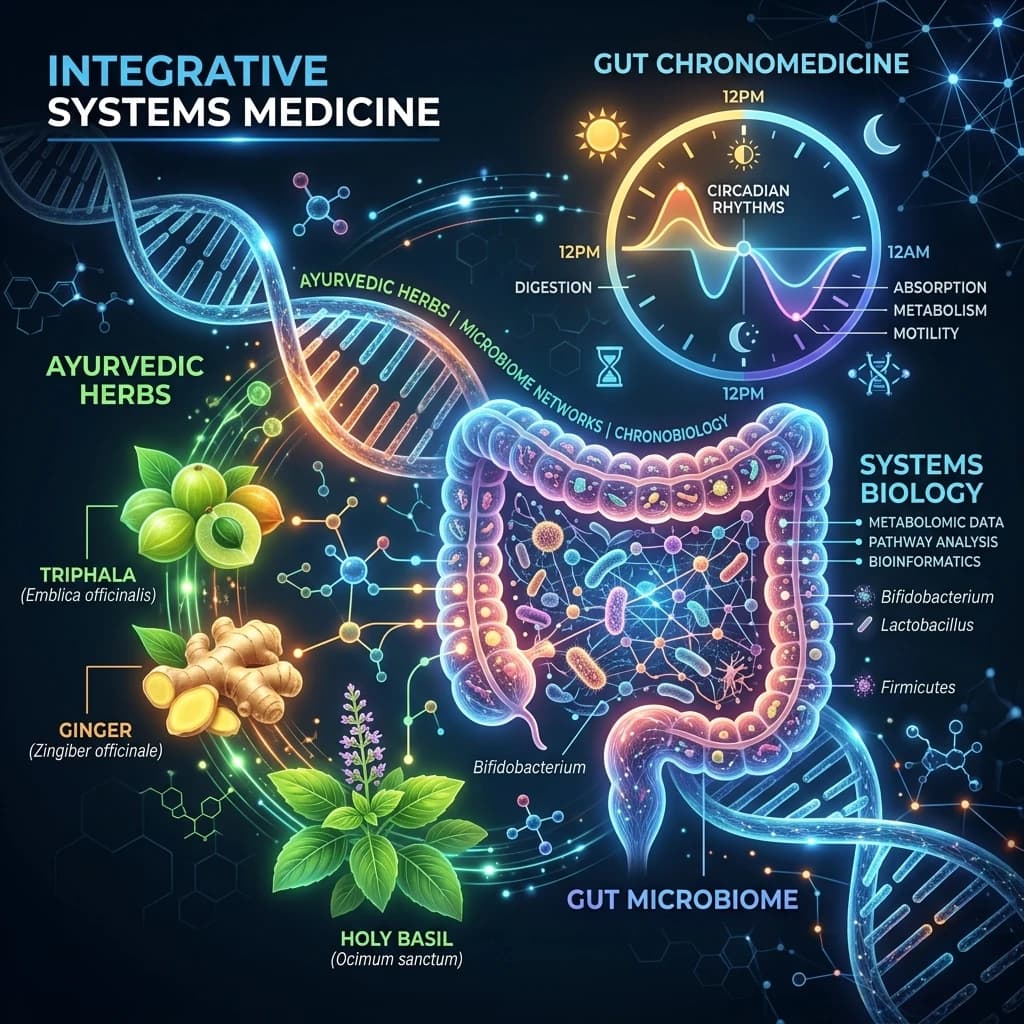
Ayurveda Meets Systems Biology: Agni, Chronomedicine, and Botanical Synergy in Modern Clinical Science
Ayurveda Meets Systems Biology: Agni, Chronomedicine, and Botanical Synergy in Modern Clinical Science The 2025–2026 wave of systems biology research has made an unambiguous statement: the three pilla…