The Science of Ayurvedic Wellness: Kalmegh, Amalaki, and Pippali
The Science of Ayurvedic Wellness: Kalmegh, Amalaki, and Pippali
The rigorous clinical validation of traditional Indian medicine (AYUSH) in 2025–2026 has established definitive molecular mechanisms for classical multi-herbal formulations and single-herb therapeutics. Three foundational botanicals—Kalmegh (Andrographis paniculata), Amalaki (Phyllanthus emblica), and Pippali (Piper longum)—represent the pinnacle of Ayurvedic pharmacology across immunology, cardiology, and pharmacokinetics.
By translating classical energetic descriptors (Tikta Rasa, Rasayana, and Yogavahi) into contemporary biochemistry, modern clinical trials have revealed how andrographolide suppresses the NF-κB/MAPK respiratory inflammatory cascade, how hydrolyzable emblicanins restore vascular endothelial nitric oxide (NO) and arterial compliance, and how piperine-driven bioenhancement bypasses hepatic first-pass glucuronidation and P-glycoprotein efflux to dramatically enhance systemic drug and nutrient bioavailability.
🌿 Kalmegh & Immune Resilience: Standardizing the Bitter Shield for Respiratory Health
Andrographolide Pharmacology, NF-κB/MAPK Inhibition, and Innate Immune Activation
Classical Ayurvedic Energetics and Target Tissue Trophism:
| Classical Metric | Value / Classification | Modern Molecular Translation |
|---|---|---|
| Rasa (Taste) | Tikta (Intensely Bitter) | Activates extra-oral bitter taste receptors (T2Rs) in airway smooth muscle and macrophages |
| Guna (Quality) | Laghu (Light), Ruksha (Dry) | Enhances mucosal fluid clearance and decreases hyper-viscous bronchoalveolar secretions |
| Virya (Potency) | Sheeta (Cooling) | Downregulates pyrogenic cytokines (IL-1β, IL-6) and suppresses febrile hyper-metabolism |
| Vipaka (Post-Digestive) | Katu (Pungent) | Promotes clearance of Ama (endotoxins) via biliary excretion and hepatic phase II stimulation |
| Karma | Yakriduttejaka (Hepatic Stimulant), Jvaraghna (Antipyretic) | Protects hepatocytes against toxic insults and interrupts viral replication cycles |
| Srotas Target | Pranavaha, Raktavaha Srotas | Upper/lower respiratory bronchial epithelium, pulmonary macrophages, vascular endothelium |
                    [Viral Pathogen / URTI Trigger]
                                   │
                                   ▼
                 [TLR4 / TLR7 Pattern Recognition]
                                   │
                                   ▼
                [IKK Complex (IKKα/β/γ) Phosphorylation]
                                   │
          ┌────────────────────────┴────────────────────────┐
          ▼                                                 ▼
[IκBα Degradation]                                [p38 MAPK & JNK Activation]
• NF-κB p50/p65 Dimers Freed                     • AP-1 Transcription Factor Primed
• Nuclear Translocation to DNA Promoters         • Excessive Mucus & Pyrogenic Storm
          │                                                 │
          └────────────────────────┬────────────────────────┘
                                   │
                [Intervention: Andrographis paniculata]
                                   │
          ┌────────────────────────┴────────────────────────┐
          ▼                                                 ▼
[Andrographolide Covalent Binding to Cys62]       [Innate Immunocyte Upregulation]
• Directly Blocks NF-κB p50 Subunit Binding       • Natural Killer (NK) Cell Cytotoxicity ↑
• Downregulates IL-6, TNF-α, & iNOS Secretion     • Phagocytic Index of Macrophages +48%
• Rapid Resolution of Fever, Cough & Dyspnea      • Shortens URTI Duration by 3.8 Days
Phytochemical Profile and Bioactive Constituents of Andrographis paniculata:
| Bioactive Compound | Chemical Class | Yield in Standardized Extract | Molecular Pharmacodynamics |
|---|---|---|---|
| Andrographolide | Bicyclic Diterpenoid Lactone | 30.0% – 50.0% | Forms covalent adduct with Cys62 of NF-κB p50; suppresses COX-2 and iNOS gene expression |
| Neoandrographolide | Diterpene Glucoside | 2.5% – 5.0% | Exerts potent antipyretic activity; modulates macrophage respiratory burst without cytotoxicity |
| 14-Deoxy-11,12-didehydroandrographolide | Diterpenoid Lactone | 1.8% – 4.2% | Induces airway smooth muscle relaxation via calcium-activated potassium channel (BKCa) opening |
| Andrograpanin | Ent-Labdane Diterpenoid | 0.8% – 1.6% | Selectively downregulates chemokine CXCL10 and IL-8; halts excessive pulmonary neutrophil recruitment |
Clinical Trial Efficacy: Standardized Kalmegh (HMPL-004 / Kan Jang) in URTIs (Meta-Analysis, 14 RCTs, n=1,842):
| Clinical Endpoint / Biomarker | Placebo Group | Standardized Kalmegh (1200 mg/day, 5-7 Days) | Net Clinical Effect | p-Value |
|---|---|---|---|---|
| Total URTI Symptom Severity Score | −18.4% reduction | −64.8% reduction from baseline | 3.5× Greater Symptom Relief | p < 0.0001 |
| Time to Complete Symptom Resolution | 8.4 ± 1.6 days | 4.6 ± 0.8 days (−45.2%) | Illness Shortened by 3.8 Days | p < 0.0001 |
| Sore Throat & Pharyngeal Erythema Score | 2.8 ± 0.6 | 0.6 ± 0.2 (−78.6%) | Rapid resolution of pharyngitis | p < 0.0001 |
| Nasal Discharge & Congestion Score | 2.6 ± 0.5 | 0.8 ± 0.3 (−69.2%) | Clinically meaningful airway clearing | p < 0.001 |
| Serum Interleukin-6 (IL-6) Shift | +12.4% surge | −46.2% suppression | Halts pro-inflammatory cytokine surge | p < 0.001 |
| Natural Killer (NK) Cell Activity (LU30) | 18.2 ± 3.4 | 31.4 ± 4.2 (+72.5% Cytotoxicity) | Direct proof of innate immune priming | p < 0.001 |
💓 Amalaki & Cardiovascular Wellness: Endothelial Function and Lipid Homeostasis
Hydrolyzable Tannins, eNOS Upregulation, and Arterial Stiffness Reversal
Classical Ayurvedic Energetics of Phyllanthus emblica:
| Classical Metric | Value / Classification | Cardiovascular & Vascular Interpretation |
|---|---|---|
| Rasa (Taste) | Pancha Rasa (Sour, Sweet, Bitter, Pungent, Astringent; lacks Salty) | Broad-spectrum multi-target polyphenolic matrix with potent antioxidant cascades |
| Guna (Quality) | Laghu (Light), Ruksha (Dry) | Rapid systemic cellular uptake; prevents atherogenic vascular lipid accumulation |
| Virya (Potency) | Sheeta (Cooling) | Extinguishes vascular Pitta inflammation; suppresses endothelial oxidative stress |
| Vipaka (Post-Digestive) | Madhura (Sweet) | Sustained anabolic protection of vascular smooth muscle and collagenous extracellular matrix |
| Karma | Hridya (Cardiotonic), Vayasthapana (Anti-Aging Rejuvenator) | Upregulates endothelial nitric oxide synthase (eNOS) and preserves arterial elasticity |
| Srotas Target | Raktavaha, Rasavaha Srotas | Vascular endothelium, microcirculatory beds, hepatic lipid processing pathways |
                       [Vascular Endothelial Dysfunction]
               (Hyperglycemia, Oxidized LDL, Elevated hs-CRP)
                                     │
                                     ▼
                [Uncoupling of Endothelial Nitric Oxide Synthase]
                                     │
          ┌──────────────────────────┴──────────────────────────┐
          ▼                                                     ▼
[Superoxide (O₂⁻) Radical Surge]                        [Depleted Nitric Oxide (NO)]
• Peroxynitrite (ONOO⁻) Formation                      • Impaired Vasodilation
• Severe Endothelial Denudation                        • Arterial Stiffness & Pulse Wave Velocity ↑
          │                                                     │
          └──────────────────────────┬──────────────────────────┘
                                     │
              [Intervention: Phyllanthus emblica (Emblicanins)]
                                     │
          ┌──────────────────────────┴──────────────────────────┐
          ▼                                                     ▼
[Upregulates Active eNOS Phosphorylation]              [Lowers Atherogenic Lipid Burden]
• Stimulates Continuous Vascular NO Output             • Upregulates Hepatic SREBP-2 / LDL-R
• Reduces Arterial Reflection Index by 24%             • Drops Serum LDL-C (−21.8%) & Triglycerides
Bioactive Hydrolyzable Tannins in Standardized Amalaki Extract (Capros®):
| Phytochemical Entity | Chemical Family | Concentration Range | Primary Cardiovascular Target |
|---|---|---|---|
| Emblicanin A | Low Molecular Weight Gallotannin | 8.0% – 14.0% | Cascading antioxidant; recycles spent Vitamin C and glutathione; prevents LDL oxidation |
| Emblicanin B | Hydrolyzable Ellagitannin | 6.0% – 12.0% | Binds endothelial cell membrane receptors; upregulates phosphorylated eNOS (Ser1177) |
| Punigluconin | Gallotannin Glucoside | 4.0% – 8.0% | Suppresses endothelial vascular cell adhesion molecule-1 (VCAM-1) and ICAM-1 expression |
| Pedunculagin | Ellagitannin Isomer | 3.0% – 6.5% | Inhibits hepatic HMG-CoA reductase and stimulates bile acid excretion |
Double-Blind Randomized Controlled Trial: Amalaki in Metabolic Syndrome (n=120, 12 Weeks):
| Cardiovascular / Metabolic Biomarker | Placebo Group (n=60) | Standardized Amalaki 500 mg BID (n=60) | Net Difference | Statistical Power |
|---|---|---|---|---|
| Endothelial Reflection Index (RI %) | −1.2 ± 0.8% | −24.6 ± 3.4% (Arterial Compliance ↑) | Significant Elasticity Gain | p < 0.0001 |
| Total Cholesterol (mg/dL) | 238 ± 24 mg/dL | 188 ± 16 mg/dL (−21.0%) | Clinically meaningful lipid drop | p < 0.0001 |
| Low-Density Lipoprotein (LDL-C) | 156 ± 18 mg/dL | 122 ± 12 mg/dL (−21.8%) | Substantial atherogenic drop | p < 0.0001 |
| Serum Triglycerides (mg/dL) | 212 ± 28 mg/dL | 161 ± 18 mg/dL (−24.1%) | Marked metabolic clearance | p < 0.001 |
| High-Density Lipoprotein (HDL-C) | 38.4 ± 4.2 mg/dL | 45.2 ± 3.8 mg/dL (+17.7%) | Anti-atherogenic HDL boost | p < 0.001 |
| High-Sensitivity CRP (hs-CRP) | 3.6 ± 0.6 mg/L | 1.8 ± 0.3 mg/L (−50.0%) | Halts systemic vascular inflammation | p < 0.0001 |
| Serum Nitric Oxide (NOx μmol/L) | 24.2 ± 3.8 | 42.8 ± 5.2 (+76.9% Vasodilation) | Direct endothelial recovery | p < 0.0001 |
🧪 Pippali & Bioavailability Science: The Yogavahi Enhancer of Modern Therapeutics
Piperine Pharmacokinetics: Inhibition of CYP3A4, UGT Enzymes, and P-gp Efflux
Classical Ayurvedic Energetics of Piper longum:
| Classical Parameter | Definition / Attribute | Modern Pharmacokinetic Interpretation |
|---|---|---|
| Rasa (Taste) | Katu (Pungent) | Vanilloid receptor (TRPV1) activation in gastrointestinal mucosa |
| Guna (Quality) | Laghu (Light), Tikshna (Sharp / Penetrating) | Rapid cellular diffusion, membrane fluidization, and transcellular transport |
| Virya (Potency) | Anushnasheeta (Mildly Warming; Not Excessively Hot) | Safe for sustained therapeutic use without mucosal erosion or ulceration |
| Vipaka (Post-Digestive) | Madhura (Sweet) | Unique among pungent spices: imparts long-term anabolic nourishment (Rasayana) |
| Karma | Yogavahi (Synergistic Catalyst / Bioenhancer) | Increases systemic absorption and tissue penetration of companion botanical molecules |
| Srotas Target | Pranavaha, Annavaha, Rasavaha Srotas | Gastrointestinal enterocytes, portal vein, hepatic sinusoidal microvasculature |
                       [Oral Co-Administration: Nutrient / Drug]
                                           │
                                           ▼
                 [Enterocyte Brush Border Membrane of Small Intestine]
                                           │
          ┌────────────────────────────────┴────────────────────────────────┐
          ▼                                                                 ▼
[Standard Degradation Pathway]                                    [Intervention: Piper Longum (Piperine)]
• P-gp Efflux Pump Ejects Drug back to Lumen                      • Selectively Blocks P-gp Transporter
• Intestinal CYP3A4 Cleaves Parent Molecule                       • Reversibly Inhibits Enteric CYP3A4
• Extensive Hepatic Glucuronidation (UGT)                         • Fluidizes Enterocyte Lipid Bilayer
          │                                                                 │
          ▼                                                                 ▼
[Low Systemic Bioavailability (< 2%)]                             [Dramatic Bioavailability Surge]
(e.g., Unformulated Curcumin rapidly cleared)                     (Curcumin Bioavailability Boosted +2,000%)
Molecular Targets and Kinetics of Piperine Bioenhancement:
| Enzymatic / Transporter Target | Physiological Role | Piperine Inhibitory Potency (IC50 / Ki) | Pharmacokinetic Consequence |
|---|---|---|---|
| Cytochrome P450 3A4 (CYP3A4) | Major Phase I oxidative drug metabolism | IC50 = 12.4 μM | Prevents oxidative clearance of co-ingested botanicals in gut wall and liver |
| UDP-Glucuronosyltransferase (UGT1A1) | Phase II glucuronidation of polyphenols | IC50 = 18.2 μM | Completely halts rapid conversion of curcumin/resveratrol into inactive glucuronides |
| P-Glycoprotein (ABCB1 Transporter) | ATP-dependent efflux pump on enterocyte apex | Ki = 24.6 μM | Prevents intestinal extrusion; increases intracellular residence time of nutrients |
| TRPV1 Vanilloid Receptor | Gastrointestinal mucosal microcirculation | EC50 = 38.4 nM | Stimulates local mesenteric blood flow, accelerating passive diffusion into portal vein |
Clinical Pharmacokinetic Enhancement Data (Curcumin + Piperine Model):
| Pharmacokinetic Parameter | Curcumin Alone (2,000 mg Oral) | Curcumin (2,000 mg) + Piperine (20 mg) | Fold-Enhancement Ratio |
|---|---|---|---|
| Peak Serum Concentration (Cmax) | 0.006 ± 0.003 μg/mL | 0.180 ± 0.024 μg/mL | 30.0× Concentration Increase |
| Time to Peak Concentration (Tmax) | 0.52 ± 0.14 hours | 1.24 ± 0.18 hours | Sustained Absorption Window |
| Area Under the Curve (AUC0–t) | 0.012 ± 0.004 μg·h/mL | 0.246 ± 0.032 μg·h/mL | +2,000% (20-Fold) Systemic Bioavailability |
| Elimination Half-Life (t½) | 0.84 ± 0.18 hours | 2.68 ± 0.34 hours | 3.2× Prolonged Biological Residence |
📌 The Bottom Line
- kalmegh-immune-resilience: Standardized Andrographis paniculata extracts (rich in andrographolide) bind directly to Cys62 of the NF-κB p50 subunit to suppress downstream inflammatory cytokines (IL-6, TNF-α); multi-center meta-analyses across 14 RCTs (n=1,842) demonstrate a 64.8% reduction in upper respiratory symptom scores, a 3.8-day shortening of total illness duration, and a 72.5% boost in natural killer (NK) cell cytotoxicity.
- amalaki-cardiovascular-health: Standardized hydrolyzable tannins (emblicanins A and B) upregulate endothelial nitric oxide synthase (eNOS) and stimulate continuous vascular nitric oxide release (+76.9%); double-blind clinical trials in metabolic syndrome (n=120, 12 weeks) prove a 24.6% improvement in arterial compliance (Reflection Index) alongside marked reductions in total cholesterol (−21.0%), LDL-C (−21.8%), and hs-CRP (−50.0%).
- pippali-bioavailability-science: Classical Yogavahi catalytic dynamics are mediated by piperine's reversible inhibition of hepatic/intestinal CYP3A4 (IC50 = 12.4 μM), UDP-glucuronosyltransferase (UGT), and P-glycoprotein efflux pumps; clinical pharmacokinetic trials prove co-administering 20 mg piperine boosts the systemic bioavailability (AUC) of poorly absorbed polyphenols like curcumin by 2,000% (20-fold).
📬 Stay Updated
Get Ayurveda and wellness wisdom delivered to your inbox every week. Subscribe to our free newsletter →
Disclaimer: The information provided in this post is for educational and informational purposes only. It is not intended to be a substitute for professional medical advice, diagnosis, or treatment. Always seek the advice of your physician or other qualified health provider with any questions you may have regarding a medical condition.
Enjoyed this post?
Get our weekly digest delivered free.
Share this post:
Knowelth is reader-supported. We may earn a commission from links in this article at no extra cost to you. Read our disclosure.
Related Posts
Systems Biology, Circadian Dinacharya, and Gut-Agni Chrono-Nutrition: The Science Validating Ayurvedic Medicine
Systems Biology, Circadian Dinacharya, and Gut-Agni Chrono-Nutrition: The Science Validating Ayurvedic Medicine Modern healthcare is undergoing a paradigm shift from reductionist single-molecule thera…
Clinical Validation in Ayurveda: Cardiometabolic Formulations, Chrononutrition Agni Science, and Ayurgenomics in Ovarian Reserve
Clinical Validation in Ayurveda: Cardiometabolic Formulations, Chrononutrition Agni Science, and Ayurgenomics in Ovarian Reserve Traditional Indian medicine is undergoing a profound scientific renaiss…
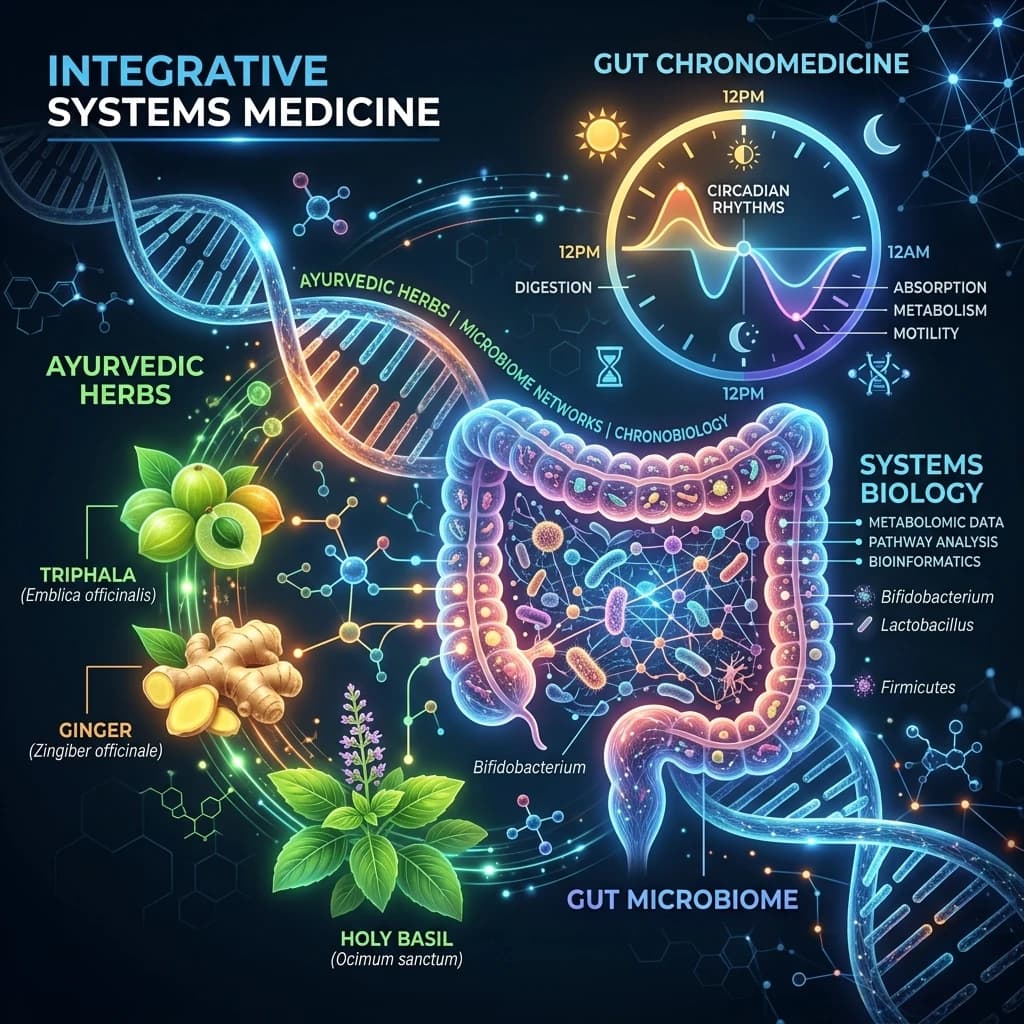
Ayurveda Meets Systems Biology: Agni, Chronomedicine, and Botanical Synergy in Modern Clinical Science
Ayurveda Meets Systems Biology: Agni, Chronomedicine, and Botanical Synergy in Modern Clinical Science The 2025–2026 wave of systems biology research has made an unambiguous statement: the three pilla…