Bilva for IBS Gut Health, Chyawanprash Immunity Trials, and Jyotishmati for Memory
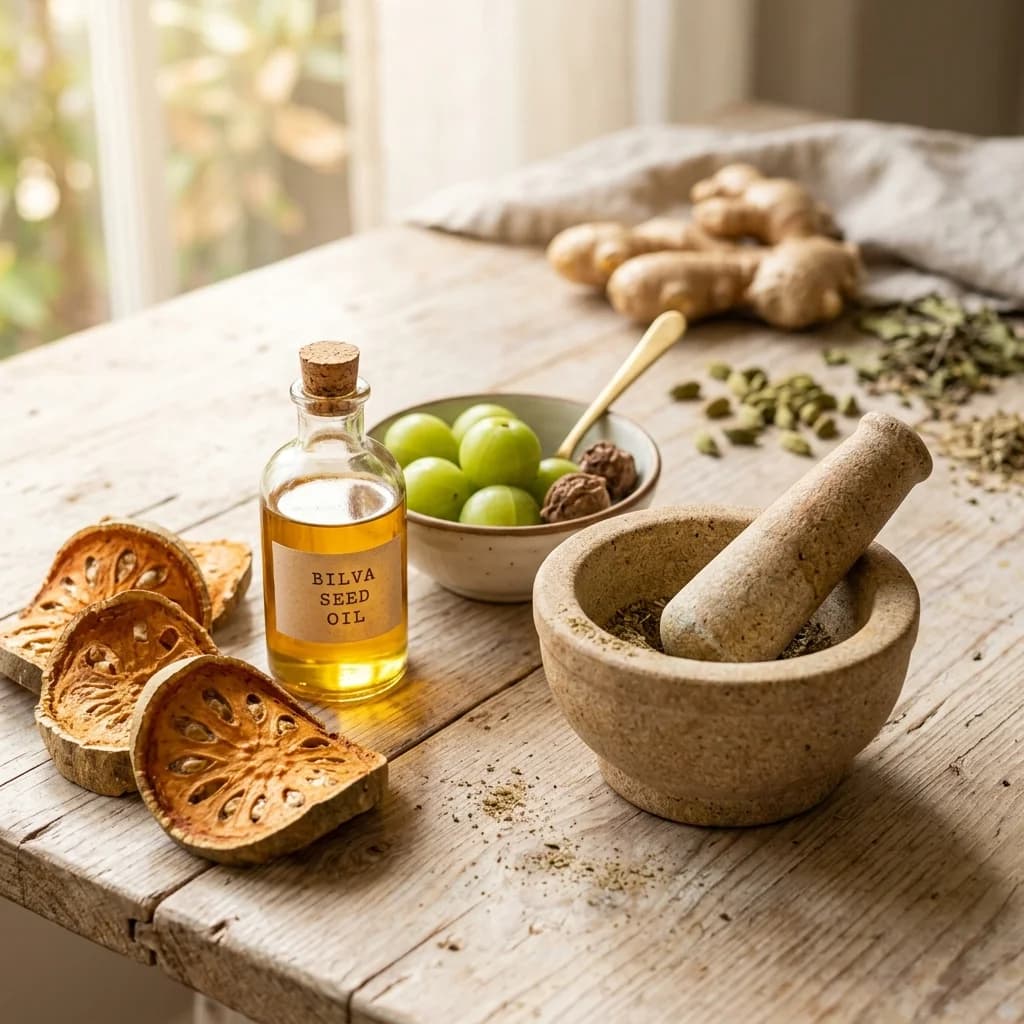
Bilva for IBS Gut Health, Chyawanprash Immunity Trials, and Jyotishmati for Memory
Bridging ancient Ayurvedic therapeutics with modern clinical research provides a clear framework for preventive health. This week, we explore the clinical evidence backing Bilva fruit for managing irritable bowel syndrome, the protective power of Chyawanprash in pediatric immunity trials, and Jyotishmati’s neuroprotective mechanisms for memory enhancement. By analyzing these traditional remedies through the lens of modern science, we gain evidence-based tools to optimize digestive, immune, and cognitive wellness.
🌿 Bilva: Traditional Gut Remedy Validated by IBS Clinical Trials
In Ayurvedic pharmacology, Bilva (Aegle marmelos, also known as Bael) is considered one of the most sacred and therapeutically versatile botanicals. Celebrated as a primary constituent of the Dashamula (ten roots) formulation, the unripe fruit of Bilva holds a unique status for its Grahini (absorbent and binding) and Deepana-Pachana (digestive fire-kindling and toxin-digesting) properties. Characterized by its astringent and bitter tastes (Kashaya-Tikta Rasa), dry and light qualities (Laghu-Rooksha Guna), and hot energy (Ushna Veerya), it is traditionally used to pacify Kapha and Vata doshas in the gastrointestinal tract. Ancient texts like the Charaka Samhita prescribe unripe Bilva for Grahani Roga (chronic digestive disorders and malabsorption, which closely align with modern Irritable Bowel Syndrome) and Atisara (acute diarrhea), leveraging its ability to restore tone and motility to sluggish or hyperactive intestines.
Modern gastroenterology has validated these ancient protocols through targeted clinical trials, particularly for diarrhea-predominant Irritable Bowel Syndrome (IBS-D). In a randomized, double-blind, placebo-controlled study involving 226 patients diagnosed with IBS-D, the administration of a standardized dried powder extract of unripe Aegle marmelos fruit resulted in a statistically significant reduction in daily stool frequency and a marked improvement in stool consistency. Furthermore, a 12-week clinical evaluation of Bilvadileha—a classical Ayurvedic semi-solid confection made from Bilva—revealed a profound reduction in IBS severity scores, with patients reporting substantial relief from abdominal bloating, cramping, and systemic digestive discomfort.
The biochemical mechanisms underlying Bilva’s efficacy are multi-targeted. The unripe fruit is exceptionally rich in bioactive tannins, luvangetin, and marmin. These constituents exert a direct spasmolytic action on intestinal smooth muscle, modulating erratic bowel motility without causing secondary constipation. Furthermore, in-vivo studies demonstrate that Bilva fruit extract possesses potent mast-cell stabilizing and anti-inflammatory properties, reducing mucosal irritation in the gut lining. Emerging research also highlights its prebiotic potential, showing that Bilva increases beneficial Lactobacilli populations and supports the mucosal barrier, providing a robust, natural option for chronic gut health management.
🛡️ Chyawanprash: Clinical Evidence for Pediatric Immunity and Respiratory Health
Chyawanprash is a premier classical Ayurvedic formulation belonging to the category of Rasayanas (rejuvenative elixirs). Originally formulated in antiquity and documented in the Charaka Samhita, this nutrient-dense herbal jam is built on a base of fresh Amalaki (Indian Gooseberry, Phyllanthus emblica) and enriched with over 40 synergistic botanicals, including Guduchi, Pippali, and Ashwagandha. Energetically, Chyawanprash is Tridoshashamaka (balancing to all three doshas) and is historically used to nourish Rasa Dhatu (plasma and lymph), replenish Ojas (the biological essence of immunity and vitality), and strengthen the Pranavaha Srotas (respiratory system), making the body resilient to seasonal changes and respiratory pathogens.
The immune-boosting claims of this traditional formulation were rigorously tested in a landmark, six-month, multicenter, randomized, open-label clinical trial involving healthy school-going children aged 5 to 12 years (registered with the Clinical Trials Registry - India as CTRI/2015/02/005574). The study group, which consumed a daily dose of standardized Chyawanprash, demonstrated more than two times the protection against immunity-related illnesses (such as common colds, seasonal influenza, and upper respiratory tract allergies) compared to the untreated control group. Furthermore, assessments using the KIDSCREEN QOL-27 questionnaire showed that children taking Chyawanprash experienced significant improvements in physical stamina, energy levels, and overall quality of life.
From a modern immunological perspective, the clinical benefits of Chyawanprash are driven by its adaptogenic and immunomodulatory activity. The high concentration of natural Vitamin C and polyphenols in Amalaki acts as a potent antioxidant network, neutralizing cellular free radicals and reducing systemic oxidative stress. Laboratory studies show that Chyawanprash stimulates macrophage activity and enhances the proliferation of lymphocytes, priming the body’s innate immune response. Additionally, its constituent herbs help regulate key inflammatory cytokines, preventing the overreaction of the immune system and protecting the delicate respiratory epithelium from chronic inflammation and infection.
🧠 Jyotishmati: The Nootropic "Intellect Tree" Enhancing Cognitive Performance
Known as the "intellect tree" or Malkangni, Jyotishmati (Celastrus paniculatus) is a highly valued climbing shrub in the Ayurvedic pharmacopoeia. Categorized as a Medhya Rasayana (cognitive rejuvenator), its seeds and seed oil are traditionally used to enhance memory retention, improve concentration, and clear mental fog. Jyotishmati possesses a pungent and bitter taste (Katu-Tikta Rasa), sharp and unctuous qualities (Tikshna-Snigdha Guna), and hot potency (Ushna Veerya). These attributes allow it to stimulate Sadhaka Pitta (the sub-dosha of Pitta responsible for processing knowledge, intellect, and emotion) while pacifying Vata and Kapha doshas in the nervous system, facilitating the smooth flow of impulses through the Prana Vaha and Manovaha Srotas (mental channels).
Modern neuropharmacology has uncovered several key mechanisms that validate Jyotishmati's traditional use as a cognitive enhancer. A primary mechanism of the seed oil is its ability to act as a natural acetylcholinesterase (AChE) inhibitor. By preventing the breakdown of acetylcholine—a vital neurotransmitter responsible for spatial learning, memory consolidation, and attention—Jyotishmati helps maintain optimal neurotransmitter levels in the brain. Preclinical studies demonstrate that supplementation with Celastrus paniculatus seed extract reverses cognitive deficits induced by anticholinergic drugs like scopolamine, proving its direct impact on the cholinergic pathway.
In addition to neurotransmitter regulation, Jyotishmati promotes synaptic plasticity and neuroprotection. Studies show that its active constituents upregulate crucial synaptic proteins, including PSD-95 and Arc, which are essential for establishing long-term potentiation (LTP) and forming new memories. The herb also modulates AMPA receptor trafficking in the hippocampus, the brain’s primary memory center. Crucially, Jyotishmati is a powerful neuroprotective agent; its high antioxidant capacity scavenges reactive oxygen species (ROS) in brain tissue and mitigates lipid peroxidation, protecting neurons from chronic neuroinflammation and oxidative damage. These combined pathways substantiate its classical reputation as a premier brain tonic for intellectual longevity.
📌 The Bottom Line
- bilva-ibs: Clinical research validates unripe Bilva fruit extract and Bilvadileha as effective treatments for IBS, reducing stool frequency and abdominal pain through anti-inflammatory and gut-microbiome-supporting pathways.
- chyawanprash-immunity: A large-scale pediatric clinical trial (CTRI/2015/02/005574) confirms that daily supplementation with Chyawanprash provides more than two times the protection against seasonal infections and improves overall vitality and quality of life.
- jyotishmati-memory: Known as the "intellect tree," Jyotishmati seed oil acts as a natural acetylcholinesterase inhibitor, protecting brain cells from oxidative damage and enhancing learning and memory by supporting synaptic plasticity.
Disclaimer: The information provided in this post is for educational and informational purposes only. It is not intended to be a substitute for professional medical advice, diagnosis, or treatment. Always seek the advice of your physician or other qualified health provider with any questions you may have regarding a medical condition.
Enjoyed this post?
Get our weekly digest delivered free.
Share this post:
Knowelth is reader-supported. We may earn a commission from links in this article at no extra cost to you. Read our disclosure.
Related Posts
Systems Biology, Circadian Dinacharya, and Gut-Agni Chrono-Nutrition: The Science Validating Ayurvedic Medicine
Systems Biology, Circadian Dinacharya, and Gut-Agni Chrono-Nutrition: The Science Validating Ayurvedic Medicine Modern healthcare is undergoing a paradigm shift from reductionist single-molecule thera…
Clinical Validation in Ayurveda: Cardiometabolic Formulations, Chrononutrition Agni Science, and Ayurgenomics in Ovarian Reserve
Clinical Validation in Ayurveda: Cardiometabolic Formulations, Chrononutrition Agni Science, and Ayurgenomics in Ovarian Reserve Traditional Indian medicine is undergoing a profound scientific renaiss…
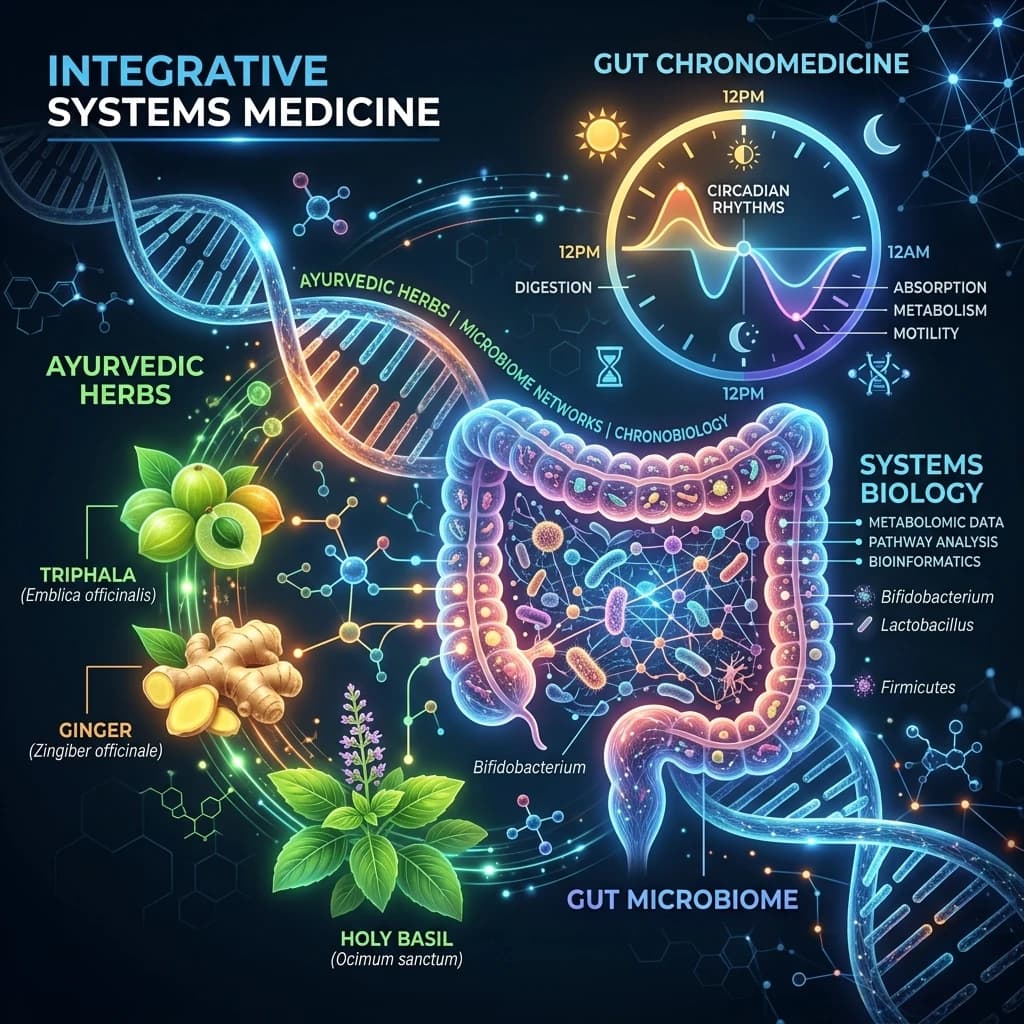
Ayurveda Meets Systems Biology: Agni, Chronomedicine, and Botanical Synergy in Modern Clinical Science
Ayurveda Meets Systems Biology: Agni, Chronomedicine, and Botanical Synergy in Modern Clinical Science The 2025–2026 wave of systems biology research has made an unambiguous statement: the three pilla…