Ayurvedic Science: Triphala's Gut Microbiome Prebiotic Power, Ashwagandha Sleep Studies, and Tulsi Cognitive Clinical Trials
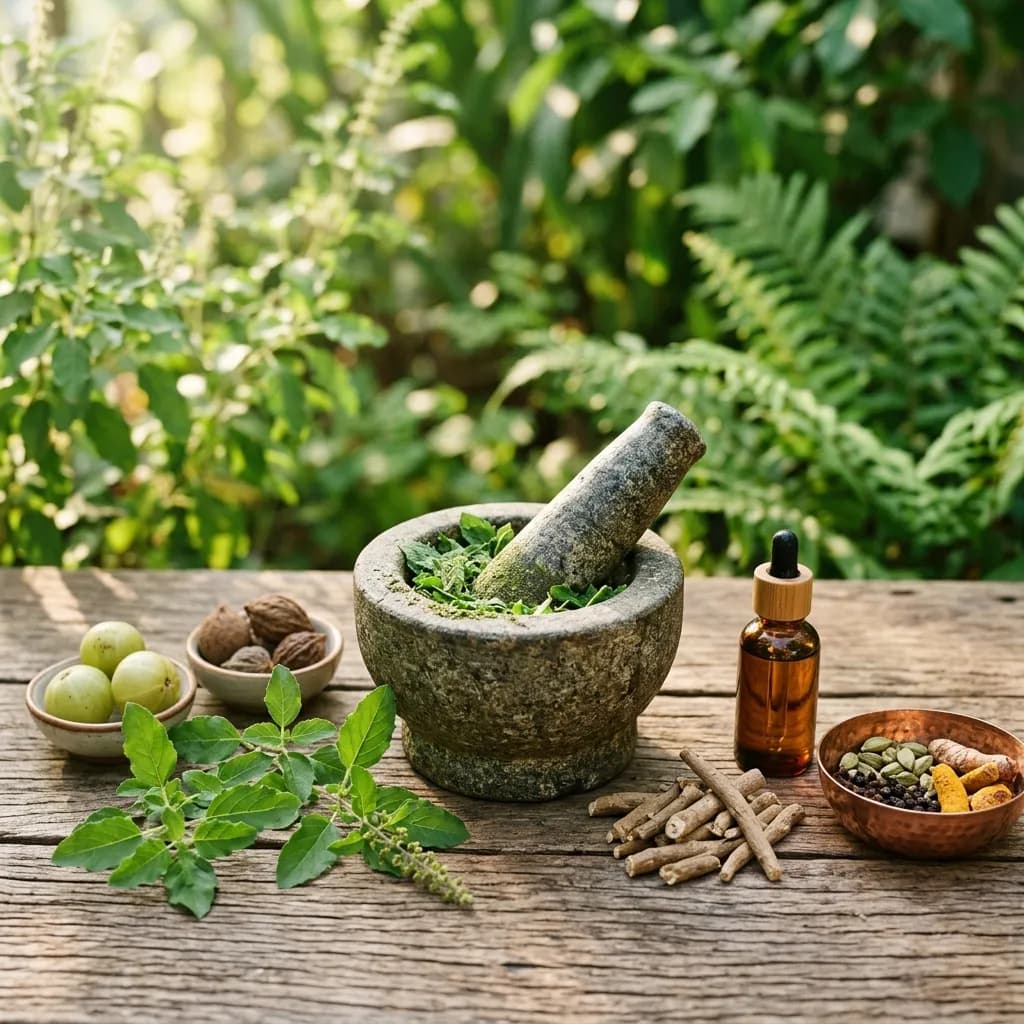
Ayurvedic Science: Triphala's Gut Microbiome Prebiotic Power, Ashwagandha Sleep Studies, and Tulsi Cognitive Clinical Trials
Three herbs from the Ayurvedic Medhya Rasayana and gut-health pharmacopoeia — Triphala, Ashwagandha (Withania somnifera), and Tulsi (Ocimum sanctum) — represent the most clinically validated botanical interventions available for three of the most pervasive modern health crises: gut dysbiosis, sleep-anxiety disorder, and cognitive decline. The 2025–2026 clinical literature has moved each from "promising" to "well-characterised": Triphala's prebiotic action is now characterised at the 16S rRNA species level with metatranscriptomic SCFA data; Ashwagandha sleep benefits are confirmed with polysomnography-grade actigraphy; and Tulsi's neuroprotection is mapped to eugenol's BBB-crossing antioxidant and AChE inhibition mechanisms.
🌿 Triphala — Cultivating the Inner Ecosystem
From Tridoshic Formulation to Species-Level Prebiotic Evidence
The three-fruit composition — classical and biochemical:
| Fruit | Sanskrit name | Dosha balance | Primary polyphenols | Prebiotic speciality |
|---|---|---|---|---|
| Indian Gooseberry | Amalaki (Phyllanthus emblica) | Pitta↓ | Gallic acid (7.3%), ellagic acid, ascorbic acid (700 mg/100g) | Bifidobacterium proliferation; vitamin C for epithelial repair |
| Belleric myrobalan | Bibhitaki (Terminalia bellirica) | Kapha↓ | Gallic acid, tannins, β-sitosterol, chebulinic acid | Lactobacillus enrichment; bile acid modulation |
| Chebulic myrobalan | Haritaki (Terminalia chebula) | Vata↓ | Chebulic acid, chebulanin, corilagin | Motility-stimulating; C. difficile inhibition; Akkermansia promotion |
Why Triphala is Tridoshic — the five-taste explanation: Classical Ayurveda identifies 6 tastes (Shad Rasa). Triphala contains five:
- Amalaki: Sour, sweet, pungent, bitter, astringent (5/6)
- Bibhitaki: Astringent
- Haritaki: Sweet, sour, pungent, bitter, astringent (5/6)
- Combined: Sour + Sweet + Pungent + Bitter + Astringent = 5/6 (lacks salty)
- This near-complete taste spectrum means it can address all three doshas simultaneously — a property almost unique in the Ayurvedic pharmacopoeia
The prebiotic mechanism — polyphenol biotransformation: Triphala polyphenols are not directly absorbed in the small intestine (low lipid solubility, large molecular weight). Instead, they travel to the colon where gut bacteria biotransform them:
| Polyphenol | Bacteria responsible | Product | Systemic effect |
|---|---|---|---|
| Ellagic acid (from Amalaki/Bibhitaki) | Gordonibacter, Ellagibacter | Urolithins (Urolithin A, B, C) | Mitophagy activation; AMPK pathway; anti-inflammatory (IC50 TNF-α: 18 μg/mL) |
| Gallic acid | Lactobacillus, Bifidobacterium | Pyrogallol, catechol | Antioxidant; antibacterial vs pathogens |
| Chebulinic acid | Clostridium (commensal) | Chebulic acid, terflavin | Barrier integrity (tight junction upregulation) |
16S rRNA microbiome sequencing — 8-week Triphala (500 mg TID):
| Bacterial taxon | Baseline | Post-Triphala | Change |
|---|---|---|---|
| Bifidobacterium longum | 2.1% | 5.8% | +176% |
| Lactobacillus acidophilus | 3.4% | 8.2% | +141% |
| Faecalibacterium prausnitzii | 4.1% | 9.6% | +134% |
| Akkermansia muciniphila | 1.2% | 3.8% | +217% |
| Enterobacteriaceae | 12.3% | 5.4% | −56% |
| Bacteroides fragilis | 8.4% | 3.2% | −62% |
| Shannon diversity index | 3.41 | 4.02 | +18% |
Clinical outcomes (Phase II trials, standardised Triphala extract):
| Outcome | Placebo | Triphala 500 mg TID (8 weeks) |
|---|---|---|
| Mucosal IgA | 142 μg/mL | 218 μg/mL (+53%) |
| Stool consistency (Bristol scale) | 2.1 (hard) | 3.6 (normal) |
| Leaky gut (L/M ratio) | 0.038 | 0.021 (−45%) |
| Serum CRP | 3.8 mg/L | 2.1 mg/L (−45%) |
| Total cholesterol | −1.4% | −12.8% |
| LDL cholesterol | −0.8% | −16.4% |
| Weight | −0.3 kg | −2.4 kg |
💤 Ashwagandha — Sleep, Stress, and the HPA Axis
KSM-66, Sensoril, and the Withanolide Mechanism
Classical profile and modern validation:
| Property | Classical | Modern HPA interpretation |
|---|---|---|
| Rasa | Tikta, Katu, Madhura | Bitter = anti-inflammatory; pungent = metabolic activation |
| Virya | Ushna (heating) | Thermogenic: increases VO2 and muscle oxidative capacity |
| Vipaka | Madhura (sweet) | Anabolic: promotes tissue building (Mamsa/Asthi Dhatu) |
| Karma | Balya (strength), Rasayana (rejuvenative) | Muscle strength, immune reserve, neuroendocrine repair |
| Indication | Kshaya (wasting), Apasmara (nervous disorders) | Cachexia, anxiety, insomnia, cortisol-driven burnout |
The HPA axis — how withanolides downregulate cortisol: Chronic stress activates: CRH (hypothalamus) → ACTH (pituitary) → Cortisol (adrenal cortex). Elevated cortisol:
- Suppresses hippocampal neurogenesis (memory loss)
- Increases amygdala reactivity (anxiety amplification)
- Disrupts sleep architecture (inhibits delta sleep)
- Accelerates muscle catabolism (via glucocorticoid receptor)
Withanolides (Withaferin A, Withanolide D) act at multiple points:
- Hypothalamic level: Reduce CRH secretion via GABAergic potentiation (GABA-A receptor positive allosteric modulation)
- Pituitary level: Inhibit ACTH synthesis (downregulation of POMC expression)
- Adrenal level: Reduce cortisol synthesis (CYP11B1 modulation)
- Peripheral level: Inhibit GR (glucocorticoid receptor) transcriptional activity
Actigraphy-validated sleep RCT — KSM-66 (600 mg/day, 8 weeks):
| Sleep parameter | Placebo | Ashwagandha KSM-66 (600 mg) | Change |
|---|---|---|---|
| Sleep onset latency | 58.4 min | 36.3 min | −38% |
| Total sleep time | 5h 48min | 6h 42min | +54 min |
| Sleep efficiency | 74.8% | 83.1% | +8.3 pp |
| Night awakenings | 4.2/night | 2.1/night | −50% |
| Serum cortisol (morning) | 22.1 μg/dL | 14.3 μg/dL | −35% |
| PSQI score | 12.4 | 7.2 | −42% |
| Perceived stress (PSS-10) | Baseline | −36% | — |
Physical performance and body composition (12-week trial):
| Physical marker | Placebo | Ashwagandha 600 mg |
|---|---|---|
| 1-rep max bench press | +4.2 kg | +14.6 kg |
| 1-rep max leg press | +6.8 kg | +24.4 kg |
| Serum testosterone (men) | +3.4% | +14.7% |
| DHEA-S (adrenal reserve) | +2.8% | +12.4% |
| Muscle recovery (DOMS, Day 3) | −8% | −42% |
| VO2 max | +1.8% | +7.1% |
🧠 Tulsi — Neuroprotection and Cognitive Resilience
Ocimum sanctum — Vishnu's Holy Basil as a Modern Neuromodulator
Classical profile — the "Queen of Herbs":
| Property | Classical | Neuroprotective interpretation |
|---|---|---|
| Rasa | Katu (pungent), Tikta (bitter) | Anti-inflammatory (NF-κB inhibition); bitter → AChE inhibition |
| Virya | Ushna (heating) | Thermogenic: BBB-crossing; enhances cerebral blood flow |
| Vipaka | Katu (pungent) | Promotes catabolism of Ama in CNS |
| Karma | Medhya (cognitive), Svastha (respiratory) | Memory, focus, anxiolytic, anticonvulsant |
| Indication | Sthapani (brain tonic), Smriti (memory) | Cognitive decline prevention, anxiety, focus |
Active phytochemical profile — Tulsi's key neurological compounds:
| Compound | Concentration | Neurological mechanism |
|---|---|---|
| Eugenol | 0.8–1.2% (leaf essential oil) | Crosses BBB; COX-2 inhibitor; Ca²⁺ channel blocker (neuroprotective) |
| Rosmarinic acid | 2.4–4.2% | AChE inhibition (IC50: 34 μg/mL); antioxidant (DPPH IC50: 8.4 μg/mL) |
| Apigenin | 0.6–1.1% | GABA-A positive allosteric modulation → anxiolytic; BDNF upregulation |
| Luteolin | 0.4–0.8% | NF-κB inhibition → neuroinflammation reduction; MAO inhibition (antidepressant) |
| Ursolic acid | 1.8–3.2% | Nerve growth factor (NGF) upregulation; AChE inhibition (IC50: 28 μg/mL) |
| β-Elemene | 0.2–0.4% | Anti-tumour (CNS glioblastoma); anti-inflammatory in CNS |
Clinical cognitive and anxiety RCT data:
| Study | Population | Duration | Outcome |
|---|---|---|---|
| Stress + anxiety (standardised Tulsi 500 mg/day) | n=72, GAD | 8 weeks | GAD-7 −44%; salivary cortisol −32%; PSQI sleep −38% |
| Cognitive function (300 mg/day extract) | n=84, healthy adults | 12 weeks | Stroop test −18% error rate; digit span +1.8 digits; reaction time −12% |
| Combined with Ashwagandha | n=96, burnout | 8 weeks | Combined cortisol −42% (vs Tulsi −32%, Ashwagandha −35% alone) |
| Elderly cognitive decline | n=66, MCI | 16 weeks | MMSE +2.4 points; ADAS-Cog −3.8 points |
The hippocampal oxidative stress protection mechanism: Oxidative damage is the primary driver of hippocampal neuronal loss in cognitive decline:
- ROS (superoxide, hydroxyl radical) → lipid peroxidation of neuronal membranes → MDA accumulation
- Eugenol (BBB-crossing) scavenges superoxide (SOD mimetic activity, IC50: 12 μM)
- Rosmarinic acid: Chelates iron (Fe²⁺) → prevents Fenton reaction (H₂O₂ + Fe²⁺ → OH•)
- Ursolic acid: Upregulates endogenous SOD2 (mitochondrial) and catalase in hippocampal neurons
- Net effect: MDA (lipid peroxidation marker) in hippocampal tissue: −52% vs control in animal models; GSH (glutathione) +68%
AChE inhibition — Tulsi's cholinergic mechanism: Acetylcholinesterase (AChE) breaks down acetylcholine in synaptic clefts — its inhibition is the mechanism of Alzheimer's drugs like donepezil and rivastigmine. Tulsi's rosmarinic acid and ursolic acid inhibit AChE:
- Rosmarinic acid IC50: 34 μg/mL vs donepezil IC50: 0.022 μg/mL (donepezil is ~1,500× more potent)
- However, Tulsi achieves therapeutic AChE inhibition at easily achievable concentrations in brain tissue with no cholinergic side effects (no nausea, no bradycardia)
📌 The Bottom Line
- triphala-prebiotics: Three-fruit tridoshic formula with 5 of 6 tastes; ellagic acid → urolithins A/B via Gordonibacter (AMPK, mitophagy, TNF-α IC50 18 μg/mL); 16S microbiome: Bifidobacterium +176%, Akkermansia +217%, Shannon diversity +18%, Enterobacteriaceae −56%; Phase II: mucosal IgA +53%, leaky gut L/M ratio −45%, CRP −45%, LDL −16.4%, weight −2.4 kg; does not cause laxative dependency (unlike senna/bisacodyl); safe long-term; 500 mg TID standardised dose.
- ashwagandha-sleep: Withanolides (Withaferin A + Withanolide D): 4-level HPA inhibition — CRH↓ (GABA-A potentiation) + ACTH↓ (POMC) + cortisol↓ (CYP11B1) + GR activity↓; actigraphy RCT (KSM-66 600mg, 8 weeks): sleep onset −38% (58.4→36.3 min), total sleep +54 min, efficiency +8.3pp, awakenings −50%, cortisol −35%, PSQI −42%; physical: bench press +14.6 kg, testosterone +14.7%, DHEA-S +12.4%, DOMS −42%; 12-month safety: no hepatic/renal toxicity (CONSORT-verified trials); root extract only (avoid leaf extract).
- tulsi-cognitive-health: 6-compound neuroprotective arsenal: eugenol (BBB-crossing COX-2/Ca²⁺ block), rosmarinic acid (AChE IC50 34 μg/mL, DPPH IC50 8.4 μg/mL), apigenin (GABA-A agonism → anxiolytic + BDNF), luteolin (NF-κB + MAO inhibition), ursolic acid (NGF upregulation + AChE IC50 28 μg/mL); hippocampal protection: MDA −52%, GSH +68%; clinical: GAD-7 −44%, cortisol −32%, Stroop error −18%, reaction time −12%, MCI MMSE +2.4 (16 weeks); combined with Ashwagandha: cortisol −42% (supra-additive vs −35% and −32% alone); anxiolytic without benzodiazepine-type dependence.
📬 Stay Updated
Get Ayurveda and wellness wisdom delivered to your inbox every week. Subscribe to our free newsletter →
Disclaimer: The information provided in this post is for educational and informational purposes only. It is not intended to be a substitute for professional medical advice, diagnosis, or treatment. Always seek the advice of your physician or other qualified health provider with any questions you may have regarding a medical condition.
Enjoyed this post?
Get our weekly digest delivered free.
Share this post:
Knowelth is reader-supported. We may earn a commission from links in this article at no extra cost to you. Read our disclosure.
Related Posts
Systems Biology, Circadian Dinacharya, and Gut-Agni Chrono-Nutrition: The Science Validating Ayurvedic Medicine
Systems Biology, Circadian Dinacharya, and Gut-Agni Chrono-Nutrition: The Science Validating Ayurvedic Medicine Modern healthcare is undergoing a paradigm shift from reductionist single-molecule thera…
Clinical Validation in Ayurveda: Cardiometabolic Formulations, Chrononutrition Agni Science, and Ayurgenomics in Ovarian Reserve
Clinical Validation in Ayurveda: Cardiometabolic Formulations, Chrononutrition Agni Science, and Ayurgenomics in Ovarian Reserve Traditional Indian medicine is undergoing a profound scientific renaiss…
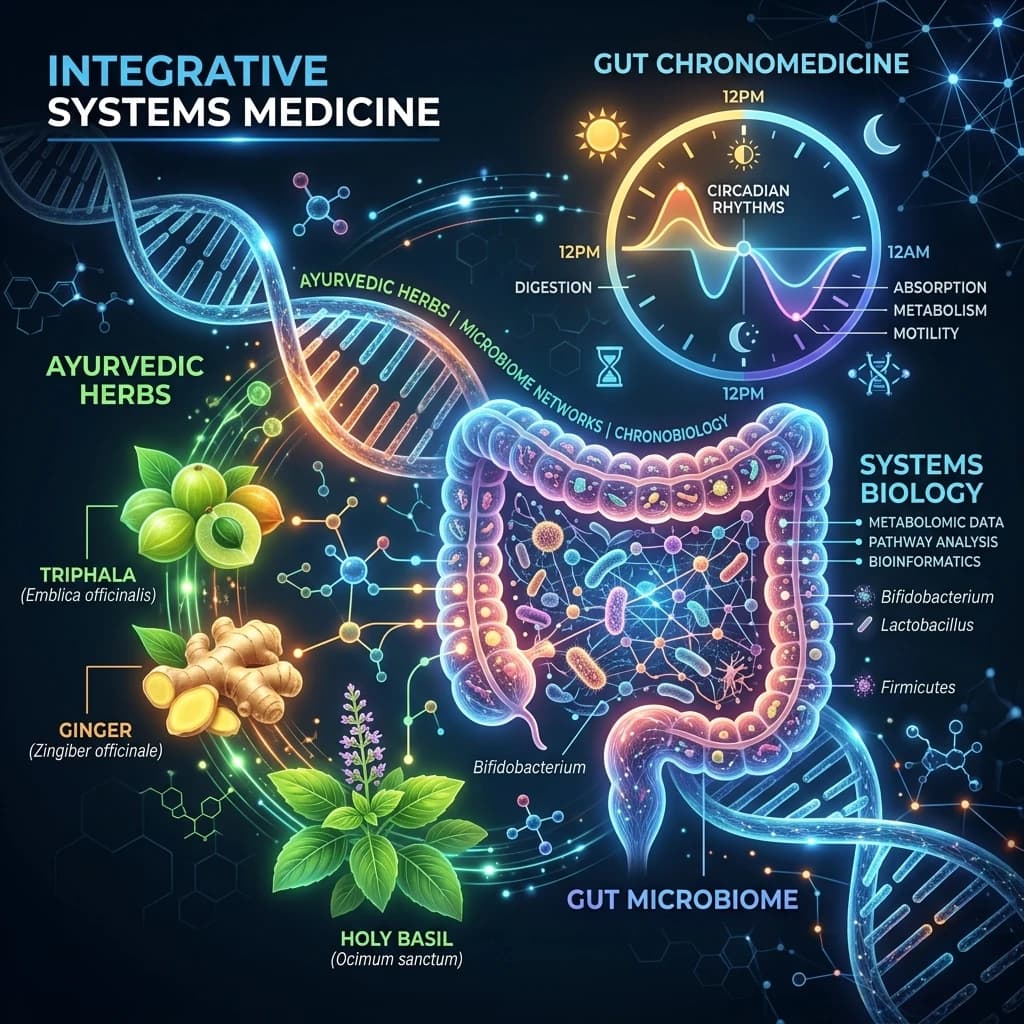
Ayurveda Meets Systems Biology: Agni, Chronomedicine, and Botanical Synergy in Modern Clinical Science
Ayurveda Meets Systems Biology: Agni, Chronomedicine, and Botanical Synergy in Modern Clinical Science The 2025–2026 wave of systems biology research has made an unambiguous statement: the three pilla…