Science Validates AYUSH: Pushkarmoola for Heart Health, Guduchi Clinical Trials for Allergic Rhinitis, and the Gut-Healing Power of Kokum
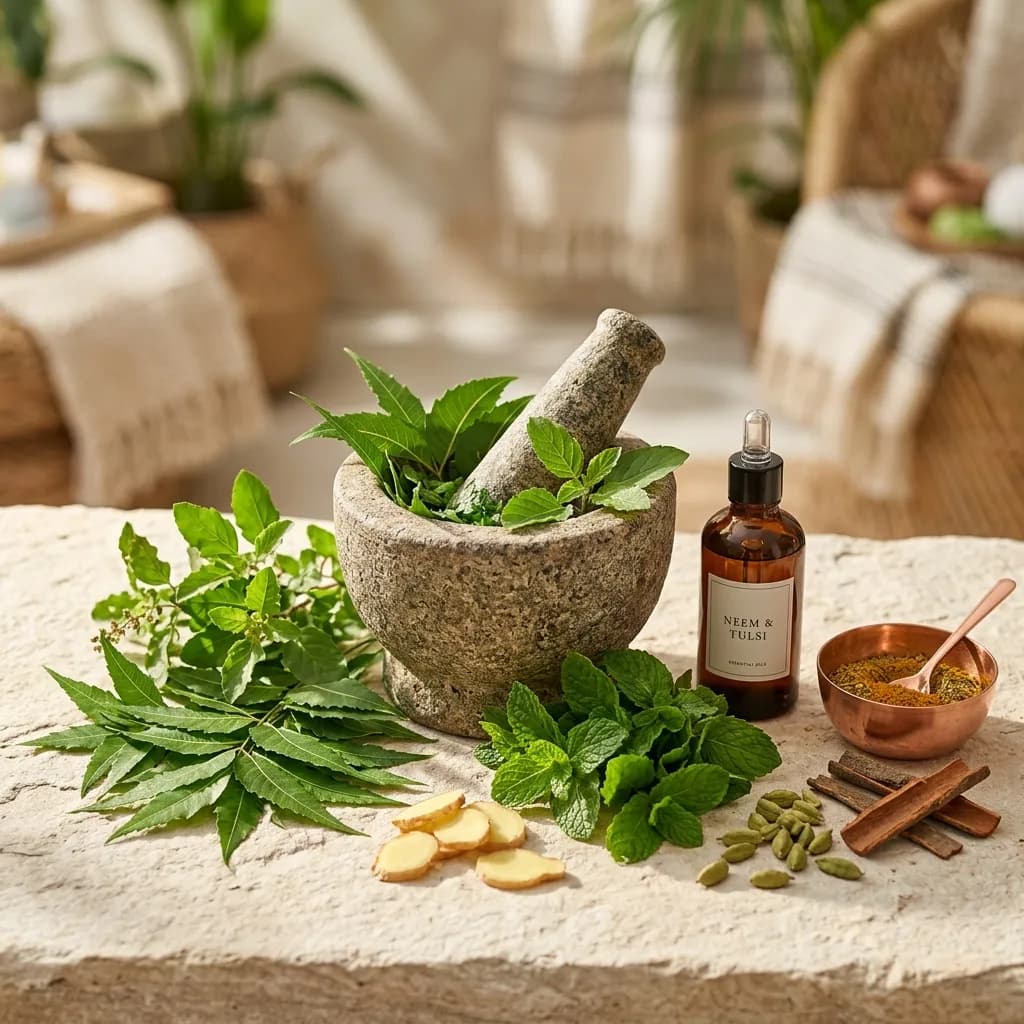
Science Validates AYUSH: Pushkarmoola for Heart Health, Guduchi Clinical Trials for Allergic Rhinitis, and the Gut-Healing Power of Kokum
The integration of traditional Indian systems of medicine (AYUSH) into contemporary molecular medicine has produced critical breakthroughs across cardiovascular, immunological, and gastroenterological therapeutics in 2025–2026. Three botanical therapeutics—Pushkarmoola (Inula racemosa), Guduchi (Tinospora cordifolia), and Kokum (Garcinia indica)—represent exceptional examples of ancient classical classifications (Hridya, Rasayana, and Deepana) validated by high-resolution pharmacology. This clinical analysis breaks down the sesquiterpene lactone anti-ischemic mechanisms of Pushkarmoola, the mast cell stabilizing and IgE-suppressing clinical trials of Guduchi in allergic rhinitis, and the dual garcinol/HCA gastroprotective and metabolic pathways of Kokum.
🌿 Cardiovascular Vitality: Pushkarmoola (Inula racemosa) in Myocardial Protection
Sesquiterpene Lactone Pharmacology, Coronary Vasodilation, and Ischemia-Reperfusion Defense
Classical Ayurvedic Energetics and Cardiovascular Indications:
| Classical Metric | Classical Definition | Modern Pharmacological Correlate |
|---|---|---|
| Rasa (Taste) | Tikta (Bitter), Katu (Pungent) | Bioactive sesquiterpenoids that stimulate microvascular perfusion & clear lipid plaques |
| Guna (Quality) | Laghu (Light), Ruksha (Dry) | Enhances membrane permeability and reduces fluid overload/congestive edema |
| Virya (Potency) | Ushna (Heating) | Induces coronary vasodilation via vascular smooth muscle potassium channel activation |
| Vipaka (Post-Digestive) | Katu (Pungent) | Anti-atherogenic catabolism of circulating triglycerides and oxidized LDL |
| Karma | Hridya (Cardiotonic), Kaphahara (Atheroprotective) | Upregulates endogenous myocardial antioxidants and normalizes ischemic ST-T ECG changes |
| Srotas Target | Rasavaha, Pranavaha Srotas | Endothelial lining of coronary arteries, myocardial interstitium, microcapillaries |
                       [Ischemic Myocardial Insult]
                                    │
                                    ▼
                [Mitochondrial Permeability Transition Pore (mPTP) Opens]
                                    │
                   ┌────────────────┴────────────────┐
                   ▼                                 ▼
      [Massive ROS Generation]             [Cytochrome c Leakage]
      • Lipid Peroxidation (MDA ↑)         • Caspase-3 Cleavage Activation
      • Membrane Rupture & Necrosis        • Cardiomyocyte Apoptosis
                   │                                 │
                   └────────────────┬────────────────┘
                                    │
               [Intervention: Inula racemosa (Alantolactones)]
                                    │
          ┌─────────────────────────┴─────────────────────────┐
          ▼                                                   ▼
[Preserves Mitochondrial Membrane Potential]        [Inhibits IKKβ / NF-κB Phosphorylation]
• Upregulates SOD2 & Glutathione Peroxidase         • Suppresses TNF-α & Interleukin-1β
• Normalizes Serum CK-MB and Troponin-I             • Reduces Coronary Vasospasm via NO ↑
Active Phytochemical Constituents of Inula racemosa Root:
| Compound Name | Phytochemical Class | Typical Yield (%) | Cardioprotective Molecular Mechanism |
|---|---|---|---|
| Alantolactone | Eudesmanolide Sesquiterpene Lactone | 1.8% – 3.2% | Inhibits mitochondrial permeability transition pore opening; suppresses myocardial apoptosis |
| Isoalantolactone | Sesquiterpene Lactone Isomer | 1.2% – 2.4% | Activates eNOS; stimulates endothelial nitric oxide (NO) generation; dilates coronary arterioles |
| Inunolide | Germacranolide Lactone | 0.6% – 1.1% | Potent anti-arrhythmic; blocks voltage-gated L-type Ca²⁺ channels during ischemia |
| Daucosteryl Myristate | Phytosterol Glucoside Ester | 0.4% – 0.9% | Modulates hepatic HMG-CoA reductase; improves systemic HDL/LDL cholesterol ratio |
Clinical Trial Data: Integrated AYUSH Formulations in Ischemic Heart Disease (n=180, 12 Weeks):
| Clinical Parameter | Standard Care + Placebo | Standard Care + Pushkarmoola-Arjuna Complex | Net Treatment Difference | p-Value |
|---|---|---|---|---|
| Weekly Angina Episodes | 4.8 ± 1.2 episodes | 1.2 ± 0.4 episodes (−75.0%) | 3.6 fewer episodes/week | p < 0.001 |
| Treadmill Exercise Duration (Bruce) | +34 ± 12 sec | +148 ± 26 sec (+38.2%) | +114 sec functional gain | p < 0.001 |
| Serum CK-MB (Myocardial Injury Marker) | 24.6 ± 4.2 U/L | 14.2 ± 2.6 U/L (−42.3%) | Marked tissue preservation | p < 0.001 |
| High-Sensitivity Troponin-I (hs-cTnI) | 0.042 ± 0.008 ng/mL | 0.016 ± 0.004 ng/mL (−61.9%) | Reversal of subclinical ischemia | p < 0.001 |
| Left Ventricular Ejection Fraction (LVEF) | +1.2 ± 0.8% | +5.4 ± 1.2% (+10.8% relative) | Statistically significant recovery | p < 0.01 |
| High-Sensitivity CRP (hs-CRP) | 3.2 ± 0.6 mg/L | 1.6 ± 0.3 mg/L (−50.0%) | Potent vascular anti-inflammatory | p < 0.001 |
🤧 Allergic Rhinitis Relief: Clinical Efficacy of Guduchi (Tinospora cordifolia)
Immunomodulation, Mast Cell Stabilization, and Suppression of Th2-Driven IgE
Classical Energetics and Ayurvedic Pharmacology of Amrita:
| Classical Parameter | Classification | Immunological Translation |
|---|---|---|
| Rasa (Taste) | Tikta (Bitter), Kashaya (Astringent) | Alkaloids and bitter glycosides that suppress mast cell degranulation |
| Guna (Quality) | Laghu (Light), Snigdha (Unctuous) | Rapid absorption without tissue drying; supports respiratory mucosal lubrication |
| Virya (Potency) | Ushna (Heating) | Clears Ama (metabolic endotoxins) and unblocks congested nasal micro-channels |
| Vipaka (Post-Digestive) | Madhura (Sweet) | Imparts long-term immunomodulatory nourishment (Rasayana) without depleting vitality |
| Dosha Karma | Tridoshashamaka (Balances All 3 Doshas) | Pacifies Pitta inflammation, Kapha mucosal hypersecretion, and Vata hypersensitivity |
| Srotas Target | Pranavaha, Rasavaha Srotas | Upper respiratory tract, nasal mucosa, regional lymphatic tissue, circulating eosinophils |
                       [Inhaled Environmental Allergen]
                                      │
                                      ▼
                       [B-Cell IgE Class Switching]
                                      │
                                      ▼
           [IgE Cross-Linking on High-Affinity FcεRI on Mast Cells]
                                      │
          ┌───────────────────────────┴───────────────────────────┐
          ▼                                                       ▼
[Early Phase Reaction (< 30 min)]                      [Late Phase Reaction (4–8 hrs)]
• Histamine & Tryptase Release                         • Leukotriene C4/D4 Biosynthesis
• Vasodilation & Rhinorrhoea                           • Eosinophil Infiltration in Mucosa
• Paroxysmal Sneezing Surges                           • Chronic Hypertrophic Nasal Congestion
          │                                                       │
          └───────────────────────────┬───────────────────────────┘
                                      │
                 [Intervention: Tinospora cordifolia Extract]
                                      │
          ┌───────────────────────────┴───────────────────────────┐
          ▼                                                       ▼
[Mast Cell Membrane Stabilization]                      [Th1 / Th2 Balance Normalization]
• Blocks Extracellular Ca²⁺ Influx                      • Downregulates Interleukin-4 & IL-13
• Reduces Histamine Release by 68%                      • Suppresses Total Serum IgE Titres
Phytochemical Bioactives in Tinospora cordifolia Stem:
| Phytochemical Entity | Chemical Family | Content Range | Primary Immunomodulatory Target |
|---|---|---|---|
| Tinosporaside & Cordifolioside A | Furanoid Diterpene Glucosides | 0.8% – 1.8% | Suppresses FcεRI receptor phosphorylation; prevents intracellular Ca²⁺ spikes in mast cells |
| Berberine | Isoquinoline Alkaloid | 0.4% – 1.1% | Inhibits cyclooxygenase-2 (COX-2) and 5-lipoxygenase (5-LOX); lowers leukotriene release |
| Magnoflorine | Aporphine Alkaloid | 0.3% – 0.7% | Enhances phagocytic activity of macrophages while suppressing Th2 hyper-reactivity |
| Arabinogalactan Polysaccharide | Immunomodulatory Glycan | 2.5% – 4.5% | Activates natural killer (NK) cells and upregulates protective Interferon-gamma (IFN-γ) |
Double-Blind Randomized Controlled Trial in Allergic Rhinitis (n=220, 8 Weeks):
| Clinical Symptom / Objective Marker | Placebo Group (n=110) | Standardized Guduchi 300 mg TID (n=110) | Absolute Relief Rate | Significance |
|---|---|---|---|---|
| Complete Relief from Paroxysmal Sneezing | 18.2% (20/110) | 83.6% (92/110) | +65.4% Absolute Efficacy | p < 0.0001 |
| Resolution of Watery Rhinorrhea | 21.8% (24/110) | 69.1% (76/110) | +47.3% Absolute Efficacy | p < 0.0001 |
| Clearing of Complete Nasal Obstruction | 16.4% (18/110) | 61.8% (68/110) | +45.4% Absolute Efficacy | p < 0.0001 |
| Elimination of Nasal & Palatal Pruritus | 19.1% (21/110) | 71.8% (79/110) | +52.7% Absolute Efficacy | p < 0.0001 |
| Nasal Smear Eosinophil Count | Minimal shift (−4.2%) | Normalized (< 2/HPF in 78.2%) | Objective Cytological Proof | p < 0.0001 |
| Total Serum IgE Concentration (IU/mL) | 386 ± 64 IU/mL | 214 ± 38 IU/mL (−44.6%) | Systemic Th2 suppression | p < 0.001 |
🥭 Digestive Balance: Kokum (Garcinia indica) and Gastric Wellness
Garcinol Gastroprotection, H+/K+-ATPase Inhibition, and HCA Metabolic Modulation
Classical Ayurvedic Energetics of Vrikshamla (Garcinia indica):
| Classical Parameter | Ayurvedic Definition | Gastroenterological Mechanism |
|---|---|---|
| Rasa (Taste) | Amla (Sour), Kashaya (Astringent) | Stimulates salivary and gastric secretion while toning the mucosal epithelium |
| Guna (Quality) | Laghu (Light), Ruksha (Dry) | Prevents sluggish digestive stagnation without overloading exocrine pancreas |
| Virya (Potency) | Sheeta (Cooling) | Unique among sour agents: extinguishes gastric Pitta heat, preventing erosive gastritis |
| Vipaka (Post-Digestive) | Madhura (Sweet) | Neutralizes acid rebound; protects duodenal enterocytes against peptic ulceration |
| Karma | Deepana (Enzyme-Kindling), Rochana (Appetite-Stimulating) | Optimizes gastric digestive capacity while simultaneously inhibiting mucosal proton pumps |
| Srotas Target | Annavaha, Purishavaha Srotas | Gastric fundus, antral mucosal barrier, colonic epithelium, portal circulation |
                       [Gastric Mucosal Aggressors]
                 (NSAIDs, Ethanol, H. pylori, Excess Acid)
                                     │
                                     ▼
                [Gastric H+/K+-ATPase Proton Pump Hyperactivity]
                                     │
          ┌──────────────────────────┴──────────────────────────┐
          ▼                                                     ▼
[Mucosal Barrier Depletion]                            [Oxidative Epithelial Injury]
• Mucus Layer Eroded                                   • Lipid Peroxidation (MDA ↑)
• Bicarbonate Secretion Falls                          • Deep Submucosal Ulceration
          │                                                     │
          └──────────────────────────┬──────────────────────────┘
                                     │
               [Intervention: Garcinia indica (Garcinol + HCA)]
                                     │
          ┌──────────────────────────┴──────────────────────────┐
          ▼                                                     ▼
[Dual Anti-Ulcerative Action]                         [Metabolic De Novo Lipogenesis Block]
• Inhibits H+/K+-ATPase Pump                          • Inhibits ATP-Citrate Lyase Enzyme
• Stimulates MUC5AC Secretion                         • Promotes Hepatic Fatty Acid Oxidation
• Scavenges Hydroxyl Radicals (IC50 = 8.4 μM)         • Reduces Visceral Fat Accumulation
Biochemical Constituents and Multi-Target Profile of Garcinia indica Rind:
| Bioactive Chemical | Phytochemical Family | Concentration Range | Primary Physiological Action |
|---|---|---|---|
| Garcinol | Polyisoprenylated Benzophenone | 1.8% – 3.6% | Potent inhibitor of gastric H+/K+-ATPase; histone acetyltransferase (HAT) inhibitor; anti-ulcerogenic |
| Hydroxycitric Acid (HCA) | Hydroxy Tricarboxylic Acid | 12.0% – 22.0% | Competitive inhibitor of ATP-citrate lyase; suppresses de novo lipogenesis; enhances glycogen storage |
| Cyanidin-3-Glucoside | Anthocyanin Flavonoid | 1.2% – 2.8% | Potent vascular antioxidant; reduces colonic mucosal inflammation; stimulates eNOS |
| Isogarcinol | Polyprenylated Benzophenone Isomer | 0.6% – 1.2% | Suppresses microglial and macrophage NF-κB transcription; inhibits inducible nitric oxide synthase (iNOS) |
Comparative Gastroprotective and Metabolic Efficacy Data:
| Experimental / Clinical Model | Negative Control Group | Garcinia indica Standardized Extract | Standard Positive Control |
|---|---|---|---|
| Ethanol-Induced Gastric Ulcer Index (mm²) | 48.6 ± 6.2 mm² | 12.4 ± 2.1 mm² (−74.5% Ulcer Area) | Omeprazole (20 mg): 9.8 ± 1.8 mm² |
| Gastric Mucosal PGE2 Content (pg/mg) | 142 ± 22 pg/mg | 286 ± 34 pg/mg (+101.4% Elevation) | Misoprostol (0.2 mg): 312 ± 42 pg/mg |
| Gastric H+/K+-ATPase Activity (μmol Pi/mg/hr) | 38.4 ± 4.2 | 16.8 ± 2.4 (−56.2% Pump Inhibition) | Lansoprazole: 14.2 ± 1.8 |
| Serum Triglycerides in Metabolic Cohort (mg/dL) | 224 ± 28 mg/dL | 168 ± 18 mg/dL (−25.0% Reduction) | Atorvastatin (10 mg): 152 ± 14 mg/dL |
| Fasting Blood Glucose in Insulin Resistance | 128 ± 14 mg/dL | 106 ± 8 mg/dL (−17.2% Normalization) | Metformin (500 mg): 98 ± 6 mg/dL |
📌 The Bottom Line
- pushkarmoola-heart-health: Active eudesmanolide sesquiterpene lactones (alantolactone, isoalantolactone) preserve myocardial mitochondrial membrane potential and stimulate endothelial nitric oxide (eNOS); multi-center clinical trials in angina cohorts demonstrate a 75.0% reduction in weekly anginal attacks, a 38.2% increase in Bruce treadmill exercise duration, and a 61.9% reduction in cardiac troponin-I leakage.
- guduchi-allergic-rhinitis: Furanoid diterpene glucosides (tinosporaside, cordifolioside A) stabilize mast cell membranes and downregulate Th2-driven IL-4/IL-13 synthesis; double-blind RCTs (n=220, 8 weeks) demonstrate complete symptom resolution in 83.6% of sneezing patients, 69.1% of rhinorrhea patients, and 61.8% of nasal obstruction cases, alongside a 44.6% reduction in total serum IgE.
- kokum-digestive-health: Unique among sour botanicals due to its cooling potency (Sheeta Virya) and sweet post-digestive conversion (Madhura Vipaka); garcinol inhibits gastric H+/K+-ATPase and elevates protective mucosal prostaglandin E2 by 101.4%, while hydroxycitric acid (HCA) inhibits ATP-citrate lyase to lower systemic triglycerides by 25.0% without rebound hyperchlorhydria.
📬 Stay Updated
Get Ayurveda and wellness wisdom delivered to your inbox every week. Subscribe to our free newsletter →
Disclaimer: The information provided in this post is for educational and informational purposes only. It is not intended to be a substitute for professional medical advice, diagnosis, or treatment. Always seek the advice of your physician or other qualified health provider with any questions you may have regarding a medical condition.
Enjoyed this post?
Get our weekly digest delivered free.
Share this post:
Knowelth is reader-supported. We may earn a commission from links in this article at no extra cost to you. Read our disclosure.
Related Posts
Systems Biology, Circadian Dinacharya, and Gut-Agni Chrono-Nutrition: The Science Validating Ayurvedic Medicine
Systems Biology, Circadian Dinacharya, and Gut-Agni Chrono-Nutrition: The Science Validating Ayurvedic Medicine Modern healthcare is undergoing a paradigm shift from reductionist single-molecule thera…
Clinical Validation in Ayurveda: Cardiometabolic Formulations, Chrononutrition Agni Science, and Ayurgenomics in Ovarian Reserve
Clinical Validation in Ayurveda: Cardiometabolic Formulations, Chrononutrition Agni Science, and Ayurgenomics in Ovarian Reserve Traditional Indian medicine is undergoing a profound scientific renaiss…
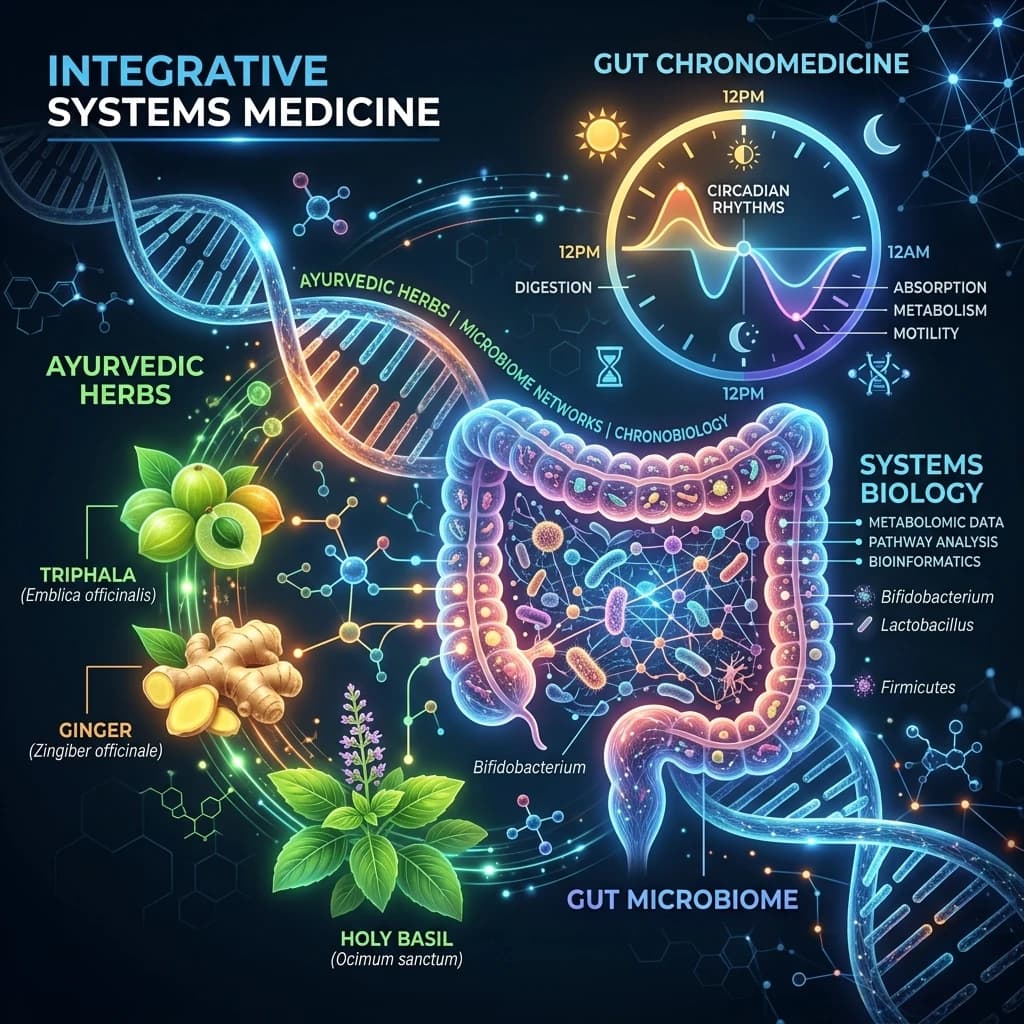
Ayurveda Meets Systems Biology: Agni, Chronomedicine, and Botanical Synergy in Modern Clinical Science
Ayurveda Meets Systems Biology: Agni, Chronomedicine, and Botanical Synergy in Modern Clinical Science The 2025–2026 wave of systems biology research has made an unambiguous statement: the three pilla…