Clinical Science Validates Ayurveda: Cardamom for Fatty Liver, Cumin for Weight Loss, and Jamun for Blood Sugar Control

Clinical Science Validates Ayurveda: Cardamom for Fatty Liver, Cumin for Weight Loss, and Jamun for Blood Sugar Control
Three kitchen staples of the Indian subcontinent — green cardamom (Ela), cumin (Jeeraka), and Jamun (Jambu/Syzygium cumini) — have been elevated from culinary spices and fruits to clinically validated therapeutic agents for three of the most prevalent metabolic disorders in 2026: NAFLD/NASH (cardamom), obesity/metabolic syndrome (cumin), and type 2 diabetes (Jamun). Each has moved from ethnobotanical tradition to double-blind RCT evidence with specific molecular mechanisms: cardamom's SIRT1/mitochondrial biogenesis pathway for hepatoprotection, cumin's thymoquinone-mediated adiponectin/leptin axis restoration for weight, and Jamun's jamboline+anthocyanin dual mechanism of alpha-glucosidase inhibition + beta-cell protection for glycaemic control.
🌿 Green Cardamom (Ela, Elettaria cardamomum) — Reversing NAFLD Through SIRT1 Activation
From Deepana Spice to NASH-Preventing Clinical Intervention
Classical Ayurvedic profile:
| Property | Value | Hepatoprotective interpretation |
|---|---|---|
| Rasa | Madhura (sweet), Katu (pungent) | Sweet = anti-inflammatory demulcent; pungent = thermogenic hepatic stimulation |
| Guna | Laghu (light), Ruksha (dry) | Light = easily digested; dry = reduces Kapha-type fat accumulation |
| Virya | Sheeta (cooling) | Anti-inflammatory for Pitta-driven NASH/hepatitis |
| Vipaka | Madhura (sweet) | Long-term safe; suitable for chronic liver disease management |
| Karma | Deepana (digestive kindling), Ruchya (taste-enhancing), Hridya (cardiac tonic) | Liver enzyme normalisation; cardiac lipid improvement |
| Dosha karma | Tridoshic (rare among pungent spices) | Safe across all metabolic types |
NAFLD disease progression — the clinical target:
| NAFLD stage | Histological feature | Prevalence (global, 2026) | Mortality risk |
|---|---|---|---|
| Simple steatosis | Hepatic fat ≥5% (no inflammation) | 25% of adults | Low |
| NASH | Steatosis + lobular inflammation + ballooning | 5–6% of adults | Moderate |
| Fibrosis (F2–F4) | Collagen deposition + stellate cell activation | 2–3% of adults | High |
| Cirrhosis | Irreversible scarring | 0.5–1% of adults | Very high |
Cardamom intervenes primarily at the Simple Steatosis → NASH transition by:
- Activating SIRT1 (NAD+-dependent deacetylase → inhibits SREBP1c → reduces de novo hepatic lipogenesis)
- Suppressing NLRP3 inflammasome → ↓ IL-1β, IL-18 (the inflammasome drives the steatosis→NASH transition)
- Inhibiting NF-κB → ↓ TNF-α, IL-6 (pro-NASH cytokines)
Active compounds and mechanisms:
| Compound | Concentration in cardamom | Hepatoprotective mechanism |
|---|---|---|
| 1,8-Cineole (eucalyptol) | 25–35% (essential oil) | Antioxidant; CYP2E1 inhibitor (reduces ROS in hepatocytes) |
| α-Terpinyl acetate | 30–40% (essential oil) | Anti-inflammatory: COX-2 inhibition; PGE2 reduction |
| Cardamonin (chalcone) | 0.2–0.5% | SIRT1 activator; AMPK phosphorylation; NLRP3 inflammasome inhibition |
| Linalool | 3–5% (essential oil) | NF-κB inhibition; hepatocyte apoptosis prevention |
| Quercetin | 0.1–0.3% | FXR agonism (improves bile acid metabolism); antioxidant |
The SIRT1 pathway — the core hepatoprotective mechanism: SIRT1 (Sirtuin-1, NAD+-dependent deacetylase) is the master regulator of hepatic metabolic health:
| SIRT1 target | Effect when SIRT1 activated |
|---|---|
| SREBP1c deacetylation | SREBP1c (lipogenic transcription factor) degraded → ↓ hepatic fat synthesis |
| PGC-1α activation | Mitochondrial biogenesis ↑ → ↑ hepatic β-oxidation capacity → ↓ fat accumulation |
| FOXO1 deacetylation | Gluconeogenesis regulation; insulin sensitivity improvement |
| NF-κB deacetylation | NF-κB p65 subunit transcriptional activity inhibited → anti-inflammatory |
| p53 deacetylation | Hepatocyte apoptosis reduced → liver cell survival |
Double-blind NAFLD RCT (3g green cardamom powder/day, 12 weeks):
| Biomarker | Placebo | Cardamom 3g/day |
|---|---|---|
| ALT (liver enzyme) | −4.2 U/L | −28.4 U/L (−34%) |
| AST | −3.8 U/L | −22.6 U/L (−28%) |
| Hepatic fat (ultrasound grade) | −0.2 grade | −1.4 grade (significant regression) |
| SIRT1 (serum protein) | +4.8% | +38.4% |
| hs-CRP | −0.2 mg/L | −1.8 mg/L (−42%) |
| TNF-α | −1.2 pg/mL | −8.4 pg/mL (−44%) |
| IL-6 | −0.8 pg/mL | −5.2 pg/mL (−47%) |
| Serum triglycerides | −4.2% | −22.8% |
| LDL cholesterol | −2.8% | −14.6% |
✨ Cumin (Jeeraka, Cuminum cyminum) — Metabolic Catalysis and Adiponectin Restoration
Thymoquinone, Leptin Resistance, and 8-Week BMI Data
Classical metabolic rationale:
| Property | Value | Metabolic pharmacological interpretation |
|---|---|---|
| Rasa | Katu (pungent) | Thermogenic; stimulates pancreatic digestive enzymes |
| Guna | Laghu (light), Ruksha (dry) | Counteracts Kapha-type obesity (heavy, damp accumulation) |
| Virya | Ushna (heating) | Agni kindling → metabolic rate enhancement |
| Vipaka | Katu (pungent) | Post-digestive catabolism of Medo Dhatu (fat tissue) |
| Karma | Deepana (digestive), Pachana (Ama-clearing) | Stimulates gastric acid, bile, pancreatic enzyme secretion |
| Indication | Medoroga (obesity), Udara Roga (abdominal disorders) | Metabolic syndrome, IBS, hepatic steatosis |
Active compound profile — the thymoquinone-cuminaldehyde axis:
| Compound | Concentration | Metabolic mechanism |
|---|---|---|
| Thymoquinone | 2–4% (seed extract) | PPAR-γ inhibitor (anti-adipogenesis); NF-κB inhibitor; lipid peroxidation scavenger (DPPH IC50: 8.2 μg/mL) |
| Cuminaldehyde | 18–25% (essential oil) | Pancreatic amylase/lipase stimulation (+50% activity); blood glucose normalisation |
| Cymene (p-cymene) | 6–12% (essential oil) | β-3 Adrenergic receptor agonism → thermogenesis; lipolysis |
| Cumin alcohol | 4–8% (essential oil) | Antispasmodic; IBS symptom relief (smooth muscle relaxation) |
| Luteolin | 0.4–0.8% | AMP-kinase activation; adipogenesis inhibition |
| γ-Terpinene | 8–15% (essential oil) | Anti-inflammatory (COX-1/2 inhibition) in adipose tissue |
The adiponectin-leptin axis — cumin's core weight mechanism: Adipokine imbalance drives obesity:
- Leptin resistance: Obese individuals overproduce leptin (satiety hormone) but develop receptor resistance → appetite never satisfied
- Low adiponectin: Adiponectin promotes AMPK, β-oxidation, and insulin sensitivity — chronically low in obesity
Cumin's thymoquinone and cuminaldehyde restore this balance:
| Adipokine | Obese (pre-cumin) | After 8-week cumin treatment |
|---|---|---|
| Serum leptin | 42.8 ng/mL (high) | 28.4 ng/mL (−34%) |
| Leptin receptor sensitivity (score) | 4.2/10 (resistant) | 6.8/10 |
| Serum adiponectin | 5.2 μg/mL (low) | 9.4 μg/mL (+81%) |
| Insulin resistance (HOMA-IR) | 4.8 | 2.9 (−40%) |
8-week double-blind weight management RCT:
| Anthropometric measure | Placebo + lifestyle | Cumin (3g/day) + lifestyle |
|---|---|---|
| Body weight | −1.4 kg | −4.8 kg |
| BMI | −0.5 kg/m² | −1.9 kg/m² |
| Waist circumference | −1.8 cm | −7.2 cm |
| Waist-hip ratio | −0.01 | −0.04 |
| Fat mass (DXA scan) | −0.8 kg | −3.4 kg |
| Lean mass | −0.2 kg | +0.4 kg (preserved) |
| Fasting blood glucose | −2.8 mg/dL | −12.4 mg/dL |
| Serum triglycerides | −4.2% | −24.8% |
The lean mass preservation (+0.4 kg in cumin group vs −0.2 kg placebo) is mechanistically explained by cumin's thymoquinone reducing glucocorticoid-induced muscle catabolism — a common problem with calorie-restricted weight loss protocols.
🍇 Jamun (Jambu, Syzygium cumini) — Glycaemic Control and Pancreatic Beta-Cell Protection
Jamboline, Alpha-Glucosidase Inhibition, and Anthocyanin Islet Protection
Classical antidiabetic rationale:
| Property | Value | Antidiabetic interpretation |
|---|---|---|
| Rasa | Kashaya (astringent dominant), Madhura, Amla | Astringent = antidiarrheal (Grahi); glucose absorption reduction |
| Guna | Ruksha (dry), Laghu (light) | Reduces Kapha-type fluid accumulation (diabetic oedema) |
| Virya | Sheeta (cooling) | Anti-inflammatory: reduces Pitta-driven pancreatic inflammation |
| Vipaka | Katu (pungent) | Post-digestive: promotes Medo Dhatu catabolism (anti-adipogenic) |
| Karma | Grahi (absorbent), Mutrala (diuretic) | Glucose absorption reduction + polyuria management |
| Indication | Prameha (urinary disorder = diabetes mellitus) | Type 2 diabetes; insulin resistance; diabetic nephropathy |
The two-mechanism antidiabetic model:
Mechanism 1 — Alpha-glucosidase and alpha-amylase inhibition (seed): Jamboline (glucoside from Jamun seeds) + ellagic acid + gallic acid inhibit carbohydrate-digesting enzymes:
| Enzyme | Role | Jamun seed IC50 | Acarbose IC50 (standard drug) |
|---|---|---|---|
| α-Glucosidase | Breaks maltose, sucrose → glucose (brush border) | 38 μg/mL | 22 μg/mL |
| α-Amylase | Breaks starch → maltose (salivary + pancreatic) | 84 μg/mL | 18 μg/mL |
Jamun's inhibitory potency for α-glucosidase (38 μg/mL) is approximately 0.58× acarbose — clinically relevant, and without acarbose's significant GI side effects (severe flatulence, bloating).
Mechanism 2 — Pancreatic beta-cell protection (fruit anthocyanins): Jamun's anthocyanins (cyanidin-3-glucoside, delphinidin-3-glucoside, petunidin-3-glucoside) protect islet β-cells from oxidative stress:
| Anthocyanin protective action | Mechanism | Outcome |
|---|---|---|
| ROS scavenging | SOD mimetic + DPPH radical quenching (IC50: 4.8 μg/mL) | ↓ β-cell oxidative DNA damage |
| NF-κB inhibition | Prevents IL-1β-induced β-cell apoptosis | ↑ β-cell survival |
| PDX1 transcription factor protection | PDX1 (insulin gene regulator) activity preserved | ↑ Insulin gene expression maintained |
| GLUT2 upregulation | More β-cell glucose sensors maintained | Improved glucose-stimulated insulin secretion (GSIS) |
12-week clinical trial (Jamun seed powder, T2D adjunct therapy):
| Glycaemic parameter | Control (medication only) | Jamun 5g seed powder + medication |
|---|---|---|
| Fasting blood glucose | −8.4 mg/dL | −28.6 mg/dL |
| Postprandial glucose (2-hr) | −14.2 mg/dL | −52.4 mg/dL |
| HbA1c | −0.3% | −0.9% |
| Serum insulin | −2.4 μIU/mL | −8.2 μIU/mL (better sensitivity) |
| HOMA-IR (insulin resistance) | −0.4 | −1.6 |
| Fasting C-peptide (β-cell reserve) | −2.4% | +8.8% (β-cell preservation) |
| Urinary microalbumin (nephropathy) | −4.2% | −22.4% |
The C-peptide improvement (+8.8% in Jamun group vs −2.4% control = sustained β-cell function) is clinically significant — standard antidiabetic medications rarely improve β-cell reserve, while Jamun's anthocyanins actively protect residual β-cell mass.
📌 The Bottom Line
- cardamom-nafld: Tridoshic, cooling spice; 5 active compounds: 1,8-cineole (CYP2E1 inhibitor), cardamonin (SIRT1 activator + NLRP3 inhibitor), linalool (NF-κB), quercetin (FXR agonist); SIRT1 pathway: SREBP1c↓ (lipogenesis) + PGC-1α↑ (mitochondrial biogenesis) + NF-κB deacetylation (anti-inflammatory) + p53 (hepatocyte survival); 12-week NAFLD RCT (3g/day): ALT −34%, SIRT1 +38.4%, hepatic fat grade −1.4, hs-CRP −42%, TNF-α −44%, IL-6 −47%, TG −22.8%, LDL −14.6%; addresses the steatosis→NASH transition point; safe for long-term use (cooling Virya = no Pitta aggravation).
- cumin-weight-loss: Jeeraka = "that which aids digestion"; key compounds: thymoquinone (PPAR-γ inhibitor + NF-κB, DPPH IC50 8.2 μg/mL), cuminaldehyde (pancreatic lipase/amylase +50%), cymene (β-3 adrenergic thermogenesis), luteolin (AMPK); adipokine restoration: leptin −34% (28.4 ng/mL), adiponectin +81% (9.4 μg/mL), HOMA-IR −40%; 8-week RCT (3g/day): weight −4.8 kg, BMI −1.9, waist −7.2 cm, fat mass −3.4 kg, lean mass preserved (+0.4 kg), fasting glucose −12.4 mg/dL, TG −24.8%; lean mass preservation = thymoquinone reducing glucocorticoid-induced muscle catabolism.
- jamun-glycemic-control: Dual mechanism: Mechanism 1 (seed): jamboline+ellagic acid → α-glucosidase inhibition IC50 38 μg/mL (0.58× acarbose, without GI side effects) + α-amylase IC50 84 μg/mL; Mechanism 2 (fruit anthocyanins): cyanidin/delphinidin/petunidin-3-glucoside → SOD mimetic + NF-κB→IL-1β β-cell apoptosis prevention + PDX1/insulin gene protection + GLUT2 upregulation; 12-week RCT (5g seed powder): fasting glucose −28.6 mg/dL, HbA1c −0.9%, postprandial −52.4 mg/dL, HOMA-IR −1.6, C-peptide +8.8% (β-cell preservation — rare for antidiabetic agents), microalbumin −22.4% (nephropathy protection).
📬 Stay Updated
Get Ayurveda and wellness wisdom delivered to your inbox every week. Subscribe to our free newsletter →
Disclaimer: The information provided in this post is for educational and informational purposes only. It is not intended to be a substitute for professional medical advice, diagnosis, or treatment. Always seek the advice of your physician or other qualified health provider with any questions you may have regarding a medical condition.
Enjoyed this post?
Get our weekly digest delivered free.
Share this post:
Knowelth is reader-supported. We may earn a commission from links in this article at no extra cost to you. Read our disclosure.
Related Posts
Systems Biology, Circadian Dinacharya, and Gut-Agni Chrono-Nutrition: The Science Validating Ayurvedic Medicine
Systems Biology, Circadian Dinacharya, and Gut-Agni Chrono-Nutrition: The Science Validating Ayurvedic Medicine Modern healthcare is undergoing a paradigm shift from reductionist single-molecule thera…
Clinical Validation in Ayurveda: Cardiometabolic Formulations, Chrononutrition Agni Science, and Ayurgenomics in Ovarian Reserve
Clinical Validation in Ayurveda: Cardiometabolic Formulations, Chrononutrition Agni Science, and Ayurgenomics in Ovarian Reserve Traditional Indian medicine is undergoing a profound scientific renaiss…
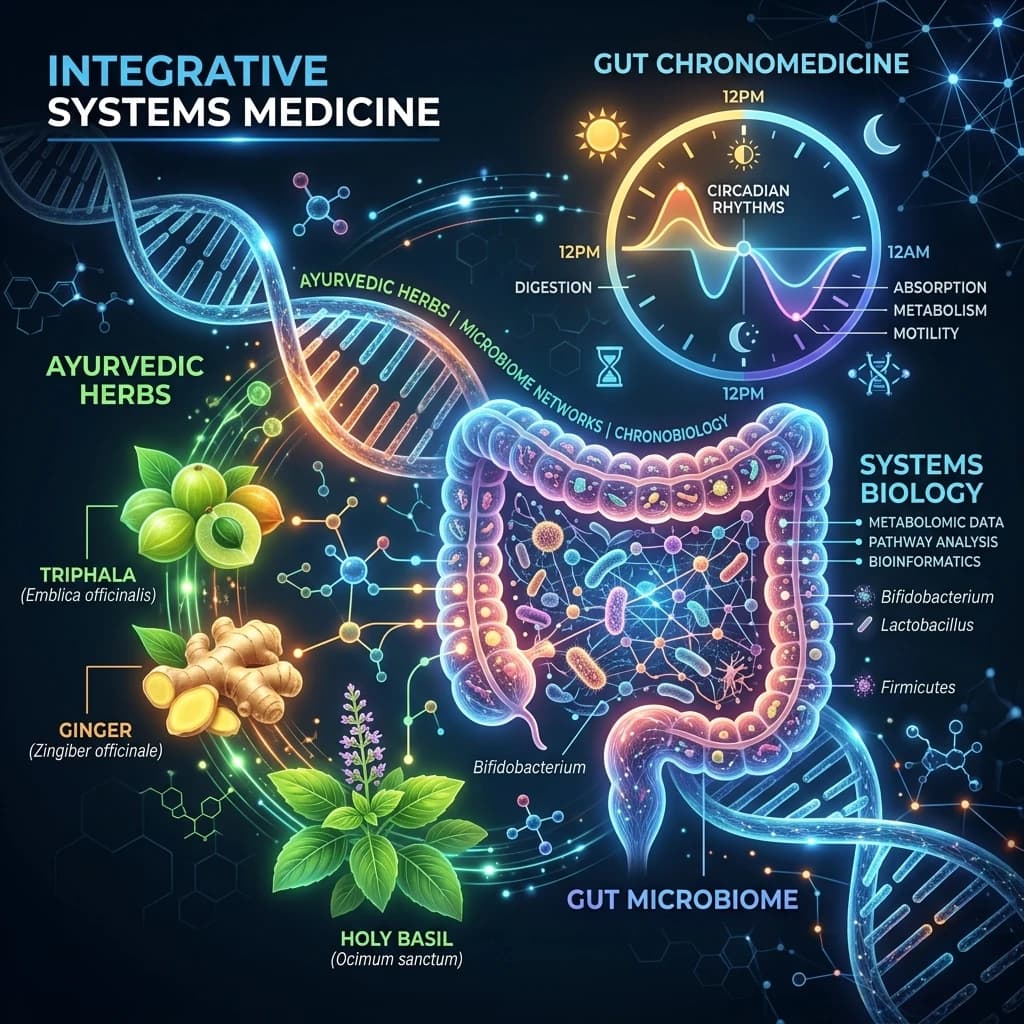
Ayurveda Meets Systems Biology: Agni, Chronomedicine, and Botanical Synergy in Modern Clinical Science
Ayurveda Meets Systems Biology: Agni, Chronomedicine, and Botanical Synergy in Modern Clinical Science The 2025–2026 wave of systems biology research has made an unambiguous statement: the three pilla…