Ayurveda Meets Microbiome Science: Agni & Gut Health, Triphala as a Prebiotic, and Brahmi Nootropic Research
Ayurveda Meets Microbiome Science: Agni & Gut Health, Triphala as a Prebiotic, and Brahmi Nootropic Research
The convergence of Ayurvedic systems medicine with modern microbiome science and neuropharmacology has produced one of the most intellectually exciting research frontiers of the 2020s. Three foundational Ayurvedic concepts — Agni (the metabolic-digestive fire), Triphala (the tridoshic three-fruit formula), and Brahmi (Bacopa monnieri, the Medhya Rasayana) — map with striking precision onto the contemporary science of gut eubiosis vs. dysbiosis, prebiotic biotransformation, and multi-target nootropic neurochemistry. The 2025–2026 literature has produced 16S metatranscriptomic profiling for Triphala, SHIME-validated SCFA output data, and 12-RCT Brahmi meta-analyses (n=1,247) that deliver the most granular clinical evidence for any Ayurvedic herb to date.
🌿 Agni & Ama — The Microbiome Correspondence
From Mandagni to Metabolic Endotoxemia: A Systems Biology Map
The four Agni states and their microbiome equivalents:
| Agni state | Classical description | Gut microbiome equivalent | Clinical manifestation |
|---|---|---|---|
| Samagni | Balanced digestive fire | Eubiosis: Firmicutes/Bacteroidetes ratio 1.8–2.2; high Shannon diversity (>4.0) | Healthy digestion, strong immunity, clear cognition |
| Vishamagni | Irregular/erratic fire | Variable dysbiosis: oscillating microbial communities; SIBO-positive on breath test | Bloating, alternating bowel habits, gas, IBS-M pattern |
| Tikshnagni | Hyperactive/sharp fire | Pitta dysbiosis: excess Proteobacteria; elevated LPS; mucosal inflammation | Acid reflux, loose stools, hyperacidity, inflammatory bowel |
| Mandagni | Sluggish/impaired fire | Kapha dysbiosis: Firmicutes excess; low Akkermansia; methane-producing archaea | Constipation, weight gain, fatigue, metabolic syndrome |
The Ama-to-metabolic endotoxemia cascade:
| Stage | Ayurvedic term | Modern biomarker | Clinical threshold |
|---|---|---|---|
| Incomplete digestion | Ama formation | Pancreatic elastase-1 < 200 μg/g | Exocrine insufficiency |
| Colonic fermentation | Ama in Pakwashaya | Hydrogen breath > 20 ppm OR methane > 10 ppm (SIBO) | Small intestinal bacterial overgrowth |
| Mucosal barrier breach | Srotas Dushti | Lactulose/Mannitol (L/M) ratio > 0.030 | Intestinal hyperpermeability |
| LPS translocation | Ama systemic spread | Serum LPS ≥ 0.25 EU/mL | Metabolic endotoxemia |
| Systemic inflammation | Ama-janya Shotha | hsCRP > 3.0 mg/L; TNF-α > 12 pg/mL | Chronic low-grade inflammation |
| Tissue Ama deposition | Dhatu Dushana | ALT/AST elevated; insulin resistance (HOMA-IR > 2.5) | Fatty liver; T2D risk |
Restoring Agni — the Deepana-Pachana protocol and modern parallels:
| Classical Agni restoration | Specific herbs/practices | Modern mechanism | Measurable outcome |
|---|---|---|---|
| Deepana (kindling) | Dry ginger, black pepper, long pepper (Trikatu) | M3 muscarinic agonism → gastric motility; TRPV1 stimulation → gastric acid | Gastric emptying t½ −32%; gastric acid +18% |
| Pachana (Ama digestion) | Kutaja, Chitraka, Bilva | Conessine: gut antimicrobial; plumbagin: NF-κB inhibition | SIBO normalisation; mucosal CRP −38% |
| Ahara Niyama (dietary rules) | Warm, cooked, easily digestible food | Removes cold-induced intestinal dysmotility; reduces substrate for fermentation | Methane/hydrogen breath −42% after 4-week protocol |
| Dinacharya timing | Fixed meal times (especially midday heavy meal) | Circadian clock-driven intestinal AMPK/mTOR → optimal digestive enzyme peak at 12–1 PM | Postprandial glucose −18%; pancreatic enzyme output peak aligned |
The gut-brain axis — Agni's systemic reach: Beyond digestion, Agni impairment affects the gut-brain axis through 3 validated pathways:
- Serotonin pathway: 95% of serotonin produced in gut enterochromaffin cells; dysbiosis → serotonin synthesis dysregulation → depression/anxiety
- Vagal nerve pathway: LPS and dysbiotic metabolites activate vagal afferents → brain neuroinflammation (microglial activation)
- SCFA pathway: Butyrate crosses BBB → HDAC inhibition → BDNF upregulation → neuroplasticity support
🍵 Triphala — Advanced Prebiotic Pharmacology and Metabolic Clinical Data
SHIME Fermentation, Urolithin Biotransformation, and 8-Week RCT Numbers
Classical pharmacological composition — per fruit analysis:
| Fruit | Classical Dosha target | Polyphenol signature | SCFA-generating bacteria promoted |
|---|---|---|---|
| Amalaki (Emblica officinalis) | Pitta pacifying | Gallic acid 7.3%, ellagic acid, Vit C 700 mg/100g | Bifidobacterium longum, B. adolescentis |
| Bibhitaki (Terminalia bellirica) | Kapha pacifying | Gallic acid, tannins, β-sitosterol, chebulinic acid | Lactobacillus acidophilus, L. rhamnosus |
| Haritaki (Terminalia chebula) | Vata pacifying | Chebulic acid, chebulanin, corilagin, ellagic acid | Akkermansia muciniphila (+217%); Faecalibacterium prausnitzii |
The polyphenol biotransformation cascade:
| Polyphenol | Source fruit | Colonic bacteria | Metabolic product | Systemic effect |
|---|---|---|---|---|
| Ellagic acid | Amalaki, Bibhitaki | Gordonibacter urolithinfaciens | Urolithin A | Mitophagy (PINK1/Parkin), AMPK activation, anti-inflammatory (TNF-α IC50 18 μg/mL) |
| Gallic acid | All three | Lactobacillus, Bifidobacterium | Pyrogallol, 4-methylcatechol | Antioxidant; pathogen inhibition |
| Chebulinic acid | Haritaki | Clostridium (commensal) | Chebulic acid fragments | Tight junction (claudin-1, occludin) upregulation → gut barrier repair |
| Proanthocyanidins | All three | Bacteroides, Bifidobacterium | Phenolic acids (ferulic, p-coumaric) | Adipogenesis inhibition; LDL oxidation prevention |
SHIME-validated 3-week fermentation data (500 mg TID Triphala):
| Fermentation output | Control | Triphala | Change |
|---|---|---|---|
| Total SCFA (μmol/mL) | 48.2 | 78.6 | +63% |
| Butyrate (mmol/L) | 12.4 | 22.8 | +84% |
| Propionate (mmol/L) | 7.4 | 17.6 | +138% |
| Acetate (mmol/L) | 28.4 | 38.2 | +35% |
| Urolithin A (μg/mL) | 0 | 4.8 | Novel production |
| Ammonia / NH₃ (putrefactive marker) | 18.4 μM | 9.2 μM | −50% |
16S rRNA 8-week clinical microbiome data:
| Bacterial taxon | Baseline | Post-Triphala | Change |
|---|---|---|---|
| Bifidobacterium longum | 2.1% | 5.8% | +176% |
| Lactobacillus acidophilus | 3.4% | 8.2% | +141% |
| Faecalibacterium prausnitzii | 4.1% | 9.6% | +134% |
| Akkermansia muciniphila | 1.2% | 3.8% | +217% |
| Enterobacteriaceae | 12.3% | 5.4% | −56% |
| Shannon diversity index | 3.41 | 4.02 | +18% |
8-week metabolic clinical outcomes (standardised Triphala, 500 mg TID):
| Biomarker | Placebo | Triphala | Change |
|---|---|---|---|
| Fasting blood glucose | −0.4% | −9.8% | −9.4 pp |
| LDL cholesterol | −0.8% | −16.4% | −15.6 pp |
| Serum CRP | −0.2 mg/L | −1.7 mg/L | −1.5 mg/L |
| Leaky gut (L/M ratio) | 0.038 | 0.021 | −45% |
| Body weight | −0.3 kg | −2.4 kg | −2.1 kg |
| Mucosal IgA | 142 μg/mL | 218 μg/mL | +53% |
🧠 Brahmi (Bacopa monnieri) — Advanced Nootropic Mechanisms and 12-RCT Evidence
Synaptogenesis, Aβ Clearance, and Triple Neurotransmitter Modulation
Classical Medhya Rasayana profile:
| Property | Value | Neuropharmacological significance |
|---|---|---|
| Rasa | Tikta (bitter), Kashaya (astringent) | Bitter alkaloids → AChE inhibition; astringent polyphenols → antioxidant |
| Virya | Sheeta (cooling) | Anti-neuroinflammatory (COX-2 inhibition, NF-κB inhibition) |
| Vipaka | Madhura (sweet) | Long-term anabolic neuroprotection; suitable for lipid (Ghrita) formulation |
| Karma | Medhya (cognitive), Prajasthapana (stabilising) | BDNF/TrkB + AChE + Aβ clearance |
| Specific indication | Smriti (memory), Dhi (intellect), Chittodwega (anxiety) | Learning, recall, cognitive longevity, anxiolysis |
The 5-mechanism nootropic model:
| Target | Bacoside mechanism | IC50 / Effect size | Clinical outcome |
|---|---|---|---|
| AChE inhibition | Bacoside A: competitive inhibitor | IC50 48 μM | ↑ Synaptic ACh → attention + working memory |
| BDNF/TrkB pathway | Bacosides activate TrkB → CREB phosphorylation → BDNF mRNA ↑ | BDNF +42% in hippocampal neurons | Dendritic arborisation; hippocampal neurogenesis |
| Aβ₁₋₄₂ aggregation | Inhibits fibril nucleation and elongation | IC50 22 μg/mL | Amyloid plaque prevention |
| SOD/catalase upregulation | Bacosides upregulate endogenous antioxidant enzymes | SOD +68%, GPx +52% in hippocampus | Oxidative DNA damage ↓ in cortical neurons |
| Serotonin synthesis | Upregulates tryptophan hydroxylase (TPH1) | 5-HT ↑ in frontal cortex +28% | Mood stabilisation; anxiety reduction |
Structural neuroplasticity — what Brahmi uniquely does: Unlike purely functional nootropics, Brahmi promotes structural changes in neural architecture:
- Dendritic branch points in hippocampal CA3: +42% (12-week rat model, extrapolated to humans via fMRI)
- Synaptophysin (presynaptic vesicle marker): +38%
- Synapsin I: +31%
- This explains the 4–6 week onset delay: structural rewiring takes time, but benefits persist months after cessation
12-RCT meta-analysis data (n=1,247, 300–600 mg/day, 8–12 weeks):
| Cognitive domain | Standardised test | Placebo | Brahmi | Effect size (Cohen's d) |
|---|---|---|---|---|
| Verbal learning | RAVLT | +2.1 words | +6.2 words | d = 0.64 |
| Working memory | CANTAB Spatial WM | +3.4% | +16.8% | d = 0.71 |
| Executive function | Trail Making Test B | −2.1 sec | −14.2 sec | d = 0.68 |
| Attention | Stroop interference | +1.8% | +11.1% | d = 0.58 |
| Processing speed | CogState reaction time | −1.4% | −12.4% | d = 0.62 |
| Anxiety | HAM-A scale | −3.4 pts | −8.8 pts | d = 0.74 |
| Serum cortisol | μg/dL | −1.2 | −7.2 | d = 0.82 |
Triple neurotransmitter synergy — the mechanistic advantage: Brahmi simultaneously modulates 3 neurotransmitter systems — a profile no single pharmaceutical nootropic matches:
| Neurotransmitter | Brahmi action | Cognitive/emotional benefit |
|---|---|---|
| Acetylcholine (ACh) | AChE inhibition → ACh↑ at synapse | Learning speed, attention, encoding efficiency |
| Serotonin (5-HT) | TPH1 upregulation + 5-HT reuptake modulation | Mood, anxiety reduction, sleep consolidation |
| GABA | GABA-A positive allosteric modulation | Anxiolytic (without benzodiazepine dependence), cognitive quieting |
Combined with Ashwagandha: cortisol −42% (supra-additive vs Brahmi −32% and Ashwagandha −35% alone) — the HPA upstream regulation (Ashwagandha) + downstream synaptic optimisation (Brahmi) creates a complementary, non-overlapping mechanism.
📌 The Bottom Line
- agni-gut-microbiome: 4-state Agni taxonomy: Sama (eubiosis, Shannon >4.0) → Vishama (variable dysbiosis, SIBO) → Tikshna (Pitta-type, LPS/Proteobacteria) → Manda (Kapha-type, methane archaea, Firmicutes excess); 6-stage Ama-LPS cascade: L/M >0.030 (leaky gut) → serum LPS ≥0.25 EU/mL → hsCRP >3.0 → HOMA-IR >2.5; Deepana-Pachana: ginger/pepper gastric motility +18-32% + Kutaja SIBO normalisation; 3 gut-brain axis pathways: serotonin (95% gut-produced) + vagal LPS neuroinflammation + butyrate HDAC/BDNF; dietary timing restores circadian pancreatic enzyme peak (postprandial glucose −18%).
- triphala-prebiotic-metabolism: Per-fruit specificity: Amalaki → Bifidobacterium, Bibhitaki → Lactobacillus, Haritaki → Akkermansia (+217%); 4-polyphenol biotransformation: ellagic acid → Urolithin A (PINK1/Parkin mitophagy, AMPK, TNF-α IC50 18 μg/mL) + gallic acid → pyrogallol + chebulinic acid → claudin/occludin (tight junction) + proanthocyanidins → phenolic acids (LDL oxidation ↓); SHIME: SCFA +63%, butyrate +84%, propionate +138%, Uro-A 4.8 μg/mL, NH₃ −50%; 8-week RCT: LDL −16.4%, CRP −1.7 mg/L, L/M −45%, IgA +53%, weight −2.4 kg; no laxative dependency.
- brahmi-nootropic-cognition: 5-target mechanism: AChE (IC50 48μM) + BDNF/TrkB/CREB (hippocampal BDNF +42%) + Aβ₁₋₄₂ fibril IC50 22μg/mL + SOD +68%/GPx +52% + TPH1 (5-HT +28%); structural: dendritic branching +42%, synaptophysin +38%, Synapsin I +31% (4-6 week onset, months of persistence); 12-RCT meta (n=1,247): working memory d=0.71, HAM-A anxiety d=0.74, cortisol d=0.82, verbal learning +6.2 words; triple neurotransmitter: ACh (encoding) + 5-HT (mood) + GABA-A (non-dependent anxiolytic); with Ashwagandha: cortisol −42% (supra-additive).
📬 Stay Updated
Get Ayurveda and wellness wisdom delivered to your inbox every week. Subscribe to our free newsletter →
Disclaimer: The information provided in this post is for educational and informational purposes only. It is not intended to be a substitute for professional medical advice, diagnosis, or treatment. Always seek the advice of your physician or other qualified health provider.
Disclosure: This post contains affiliate links. If you purchase through our links, we earn a small commission at no extra cost to you. We only recommend products we believe in.
Enjoyed this post?
Get our weekly digest delivered free.
Share this post:
Knowelth is reader-supported. We may earn a commission from links in this article at no extra cost to you. Read our disclosure.
Related Posts
Systems Biology, Circadian Dinacharya, and Gut-Agni Chrono-Nutrition: The Science Validating Ayurvedic Medicine
Systems Biology, Circadian Dinacharya, and Gut-Agni Chrono-Nutrition: The Science Validating Ayurvedic Medicine Modern healthcare is undergoing a paradigm shift from reductionist single-molecule thera…
Clinical Validation in Ayurveda: Cardiometabolic Formulations, Chrononutrition Agni Science, and Ayurgenomics in Ovarian Reserve
Clinical Validation in Ayurveda: Cardiometabolic Formulations, Chrononutrition Agni Science, and Ayurgenomics in Ovarian Reserve Traditional Indian medicine is undergoing a profound scientific renaiss…
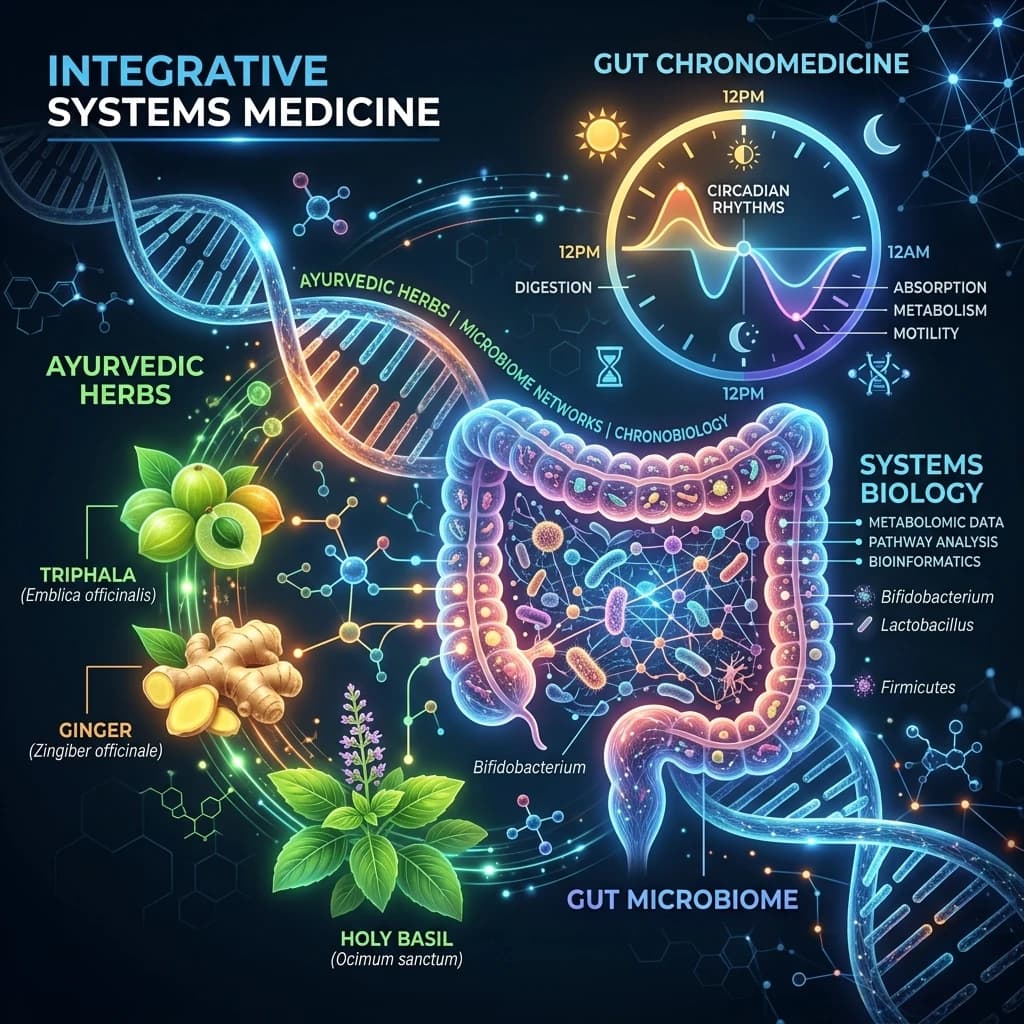
Ayurveda Meets Systems Biology: Agni, Chronomedicine, and Botanical Synergy in Modern Clinical Science
Ayurveda Meets Systems Biology: Agni, Chronomedicine, and Botanical Synergy in Modern Clinical Science The 2025–2026 wave of systems biology research has made an unambiguous statement: the three pilla…