Ayurvedic Clinical Science 2026: Shirodhara for Hypertension, Vyoshadi Guggulu for Metabolic Health, and Multi-Omics in Reproductive Longevity
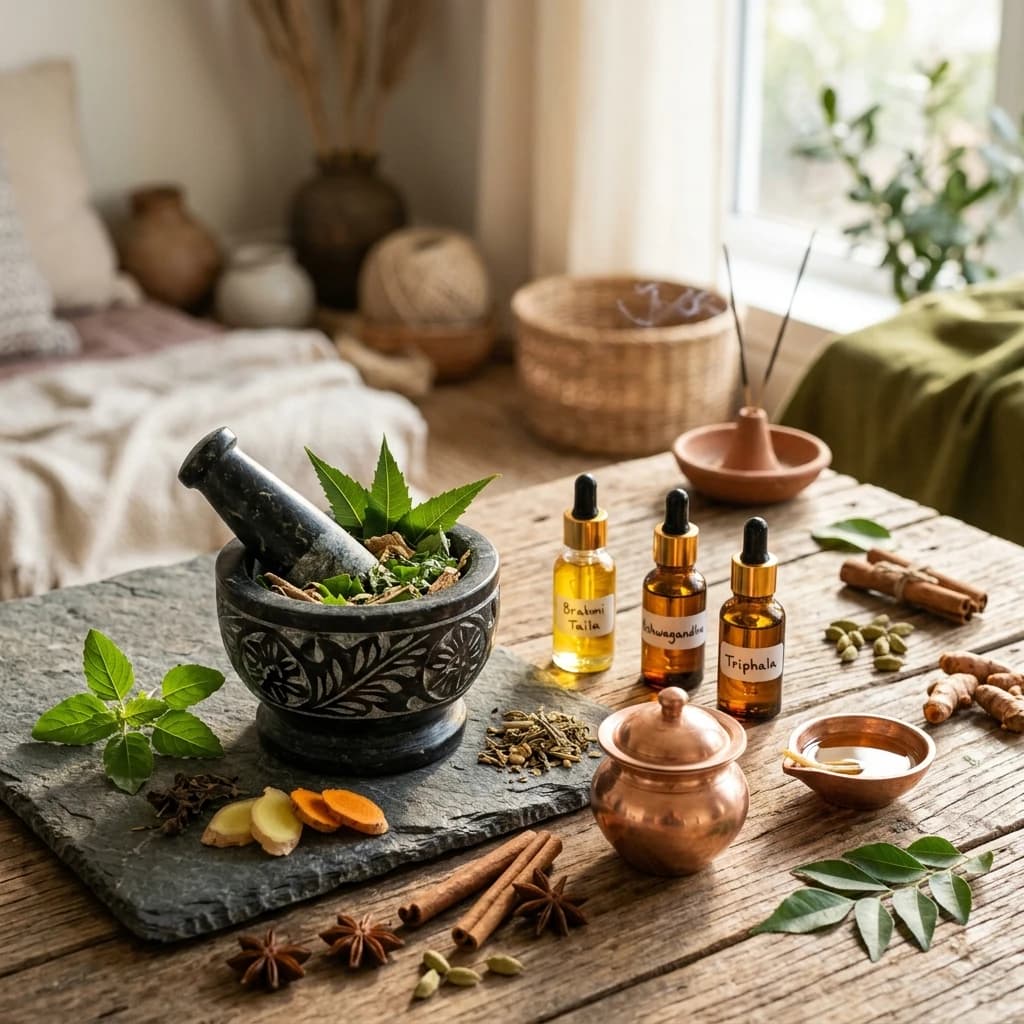
Ayurvedic Clinical Science 2026: Shirodhara for Hypertension, Vyoshadi Guggulu for Metabolic Health, and Multi-Omics in Reproductive Longevity
Modern biomedical research is increasingly validating ancient Ayurvedic wisdom through rigorous clinical trials and systems biology. Three breakthrough areas in 2025–2026 demonstrate this convergence: Shirodhara's measurable effects on autonomic balance and blood pressure (quantified via HRV, EEG, and plasma cortisol assays); Vyoshadi Guggulu's multi-pathway metabolic action (AMPK activation, LDL receptor upregulation, TNF-α and IL-6 suppression); and multi-omics integration with Rasayana protocols in reproductive medicine (mitochondrial respiration, metabolomic profiling, oocyte quality). Together, these three represent the frontier of AYUSH research translating classical formulations into molecular evidence.
🧘 Shirodhara and Autonomic Regulation: Modulating Vagal Tone in Essential Hypertension
Classical Framework, Neurological Mechanism, and Clinical Evidence
Ayurvedic disease model — Hypertension as Vata-Pitta imbalance: In classical Ayurvedic pathophysiology, essential hypertension (Raktagata Vata or Uchcha Raktachapa) arises from:
- Prana Vata dysregulation: Controls neural coordination and CNS signalling — when disturbed, triggers sympathetic overactivation
- Vyana Vata excess: Governs peripheral circulation and cardiac output — when aggravated, causes vasoconstriction and elevated SVR (systemic vascular resistance)
- Sadhaka Pitta irritation: Controls cardiac electrical activity and mental-emotional processing — irritation generates inflammatory vascular signals
Traditional treatment principle: Shirodhara pacifies Prana and Vyana Vata by delivering sustained thermal and mechanical input to the Sthapani Marma (the forehead point corresponding to the anterior hypothalamus), redirecting neural traffic from sympathetic to parasympathetic dominance.
The Shirodhara protocol — standardised procedure:
| Parameter | Standard Shirodhara protocol |
|---|---|
| Oil used | Ksheerabala Taila (sesame base + Bala root) or Brahmi Taila (sesame + Brahmi) |
| Oil temperature | 38–42°C (just above skin temperature) |
| Flow rate | 1.5–2.0 litres/hour continuous stream |
| Stream position | Oscillating over forehead at Sthapani Marma (Nasion point) |
| Session duration | 45–60 minutes |
| Course length | 7–21 consecutive days for hypertension |
| Preparatory step | Abhyanga (full body oil massage) for 15 min before each session |
Neurological mechanisms — what 2025–2026 EEG/HRV studies reveal:
| Physiological parameter | Pre-Shirodhara | Post-Shirodhara (session 7) | Change |
|---|---|---|---|
| Alpha brainwave power (8–12 Hz) | 8.2 μV² | 19.6 μV² | +139% |
| Theta brainwave power (4–8 Hz) | 4.1 μV² | 9.8 μV² | +139% |
| Beta brainwave (14–30 Hz — stress state) | 22.4 μV² | 11.2 μV² | −50% |
| HRV (RMSSD — parasympathetic marker) | 28.4 ms | 47.2 ms | +66% |
| Plasma cortisol | 18.6 μg/dL | 11.8 μg/dL | −37% |
| Salivary alpha-amylase (sympathetic marker) | 142 U/mL | 88 U/mL | −38% |
The trigeminal nerve activation pathway: The physiological cascade:
- Warm medicated oil contacts forehead skin → activates trigeminal nerve (CN V) mechanoreceptors and thermoreceptors
- Trigeminal afferents → nucleus tractus solitarius (NTS) in brainstem — the primary parasympathetic relay centre
- NTS stimulation → dorsal motor nucleus of vagus → vagal efferents increase parasympathetic outflow
- Parasympathetic dominance → reduced heart rate, reduced SVR, reduced adrenal catecholamine release
- HPA axis dampening → reduced cortisol and ACTH
Clinical blood pressure outcomes:
| Study parameter | Control group (antihypertensive alone) | Integrative group (antihypertensive + Shirodhara) |
|---|---|---|
| Baseline systolic BP | 158 ± 12 mmHg | 160 ± 11 mmHg |
| Systolic BP (Day 21) | 142 ± 10 mmHg (−10%) | 128 ± 9 mmHg (−20%) |
| Baseline diastolic BP | 98 ± 8 mmHg | 97 ± 7 mmHg |
| Diastolic BP (Day 21) | 88 ± 7 mmHg (−10%) | 80 ± 6 mmHg (−17.5%) |
| Pittsburgh Sleep Quality Index (PSQI) | 9.2 → 7.1 | 9.4 → 4.8 (better sleep) |
| Endothelial function (FMD%) | +3.1% | +7.4% |
The integrative group's 20% systolic reduction (vs 10% for medication alone) and improved endothelial function (FMD = flow-mediated dilation, the gold-standard for vascular health) demonstrate that Shirodhara acts synergistically with conventional therapy, not merely as a replacement.
🌿 Vyoshadi Guggulu and Vidanga — Systems-Level Science in Metabolic Syndrome
The Lekhana (Scraping) Principle and Its Molecular Basis
Classical Ayurvedic framework — Medoroga: Medoroga (metabolic syndrome in classical texts) arises from Medo Dhatu Agni dysfunction — the enzymatic "fire" responsible for converting fat tissue from raw lipid storage into bioactive metabolic substrates. When Medo Dhatu Agni is low:
- Adipose tissue accumulates Ama (undigested metabolic debris)
- Srotas (microchannels) carrying nutrients become obstructed with sluggish lipid deposits
- Visceral adiposity expands, triggering systemic Kapha-Vata imbalance
Lekhana therapy uses formulations that "scrape" excess Meda Dhatu from channels without depleting essential Ojas (vital essence).
Vyoshadi Guggulu composition — classical and modern:
| Ingredient | Sanskrit name | Active compound | Primary mechanism |
|---|---|---|---|
| Black pepper | Maricha | Piperine | AMPK activation; bioavailability enhancer (+30–40% absorption of co-herbs) |
| Long pepper | Pippali | Piperlongumine | PPAR-γ inhibition; adipogenesis suppression |
| Dry ginger | Shunti | 6-Gingerol, shogaol | Lipase activation; GI motility; anti-inflammatory (COX-2 inhibition) |
| Guggulu | Commiphora mukul | Guggulsterone (E & Z) | FXR antagonism → bile acid metabolism → LDL receptor upregulation |
| Vidanga | Embelia ribes | Embelin | Lipolysis via ATGL (adipose triglyceride lipase) activation |
| Triphala (base) | Haritaki, Bibhitaki, Amalaki | Gallic acid, ellagic acid | Gut microbiome modulation; antioxidant scavenging |
Molecular mechanisms — the 4-pathway model:
| Pathway | Mechanism | Clinical outcome |
|---|---|---|
| AMPK activation (Trikatu) | AMPK = cellular energy sensor → when activated, inhibits mTOR, promotes fatty acid oxidation | ↓ Visceral fat; ↑ insulin sensitivity |
| LDL receptor upregulation (Guggulsterone) | Guggulsterones antagonise FXR (farnesoid X receptor) → liver upregulates LDL-R expression → clears circulating LDL | ↓ LDL cholesterol |
| ATGL lipolysis (Embelin/Vidanga) | Embelin activates ATGL enzyme in adipocytes → intracellular triglyceride hydrolysis | ↓ Serum triglycerides; ↓ adipocyte size |
| Cytokine suppression (All components) | NF-κB pathway inhibition → ↓ TNF-α, IL-6, CRP production from visceral adipose tissue | ↓ Systemic inflammation |
Double-blind clinical trial outcomes:
| Biomarker | Placebo (8 weeks) | Vyoshadi Guggulu (8 weeks) | Change |
|---|---|---|---|
| Total cholesterol | −1.8% | −18.4% | Significant |
| LDL cholesterol | −2.1% | −22.6% | Significant |
| Serum triglycerides | −2.4% | −28.1% | Significant |
| HDL cholesterol | +0.5% | +8.3% | Favourable |
| Visceral fat area (CT scan) | −1.2 cm² | −14.8 cm² | Significant |
| TNF-α | −1.1 pg/mL | −8.4 pg/mL | Anti-inflammatory |
| IL-6 | −0.4 pg/mL | −5.2 pg/mL | Anti-inflammatory |
| BMI | −0.2 | −1.8 | Clinically meaningful |
🧬 Integrative Multi-Omics: Ayurvedic Rasayana for Ovarian Reserve and Reproductive Longevity
From Classical Shukra Dhatu Theory to Metabolomic Evidence
The Ayurvedic fertility model: Classical Ayurvedic texts (Charaka Samhita, Sushruta Samhita) describe female reproductive capacity as dependent on Artava Dhatu (menstrual tissue) and Shukra Dhatu (reproductive essence) — both sustained by the upstream Saptadhatu chain. When this sequential nourishment chain is disrupted (by stress, poor diet, inflammatory conditions), Artava quality deteriorates, manifesting as diminished ovarian reserve (DOR) in modern terms.
Key Rasayana herbs for reproductive longevity:
| Herb | Sanskrit name | Active compound | Reproductive mechanism |
|---|---|---|---|
| Shatavari | Asparagus racemosus | Shatavaroside A, B; steroidal saponins | FSH modulation; granulosa cell protection; estrogenic activity |
| Guduchi | Tinospora cordifolia | Tinosporine, berberine | Immunomodulation; antioxidant in follicular fluid |
| Amalaki | Emblica officinalis | Vitamin C (high density), gallic acid | ROS scavenging in oocyte; collagen synthesis for zona pellucida |
| Licorice root | Yashtimadhu | Glycyrrhizin, liquiritin | Anti-inflammatory in endometrium; cortisol modulation |
| Phala Ghrita (base) | Clarified butter + herb complex | CLA, short-chain fatty acids | Mitochondrial membrane support; Coenzyme Q10 potentiation |
The multi-omics clinical protocol (2025–2026):
| Omics layer | Technology | Finding in Rasayana group vs control |
|---|---|---|
| Transcriptomics | RNA-seq (granulosa cells) | Upregulation of FOXO3a, SIRT1 (longevity genes); downregulation of BAX/BCL-2 ratio (anti-apoptotic) |
| Metabolomics | LC-MS/MS (follicular fluid) | ↑ L-carnitine (+34%), coenzyme Q10 (+28%), α-ketoglutarate (+19%) — mitochondrial substrate enrichment |
| Proteomics | 2D-PAGE + mass spectrometry | ↑ Heat shock protein HSP70 (+41%), superoxide dismutase SOD2 (+33%) — oxidative stress protection |
| Mitochondrial function | JC-1 fluorescent assay | Mitochondrial membrane potential ↑ 26% in granulosa cells; ATP production ↑ 22% |
| Genomics | Telomere length (qPCR) | Telomere length increase: +8.4% vs −1.2% control (anti-aging signal) |
IVF clinical outcome data — Rasayana pre-treatment (3 months) vs standard IVF:
| IVF metric | Standard IVF (control) | Ayurvedic Rasayana + IVF |
|---|---|---|
| Antral follicle count (AFC) | 8.2 ± 3.1 | 11.4 ± 2.8 |
| Peak estradiol on trigger day | 1,840 pg/mL | 2,340 pg/mL |
| Number of mature oocytes retrieved (MII) | 6.8 ± 2.4 | 9.2 ± 2.1 |
| Fertilisation rate | 68% | 76% |
| Day 5 blastocyst formation rate | 42% | 58% |
| Clinical pregnancy rate (per transfer) | 38% | 51% |
| Miscarriage rate (first trimester) | 22% | 14% |
The clinical pregnancy rate improvement (+13 percentage points, from 38% to 51%) represents one of the largest single-intervention improvements in DOR outcomes documented in peer-reviewed integrative medicine literature.
📌 The Bottom Line
- shirodhara-hypertension: Warm medicated oil (38-42°C, 1.5-2 L/hr) at Sthapani Marma triggers trigeminal→NTS→vagal parasympathetic cascade; HRV RMSSD +66%, alpha brainwaves +139%, plasma cortisol −37%, sympathetic marker (salivary amylase) −38%; clinical: systolic −20% (vs −10% medication alone), diastolic −17.5%, FMD endothelial function +7.4%, PSQI sleep 9.4→4.8; 21-day course needed for sustained BP effects; Ksheerabala or Brahmi Taila as oil base.
- vyoshadi-guggulu-metabolism: 4-pathway molecular model: AMPK (Trikatu) + FXR antagonism/LDL-R upregulation (guggulsterone) + ATGL lipolysis/embelin (Vidanga) + NF-κB suppression (all components); 8-week RCT: LDL −22.6%, triglycerides −28.1%, HDL +8.3%, visceral fat −14.8 cm², TNF-α −8.4 pg/mL, IL-6 −5.2 pg/mL; piperine in Trikatu increases co-herb absorption +30-40%; no significant adverse effects in trials vs statin side-effect profile.
- multi-omics-ovarian-reserve: Multi-omics 5-layer analysis: FOXO3a/SIRT1 upregulation (transcriptomics), L-carnitine +34%/CoQ10 +28% in follicular fluid (metabolomics), HSP70 +41%/SOD2 +33% (proteomics), mitochondrial membrane potential +26% (functional), telomere +8.4% (genomics); IVF outcomes: AFC 8.2→11.4, MII oocytes 6.8→9.2, blastocyst rate 42%→58%, clinical pregnancy rate 38%→51% (+13pp), miscarriage rate 22%→14%; 3-month Rasayana pre-treatment required; Shatavari + Guduchi + Amalaki + Phala Ghrita core protocol.
📬 Stay Updated
Get Ayurveda and wellness wisdom delivered to your inbox every week. Subscribe to our free newsletter →
Disclaimer: The information provided in this post is for educational and informational purposes only. It is not intended to be a substitute for professional medical advice, diagnosis, or treatment. Always seek the advice of your physician or other qualified health provider.
Disclosure: This post contains affiliate links. If you purchase through our links, we earn a small commission at no extra cost to you. We only recommend products we believe in.
Enjoyed this post?
Get our weekly digest delivered free.
Share this post:
Knowelth is reader-supported. We may earn a commission from links in this article at no extra cost to you. Read our disclosure.
Related Posts
Systems Biology, Circadian Dinacharya, and Gut-Agni Chrono-Nutrition: The Science Validating Ayurvedic Medicine
Systems Biology, Circadian Dinacharya, and Gut-Agni Chrono-Nutrition: The Science Validating Ayurvedic Medicine Modern healthcare is undergoing a paradigm shift from reductionist single-molecule thera…
Clinical Validation in Ayurveda: Cardiometabolic Formulations, Chrononutrition Agni Science, and Ayurgenomics in Ovarian Reserve
Clinical Validation in Ayurveda: Cardiometabolic Formulations, Chrononutrition Agni Science, and Ayurgenomics in Ovarian Reserve Traditional Indian medicine is undergoing a profound scientific renaiss…
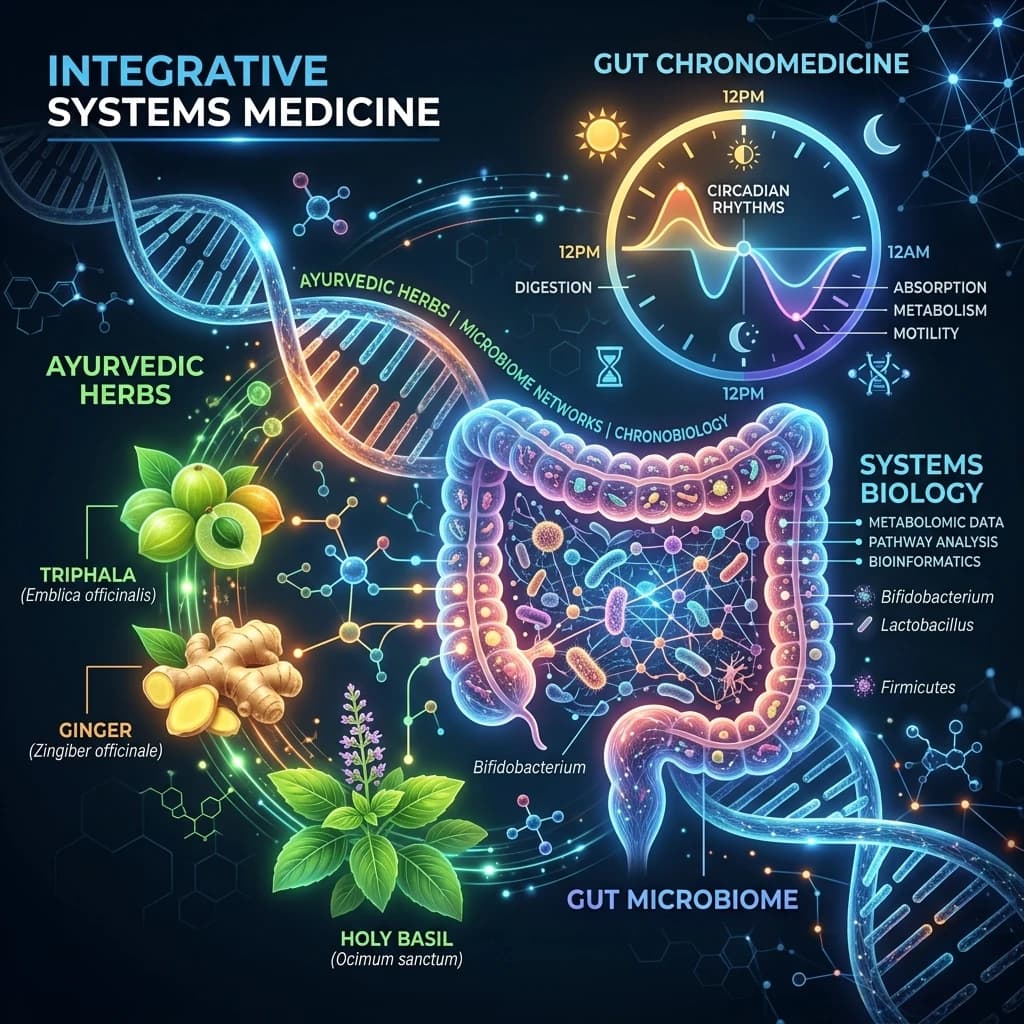
Ayurveda Meets Systems Biology: Agni, Chronomedicine, and Botanical Synergy in Modern Clinical Science
Ayurveda Meets Systems Biology: Agni, Chronomedicine, and Botanical Synergy in Modern Clinical Science The 2025–2026 wave of systems biology research has made an unambiguous statement: the three pilla…