Ancient Wisdom, Modern Proof: How Science Is Validating Ayurveda's Agni, Adaptogens, and Circadian Rhythms
Ancient Wisdom, Modern Proof: How Science Is Validating Ayurveda's Agni, Adaptogens, and Circadian Rhythms
For thousands of years, Ayurveda has approached human health through a deeply systemic lens, emphasizing internal digestive energy, botanical intelligence, and temporal harmony. Today, modern medical research and systems biology are increasingly validating these ancient frameworks, illuminating the molecular mechanisms behind traditional holistic wellness. In this breakdown, we explore three breakthrough areas where modern science and traditional Ayurvedic wisdom converge to offer actionable strategies for contemporary living.
🌿 Agni and the Microbiome: How Ancient Digestive Theory Correlates with Modern Gut Health
In classical Ayurvedic literature such as the Charaka Samhita, Agni (metabolic and digestive fire) is recognized as the single most critical determinant of health, immunity, and longevity. Ayurveda teaches that when Agni is balanced (Sama Agni), food is efficiently digested, nutrients are thoroughly assimilated, and vital energy (Ojas) flourishes. Conversely, impaired digestion (Mandagni) leads to the formation of Ama—toxic, un-eliminated metabolic waste that accumulates in the tissue channels and initiates chronic disease.
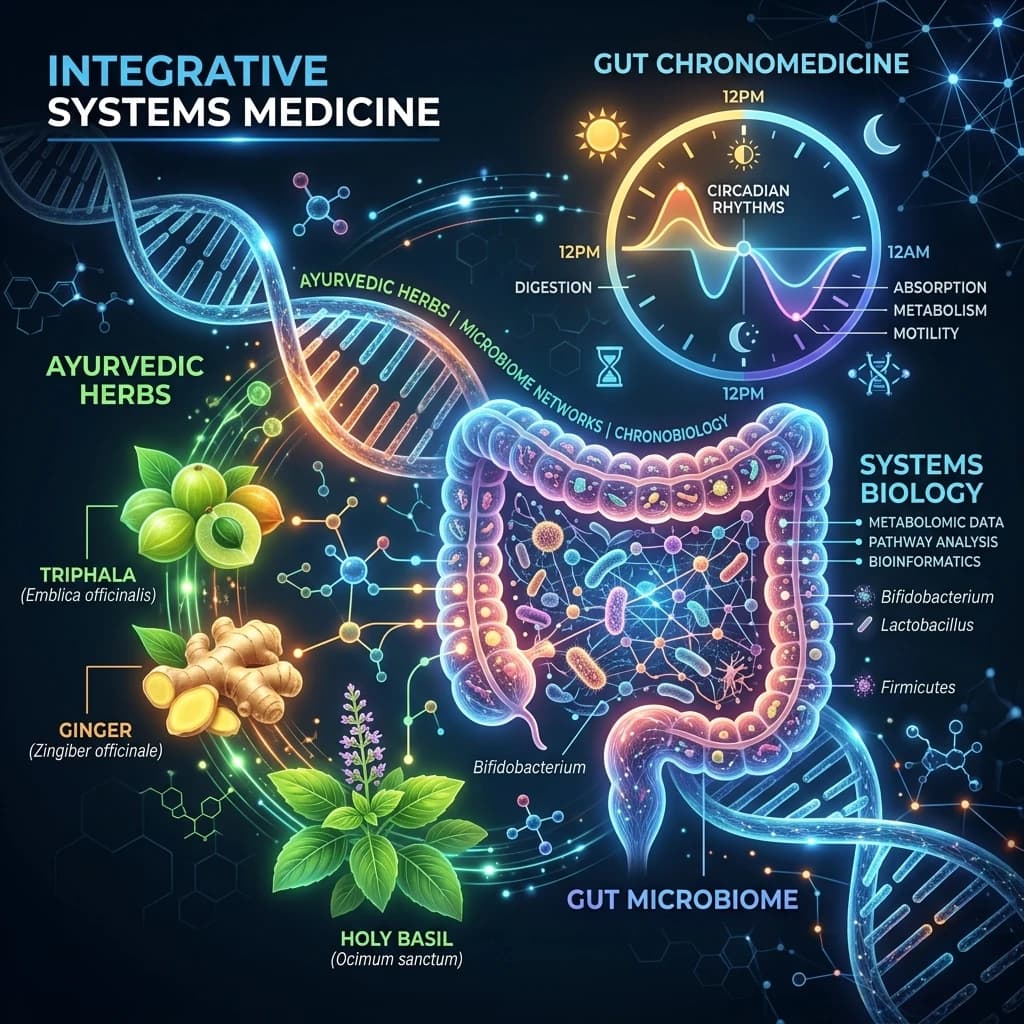
Recent clinical reviews and microbiome research from 2025 and 2026 demonstrate a striking biochemical parallel between Agni and the functional dynamics of the human gut microbiome. Researchers now map Sama Agni directly to a diverse, resilient gut microbial ecosystem rich in short-chain fatty acid (SCFA) producing bacteria such as Bifidobacterium and Faecalibacterium prausnitzii. Conversely, the pathological state of Ama closely mirrors intestinal dysbiosis, characterized by reduced species diversity, compromised mucosal integrity ("leaky gut"), and the spillover of lipopolysaccharide (LPS) endotoxins into systemic circulation.
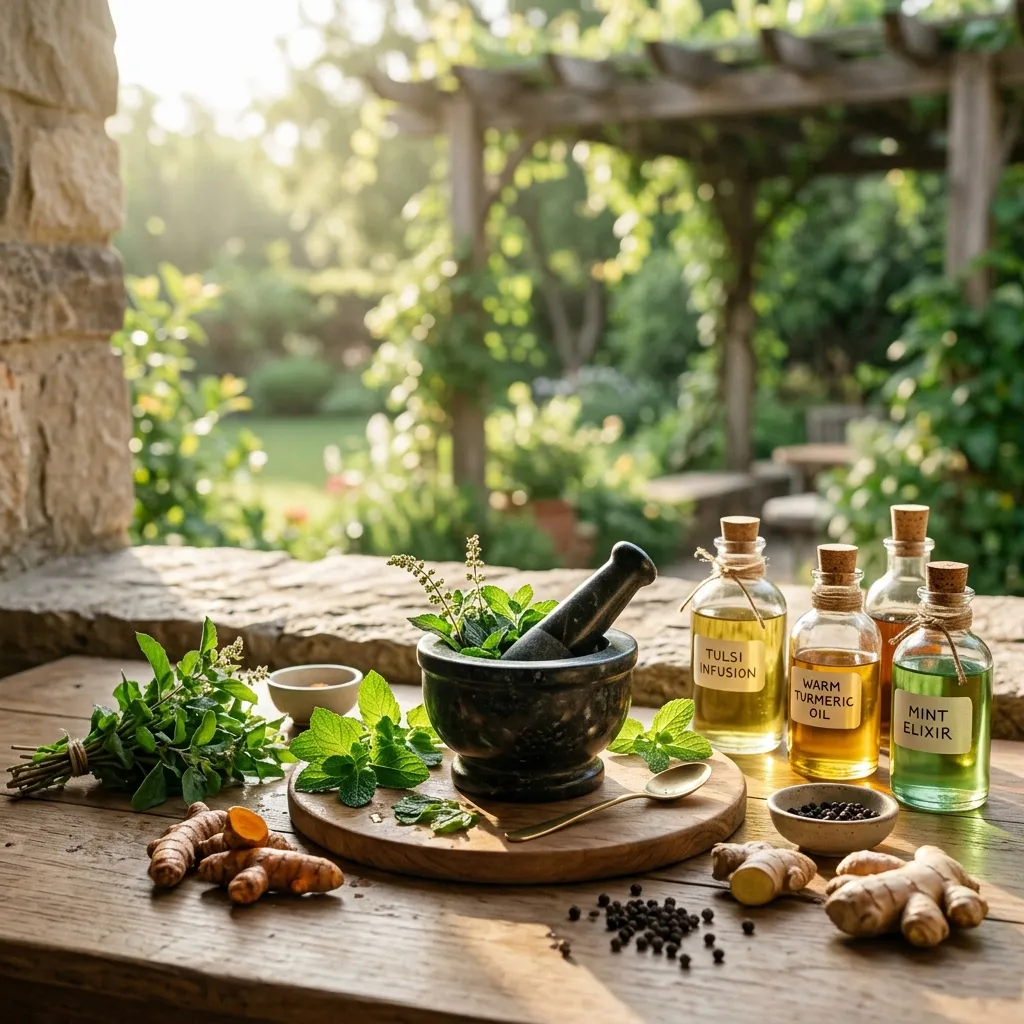
Ayurvedic nutrition (Ahara) places immense emphasis on digestive spices—such as fresh ginger (Zingiber officinale), cumin, fennel, and black pepper—to kindle Agni prior to meals. Contemporary pharmacological studies confirm that these herbs stimulate digestive enzymes, accelerate gastric emptying, and promote bile flow while acting as natural prebiotics that select for anti-inflammatory microbial strains. Additionally, classic formulations like Triphala (Amalaki, Bibhitaki, and Haritaki) are now recognized by gut health researchers as potent bio-modulators that restore colonic epithelial cell health and optimize transit time.
By integrating the Ayurvedic understanding of Agni with personalized gut microbiome science, modern health practitioners are gaining a more holistic blueprint for managing functional gastrointestinal disorders, metabolic syndrome, and low-grade systemic inflammation. Balancing your metabolic fire is no longer just a metaphorical concept—it is a scientifically verified pillar of preventive medicine.
🧠 The Adaptogen Synergy: Ashwagandha and Brahmi for Stress Resilience and the Gut-Brain Axis
Within the Ayurvedic pharmacopeia, herbs classified as Medhya Rasayana are revered for their specific capacity to enhance cognitive function, calm the nervous system, and promote emotional equilibrium. Among these, Ashwagandha (Withania somnifera) and Brahmi (Bacopa monnieri) stand out as primary botanicals. Historically, Ashwagandha (having Ushna virya or heating energy) was prescribed to strengthen physical vitality and ground an overactive Vata dosha, while Brahmi (having Sheeta virya or cooling energy) was used to soothe mental agitation and pacify excess Pitta dosha.
Over the past two years, rigorous clinical trials have validated the potent synergistic effects of pairing these two adaptogenic powerhouses. Bioactive withanolides in Ashwagandha have been shown to regulate the hypothalamic-pituitary-adrenal (HPA) axis by reducing circulating salivary and serum cortisol levels during periods of chronic psychological stress. Simultaneously, bacosides found in Brahmi enhance synaptic transmission, promote dendritic arborization, and elevate brain-derived neurotrophic factor (BDNF), bolstering memory retention and working memory under pressure.
Furthermore, frontier medical research into the microbiota-gut-brain axis has revealed that Ashwagandha and Brahmi do not act solely on central nervous system pathways. Clinical investigations confirm that these herbs exert bi-directional influence: by calming sympathetic nervous system arousal and modulating gut motility, they foster a gastrointestinal environment in which beneficial gut bacteria thrive. In turn, increased microbial production of neuroactive metabolites like gamma-aminobutyric acid (GABA) reinforces central calm and cognitive focus.
For modern professionals seeking sustainable energy without caffeine jitters or synthetic stimulants, the dual protocol of Ashwagandha and Brahmi represents a scientifically backed, time-tested approach to neurological resilience. Together, they bridge the gap between physical endurance and mental serenity.
⏰ Dinacharya in the Age of Chronomedicine: Synchronizing Daily Routines with Natural Rhythms
Long before the advent of modern chronobiology, Ayurvedic physicians established Dinacharya (daily regimen) and Ritucharya (seasonal regimen)—structured lifestyle protocols designed to align human physiology with environmental cycles. Central to Dinacharya is the division of the 24-hour day into six distinct 4-hour windows governed sequentially by the three Doshas: Kapha (6–10 AM/PM), Pitta (10 AM–2 PM/10 PM–2 AM), and Vata (2–6 AM/PM).
Contemporary chronomedicine and circadian biology have confirmed that human peripheral tissue clocks (located in the liver, gut, and heart) operate in precise synchronization with the central suprachiasmatic nucleus (SCN) in the brain. The Ayurvedic insight that Pitta dominates between 10 AM and 2 PM directly corresponds with peak physiological digestive capacity, core temperature, and pancreatic enzyme secretion. Modern trials on time-restricted eating confirm that consuming the largest, most nutrient-dense meal during this midday solar peak improves insulin sensitivity and metabolic efficiency compared to late-evening dining.
Similarly, classic Dinacharya hygiene practices are earning widespread endorsement from preventive healthcare specialists. Waking during Brahma Muhurta (approximately 45–60 minutes before sunrise) aligns with early morning circadian cortisol spikes and optimal autonomic nervous system transitions. Tongue scraping (Jihva Nirlekhana) using copper or stainless steel cleansers removes overnight bacterial biofilm, improving taste receptor sensitivity and reducing oral load. Warm self-massage (Abhyanga) with sesame or coconut oil stimulates cutaneous mechanoreceptors, lowering heart rate variability (HRV) stress markers and toning vagal nerve response.
In an era dominated by artificial blue light, irregular work schedules, and chronic circadian desynchronization, re-adopting the rhythmic structure of Dinacharya offers an accessible, zero-cost framework for recalibrating hormonal cascades, optimizing sleep quality, and building long-term metabolic health.
📌 The Bottom Line
- agni-gut-microbiome-science: Modern gastroenterology validates the Ayurvedic concept of Agni, proving that balanced digestive fire directly reflects a diverse, inflammation-dampening gut microbiome.
- ashwagandha-brahmi-stress-gut-brain: Clinical trials demonstrate that pairing Ashwagandha and Brahmi modulates the HPA axis, lowers cortisol, and supports the gut-brain axis for optimal cognitive resilience.
- dinacharya-circadian-chronomedicine: Synchronizing daily habits with Ayurvedic Dinacharya aligns modern lifestyles with natural circadian biology, optimizing digestion, hormone regulation, and metabolic health.
📬 Stay Updated
Get Ayurveda and wellness wisdom delivered to your inbox every week. Subscribe to our free newsletter →
Disclaimer: The information provided in this post is for educational and informational purposes only. It is not intended to be a substitute for professional medical advice, diagnosis, or treatment. Always seek the advice of your physician or other qualified health provider.
Disclosure: This post contains affiliate links. If you purchase through our links, we earn a small commission at no extra cost to you. We only recommend products we believe in.
Enjoyed this post?
Get our weekly digest delivered free.
Share this post:
Knowelth is reader-supported. We may earn a commission from links in this article at no extra cost to you. Read our disclosure.
Related Posts

Systems Biology, Circadian Dinacharya, and Gut-Agni Chrono-Nutrition: The Science Validating Ayurvedic Medicine
Systems Biology, Circadian Dinacharya, and Gut-Agni Chrono-Nutrition: The Science Validating Ayurvedic Medicine Modern healthcare is undergoing a paradigm shift from reductionist single-molecule thera…

Clinical Validation in Ayurveda: Cardiometabolic Formulations, Chrononutrition Agni Science, and Ayurgenomics in Ovarian Reserve
Clinical Validation in Ayurveda: Cardiometabolic Formulations, Chrononutrition Agni Science, and Ayurgenomics in Ovarian Reserve Traditional Indian medicine is undergoing a profound scientific renaiss…
Ayurveda Meets Systems Biology: Agni, Chronomedicine, and Botanical Synergy in Modern Clinical Science
Ayurveda Meets Systems Biology: Agni, Chronomedicine, and Botanical Synergy in Modern Clinical Science The 2025–2026 wave of systems biology research has made an unambiguous statement: the three pilla…