Science-Backed Ayurveda: Ashwagandha & Brahmi Nootropics, Agni-Microbiome Axis, and Dinacharya Chronobiology

Science-Backed Ayurveda: Ashwagandha & Brahmi Nootropics, Agni-Microbiome Axis, and Dinacharya Chronobiology
Modern medical science is increasingly validating the timeless wisdom of traditional Indian medicine (AYUSH), revealing that ancient health practices possess deep physiological rationales. From neuroprotective herbal synergy to chrono-nutrition and gut ecology, Ayurvedic paradigms offer cutting-edge blueprints for modern preventative healthcare. Here are three major scientific breakthroughs bridging traditional Ayurveda with contemporary clinical medicine.
🌿 Clinical Synergies of Ashwagandha & Brahmi: Nootropic Adaptogens for Brain-Gut Resilience
In Ayurvedic pharmacology, Withania somnifera (Ashwagandha) is revered as a premier Rasayana (rejuvenative tonic) and Balya (strength enhancer), while Bacopa monnieri (Brahmi) stands as a foundational Medhya Rasayana—a specialized class of botanical remedies dedicated to sharpening memory, intellect (Dhi), and emotional stability. Traditionally classified as possessing Tikta (bitter) and Kashaya (astringent) tastes with a balancing effect on Vata and Kapha doshas, these two herbs have historically been prescribed together to calm an overactive mind while nourishing nervous tissue (Majja Dhatu).
Recent clinical trials (2024–2026) have begun illuminating the biomolecular mechanisms behind this synergistic pairing. Double-blind, placebo-controlled clinical studies investigating standardized dual-extract combinations (such as the BacoZen™ complex and clinical protocols evaluating Brahmi vati paired with Aswagandharista) demonstrated a dramatic reduction in serum cortisol levels—exceeding 30%—alongside statistically significant improvements in subjective perceived stress scores. Neuroimaging and biomarker assays reveal that these botanical adaptogens act directly on the hypothalamic-pituitary-adrenal (HPA) axis, dampening hyperactive stress responses while simultaneously enhancing GABAergic and dopaminergic signaling pathways in the prefrontal cortex.
Beyond acute stress attenuation, randomized controlled trials published in 2025 and 2026 highlight the profound neuroprotective capacity of this herbal tandem. Ashwagandha’s active withanolides and Brahmi’s bacosides stimulate nerve growth factor (NGF) and brain-derived neurotrophic factor (BDNF), encouraging dendritic arborization and synaptic plasticity. In a landmark 2025 clinical trial, patients suffering from mild-to-moderate mood disturbances receiving a combined regimen of Brahmi and Ashwagandha demonstrated clinical improvements comparable to standard pharmaceutical SSRIs (escitalopram), but with superior reported quality-of-life outcomes and zero anticholinergic side effects.
Furthermore, researchers are connecting these neurotropic effects directly to the gut-brain axis. Both herbs contain bioavailable polyphenols and steroidal lactones that reduce neuroinflammation by inhibiting pro-inflammatory cytokines (TNF-alpha, IL-6) while selectively modulating intestinal flora. By supporting gut mucosal integrity and suppressing systemic inflammation, Ashwagandha and Brahmi provide a dual-action defense system that protects cognitive health from the intestine to the cerebral cortex.
🔬 Agni, Ama, & Microbiome Science: Decoding the Ayurvedic Gut-Brain Axis
One of the central tenets of Ayurvedic physiology is articulated in the classic dictum Rogaḥ Sarve'pi Mandāgneau—"All diseases originate from impaired Agni." In Ayurvedic gastroenterology, Agni represents the metabolic and digestive fire responsible for breaking down food (Ahara), assimilating nutrients, and sustaining cellular vitality (Ojas). When Agni becomes sluggish (Mandagni), incomplete digestion gives rise to Ama—a sticky, toxic, endotoxic byproduct that accumulates in metabolic channels (Srotas) and instigates systemic disease.
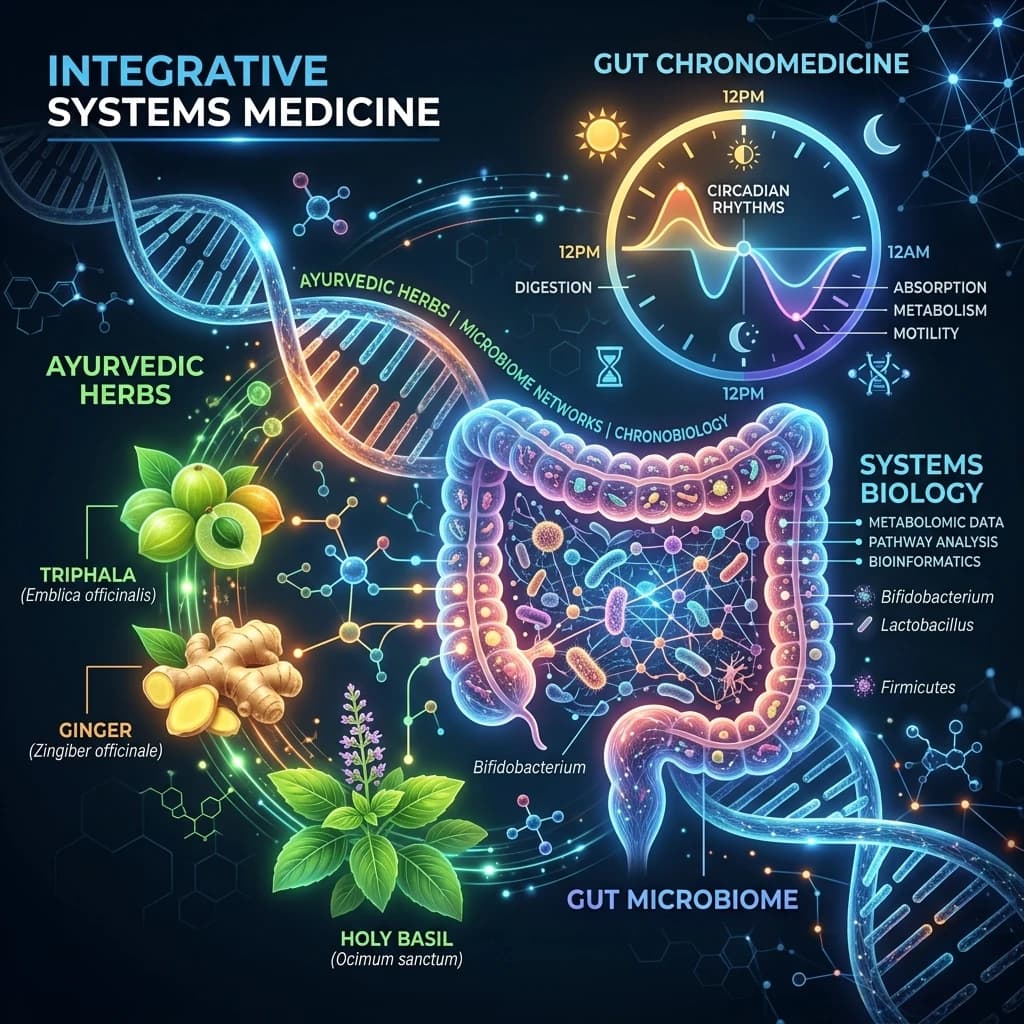
Contemporary gastroenterology and microbiome research published between 2024 and 2026 have effectively mapped the concepts of Agni and Ama onto modern intestinal biology. Medical researchers now recognize Agni as the functional representation of gut enzymatic activity, gastric acid secretion, brush-border transport, and a diverse, resilient gut microbiome. Conversely, the clinical description of Ama correlates precisely with intestinal dysbiosis, small intestinal bacterial overgrowth (SIBO), impaired tight junction integrity ("leaky gut"), and the translocation of lipopolysaccharides (LPS) into systemic circulation, triggering chronic systemic inflammation.
Scientific studies investigating Ayurvedic dietary wisdom (Ahara Vidhi) confirm that optimizing Agni directly cultivates beneficial microbial species, such as Bacteroidetes and Bifidobacteria, while boosting short-chain fatty acid (SCFA) production (butyrate, acetate, propionate). Butyrate, in particular, acts as an essential energy source for colonocytes and serves as a powerful epigenetic regulator that calms neuroinflammation and repairs the blood-brain barrier.
To maintain optimal Agni and prevent Ama formation, Ayurvedic clinical practice emphasizes sensory-conscious eating: consuming warm, freshly prepared, whole foods spiced with traditional digestive enhancers (Deepana and Pachana herbs like Shunti/ginger, Jeeraka/cumin, and Maricha/black pepper). Incorporating these carminative spices enhances digestive enzyme secretion, accelerates gastric emptying, and prevents the microbial fermentation of undigested matter, aligning ancient dietary wisdom with modern metabolic health.
☀️ Dinacharya & Chronobiology: Aligning Daily Regimens with Circadian Clocks
In classical Ayurvedic literature, Dinacharya refers to the structured daily routine designed to maintain physical homeostasis, emotional equilibrium, and longevity. Central to Dinacharya is the synchronization of human behavior with the diurnal rhythms of nature—waking during Brahma Muhurta (the auspicious pre-dawn hours between 4:30 AM and 5:30 AM), performing daily purification practices (Gandusha/oil pulling, Jivha Nirlekhana/tongue scraping), scheduling the main meal when solar and internal Agni peak (between 10:00 AM and 2:00 PM), and winding down early to facilitate restful sleep.
Modern chronobiology—the scientific study of biological rhythms—has revealed that virtually every cell in the human body operates on an endogenous 24-hour master clock driven by the suprachiasmatic nucleus (SCN) of the hypothalamus, as well as peripheral clocks located in the liver, pancreas, and gastrointestinal tract. Research published in 2026 underscores that misalignment between lifestyle habits and internal circadian clocks is a primary driver of metabolic syndrome, insulin resistance, immune dysfunction, and neurodegenerative decline.
By examining Dinacharya through the lens of circadian medicine, scientists have verified the profound health benefits of these ancient daily habits. For instance, waking early during Brahma Muhurta coincides with natural spikes in cortisol and temperature, optimizing cognitive performance and autonomic function. Aligning meal timing with the Pitta period of the day corresponds with peak insulin sensitivity and optimal bile acid secretion, preventing postprandial hyperglycemia and ectopic fat accumulation.
Furthermore, evening practices recommended in Dinacharya—such as avoiding heavy late-night meals, practice of Abhyanga (warm oil massage to calm Vata), and turning off external stimuli—support natural melatonin production and enhance the brain's glymphatic clearance system during deep sleep. By adhering to a steady Dinacharya, individuals reinforce clock-gene expression, support microbiome circadian rhythmicity, and foster long-term physiological resilience.
📌 The Bottom Line
- ashwagandha-brahmi-nootropics: Clinical trials confirm that combining Ashwagandha and Brahmi lowers cortisol by >30%, boosts BDNF, and calms stress via the HPA axis and neuro-enteric signaling.
- agni-ama-microbiome-science: Modern gastroenterology validates Agni as gut microbiome diversity and SCFA synthesis, while Ama represents dysbiosis, leaky gut, and endotoxemia.
- dinacharya-circadian-rhythms: Chronobiology research confirms that Ayurvedic daily routines (Dinacharya) synchronize peripheral master clocks, optimizing metabolic rate, digestive efficiency, and sleep quality.
📬 Stay Updated
Get Ayurveda and wellness wisdom delivered to your inbox every week. Subscribe to our free newsletter →
Disclaimer: The information provided in this post is for educational and informational purposes only. It is not intended to be a substitute for professional medical advice, diagnosis, or treatment. Always seek the advice of your physician or other qualified health provider.
Disclosure: This post contains affiliate links. If you purchase through our links, we earn a small commission at no extra cost to you. We only recommend products we believe in.
Enjoyed this post?
Get our weekly digest delivered free.
Share this post:
Knowelth is reader-supported. We may earn a commission from links in this article at no extra cost to you. Read our disclosure.
Related Posts

Systems Biology, Circadian Dinacharya, and Gut-Agni Chrono-Nutrition: The Science Validating Ayurvedic Medicine
Systems Biology, Circadian Dinacharya, and Gut-Agni Chrono-Nutrition: The Science Validating Ayurvedic Medicine Modern healthcare is undergoing a paradigm shift from reductionist single-molecule thera…

Clinical Validation in Ayurveda: Cardiometabolic Formulations, Chrononutrition Agni Science, and Ayurgenomics in Ovarian Reserve
Clinical Validation in Ayurveda: Cardiometabolic Formulations, Chrononutrition Agni Science, and Ayurgenomics in Ovarian Reserve Traditional Indian medicine is undergoing a profound scientific renaiss…
Ayurveda Meets Systems Biology: Agni, Chronomedicine, and Botanical Synergy in Modern Clinical Science
Ayurveda Meets Systems Biology: Agni, Chronomedicine, and Botanical Synergy in Modern Clinical Science The 2025–2026 wave of systems biology research has made an unambiguous statement: the three pilla…