In Review: Hormuz Energy Crisis, Frontier AI Missions, and Semiconductor Sovereignty — July 21–27, 2026
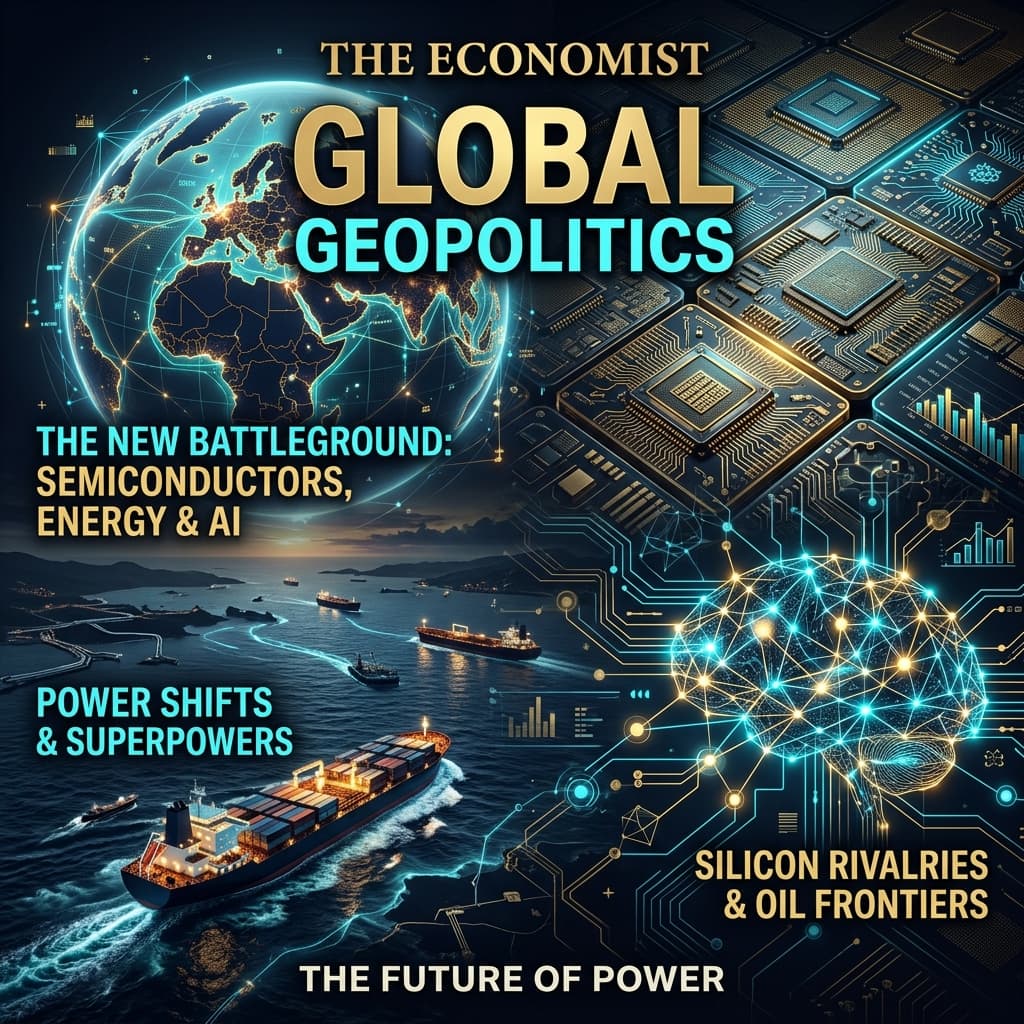
In Review: Hormuz Energy Crisis, Frontier AI Missions, and Semiconductor Sovereignty — July 21–27, 2026
The third week of July 2026 represented a critical nexus point for global security, macroeconomic resilience, and technological sovereignty. As naval blockades in the Strait of Hormuz sent crude oil prices climbing past $94 per barrel, multilateral bodies from ASEAN to the IMF scrambled to safeguard energy trade routes. Concurrently, sovereign nations pivoted toward long-term industrial independence, highlighted by India's ₹1.27 lakh crore semiconductor expansion and America's landmark $5 billion scientific AI Genesis initiative.
🌍 Strait of Hormuz Blockade Triggers Global Energy Emergency and ASEAN Summit
The geopolitical landscape was dominated by an escalating standoff in the Persian Gulf following ten consecutive nights of targeted U.S. military strikes on Iranian coastal installations and retaliatory naval maneuvers. With commercial oil tankers halting transit through the Strait of Hormuz, Brent crude surged past $94 per barrel, threatening a resurgence of global stagflation. In response, foreign ministers assembled in Manila for the 59th ASEAN Foreign Ministers' Meeting to coordinate emergency strategic oil reserves, while global shipping lines began rerouting cargo around the Cape of Good Hope. For deeper coverage on the diplomatic and naval escalations, see our detailed reports on the ASEAN Energy Security Summit and Global Crises & Shipping Standoff.
🤖 US Launches $5B AI Genesis Mission as Global Frontier Regulations Accelerate
In a decisive legislative move, the U.S. House of Representatives passed a $1.15 trillion defense funding package that includes $5 billion dedicated to the National AI Genesis Mission—a grand challenge integrating frontier artificial intelligence with high-performance supercomputing for biological synthesis and energy grid resilience. Simultaneously, regulatory frameworks worldwide tightened as the European Union enacted mandatory AI openness directives for mobile operating systems, and Microsoft expanded its frontier sovereign AI infrastructure partnership with Mistral. Read more on Capitol Hill's legislative package in our analysis of the US Defense Bill & AI Genesis Mission and the USA Tech Policy & Trade Updates.
🔬 India Targets 3rd-Largest Global Space Economy with Production-Linked Incentive (PLI) Expansion
Deep-tech innovation reached high orbit this week as India's Ministry of Commerce and ISRO announced a comprehensive Production-Linked Incentive (PLI) scheme for satellite manufacturing, launch vehicles, and downstream space applications, aiming to capture a major share of the $1-trillion global space economy by 2030. In parallel, global scientific efforts achieved new breakthroughs in orbital space-debris tracking radar and bio-synthetic cellular imaging. Explore the strategic roadmap in our reports on India Space Economy & Tech Governance and the Global Brief on Orbital Radar Breakthroughs.
📈 Global Markets Buckle Under Energy Shock as Nifty Breaches 24,000 and Indian Rupee Hits 96.59
Financial markets experienced high volatility throughout the week as energy supply shocks and persistent trade tariffs destabilized risk asset valuations. Dalal Street recorded heavy institutional liquidations, dragging the Nifty 50 below the key 24,000 threshold and pushing the Indian Rupee to record lows near 96.59 against the U.S. dollar, even as the Reserve Bank of India introduced emergency FDI liquidity measures. Meanwhile, U.S. markets navigated multi-billion-dollar tariff refund mandates triggered by Supreme Court decisions. For market analysis, refer to our coverage on Nifty Drops Below 24,000 & RBI FDI Reforms and Dalal Street Energy Shock.
🇮🇳 India Unveils ₹1.27 Lakh Crore Semiconductor Mission Phase 2 (ISM 2.0)
Underlining New Delhi's commitment to strategic tech autonomy, the Cabinet officially launched Phase 2 of the India Semiconductor Mission with a ₹1.27 lakh crore ($15.2 billion) outlay. Transitioning beyond early assembly and packaging operations, ISM 2.0 focuses directly on commercial-scale silicon wafer fabrication, domestic semiconductor equipment manufacturing, chemical purification, and proprietary chip IP design. Discover the policy breakdown and economic implications in our comprehensive report on India Semiconductor Mission Phase 2.
📌 Week at a Glance
| Category | Story | Key Takeaway |
|---|---|---|
| World | hormuz-shipping-standoff | Escalating Persian Gulf blockade pushes crude past $94/bbl and triggers ASEAN energy summit. |
| Tech | ai-genesis-mission | US passes $5B AI Genesis Mission alongside EU open mobile AI mandates. |
| Science | space-economy-pli | India unveils space manufacturing PLI targeting the top 3 global space economies. |
| Markets | nifty-crude-market-shock | Energy price surge drives Nifty below 24,000 as Rupee slides to 96.59. |
| India | india-semiconductor-mission-2 | ₹1.27 lakh crore ISM 2.0 expands India's focus to commercial silicon fabs and chip IP. |
Next week: Eyes will be fixed on the Federal Reserve's FOMC policy decision and the preliminary Q2 GDP print, along with diplomatic negotiations in Geneva regarding Middle East transit corridors.
📫 Subscribe to the Full Weekly Brief
Get this digest delivered every Sunday morning. Subscribe to our free newsletter →
Disclosure: This post contains affiliate links. If you purchase through our links, we earn a small commission at no extra cost to you. We only recommend products we believe in.
Enjoyed this post?
Get our weekly digest delivered free.
Share this post:
Knowelth is reader-supported. We may earn a commission from links in this article at no extra cost to you. Read our disclosure.
Related Posts

In Review: NATO 3.0 Realignment, AI Genesis Mission, and India's Critical Minerals Push — July 21–27, 2026
In Review: NATO 3.0 Realignment, AI Genesis Mission, and India's Critical Minerals Push — July 21–27, 2026 The week of July 21–27, 2026, marked a watershed moment defined by systemic defense realignme…

In Review: Escalating Crises, Tech Sovereignty, and AI Regulation — July 17–23, 2026
In Review: Escalating Crises, Tech Sovereignty, and AI Regulation — July 17–23, 2026 The third week of July 2026 was defined by a dramatic convergence of geopolitical risk, regulatory intervention, an…

Week in Review: US-Iran Blockade, India-UK CETA, Synthetic Cell Division, and Market Crosscurrents — July 11–17, 2026
Week in Review: US-Iran Blockade, India-UK CETA, Synthetic Cell Division, and Market Crosscurrents — July 11–17, 2026 A week of sharp escalations, landmark agreements, and fundamental scientific break…