Cartilage Regeneration, Reusable Orbital Shields, and Sovereign AI Drug Governance: The Mid-June 2026 Update

Cartilage Regeneration, Reusable Orbital Shields, and Sovereign AI Drug Governance: The Mid-June 2026 Update
As of mid-June 2026, the global scientific, technological, and geopolitical landscapes are experiencing a rapid convergence characterized by a search for physical resilience, structural recovery, and national technological sovereignty. Rather than developing in isolation, the systems driving the next generation of human capability—from non-surgical cartilage restoration and weekly antiviral regimens to reusable fabric heat shields for orbital manufacturing and sovereign cloud compute frameworks—are sharing a focus on durability, safety, and self-reliance. Together, these milestones outline a future where advanced engineering is increasingly focused on repairing biological structures, securing critical supply chains, and establishing trusted digital borders.
Here is a synthesized analysis of the major breakthroughs and market-defining shifts as of June 15, 2026.
1. Regenerative Medicine and Therapeutic Frontiers: Cartilage Restoration and CKD Protection
In biology and clinical therapeutics, researchers are achieving significant milestones in reversing cellular and tissue degeneration, while clinical trials expand the protective utility of existing drug classes.
Key Biological and Medical Developments:
- Stanford's Cartilage Restoration Breakthrough: Researchers at Stanford Medicine have developed a therapeutic approach to restore lost joint cartilage and halt the progression of osteoarthritis. By identifying and blocking the aging-related protein 15-PGDH (15-prostaglandin dehydrogenase) using a targeted small-molecule inhibitor, the team successfully repaired cartilage tissue in mice and human joint samples. This milestone offers a non-surgical alternative to joint replacement surgeries, promising to restore mobility for millions of patients suffering from chronic joint degeneration.
- Finerenone's Expanded Protection for CKD: Landmark clinical trial results published in The New England Journal of Medicine and The Lancet have demonstrated that the non-steroidal mineralocorticoid receptor antagonist finerenone provides significant kidney-protective and cardiovascular benefits to a much broader population of Chronic Kidney Disease (CKD) patients than previously established. The data shows that finerenone's protective efficacy extends to patients without type 2 diabetes, fundamentally shifting the treatment paradigm and offering a new line of defense against progressive renal decline.
- Once-Weekly Oral HIV Regimen Success: Pharmaceutical developers Gilead Sciences and Merck reported positive Phase 3 results from their ISLEND-1 and ISLEND-2 clinical trials evaluating an investigational, once-weekly oral single-tablet regimen combining islatravir and lenacapavir. The long-acting oral formulation maintained viral suppression in adults with HIV-1, marking a significant step toward reducing treatment burden and improving long-term adherence.
2. NewSpace Infrastructure and Microgravity Manufacturing: Reusable Heat Shields and ISC 2026
The commercial space sector is transitioning from exploratory orbital launches to sustainable, recurring manufacturing corridors supported by reusable recovery systems and regional diplomatic alignments.
Orbital and Manufacturing Milestones:
- Space Forge’s Pridwen Reusable Heat Shield: In orbital manufacturing, the UK government announced a £19 million space funding package, with Cardiff-based startup Space Forge receiving £10 million to accelerate the development of its "Pridwen" reusable heat shield. Designed to survive the intense thermal stresses of atmospheric re-entry using high-temperature fabric, Pridwen enables the cost-effective and gentle return of high-value materials (such as semiconductors, specialty alloys, and biologics) manufactured in the microgravity environment of space. This technology addresses a critical bottleneck in the space-to-Earth supply chain, making commercial in-space manufacturing economically viable.
- India Space Congress 2026: The India Space Congress (ISC) 2026 convened in New Delhi from June 15–17, drawing together space agencies, diplomats, and private satellite operators from across the Indo-Pacific. The congress highlighted India’s strategic pivot toward public-private partnerships and the deregulation of its satellite communication sector. Key discussions centered on deploying sovereign low-Earth orbit (LEO) constellations for secure communication and maritime tracking, establishing India as a critical hub for low-cost, high-reliability NewSpace services.
3. Sovereign Infrastructure and AI Governance: The EU CADA, UK Drug Sandbox, and G7 De-risking
As digital intelligence and critical materials become central to national security, governments are establishing regulatory boundaries to secure domestic supply lines and accelerate safe therapeutic development.
Key Policy, Regulatory, and Economic Indicators:
- EU’s Cloud and AI Development Act (CADA) Proposals: In digital policy, the European Union has advanced draft proposals for the Cloud and AI Development Act (CADA). Aimed at establishing European digital sovereignty, the act proposes direct funding for public-private hyperscale computing infrastructure and sovereign AI model development. CADA seeks to reduce Europe's dependence on foreign cloud monopolies and ensure that critical public services, healthcare systems, and industrial AI workloads run on domestic, GDPR-compliant infrastructure.
- UK's AI Drug Safety Sandbox: The UK Government launched a novel regulatory sandbox designed to assess and accelerate the use of artificial intelligence in predicting drug safety and toxicology. Led by the Medicines and Healthcare products Regulatory Agency (MHRA), the sandbox allows biopharma developers to test advanced machine learning models on shared clinical datasets. By utilizing AI to predict potential adverse drug reactions early in the development cycle, the initiative aims to shorten clinical trial timelines and reduce the cost of bringing life-saving therapeutics to market.
- G7 Supply Chain "De-risking" and Minerals Partnership: At the 52nd G7 Summit in Évian-les-Bains, France, leaders focused on geoeconomics and the "de-risking" of supply chains for critical minerals. The summit emphasized the creation of resilient, redundant supply corridors for lithium, cobalt, and rare earth elements, moving away from a lean, cost-efficiency logistics model to one prioritizing national security and supply continuity. G7 members finalized a multilateral agreement to co-invest in refining infrastructure across North America, Europe, and Africa to bypass dominant bottlenecks.
Conclusion: The Cyber-Physical and Sovereign Feedback Loop
The milestones of mid-June 2026 demonstrate that technological sovereignty, orbital infrastructure, and medical science are bound in a mutual feedback loop. The deployment of AI-powered regulatory sandboxes in the UK accelerates the translation of chemical insights into clinical trials, enabling breakthroughs like Stanford's cartilage restoration and finerenone's renal protection to reach patients faster. These medical advances, along with high-purity materials produced in space, rely on NewSpace recovery systems like Space Forge’s Pridwen shield and global policy cooperation at the India Space Congress. Ultimately, these physical and biological innovations are protected and sustained by sovereign frameworks like the EU's CADA and G7 de-risking strategies, ensuring that the critical compute power and material supply chains of the next technological era remain secure, resilient, and locally governed.
Enjoyed this post?
Get our weekly digest delivered free.
Share this post:
📌 Disclosure: This post may contain affiliate links. If you make a purchase through our links, we may earn a commission at no extra cost to you. We only recommend products we believe in. See our Affiliate Disclosure.
Related Posts

U.S. Launches Major Night Strikes on 90 Targets in Iran as Ceasefire Declared Over
Breaking: U.S. Launches Major Night Strikes on 90 Targets in Iran as Ceasefire Declared Over Last updated: 2026-07-09 11:15 IST The United States military has launched a massive wave of airstrikes tar…

U.S.-Iran Ceasefire Collapses Amid Persian Gulf Military Strikes
Breaking: U.S.-Iran Ceasefire Collapses Amid Persian Gulf Military Strikes Last updated: 2026-07-08 22:30 IST The fragile ceasefire between the United States and Iran has collapsed after a series of m…
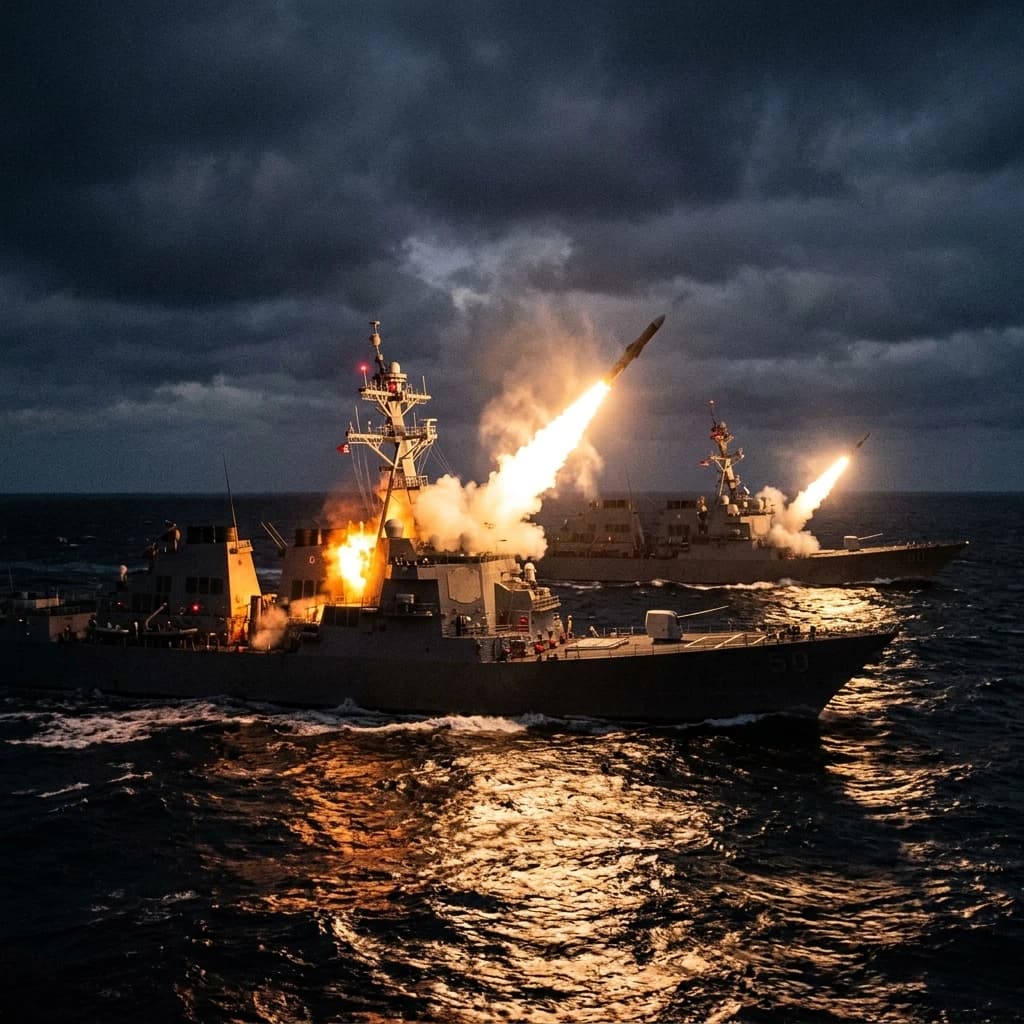
Breaking: US Launches Massive Strikes on 80 Iran Sites; Tehran Retaliates Against US Bases in Bahrain and Kuwait
Breaking: US Launches Massive Strikes on 80 Iran Sites; Tehran Retaliates Against US Bases in Bahrain and Kuwait Last updated: 2026-07-08 17:20 IST On July 8, 2026, the United States Central Command (…