Engineering the Next Epoch: Local Agentic Silicon, Artemis III Rendezvous, and the Solid-State Grid of 2026
Engineering the Next Epoch: Local Agentic Silicon, Artemis III Rendezvous, and the Solid-State Grid of 2026
As we cross the mid-point of June 2026, the global technological landscape is undergoing a profound structural reorganization. Rather than advancing along parallel tracks, artificial intelligence, space exploration, and renewable energy are converging. Breakthroughs in silicon architecture are shifting AI workloads from massive cloud facilities directly to edge machines; at the same time, space exploration is entering a commercial and crewed renaissance, while energy grids are adapting to the demands of localized compute through material science innovations.
Here is an analysis of the developments and milestones defining this new technological epoch as of June 12, 2026.
1. The Local Agentic Frontier: Local Silicon and Multi-Turn Workbenches
In artificial intelligence, the defining paradigm of 2026 is the rapid transition from passive, conversational language models to autonomous Agentic AI. Rather than executing isolated tasks in response to user prompts, these systems plan, write code, run self-correcting tests, and execute complex workflows over multiple turns. This shift is driving a complete redesign of developer environments and consumer hardware.
Key AI Developments:
- The Agentic IDE: Rebuilding developer tooling from the ground up, Apple's newly introduced Xcode 27 features integrated coding agents capable of autonomous multi-turn planning. These agents can write code, run unit tests, debug runtime errors, and interact with physical target devices. Xcode 27 natively integrates advanced frontier models from Anthropic, Google, and OpenAI, turning the IDE into a multi-agent collaborative workbench.
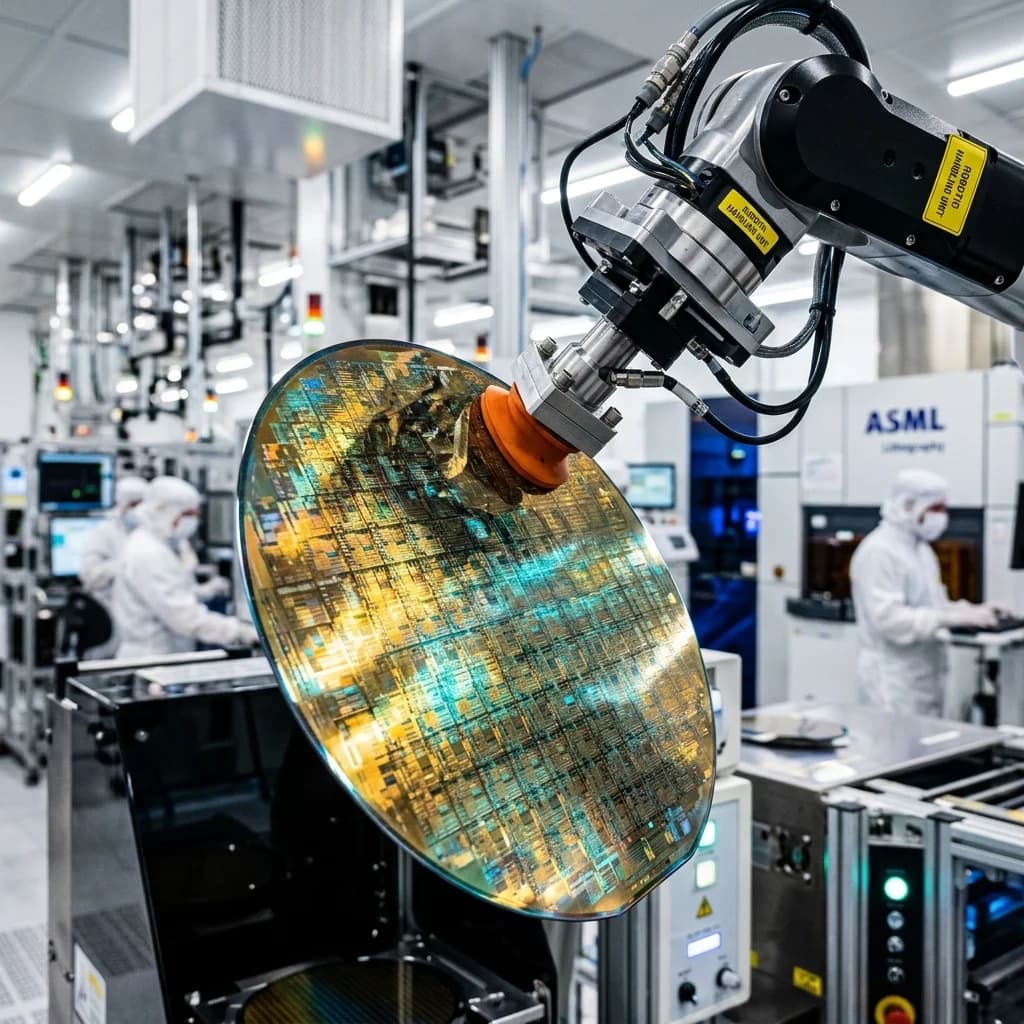
- Silicon for "Agent Computers": Running agentic workflows locally requires substantial compute power. AMD has addressed this by opening pre-orders for its Ryzen AI Halo developer platform and unveiling the Ryzen AI Max PRO 400 Series processors. These processors are designed to power a new class of "Agent Computers" capable of running 200-billion-parameter models entirely locally, securing user privacy and reducing network latency.
- Enterprise and Rackscale Infrastructure: For cloud and hybrid environments, Intel has launched its Xeon 6+ processors alongside specialized rackscale AI architectures optimized for dense inference and agent coordination. Meanwhile, Huawei Cloud introduced "Agentic Infra," featuring built-in "token factories" to optimize data flow across distributed agent networks.
2. Orbits of Scale: The Artemis III Crew, SpaceX IPO, and Gaganyaan's Prelude
Space exploration is experiencing a historic surge in operational cadence, marked by crew selection milestones, commercial market events, and preparation for new orbital platforms.
Milestones in Space Tech:
- Artemis III Crew Selection: On June 9, 2026, NASA officially announced the four-astronaut crew for the Artemis III mission, targeted for 2027. Led by Commander Randy Bresnik and Pilot Luca Parmitano (ESA), alongside Mission Specialists Andre Douglas and Frank Rubio, the mission will serve as a crewed demonstration in low Earth orbit (LEO). It will perform critical rendezvous and docking maneuvers with SpaceX and Blue Origin Human Landing Systems (HLS), laying the operational groundwork for subsequent lunar landings.
- SpaceX IPO on the NASDAQ: In a highly anticipated corporate event, SpaceX officially listed on the NASDAQ on June 12, 2026, marking a historic transition to a publicly traded company. The IPO reflects the maturation of the NewSpace economy and provides capital to accelerate the Starship program.
- Flight 13 and Starship Testing: Following the launch of Starship Flight 12 on May 22—which successfully demonstrated engine-out capabilities—SpaceX is preparing for Flight 13. Operations at Starbase have transitioned to cryogenic testing of Booster 20 and validation of the Starship V3 architecture, as SpaceX addresses FAA mishap investigations concerning the Flight 12 booster return.
- Gaganyaan-1 (G1) Uncrewed Flight: India's ISRO is preparing for the uncrewed Gaganyaan-1 (G1) orbital mission in the second half of 2026. The flight will carry the humanoid robot Vyommitra to test life support and capsule dynamics. This follows successful propulsion hot tests and the Integrated Air Drop Test (IADT-02) verifying recovery systems.
3. Materials of Progress: Perovskite Solar, Low-Temp Hydrogen, and Solid-State Grids
As computational demands and orbital networks expand, the underlying energy infrastructure is adapting through chemical breakthroughs and policy-driven scaling.
Energy and Storage Innovations:
- Stable Perovskite Solar Cells: Silicon-perovskite tandem solar cells continue to push thermodynamic limits, with collaborative research teams at EPFL and CSEM achieving 31.25% efficiency. In 2026, the focus has shifted to stability; by employing "molecular press annealing" and novel chemical stabilizers, researchers have mitigated material degradation, accelerating the commercialization of flexible and building-integrated PV (BIPV) panels.
- Low-Temperature Solar Hydrogen: The University of Birmingham has developed a perovskite-based catalyst that enables thermochemical water splitting at significantly lower temperatures than previous designs. This allows green hydrogen production to integrate directly with industrial waste heat, increasing system-level energy efficiency.
- Solid-State Road Testing: Stellantis and Factorial Energy have begun real-world road testing of solid-state batteries in North America. These cells are integrated into development vehicles, promising higher energy density, faster charge rates, and improved safety profiles compared to traditional liquid lithium-ion packs.
- Policy and Fusion Infrastructure: Infrastructure scaling is being supported by massive public initiatives, such as the EU's newly launched €1.5 billion Battery Booster Facility. Meanwhile, the U.S. Department of Energy finalized its Fusion Science and Technology (FS&T) Roadmap to commercialize fusion power by the mid-2030s, and the UK government designated fusion infrastructure as a Critical National Priority under its draft National Policy Statement (EN-8).
Conclusion: The Interdependent Loop
The milestones of June 2026 demonstrate that technological progress is no longer linear. Localized, agent-based computing is accelerating material discovery, leading to the molecular engineering of more stable perovskites and solid-state battery chemistries. These clean energy developments, in turn, provide the low-carbon power required by rackscale AI installations. Finally, the resulting autonomous software and power systems are what make complex deep-space missions like Artemis III and Gaganyaan possible. As these industries continue to feed into one another, they form a self-reinforcing engine of innovation that is reshaping the physical and digital frontiers of our world.
Enjoyed this post?
Get our weekly digest delivered free.
Share this post:
📌 Disclosure: This post may contain affiliate links. If you make a purchase through our links, we may earn a commission at no extra cost to you. We only recommend products we believe in. See our Affiliate Disclosure.
Related Posts

U.S. Launches Major Night Strikes on 90 Targets in Iran as Ceasefire Declared Over
Breaking: U.S. Launches Major Night Strikes on 90 Targets in Iran as Ceasefire Declared Over Last updated: 2026-07-09 11:15 IST The United States military has launched a massive wave of airstrikes tar…

U.S.-Iran Ceasefire Collapses Amid Persian Gulf Military Strikes
Breaking: U.S.-Iran Ceasefire Collapses Amid Persian Gulf Military Strikes Last updated: 2026-07-08 22:30 IST The fragile ceasefire between the United States and Iran has collapsed after a series of m…
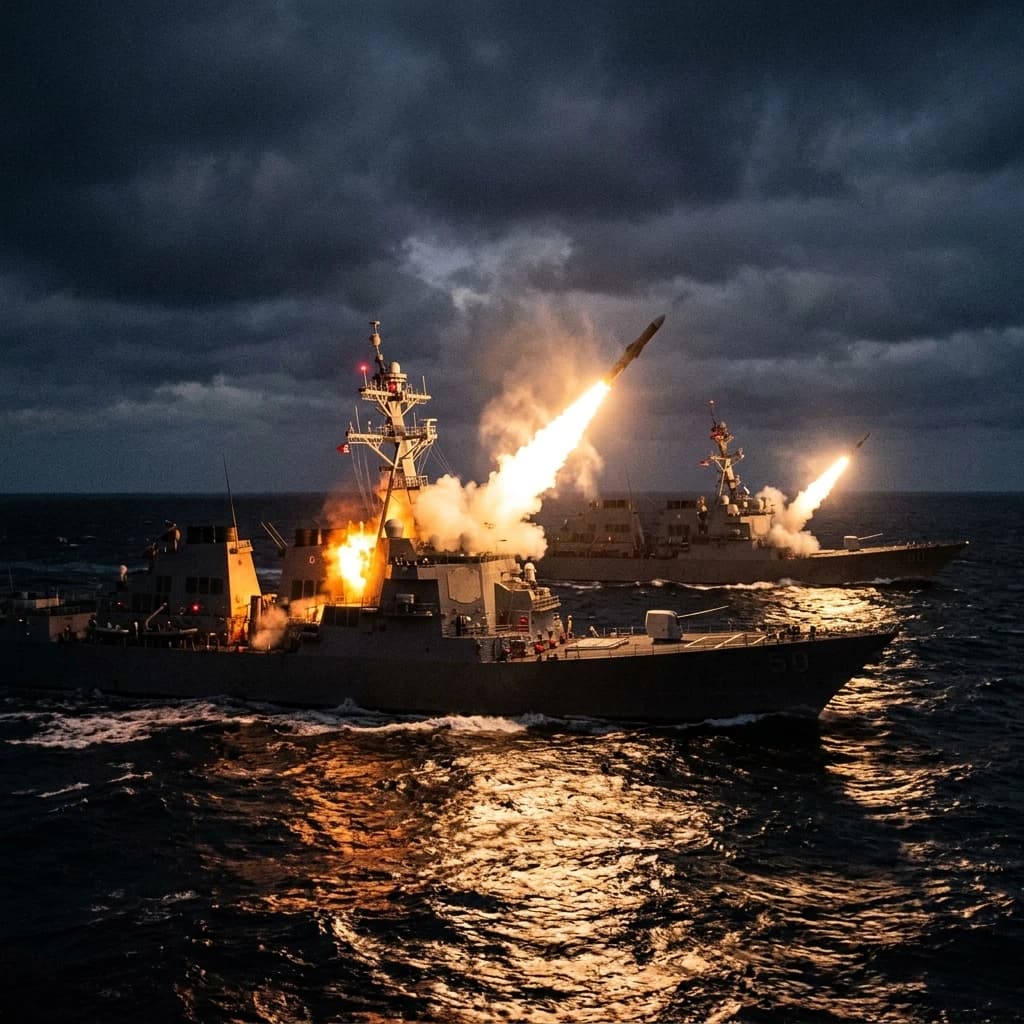
Breaking: US Launches Massive Strikes on 80 Iran Sites; Tehran Retaliates Against US Bases in Bahrain and Kuwait
Breaking: US Launches Massive Strikes on 80 Iran Sites; Tehran Retaliates Against US Bases in Bahrain and Kuwait Last updated: 2026-07-08 17:20 IST On July 8, 2026, the United States Central Command (…