Prebiotic Nanozymes, Under-16 Social Media Bans, and Phase-II Ballistic Defense Shields: The Mid-June 2026 Update
Prebiotic Nanozymes, Under-16 Social Media Bans, and Phase-II Ballistic Defense Shields: The Mid-June 2026 Update
As of mid-June 2026, the global landscape is witnessing a profound intersection of prebiotic chemistry, sovereign defense networks, and digital safety frameworks. Rather than evolving in isolation, the fundamental theories explaining how life originated on Earth are being paired with advanced autonomous discovery systems. At the same time, the geopolitical urgency driving new multi-layered missile defense shields is reflected in national efforts to secure digital borders and regulate the virtual spaces occupied by younger generations. Together, these breakthroughs define a new period of sovereign control, security, and advanced automation.
Here is a synthesized analysis of the major breakthroughs defining the global landscape as of June 15, 2026.
1. Prebiotic Catalysts and Autonomous R&D: The Nanozymes Hypothesis and Self-Driving Labs
In chemical synthesis and the study of biogenesis, researchers are bridging the gap between lifeless organic precursors and biological systems, while digital innovators scale the automation of laboratory experiments. The search for the origin of life has led to unified structural models, even as agentic systems transform the rate of physical materials discovery.
Key Biochemical and R&D Developments:
- The Nanozymes Hypothesis for the Origin of Life: Led by Professor Yongdong Jin at Shenzhen University, the "Nanozymes Hypothesis" has emerged as a groundbreaking framework to unify existing theories on the origin of life. The theory posits that natural mineral nanozymes (MN-zymes)—inorganic mineral nanoparticles with enzyme-like catalytic properties—acted as the essential bridges that facilitated the transition from inert chemicals to biological systems. Under the prebiotic conditions of early Earth, including intense UV radiation, volcanic activity, and thermal gradients, these particles catalyzed the synthesis and concentration of amino acids, nucleotides, and lipids. By providing five critical functions—catalysis, confinement concentration, UV protection, stereoselectivity, and molecular cooperation—MN-zymes present a mechanism where proteins, DNA, and RNA could co-evolve, resolving long-standing metabolic and replication paradoxes.
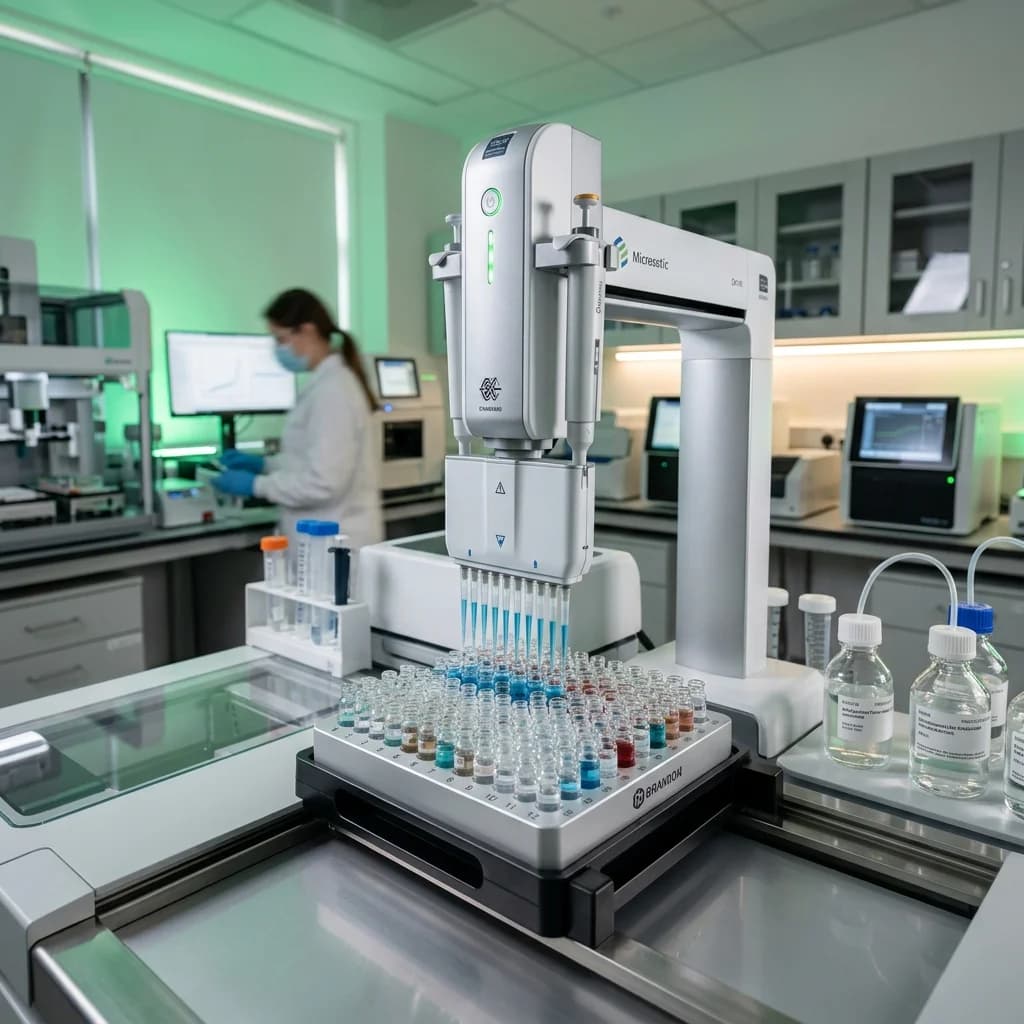
- AI-Powered Self-Driving Labs: Accelerating this frontier is the commercialization of closed-loop research systems. Named as a World Economic Forum 2026 Technology Pioneer, Switzerland-based Atinary has deployed its agentic AI and robotics platform to automate experimental workflows in chemistry and pharmaceutical design. By integrating machine learning algorithms with automated robotic synthesizers, Atinary's platform can autonomously formulate hypotheses, execute experiments, analyze molecular yields, and optimize reaction pathways in real time. This "self-driving lab" paradigm compresses research timelines from years to days, providing a powerful digital engine to scan mineral catalysts, optimize synthetic routes, and accelerate the development of next-generation green fuels and targeted therapeutics.
2. Sovereign Defenses and Geopolitical Security: Phase-II BMD and Exo-Atmospheric Interceptions
In international relations and defensive aerospace, the escalation of global conflicts has catalyzed the rapid deployment of next-generation missile defense shields and maritime strike capabilities.
Key Strategic and Defensive Developments:
- India's Phase-II Ballistic Missile Defence Success: On June 10 and 11, 2026, India's Defence Research and Development Organisation (DRDO) successfully completed Phase-II of its Ballistic Missile Defence (BMD) programme. The agency conducted three consecutive flight trials of its multi-layered interception system, demonstrating the capability to neutralize incoming Intercontinental Ballistic Missile (ICBM) class targets in both exo-atmospheric (space) and endo-atmospheric (low altitude) regimes. Utilizing high-altitude interceptor missiles guided by advanced long-range tracking radars, the trials confirm India's entry into an elite group of nations possessing operational hit-to-kill capabilities against strategic threats. Additionally, the DRDO completed the maiden flight test of the Naval Anti-Ship Missile-Medium Range (NASM-MR), significantly strengthening Indian maritime strike capabilities and securing crucial shipping routes.
- Sovereign Strategic Security at the G7 Summit: These defense milestones coincide with the start of the 52nd G7 Summit in Évian-les-Bains, France (June 15–17, 2026). With geopolitical tensions rising following heavy Russian strikes on Kyiv that damaged the historic Kyiv Pechersk Lavra monastery, G7 leaders are prioritizing maritime security, strategic deterrents, and critical infrastructure protection. The success of multi-layered defensive shields like Phase-II BMD demonstrates a global shift where sovereign security is increasingly dependent on real-time radar telemetry, automated fire-control networks, and high-altitude kinetic interception.
3. Digital Governance and Edge Compute: The Under-16 Social Ban and Orbital AI Ecosystems
As governments move to establish strict regulatory boundaries over the domestic digital environment, the physical infrastructure of computation is expanding beyond terrestrial limits to the orbital edge.
Key Governance and Computational Developments:
- The UK's Under-16 Social Media Ban: Ahead of his departure for the G7 Summit, UK Prime Minister Sir Keir Starmer announced that the UK will implement a comprehensive ban on social media access for children under the age of 16. Labeled an "Australia-plus" model, the policy aims to safeguard youth from cyberbullying, online harassment, and addictive algorithms. While the final platform registry is being determined, the ban is slated to cover major platforms including TikTok, Instagram, Facebook, X, Snapchat, Reddit, Threads, and Twitch, alongside strict new regulations blocking direct messaging between children and strangers in gaming networks. The announcement follows a public consultation involving over 116,000 parents and educators, signaling a major regulatory clash with US-based tech conglomerates and setting a precedent for global digital safety legislation.
- Orbital AI Infrastructure and Space Edge Compute: In contrast to terrestrial restrictions, the sky-high computing frontier is accelerating with the deployment of high-performance AI modules directly into orbit. Driven by the need to handle petabyte-scale telemetry data from mega-constellations, SpaceX and major aerospace institutions are preparing to test orbital AI servers equipped with radiation-hardened Nvidia chips. Rather than relying on bandwidth-constrained, high-latency ground links, these orbital edge computing platforms process Earth observation imagery, manage collision avoidance, and optimize satellite navigation locally in space. Backed by new verification protocols like The Aerospace Corporation's "Trusted AI Framework," space computing is shifting from a hardware-only model to an active, intelligent network capable of autonomous space operations.
Conclusion: The Cyber-Physical and Sovereign Feedback Loop
The events of mid-June 2026 demonstrate that technological progress, digital safety, and national sovereignty have merged into a single, integrated feedback loop. The development of self-driving labs shows how AI-driven automation can decipher complex, natural chemical processes, including the prebiotic reactions described by the Nanozymes Hypothesis. In turn, these advanced materials and pharmaceutical insights are protected by sovereign defense networks, such as India's Phase-II BMD, which utilize high-altitude interception to secure regional and global stability. Finally, as governments like the UK enforce strict digital boundaries to protect human capital, the infrastructure of compute is rising to the orbital edge, utilizing space-based AI to bypass terrestrial bottlenecks. The future is no longer a collection of isolated discoveries, but a highly coordinated, sovereign cyber-physical loop.
Enjoyed this post?
Get our weekly digest delivered free.
Share this post:
📌 Disclosure: This post may contain affiliate links. If you make a purchase through our links, we may earn a commission at no extra cost to you. We only recommend products we believe in. See our Affiliate Disclosure.
Related Posts

U.S. Launches Major Night Strikes on 90 Targets in Iran as Ceasefire Declared Over
Breaking: U.S. Launches Major Night Strikes on 90 Targets in Iran as Ceasefire Declared Over Last updated: 2026-07-09 11:15 IST The United States military has launched a massive wave of airstrikes tar…

U.S.-Iran Ceasefire Collapses Amid Persian Gulf Military Strikes
Breaking: U.S.-Iran Ceasefire Collapses Amid Persian Gulf Military Strikes Last updated: 2026-07-08 22:30 IST The fragile ceasefire between the United States and Iran has collapsed after a series of m…
Breaking: US Launches Massive Strikes on 80 Iran Sites; Tehran Retaliates Against US Bases in Bahrain and Kuwait
Breaking: US Launches Massive Strikes on 80 Iran Sites; Tehran Retaliates Against US Bases in Bahrain and Kuwait Last updated: 2026-07-08 17:20 IST On July 8, 2026, the United States Central Command (…