The Convergent Horizon: Interpretable Materials AI, Solid-State Road Testing, and the $45B Space Economy
The Convergent Horizon: Interpretable Materials AI, Solid-State Road Testing, and the $45B Space Economy
As of mid-June 2026, the boundaries of technological progress are being redrawn at the intersection of international policy, material science, and high-performance computing. Rather than developing in isolation, the systems driving the next decade of human capability—from autonomous, localized AI agents to deep-space launch frameworks and next-generation solid-state chemistry—are merging. Milestones over the past several days highlight this accelerating feedback loop, outlining a future where trusted computation directly shapes physical infrastructure.
Here is a synthesized analysis of the major breakthroughs defining the global tech landscape as of June 15, 2026.
1. Trust and Interpretation: Local Silicon and "White-Box" Materials AI
The software paradigm of 2026 has settled firmly into Agentic and Trusted AI. As autonomous models take over multi-turn programming, code execution, and material design, the priority has shifted from raw scale to explainability and local hardware sovereignty.
Key Developments in AI and Local Compute:
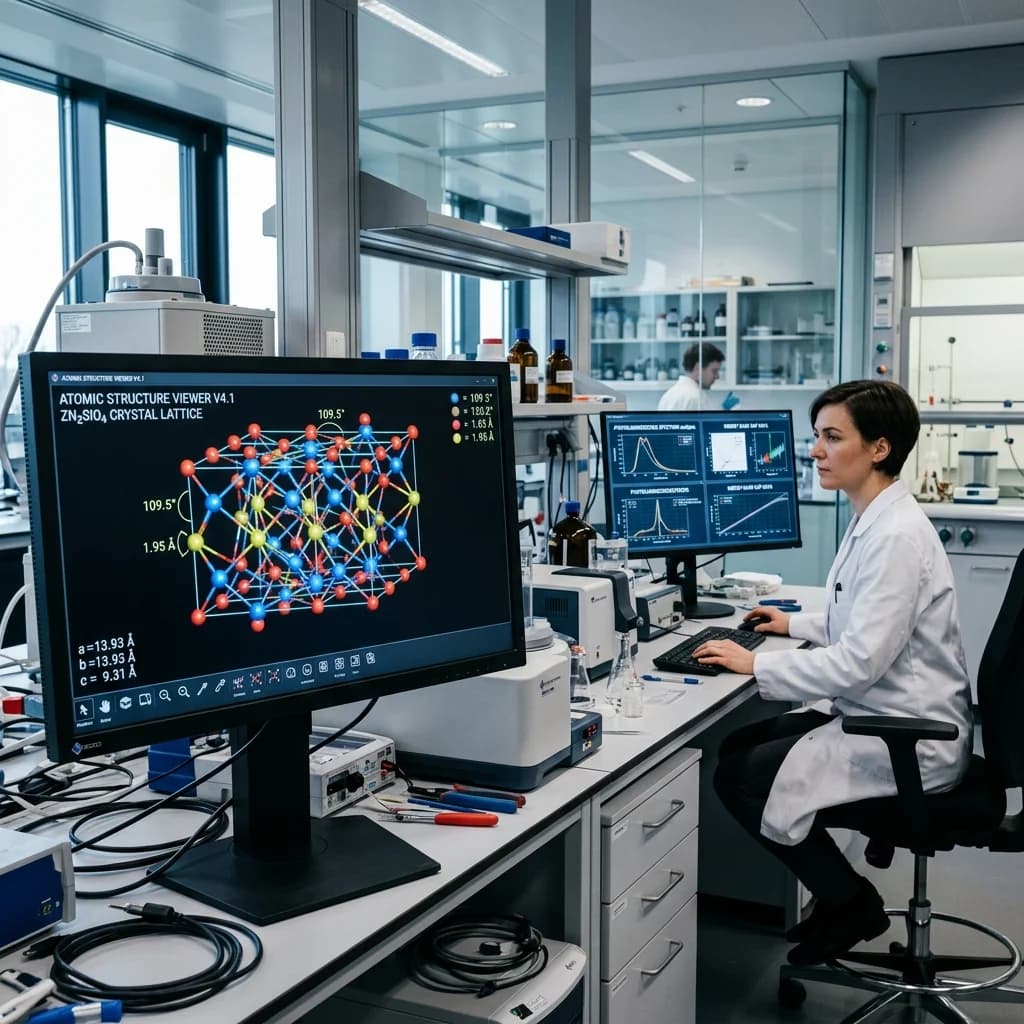
- Interpretable Materials AI: In a study published on June 15, researchers at the Institute of Science Tokyo unveiled a machine learning method capable of deciphering the atomic structure and optical spectra of new materials. By designing a model that translates "black-box" neural networks into interpretable structure-property relationships, the team has provided a tool to dramatically accelerate the discovery of next-generation semiconductors and solar materials.
- The India-France Innovation Roadmap 2030: Inaugurated by Prime Minister Narendra Modi and French President Emmanuel Macron at the "Bharat Innovates 2026" summit in Nice, this bilateral framework places a heavy emphasis on "Trusted AI". The initiative focuses on building transparent, ethical AI systems while bridging startup ecosystems in Kanpur, Nice, and Paris.
- The "Agent Computer" Hardware Wave: Powering these trusted workflows is local silicon. With AMD's Ryzen AI Max PRO 400 Series ("Gorgon Halo") workstation processors preparing to ship, developers are gearing up to run models up to 300 billion parameters locally. Supported by up to 192GB of unified LPDDR5X memory, these local systems eliminate the data leakage and network latency of cloud-dependent agents.
2. Launchpads of Scale: The $45 Billion Space Corridor and the SPCX Debut
The space economy is transitioning from an era of exploratory milestones to a mature commercial ecosystem integrated with global capital markets.
Orbital and Economic Milestones:
- India’s Projected $45B Space Economy: Highlighting the success of recent policy deregulation, Union Minister Dr. Jitendra Singh announced on June 14 that India's space economy is on track to grow from $9 billion to $40–45 billion over the next decade. This scaling is driven by the rapid onboarding of private launch startups and critical preparations for ISRO's uncrewed Gaganyaan-1 (G1) test flight.
- The Historic SpaceX SPCX IPO: On June 12, SpaceX officially listed on the Nasdaq (ticker: SPCX) at an initial price of $135.00. By the end of its first trading session, the company’s valuation surged to approximately $2 trillion, establishing SpaceX as the largest IPO in history and validating the long-term investment case for NewSpace infrastructure.
- Artemis III Crew Mobilization: Following NASA's official crew announcement on June 9, the selected astronauts—Commander Randy Bresnik (NASA), Pilot Luca Parmitano (ESA), and Specialists Andre Douglas and Frank Rubio—have begun active training. The 2027 mission, now structured as a two-week low Earth orbit (LEO) demonstration, will prove docking and transfer maneuvers with SpaceX’s Starship HLS and Blue Origin’s landing platforms.
3. Physical Chemistry: Solid-State Road Testing and Reticular Nanographene
As computing demands and space operations scale, energy storage and chemical synthesis are undergoing material transformations driven by both biological inspiration and advanced reticular chemistry.
Chemical and Energy Frontiers:
- Solid-State Enters the Real World: On June 11, Stellantis and Factorial Energy officially initiated North American road testing of Factorial's FEST® (Factorial Electrolyte System Technology) solid-state cells. Integrated into a Dodge Charger Daytona development vehicle, the 375 Wh/kg cells are undergoing validation for real-world durability, promising rapid 15-to-90% charging in 18 minutes.
- Nanographene Reticular Synthesis: Led by Nobel laureate Omar Yaghi, chemists have achieved a major milestone by synthesizing highly porous 3D structures using nanographene. By engineering a prism-shaped molecule (HBC-LA12), the team created materials with record-breaking surface areas, offering new options for ultra-dense hydrogen storage and clean fuel containment.
- Battery-Free Solar Hydrogen: Complementing storage developments, Osaka Metropolitan University researchers showcased a self-regulating electrolyzer that produces formic acid from solar energy without requiring buffer batteries, stabilizing solar chemistry despite natural fluctuations in sunlight.
- Bio-Optic Inspiration: Highlighting nature’s own material science, research published on June 14 revealed that the chocolate-chip sea star (Protoreaster nodosus) possesses cone-shaped skeletal structures that act as natural optic fibers. These structures channel 70% of ambient light to photoreceptors deep inside its arms, inspiring new light-guiding pathways for solar capture arrays.
Conclusion: The Cyber-Physical Feedback Loop
The events of mid-June 2026 confirm that physical engineering and software development have merged. The launch of interpretable AI models allows scientists to decipher the structural properties of complex materials like Yaghi's nanographene prisms and Factorial's solid-state electrolytes. These materials, in turn, form the batteries and power grids that support local "Agent Computers" like the Ryzen AI Max PRO. Finally, this local compute ecosystem accelerates the trajectory and telemetry modeling required to scale India's space economy to $45 billion and send the Artemis III crew into orbit. The future is no longer built in silos; it is a single, integrated cyber-physical loop.
Enjoyed this post?
Get our weekly digest delivered free.
Share this post:
📌 Disclosure: This post may contain affiliate links. If you make a purchase through our links, we may earn a commission at no extra cost to you. We only recommend products we believe in. See our Affiliate Disclosure.
Related Posts

U.S. Launches Major Night Strikes on 90 Targets in Iran as Ceasefire Declared Over
Breaking: U.S. Launches Major Night Strikes on 90 Targets in Iran as Ceasefire Declared Over Last updated: 2026-07-09 11:15 IST The United States military has launched a massive wave of airstrikes tar…

U.S.-Iran Ceasefire Collapses Amid Persian Gulf Military Strikes
Breaking: U.S.-Iran Ceasefire Collapses Amid Persian Gulf Military Strikes Last updated: 2026-07-08 22:30 IST The fragile ceasefire between the United States and Iran has collapsed after a series of m…
Breaking: US Launches Massive Strikes on 80 Iran Sites; Tehran Retaliates Against US Bases in Bahrain and Kuwait
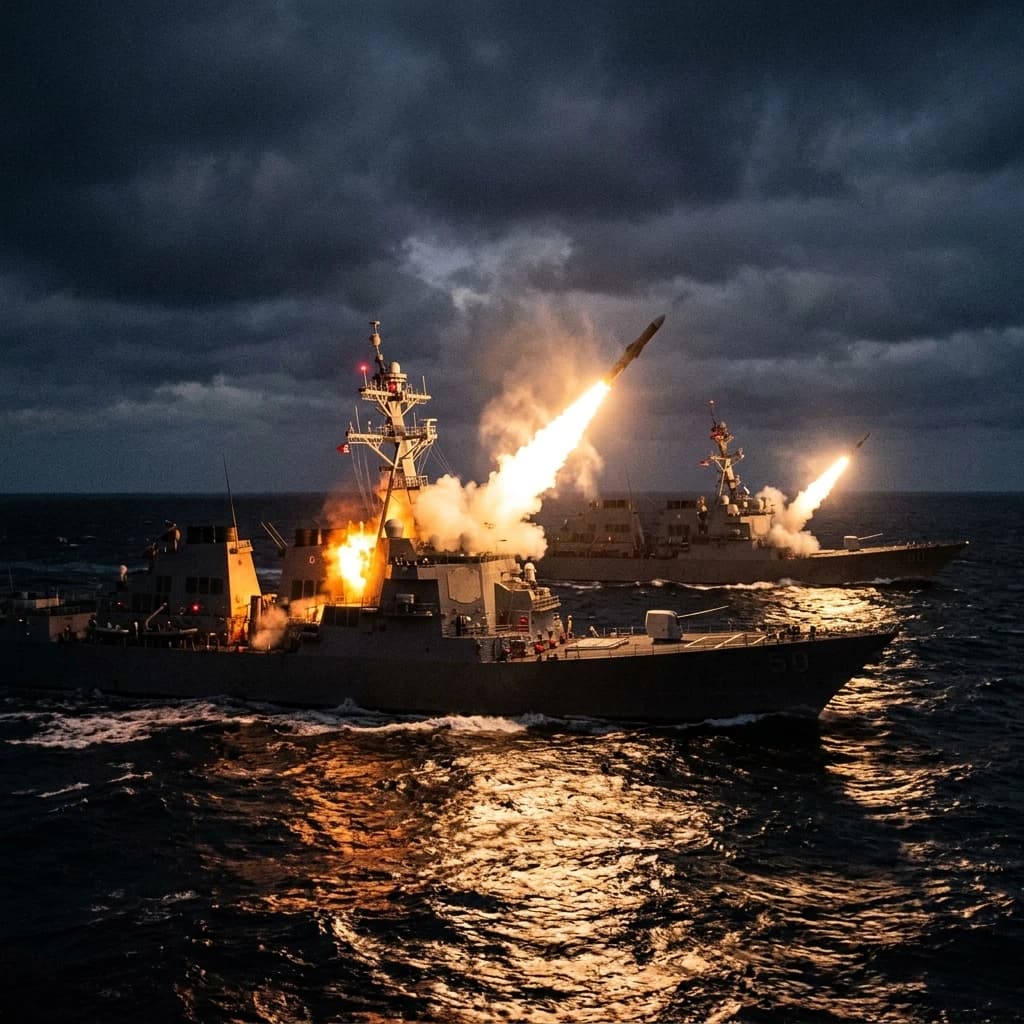
Breaking: US Launches Massive Strikes on 80 Iran Sites; Tehran Retaliates Against US Bases in Bahrain and Kuwait Last updated: 2026-07-08 17:20 IST On July 8, 2026, the United States Central Command (…