Breaking: US Launches Airstrikes in Iran, Reinstates Strait of Hormuz Blockade
Breaking: US Launches Airstrikes in Iran, Reinstates Strait of Hormuz Blockade
Last updated: 2026-07-14 12:05 IST
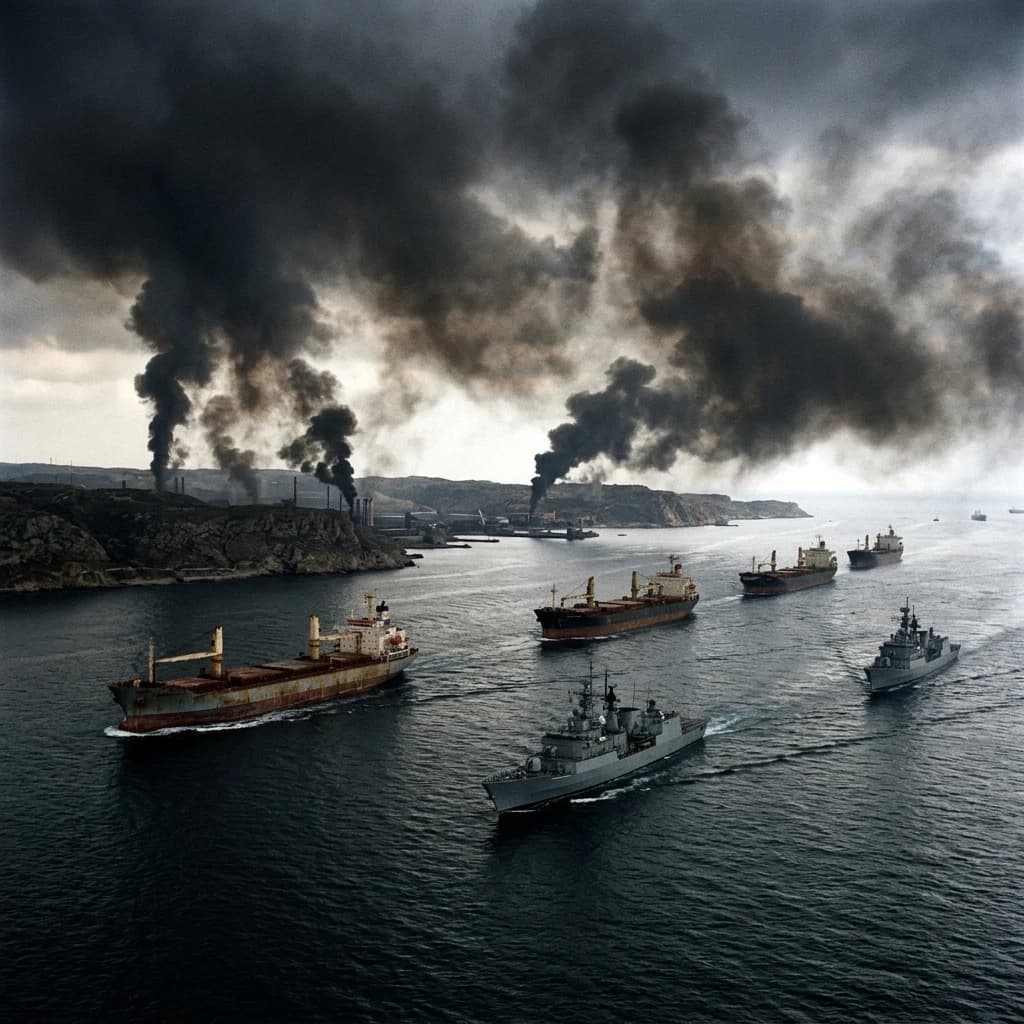
The United States military has launched its third consecutive night of airstrikes against targets in Iran, following President Donald Trump’s announcement that the U.S. is reinstating a naval blockade on Iranian ports. The escalation has drawn swift Iranian retaliation in West Asia, including cruise missile strikes on oil tankers in the Strait of Hormuz and attacks on U.S. bases in Jordan and Bahrain.
What Happened
On the night of July 13 and early hours of July 14, 2026, U.S. forces conducted a series of precision airstrikes targeting military assets within Iran. These strikes mark the third night of consecutive operations aimed at degrading Iran's capability to threaten international shipping lanes. The escalation comes directly after President Donald Trump announced the reinstatement of a U.S. naval blockade on major Iranian ports, which officially went into effect on July 14, 2026. This revived blockading policy follows a similar operational window conducted from April to June of this year.
In response to the U.S. airstrikes, Iranian forces launched retaliatory attacks across the region. The United Arab Emirates (UAE) reported that two commercial oil tankers transiting the Strait of Hormuz were struck by Iranian cruise missiles, causing severe damage, killing one Indian national crew member, and injuring several others. Furthermore, reports indicate that U.S. military installations in Jordan and Bahrain have come under fire from Iranian and proxy forces. President Trump has formally notified Congress of the resumption of hostilities under a War Powers notification, starting a new 60-day window for executive military action.
A central point of contention remains the status of the Strait of Hormuz. In a major policy shift, President Trump declared that the U.S. would act as the "guardian" of the strategic waterway. He announced that the U.S. plans to impose a 20% cargo shipment transit fee on all vessels moving through the strait, asserting that the tariff will reimburse the U.S. military for providing regional security and ensuring freedom of navigation.
Why It Matters
The resumption of military hostilities effectively ends the fragile ceasefire that was negotiated in June 2026. By reinstating the blockade and conducting direct airstrikes, the U.S. has significantly increased the risk of a full-scale regional conflict. The unilateral imposition of a 20% transit fee on commercial shipping in the Strait of Hormuz—through which approximately one-fifth of the world's petroleum passes—directly challenges established maritime law and the principle of free transit passage under the United Nations Convention on the Law of the Sea (UNCLOS).
Global energy markets have responded with immediate volatility, as oil prices surged following reports of the cruise missile strikes on tankers. Shipping companies are facing soaring insurance premiums and potential disruptions to major energy routes, threatening to reignite global inflationary pressures. The death of an Indian national also introduces complex diplomatic dynamics for neutral nations like India, which has historical ties to the region and heavily relies on Middle Eastern oil imports.
Key Figures & Reactions
- President Donald Trump: Declared the previous June Memorandum of Understanding (MoU) with Iran was a "test" that Tehran failed. He asserted that a deal with Tehran is still "possible," but warned of further military action against sites like "Pickaxe Mountain," which the U.S. suspects houses a concealed Iranian nuclear enrichment facility.
- Iranian Ministry of Foreign Affairs: Condemned the airstrikes as an act of aggression and a violation of sovereignty, warning that Iran will continue to defend its maritime territory and interests against foreign blockades.
- United Arab Emirates (UAE): Confirmed the cruise missile attacks on two tankers, expressing grave concern over the escalation of threats to international maritime safety and calling for immediate global de-escalation.
- Shipping & Energy Analysts: Warned that the proposed 20% transit fee could disrupt global supply chains and lead to a prolonged blockage or rerouting of commercial vessels around the Cape of Good Hope.
What to Watch Next
- UN Security Council Meeting: Whether international bodies or allies will convene emergency sessions to address the legality of the U.S. blockade and transit fee proposal.
- Military Action at Suspected Nuclear Sites: Developments regarding U.S. threats to target Iran's "Pickaxe Mountain" facility.
- Global Shipping Response: How commercial fleets and international partners react to the proposed 20% security fee and whether they will comply or seek alternative routes.
This is a developing story. Details may be updated as new information emerges.
Enjoyed this post?
Get our weekly digest delivered free.
Share this post:
📌 Disclosure: This post may contain affiliate links. If you make a purchase through our links, we may earn a commission at no extra cost to you. We only recommend products we believe in. See our Affiliate Disclosure.
Related Posts
France-Ukraine Cruise Missile Pact, NASA's $600M Moon Lander Expansion, and Big Tech's AI Carbon Crisis
France-Ukraine Cruise Missile Pact, NASA's $600M Moon Lander Expansion, and Big Tech's AI Carbon Crisis A series of high-stakes developments are reshaping the global landscape, spanning military allia…
Breaking: Bangkok Pub Fire Kills at Least 27 and Injures 63
Breaking: Bangkok Pub Fire Kills at Least 27 and Injures 63 Last updated: 2026-07-13 10:30 IST A massive and fast-moving fire engulfed the Rong Beer Na Lat Phrao pub in the Chatuchak district of Bangk…

Syrian Parliament Convenes, Europe Heatwave Claims 440 Daily, and Vietnam's $200B Infrastructure Push
Syrian Parliament Convenes, Europe Heatwave Claims 440 Daily, and Vietnam's $200B Infrastructure Push Global landscapes are shifting rapidly this week across political, environmental, and economic sph…