France-Ukraine Cruise Missile Pact, NASA's $600M Moon Lander Expansion, and Big Tech's AI Carbon Crisis
France-Ukraine Cruise Missile Pact, NASA's $600M Moon Lander Expansion, and Big Tech's AI Carbon Crisis
A series of high-stakes developments are reshaping the global landscape, spanning military alliances, lunar exploration, and the environmental cost of the digital age. As Europe shifts toward localized high-tech defense production, the United States is accelerating its commercial partnerships to return to the Moon. Meanwhile, the rapid expansion of artificial intelligence is creating an unprecedented energy strain, putting corporate climate pledges to the test.
🌍 France and Ukraine Forge Cruise Missile Production Pact
French President Emmanuel Macron has announced a landmark defense cooperation agreement with Ukraine, marking a strategic pivot from direct military donations to domestic high-tech defense production. Under this new bilateral accord, Ukraine will begin local manufacturing of French-designed cruise missiles, precision-guided air-dropped munitions, and air defense interceptors. The partnership is reinforced by significant Ukrainian acquisitions, including a new order of French Rafale fighter jets and Franco-Italian SAMP/T air defense systems, establishing a robust long-term aerospace framework between Kyiv and its European allies.
This agreement represents a critical evolution in Western military support. Rather than relying solely on the transfer of existing stockpiles, which have faced logistical bottlenecks and political hurdles, the focus is now on transferring technology and licensing to Ukrainian factories. By establishing local production lines, Ukraine gains the ability to produce advanced precision weaponry—such as variants of the SCALP-EG cruise missile—closer to the front lines, reducing supply chain vulnerabilities and enhancing operational responsiveness.
Globally, this pact underscores a broader trend toward localized defense manufacturing in conflict zones. It reflects a growing recognition among European nations that long-term deterrence requires sustainable, industrial-scale partnerships rather than ad-hoc aid packages. The integration of French aviation and missile technologies into Ukraine's defense apparatus not only boosts Kyiv's strategic capabilities but also represents a deeper, more permanent integration into Western defense supply chains and technological standards.
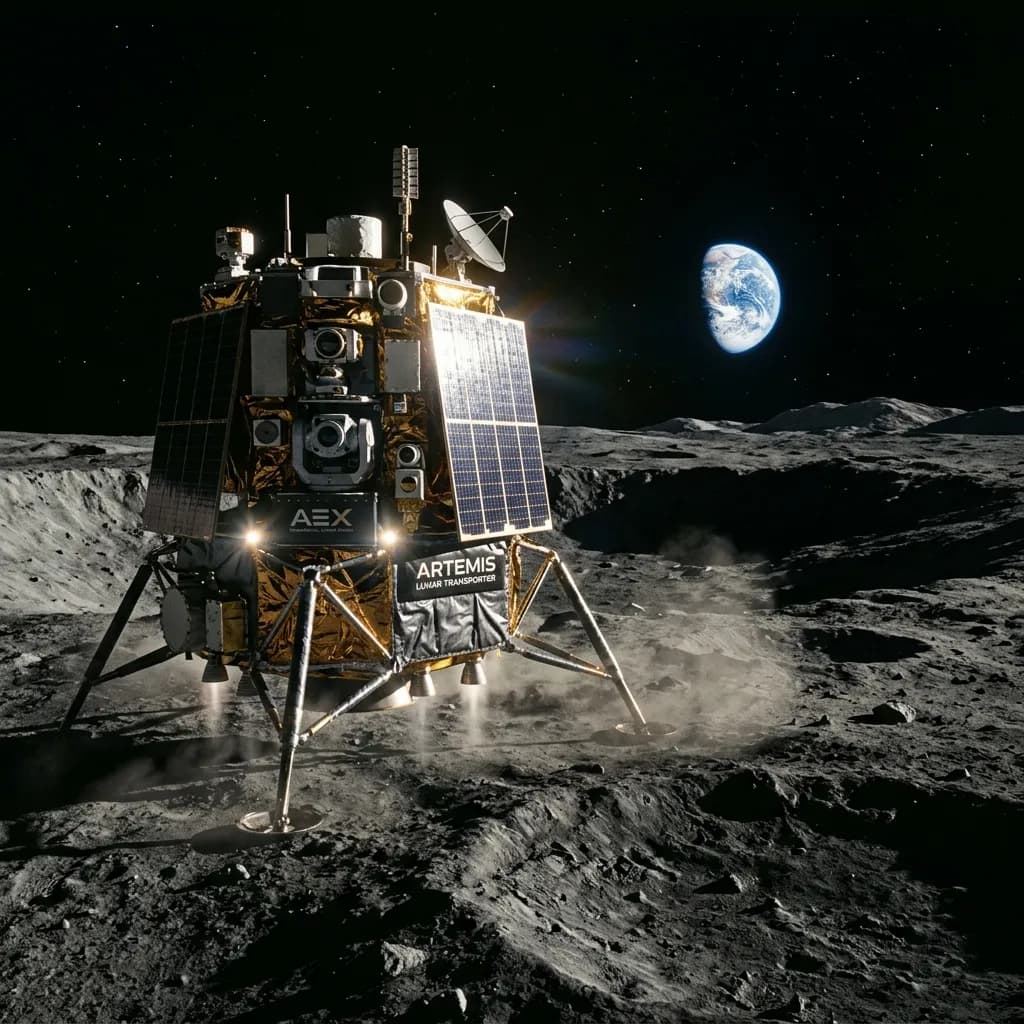
🚀 NASA Expands Artemis Push with $600M Commercial Moon Lander Pledges
NASA has awarded nearly $600 million in new contracts to three prominent commercial space firms—Astrobotic, Firefly Aerospace, and Intuitive Machines—to execute four new robotic Moon landing missions scheduled for late 2028. Operating under the Commercial Lunar Payload Services (CLPS) program, these missions are designed to deliver critical scientific instruments, analyze environmental hazards, and scout resources at the lunar south pole. The initiative represents a vital step in laying the groundwork for the agency's Artemis program, which aims to establish a sustainable human presence on the Moon.
The selected companies will carry out distinct operational profiles. Astrobotic and Firefly Aerospace will focus on delivering heavy payloads, including drills and spectrometers to map volatile organic compounds and water ice. Intuitive Machines will deploy mobile scouts and communications relays to ensure robust data transfer from permanently shadowed craters. By leveraging commercial competition, NASA aims to reduce launching and landing costs while fostering a self-sustaining cislunar economy.
The scientific yield from these missions is expected to be substantial. Instruments will measure lunar dust behavior, which poses a severe abrasive hazard to spacesuits and machinery, and record radiation levels to inform shelter designs for future astronauts. Strategically, these robotic precursors are essential for identifying the precise locations of water ice deposits, which could eventually be harvested to produce oxygen, drinking water, and rocket propellant, thereby reducing the mass that must be launched from Earth.
⚡ The AI Energy Crisis: Big Tech Confronts Rising Carbon Footprints
A coalition of environmental watchdog groups and regulatory agencies has intensified scrutiny on the world’s leading technology companies, including Amazon, Google, and Microsoft, following reports of a sharp spike in their global carbon emissions between 2024 and 2025. This environmental backslide is directly attributed to the massive power demands and water-cooling requirements of hyperscale data centers. The rapid expansion of these facilities, driven by the global race to deploy large language models (LLMs) and generative AI applications, is threatening to achieve net-zero emissions by 2030.
The training and inference of advanced artificial intelligence models are highly resource-intensive processes. Hyperscale data centers operate continuously, drawing immense electrical loads that have begun to strain local power grids in regions like Northern Virginia, Ireland, and Singapore. To meet this immediate demand, utilities have in some cases delayed the retirement of coal and natural gas plants, directly conflicting with tech companies' clean energy targets. Furthermore, the evaporative water-cooling systems required to prevent processor overheating are causing local water usage concerns in arid areas.
This crisis is forcing a fundamental re-evaluation of how the technology sector sources energy. In response, tech giants are increasingly investing in next-generation power agreements, including small modular nuclear reactors (SMRs), advanced geothermal systems, and large-scale battery storage. However, because these technologies are still in their infancy or face regulatory hurdles, the short-term reality remains highly dependent on fossil fuels. The situation highlights a growing tension between the rapid pace of technological innovation and the structural challenges of transitioning global energy grids to renewable sources.
📌 The Bottom Line
- military-tech: France and Ukraine sign a major defense pact for domestic cruise missile production and Rafale jet acquisitions, shifting support from direct donations to localized industrial partnership.
- space-exploration: NASA commits $600 million to Astrobotic, Firefly, and Intuitive Machines for four robotic lunar landings in 2028, accelerating resource scouting at the Moon's south pole.
- climate-and-ai: The energy demands of hyperscale data centers driving the AI boom have caused a surge in carbon emissions for Amazon, Google, and Microsoft, threatening net-zero pledges.
Enjoyed this post?
Get our weekly digest delivered free.
Share this post:
📌 Disclosure: This post may contain affiliate links. If you make a purchase through our links, we may earn a commission at no extra cost to you. We only recommend products we believe in. See our Affiliate Disclosure.
Related Posts

Breaking: US Launches Airstrikes in Iran, Reinstates Strait of Hormuz Blockade
Breaking: US Launches Airstrikes in Iran, Reinstates Strait of Hormuz Blockade Last updated: 2026-07-14 12:05 IST The United States military has launched its third consecutive night of airstrikes agai…

Breaking: Bangkok Pub Fire Kills at Least 27 and Injures 63
Breaking: Bangkok Pub Fire Kills at Least 27 and Injures 63 Last updated: 2026-07-13 10:30 IST A massive and fast-moving fire engulfed the Rong Beer Na Lat Phrao pub in the Chatuchak district of Bangk…

Syrian Parliament Convenes, Europe Heatwave Claims 440 Daily, and Vietnam's $200B Infrastructure Push
Syrian Parliament Convenes, Europe Heatwave Claims 440 Daily, and Vietnam's $200B Infrastructure Push Global landscapes are shifting rapidly this week across political, environmental, and economic sph…