US Launches Sixth Night of Airstrikes on Iran as Strait of Hormuz Crisis Deepens
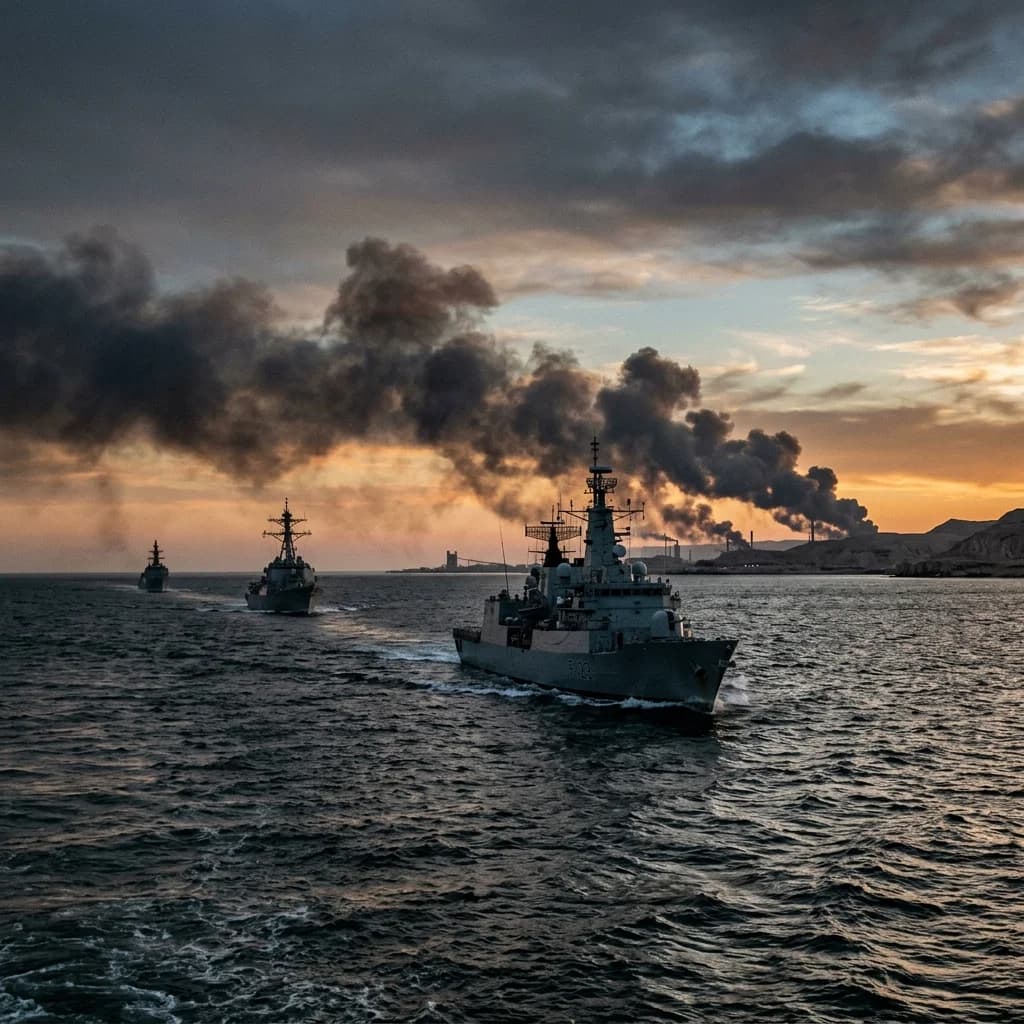
Breaking: US Launches Sixth Night of Airstrikes on Iran as Strait of Hormuz Crisis Deepens
Last updated: 2026-07-17 16:20 IST
The United States has expanded its military campaign against Iran, launching its sixth consecutive night of intensified airstrikes targeting vital infrastructure in southern Iran. This comes as the strategic Strait of Hormuz remains effectively closed to commercial shipping, causing severe disruptions to global maritime commerce and oil transit. The escalating conflict has drawn reactions from world leaders, including Indian Prime Minister Narendra Modi, who described the critical maritime channel as a constant "battlefield."
What Happened
The conflict, which originally ignited in February 2026 and saw a brief period of de-escalation, has dramatically intensified following the collapse of a temporary interim ceasefire in early July. U.S. Central Command (CENTCOM) confirmed that daily aerial and naval strikes have targeted Iranian coastal surveillance systems, air defense facilities, and crucial logistics sites. The latest wave of bombardments has focused heavily on infrastructure, including bridges and seaport facilities in key southern Iranian hubs such as Bandar Abbas, Bandar-e Khamir, and Chabahar.
In response to the U.S. airstrikes, Iranian forces have deployed drone and missile attacks targeting U.S. military bases and allied regional hubs across Kuwait, Bahrain, Qatar, and Jordan. Meanwhile, a U.S. naval blockade in the Gulf of Oman remains in place. U.S. naval forces are actively boarding and redirecting merchant vessels, reducing shipping transits through the Strait of Hormuz to a small fraction of their pre-war volume.
Earlier diplomatic attempts to resolve the stand-off, including a reported memorandum of understanding in mid-June, have dissolved. The maritime chokepoint, which typically handles over a fifth of the world's daily petroleum consumption, is now the center of active combat operations, making commercial navigation virtually impossible.
Why It Matters
The closure of the Strait of Hormuz represents an unprecedented disruption to the global economy. As one of the world's most critical maritime chokepoints, the blockade threatens global energy security, causing significant oil price volatility and stoking fears of widespread inflation. The International Energy Agency (IEA) has issued multiple warnings regarding the vulnerability of global energy supplies, particularly for nations heavily reliant on Middle Eastern imports.
For developing economies like India, the crisis poses a direct threat to the import of essential commodities such as petrol, diesel, liquefied petroleum gas (LPG), and chemical fertilizers. While India has mitigated some impact through domestic energy transitions, prolonged hostilities risk severe macroeconomic strain across the Indo-Pacific region and the wider global market.
Key Figures & Reactions
- Indian Prime Minister Narendra Modi: Speaking at a public event in Haryana, Prime Minister Modi characterized the Strait of Hormuz as a "constant battlefield" over the last few months. Modi highlighted the strategic foresight of electrifying 99% of India’s railway network, noting that a diesel-reliant system would have been crippled by the resulting energy crisis.
- U.S. Central Command (CENTCOM): In official statements, CENTCOM defended the infrastructure strikes as necessary actions to degrade Iran's offensive maritime capabilities and restore freedom of navigation, while warning that any retaliatory strikes on allied hubs would meet swift military responses.
- International Energy Agency (IEA): The agency reiterated concerns over the prolonged maritime closure, calling on oil-consuming nations to coordinate emergency reserves and accelerate energy diversification strategies to cushion the economic impact.
What to Watch Next
- U.S. Navy Escorts and Convoy Operations: Whether the U.S. and its international allies will initiate armed convoy operations to escort commercial tankers through the Gulf of Oman and Strait of Hormuz.
- Global Crude Oil Price Shocks: The movement of Brent and WTI crude benchmarks as market inventories draw down and alternative shipping routes face capacity constraints.
- Diplomatic Interventions: Potential mediation efforts by neutral third parties, such as Switzerland or regional partners, to establish localized humanitarian corridors or negotiate a fresh ceasefire.
This is a developing story. Details may be updated as new information emerges.
📬 Stay Updated
Get breaking news and in-depth analysis delivered to your inbox. Subscribe to our free newsletter →
Disclosure: This post contains affiliate links. If you purchase through our links, we earn a small commission at no extra cost to you. We only recommend products we believe in.
Enjoyed this post?
Get our weekly digest delivered free.
Share this post:
Knowelth is reader-supported. We may earn a commission from links in this article at no extra cost to you. Read our disclosure.
Related Posts

China's AI Governance Vision, US Proposes 100% Tariff on Russian Oil Buyers, and a Historic Species Discovery in the Western Ghats
China's AI Governance Vision, US Proposes 100% Tariff on Russian Oil Buyers, and a Historic Species Discovery in the Western Ghats The global geopolitical, technological, and environmental landscape i…

Breaking: U.S. Strike Near Ahvaz Hospital Forces Evacuation of 211 Pediatric Cancer Patients
Breaking: U.S. Strike Near Ahvaz Hospital Forces Evacuation of 211 Pediatric Cancer Patients Last updated: 2026-07-16 23:45 IST An emergency evacuation of 211 pediatric cancer patients was carried out…

Breaking: US Reinstates Naval Blockade on Iran, Launches Military Strikes in Strait of Hormuz
Breaking: US Reinstates Naval Blockade on Iran, Launches Military Strikes in Strait of Hormuz Last updated: 2026-07-15 13:10 IST The United States military has reinstated a comprehensive naval blockad…