Light-Controlled Cancer Dormancy, Decoupled Forest Carbon, and Emergent Quantum Time
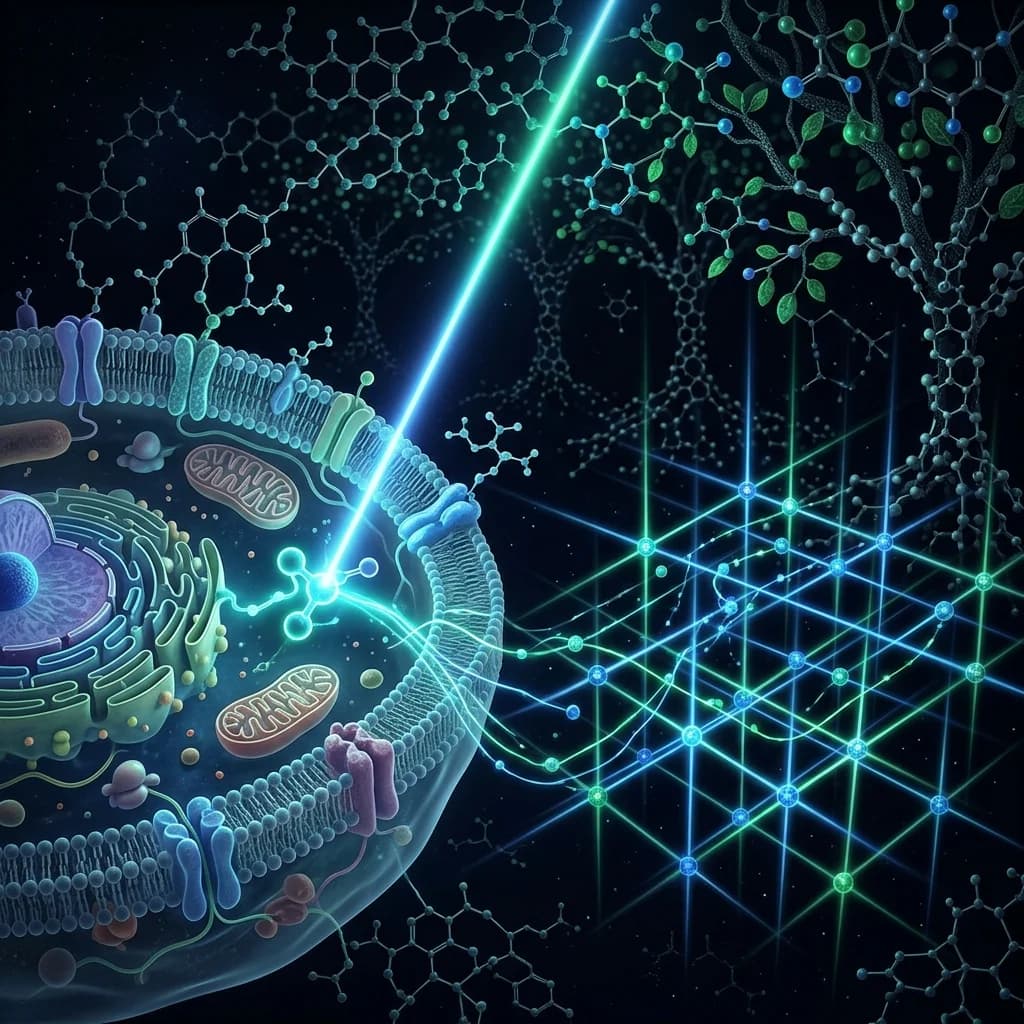
Light-Controlled Cancer Dormancy, Decoupled Forest Carbon, and Emergent Quantum Time
Three papers published in PNAS, Science Advances, and Physical Review Research in July 2026 each challenge a central assumption in their field. ETH Zurich's photoPROTAC switches dormant lung cancer cells back to a dividing state using visible light — the first spatially-controlled method to overcome the GR-driven dormancy mechanism that makes drug-resistant tumour reservoirs invisible to chemotherapy. A Science Advances oak tree study measuring post-wood-growth photosynthesis shows that 26–36% of a tree's annual carbon uptake occurs after wood growth has stopped — carbon that re-enters the atmosphere within months rather than being sequestered for decades, meaning every major climate model is likely overestimating forest carbon storage. And University of Birmingham physicists created a microscopic "mini-universe" from 24,000 ultracold rubidium atoms, demonstrating for the first time experimentally that time can emerge purely from internal quantum entanglement and entropy increase — without any external clock — providing the first empirical support for the Page-Wootters mechanism in quantum gravity.
🔬 Light-Controlled Cancer Dormancy — ETH Zurich's photoPROTAC
The Dormancy Problem in Oncology
What cancer cell dormancy is and why it defeats treatment: Many cancer cells — particularly in lung, breast, and prostate cancers — can enter a dormancy state: a metabolic slowdown where cells stop dividing but remain viable. Dormant cancer cells are the primary source of late relapse (cancer returning years after apparent remission).
| State | Cell division | Drug sensitivity | Clinical consequence |
|---|---|---|---|
| Active (proliferating) | Yes | ✅ High — most chemo targets dividing cells | Detectable; treatable |
| Dormant | No | ❌ Near zero — chemo/radiation can't target quiescent cells | Invisible on scans; survives treatment |
| Reactivated (from dormancy) | Yes | ✅ High — once proliferating again | Detectable; treatable |
Dormancy is triggered by glucocorticoid receptor (GR) activation: when stressed cancer cells are exposed to cortisol (stress hormone), cortisol binds GR → GR enters the nucleus → activates gene expression programme → cell enters dormancy. This is why psychological stress (elevated cortisol) correlates with cancer recurrence risk.
The GR blocking problem — why systemic GR inhibition fails: Glucocorticoid receptors are essential throughout the body:
- Immune regulation: GR activation in immune cells controls inflammatory response — blocking GRs systemically → autoimmune flare-ups
- Adrenal function: GRs mediate cortisol feedback — systemic block → adrenal crisis risk
- Metabolic regulation: GRs regulate glucose homeostasis
Blocking GRs everywhere in the body to wake dormant tumour cells would be toxic. The ETH Zurich team solved this with spatial precision using light.
The photoPROTAC Technology
What a PROTAC is: PROTAC (Proteolysis-Targeting Chimera) is a bifunctional molecule:
- One arm binds the target protein (here: glucocorticoid receptor, GR)
- Other arm recruits an E3 ubiquitin ligase — the cell's protein disposal machinery
- Result: The E3 ligase tags the target protein for proteasomal degradation → protein is destroyed
PROTACs are "event-driven" — one molecule can degrade many copies of the target protein (unlike small molecule inhibitors that require sustained stoichiometric binding).
Adding photocontrol — the photoPROTAC innovation:
| Component | Standard PROTAC | photoPROTAC (ETH Zurich) |
|---|---|---|
| Activation | Always active | Only active when exposed to specific light wavelength |
| Spatial control | None — acts everywhere drug reaches | Only where light is shone |
| Target specificity | Protein-target specific | Protein-target specific + location-specific |
| Off-target tissue risk | Moderate (wherever drug distributes) | Near zero (dark tissues unaffected) |
The molecular switch mechanism: The ETH Zurich photoPROTAC contains an azobenzene photoswitch — a chemical group that can adopt two geometric configurations:
- trans configuration (dark, natural): photoPROTAC is in "off" state — geometry prevents simultaneous binding to GR and E3 ligase
- cis configuration (activated by ~365 nm UV-visible light): photoPROTAC snaps to "on" state — now correctly shaped to bridge GR and E3 → GR degradation proceeds
The cancer dormancy reactivation protocol:
| Step | Action | Result |
|---|---|---|
| 1 | Administer photoPROTAC systemically (IV or oral) | Drug distributes to all tissues including tumour |
| 2 | Apply visible light to tumour location (endoscopic fiber, external UV, or implanted light source) | photoPROTAC activates only at tumour site |
| 3 | GR degraded specifically in tumour cells | Dormant cancer cells lose their dormancy trigger |
| 4 | Dormant cells re-enter cell cycle (start dividing) | Now fully vulnerable to standard chemotherapy |
| 5 | Administer chemotherapy | Targets the newly-reactivated (dividing) former dormant cells |
| 6 | Dark tissues (rest of body) | GR intact — no immune/adrenal side effects |
Published results (PNAS, July 2026):
- In vitro (cell culture): Selective GR degradation in light-exposed lung cancer cells: >85% GR protein reduction within 6 hours of light activation
- Dormancy reversal confirmed: Re-entry into proliferative cell cycle measured by Ki-67 marker expression (+400% vs dark control)
- Chemotherapy sensitivity restored: Light-activated cells showed equivalent drug sensitivity to never-dormant cancer cells
- Off-target (dark) cells: GR levels unchanged; no proliferative effect
🌳 Decoupled Forest Carbon — Why Climate Models Overestimate Tree Sequestration
The Photosynthesis-Wood Growth Assumption
The standard climate model assumption: Carbon cycle models (used in IPCC projections) assume a tight coupling:
More CO₂ → More photosynthesis → More woody biomass → More long-term carbon storage
This assumption underlies forest-based carbon offset markets, reforestation targets in NDCs (Nationally Determined Contributions), and projections of the terrestrial carbon sink.
What the Science Advances study found — the decoupling data:
| Forest type | Post-wood-growth photosynthesis | Carbon fate |
|---|---|---|
| Eastern US oaks | 36% of annual carbon uptake occurs after wood growth ceases mid-summer | Short-lived metabolic use, root respiration, deciduous foliage → CO₂ back to atmosphere within months |
| California oaks | 26% of annual carbon uptake occurs after wood growth ceases mid-summer | Same — not sequestered in wood |
| Both (combined average) | ~31% of annual carbon uptake is not converted to permanent wood biomass | This carbon is not sequestered |
Why trees continue photosynthesising after wood growth stops: Wood growth (xylogenesis) in temperate oaks is controlled by temperature and photoperiod — it stops when temperatures exceed optimal cambial growth thresholds (mid-summer heat stress) or when day length shortens in late summer. But photosynthesis continues as long as:
- Leaves are present and functional
- Light is available
- CO₂ concentration is above the compensation point
So a tree in July heat stress: wood growth = off, photosynthesis = continuing. The captured carbon goes into:
- Non-structural carbohydrates (sugars, starch) stored in wood and bark — short-lived (months to a few years)
- Root respiration and mycorrhizal exudate — decomposed within days to weeks, released as CO₂
- Canopy maintenance and foliage renewal — leaves fall in autumn, decompose, release CO₂ within 1–2 years
Implications for carbon offset market integrity:
| Carbon offset type | Assumption | Problem if decoupling is widespread |
|---|---|---|
| Forest protection offsets | Trees protected → carbon stock maintained | Still valid — preventing deforestation stops existing carbon loss |
| Afforestation offsets | New trees planted → proportional carbon sequestered over time | Overcounted if 26–36% of annual carbon uptake is non-permanent |
| Forest management offsets | Management increases growth → extra carbon | Overcounted proportionally |
Climate modelling implications: The Global Carbon Project models (which feed IPCC AR7 projections) use remote-sensing measurements of photosynthesis (NDVI, GPP from MODIS/VIIRS satellites) as a proxy for carbon sequestration. If 26–36% of photosynthetic carbon is decoupled from wood production, these models systematically overestimate the terrestrial carbon sink by a significant fraction.
As warming intensifies: trees enter wood growth cessation earlier in summer (heat stress) but continue photosynthesising → the decoupling fraction grows → the real sequestration capacity of forests is lower than models project → remaining carbon budget for 1.5°C target is smaller than assumed.
⏳ Emergent Quantum Time — The Page-Wootters Experiment
The Timeless Universe Problem
The Wheeler-DeWitt equation — why time disappears in quantum gravity: When quantum mechanics is applied to gravity (quantum cosmology), the resulting Wheeler-DeWitt equation describes the wavefunction of the entire universe:
Ĥ|Ψ⟩ = 0
The Hamiltonian operator Ĥ applied to the universal wavefunction |Ψ⟩ equals zero. This means the universal wavefunction does not evolve with time — from a purely mathematical standpoint, the universe is static. Time, as we experience it, seems to disappear entirely from the fundamental equations.
The Page-Wootters mechanism (1983) — how time can emerge: Don Page and William Wootters proposed in 1983 that time is not fundamental but relational: it emerges from the entanglement between a "clock" subsystem and the rest of the universe. From the perspective of an observer inside the system:
- The "clock" (an internal reference system) becomes entangled with the rest of the universe
- Correlations between the clock's state and the rest of the universe generate the appearance of time flowing
- No external clock is needed — time is a property of the relationships within the system
The Birmingham experiment — making it real:
| Experimental element | Description |
|---|---|
| Quantum system | 24,000 rubidium-87 atoms cooled to ~5 × 10⁻⁹ K (5 nanokelvins) |
| Isolation | Optical trap — atoms isolated from environmental decoherence |
| System partition | Laser barrier divides atoms into "bright" sector (observed) and "dark" sector (unobserved = "rest of universe") |
| Internal "clock" | Entropy of the bright sector — measured via quantum state tomography |
| Time variable | Entropic time — constructed purely from the degree of internal disorder (entropy) without any external clock |
| Evolution cycle | System transitions from low entropy (ordered, low-uncertainty state) → high entropy (disordered, high-uncertainty state) |
| Cosmological analogy | Low entropy state = "Big Bang" → high entropy state = "heat death/Big Crunch" |
What the results showed:
- Without an external clock, the team constructed an "entropic time" from the bright sector's entropy trajectory
- Quantum events within the bright sector could be ordered in time using only this internal entropy measure — perfectly consistent with standard quantum mechanical predictions
- The "dark" sector (unobserved) served as the Page-Wootters "rest of the universe" — its entanglement with the bright sector was sufficient to generate the appearance of temporal evolution
Physical significance:
| Implication | Consequence |
|---|---|
| Time is not fundamental | It is an emergent property of quantum entanglement — consistent with theories of quantum gravity |
| No external clock needed | Closed systems generate their own time — this is the mechanism by which the universe, a closed system, evolves |
| Arrow of time explained | Entropy increase (thermodynamic arrow) IS the mechanism of time emergence — time flows in the direction of entropy increase by definition |
| Black hole information paradox | Supports approaches where information is preserved in entanglement structure even when "time" appears to stop |
The cosmological cycle analogy: The experiment's transition from low-entropy state → high-entropy state mimics the universe's journey from the Big Bang (extreme order, low entropy) toward thermodynamic equilibrium. The fact that the experiment reproduced this cycle in 24,000 atoms validates the thermodynamic arrow of time as an emergent quantum phenomenon.
📌 The Bottom Line
- cancer-dormancy-photoprotac-eth-zurich: GR (glucocorticoid receptor) activation by cortisol = primary dormancy trigger in lung cancer; systemic GR block = toxic (immune/adrenal); ETH Zurich photoPROTAC: azobenzene photoswitch (trans=off → cis=on at ~365 nm) bridges GR to E3 ubiquitin ligase → spatially selective GR degradation only where light shone; results: >85% GR reduction in 6h, Ki-67 +400% (dormancy reversed), chemotherapy sensitivity fully restored; dark tissues: GR intact, no off-target effect; clinical pathway: combine with endoscopic fiber or implantable light source for deep tumours.
- forest-carbon-decoupling-photosynthesis-wood: Standard IPCC/carbon market assumption: photosynthesis ≈ wood growth ≈ permanent sequestration; Science Advances: eastern US oaks 36% of annual carbon uptake post-wood-growth; California oaks 26%; wood growth stops (heat/photoperiod) while leaves remain and photosynthesis continues; post-growth carbon fate: non-structural carbohydrates (months) + root respiration (weeks) + deciduous foliage (1-2 years) = not permanently sequestered; as warming intensifies, wood growth cessation date moves earlier → decoupling fraction grows; remote sensing GPP measurements (NDVI/MODIS) systematically overestimate sequestration; afforestation carbon offsets overcounted by ~26-36%; remaining 1.5°C carbon budget smaller than assumed.
- emergent-time-entropy-quantum-mini-universe: Wheeler-DeWitt equation: Ĥ|Ψ⟩=0 → universe wavefunction timeless; Page-Wootters (1983): time = relational, emerges from entanglement between internal clock and rest of system; Birmingham experiment: 24,000 Rb-87 atoms at 5nK, laser-partitioned bright/dark sectors, entropic time constructed from bright sector entropy without external clock → quantum events correctly ordered temporally; low-entropy → high-entropy cycle = Big Bang → heat death analogy; implications: time not fundamental but emergent (quantum gravity consistent), arrow of time = entropy direction, black hole information paradox support (information preserved in entanglement structure).
📬 Stay Updated
Get the week's most important research breakthroughs delivered to your inbox. Subscribe to our free newsletter →
Disclosure: This post contains affiliate links. If you purchase through our links, we earn a small commission at no extra cost to you. We only recommend products we believe in.
Enjoyed this post?
Get our weekly digest delivered free.
Share this post:
Knowelth is reader-supported. We may earn a commission from links in this article at no extra cost to you. Read our disclosure.
Related Posts
Targeted Protein Degrader Rewrites Leukemia Drug Sensitivity, Oxytocin Selectively Modulates Low Trust, and Siberian Permafrost Methane Surge Doubles
Targeted Protein Degrader Rewrites Leukemia Drug Sensitivity, Oxytocin Selectively Modulates Low Trust, and Siberian Permafrost Methane Surge Doubles Scientific discovery rarely moves in a single dire…
Global Research Breakthroughs: HCMI Patient Cancer Organoids, Ultra-Durable Nanochannel Fuel Cells, and 567-Million-Year-Old Deep-Ocean Fossils
Global Research Breakthroughs: HCMI Patient Cancer Organoids, Ultra-Durable Nanochannel Fuel Cells, and 567-Million-Year-Old Deep-Ocean Fossils Across biology, materials physics, and evolutionary pale…
Tumour Organoid Vulnerability Map, 567M-Year-Old Ediacaran Fossils, and NIH's TrialGPT AI Breakthrough
Tumour Organoid Vulnerability Map, 567M-Year-Old Ediacaran Fossils, and NIH's TrialGPT AI Breakthrough Three landmark studies published in the first week of August 2026 span the full breadth of modern…