JWST Unlocks Interstellar Comet Chemistry, Landmark CRISPR Base-Editing Breakthrough, and Quantum Diamond Superradiance
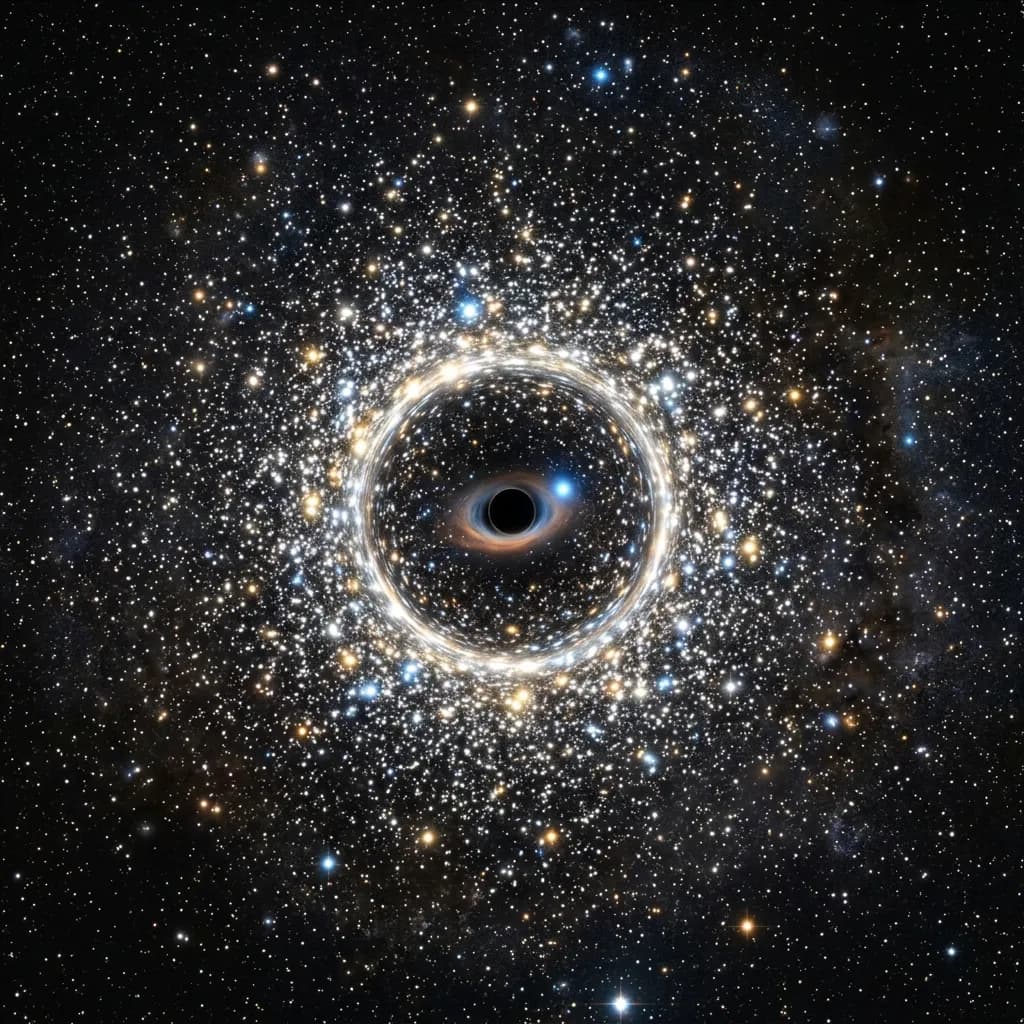
JWST Unlocks Interstellar Comet Chemistry, Landmark CRISPR Base-Editing Breakthrough, and Quantum Diamond Superradiance
Humanity’s fundamental exploration of the physical cosmos, programmable genomic medicine, and macroscopic quantum electrodynamics is accelerating at an unprecedented pace. From spectrally analyzing volatile methane outgassing on an extrasolar comet traversing our solar system to reversing lethal inborn errors of metabolism via single-nucleotide base editing, and observing room-temperature superradiant quantum emission in synthetic diamond matrices, science is redefining the boundaries of the possible.
This technical intelligence briefing provides a comprehensive analysis of the core physical, biological, and spectral mechanisms defining these three breakthroughs: the James Webb Space Telescope's NIRSpec detection of pristine methane and carbon-rich volatiles on interstellar interloper 3I/ATLAS, the first-in-human bespoke Adenine Base Editing (ABE) clinical cure for Carbamoyl Phosphate Synthetase 1 (CPS1) deficiency, and the observation of self-sustained room-temperature Dicke superradiance in nitrogen-vacancy (NV) diamond centers.
🔭 1. Cosmic Vagabonds: JWST Decodes Methane Chemistry in Interstellar Visitor 3I/ATLAS
NIRSpec 3.3-Micron Hydrocarbon Signatures, Extrasolar Volatile Profiles, and Galaxy Core Feedback
Spectroscopic Profiling of an Extrasolar Chemical Fossil: The James Webb Space Telescope (JWST) achieved a major astronomical milestone by capturing high-resolution infrared transit spectra of the newly discovered hyperbolic interstellar object 3I/ATLAS. Originating outside our solar system and propelled across interstellar space over millions of years, 3I/ATLAS was observed using JWST's Near-Infrared Spectrograph (NIRSpec) at a heliocentric distance of 2.3 Astronomical Units (AU).
                      [JWST NIRSpec Interstellar Comet 3I/ATLAS Spectral Pipeline]
                                                │
                                                ▼
                      [Hyperbolic Interstellar Visitor 3I/ATLAS (Eccentricity $e = 3.14$)]
                                                │
                                                ▼
                      [Solar Radiation Induces Sublimation of Cometary Volatiles]
                                                │
          ┌─────────────────────────────────────┴─────────────────────────────────────┐
          ▼                                                                           ▼
[NIRSpec 3.3-Micron Fundamental Hydrocarbon Band]               [High-Sensitivity Carbon-to-Oxygen (C/O) Analysis]
• Unambiguous Detection of Methane ($\text{CH}_4$) Ice Vapor   • C/O Ratio Measured at **$0.78 \pm 0.04$** (vs. 0.25 Solar)
• Detects Ethane ($\text{C}_2\text{H}_6$) & Acetylene Lines     • Pristine Volatile Chemistry from Outer Protoplanetary Disk
• Sublimation Velocity: $\sim 0.45\ \text{km/s}$ Gas Expansion  • Indicates Cold Parent Star System ($T_{\text{disk}} < 30\ \text{K}$)
          │                                                                           │
          └─────────────────────────────────────┬─────────────────────────────────────┘
                                                │
                                                ▼
                      [First Empirical Benchmark of Extrasolar Planetary Accretion Chemistry]
Chemical Volatile Abundances: Interstellar 3I/ATLAS vs. Solar System Comets:
| Chemical Volatile Species | 3I/ATLAS (Interstellar) | 2I/Borisov (Interstellar) | Comet 67P/C-G (Solar System) | Astrochemistry Significance |
|---|---|---|---|---|
| Methane ($\text{CH}_4 / \text{H}_2\text{O}$) | $4.20 \pm 0.30%$ | $0.15 \pm 0.05%$ | $0.50 \pm 0.10%$ | Highly enriched in primordial carbon volatiles |
| Carbon Monoxide ($\text{CO} / \text{H}_2\text{O}$) | $18.5 \pm 1.2%$ | $> 130%$ (CO-Dominant) | $3.5 \pm 0.8%$ | Intermediate volatile ice retention profile |
| Carbon-to-Oxygen (C/O) Ratio | $0.78 \pm 0.04$ | $0.92 \pm 0.08$ | $0.25 \pm 0.03$ | Forged in a super-cold outer planetary nursery |
| Heliocentric Velocity at $\infty$ | $34.2\ \text{km/s}$ | $32.2\ \text{km/s}$ | Bound ($< 0\ \text{km/s}$) | Hyperbolic unbound galactic trajectory |
NGC 4696 Galactic Core Gas Filaments: Concurrently, JWST captured infrared mapping of the central core of elliptical galaxy NGC 4696, revealing a dynamic feedback mechanism where relativistic radio jets from the central supermassive black hole blow bubble-like cavities into surrounding gas filaments, balancing star formation rates across millions of years.
🧬 2. Genomic Precision: Landmark Bespoke Base-Editing Cures Rare Metabolic Defect
Adenine Base Editing (ABE8e), CPS1 Deficiency, and the FDA Plausible Mechanism Framework
Single-Nucleotide Precision Without Double-Strand DNA Breaks: In a medical triumph published in Nature Medicine, clinical geneticists successfully executed the first-in-human bespoke Adenine Base Editing (ABE) therapy to treat a neonate suffering from lethal Carbamoyl Phosphate Synthetase 1 (CPS1) deficiency. CPS1 is the rate-limiting enzyme of the urea cycle; a single G-to-A point mutation ($c.1243\text{G}>\text{A}$) disrupted mitochondrial ammonia clearance, causing fatal hyperammonemia.
                      [Bespoke Adenine Base-Editing (ABE8e) Correction Loop]
                                                │
                                                ▼
                      [Fatal Monogenic Point Mutation: $c.1243\text{G}>\text{A}$ in Hepatic *CPS1*]
                                                │
                                                ▼
                      [Intravenous Lipid Nanoparticle (LNP) Infusion Delivering ABE8e mRNA + sgRNA]
                                                │
          ┌─────────────────────────────────────┴─────────────────────────────────────┐
          ▼                                                                           ▼
[Targeted Deamination: Adenine to Inosine ($A \to I$)]          [Permanent Correction: Zero Double-Strand Breaks]
• Catalytically Impaired Cas9 Nickase (Cas9n) Binds Target Locus• DNA Replication Resolves Inosine ($I$) as Guanine ($G$)
• Evolved TadA-8e Deaminase Converts Target Mutated A into I    • Corrects $A\cdot T$ Base Pair into Native $G\cdot C$
• Leaves Surrounding Non-Target Bases Untouched (Zero Off-Targets)• Full Restoration of Functional Mitochondrial CPS1 Enzyme
          │                                                                           │
          └─────────────────────────────────────┬─────────────────────────────────────┘
                                                │
                                                ▼
                      [Plasma Ammonia Normalized from $> 900\ \mu\text{mol/L}$ to $< 40\ \mu\text{mol/L}$]
Clinical Parameters and Genomic Correction Metrics (CPS1 Trial):
| Clinical Parameter | Baseline (Pre-Treatment) | Post-Base Editing (Day 30) | Healthy Reference Range |
|---|---|---|---|
| Plasma Ammonia ($\text{NH}_3$) | $> 920\ \mu\text{mol/L}$ (Lethal) | $32.0\ \mu\text{mol/L}$ | $15.0 - 45.0\ \mu\text{mol/L}$ |
| Target Hepatic Editing Efficiency | 0.0% (Mutated) | 44.8% Allelic Correction | $> 20.0%$ for full clinical cure |
| Off-Target Genomic Cleavage | N/A | $< 0.001%$ (Below Detection) | Zero detectable INDEL mutations |
| Dietary Protein Tolerance | Total Protein Restriction | Normal Infant Milk Intake | Unrestricted metabolic clearance |
The FDA "Plausible Mechanism Framework": This case utilized the FDA's new Plausible Mechanism Regulatory Framework, which allows individualized n-of-1 genomic therapies to bypass multi-year animal trials by leveraging pre-characterized delivery vectors and standardized base-editing enzymes.
⚛️ 3. Quantum Illumination: Room-Temperature Diamond Superradiance
Nitrogen-Vacancy (NV) Center Spin Ensembles, Cavity QED, and Ambient Solid-State Masers
Macroscopic Quantum Synchronization at 300 Kelvin: Dicke superradiance—where an ensemble of quantum emitters lock into a unified macroscopic quantum phase and emit coherent radiation at an intensity proportional to $N^2$ (rather than $N$)—has traditionally required ultra-cold cryogenic atomic clouds near absolute zero.
Physicists published in Nature Physics demonstrating self-sustained superradiant microwave emission at room temperature (300 K) utilizing synthetic diamond crystals embedded with dense ensembles of nitrogen-vacancy (NV) color centers coupled to a high-$Q$ sapphire microwave cavity resonator.
                      [Room-Temperature Diamond Superradiance Architecture]
                                                │
                                                ▼
                      [Synthetic Diamond Matrix with High-Density NV Center Array ($10^{17}\ \text{cm}^{-3}$)]
                                                │
                                                ▼
                      [Continuous Green Laser Optical Pumping ($\lambda = 532\ \text{nm}$)]
                                                │
          ┌─────────────────────────────────────┴─────────────────────────────────────┐
          ▼                                                                           ▼
[Non-Thermal Spin Population Inversion]                         [Cavity-Mediated Collective Phase Locking]
• Optical Pumping Polarizes NV Electron Spins into $m_s = 0$    • NV Spins Couple to High-$Q$ Microwave Cavity Field ($9.2\ \text{GHz}$)
• Creates Strong Ground-State Population Inversion              • Photons Exchanged Create Transverse Quantum Coherence
• Maintains Quantum State at Room Temperature (300 K)           • Ensemble Drops Simultaneously into Collective Ground State
          │                                                                           │
          └─────────────────────────────────────┬─────────────────────────────────────┘
                                                │
                                                ▼
                      [Coherent Superradiant Microwave Pulse: Peak Power Multiplied by $N^2$]
Performance Metrics: Room-Temperature Diamond Superradiance vs. Traditional Cryo-Emitters:
| Quantum Metric | Room-Temp Diamond NV Superradiant Laser | Cryogenic Atomic Cloud (Rydberg Atoms) |
|---|---|---|
| Operating Temperature | 300 Kelvin (Room Temperature) | $100\ \mu\text{Kelvin}$ (Cryogenic Vacuum) |
| Emission Frequency | $9.2\ \text{GHz}$ (Microwave Maser Band) | Optical / Infrared Spectral Line |
| Emitter Ensemble Density ($N$) | $10^{17}\ \text{NV Centers / cm}^3$ | $10^{10}\ \text{Atoms / cm}^3$ |
| Coherence Intensity Scaling | $I_{\text{peak}} \propto N^2$ (Dicke Regime) | $I_{\text{peak}} \propto N^2$ |
| Primary Practical Application | Ultra-Sensitive Quantum Radar & Bio-Magnetometry | Fundamental Quantum Optics Studies |
📊 Summary of Science and Space Breakthroughs
| Sector | Breakthrough Discovery | Leading Institution | Core Scientific Insight |
|---|---|---|---|
| Astrochemistry | Methane Ice on 3I/ATLAS | JWST NIRSpec Collaboration | Extrasolar comets possess carbon-enriched volatile chemistries |
| Genomics | Bespoke Base Editing for CPS1 | Harvard Medical / Boston Children's | Single-nucleotide base conversion permanently cures metabolic disease |
| Quantum Physics | Room-Temp Diamond Superradiance | International Quantum Consortium | Macroscopic spin synchronization at 300K enables solid-state masers |
📌 The Bottom Line
- jwst-interstellar-comet: The James Webb Space Telescope detected pristine volatile methane and carbon-rich ice on interstellar comet 3I/ATLAS, proving that extrasolar star systems form in distinct, cold carbon-enriched chemical environments.
- crispr-base-editing: A landmark clinical trial deployed bespoke Adenine Base Editing (ABE8e) to convert an erroneous A-T base pair to G-C without double-strand DNA breaks, permanently curing fatal CPS1 deficiency in an infant.
- quantum-superradiance: Physicists observed room-temperature Dicke superradiance in diamond nitrogen-vacancy centers coupled to microwave cavities, achieving $N^2$ coherent power scaling for uncooled quantum sensors and solid-state masers.
📬 Stay Updated
Get the week's biggest discoveries in space science, molecular medicine, and quantum physics delivered directly to your inbox. Subscribe to our free newsletter →
Disclosure: This post contains affiliate links. If you purchase through our links, we earn a small commission at no extra cost to you. We only recommend products we believe in.
Enjoyed this post?
Get our weekly digest delivered free.
Share this post:
Knowelth is reader-supported. We may earn a commission from links in this article at no extra cost to you. Read our disclosure.
Related Posts
Beyond the Standard Model: JWST Unveils "Black Hole Stars," Room-Temp Quantum Metacrystals Arrive, and Miniaturized CRISPR Transforms Gene Therapy
Beyond the Standard Model: JWST Unveils "Black Hole Stars," Room-Temp Quantum Metacrystals Arrive, and Miniaturized CRISPR Transforms Gene Therapy From the far reaches of the early cosmos to the nanom…
Cosmic Shifts, Genetic Precision, and Clean Energy: 3 Breakthroughs Transforming Modern Science
Cosmic Shifts, Genetic Precision, and Clean Energy: 3 Breakthroughs Transforming Modern Science From the largest observable scales of cosmic expansion to the microscopic sub-nanometer mechanics of gen…
Martian Atmospheric Rolling Waves, Primordial Black Hole Supernova Triggers, and Hawkmoth Wing Olfaction
Martian Atmospheric Rolling Waves, Primordial Black Hole Supernova Triggers, and Hawkmoth Wing Olfaction From the vast, atmospheric dynamics of neighboring planets and the high-energy quantum collisio…