Cosmic Shifts, Genetic Precision, and Clean Energy: 3 Breakthroughs Transforming Modern Science
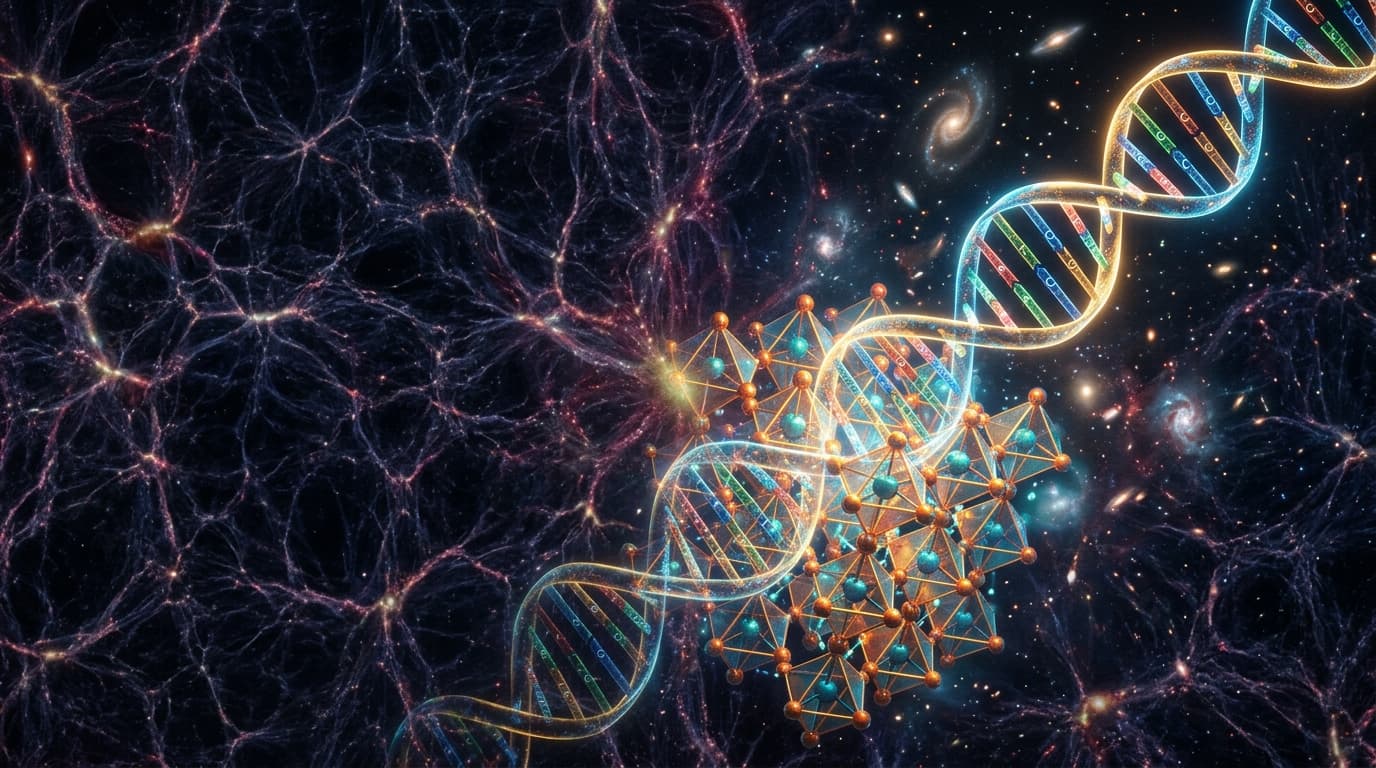
Cosmic Shifts, Genetic Precision, and Clean Energy: 3 Breakthroughs Transforming Modern Science
From the largest observable scales of cosmic expansion to the microscopic sub-nanometer mechanics of genetic code and crystal lattices, science is experiencing a historic convergence of paradigm shifts. Recent months have delivered landmark findings that challenge long-held theoretical models and unlock unprecedented technological capabilities. Here is a deep dive into three major discoveries defining the frontiers of physics, medicine, and renewable energy.
🌌 Evolving Dark Energy: Is Einstein's Cosmological Constant Cracking?
For nearly three decades, modern cosmology has rested upon a foundational pillars known as the $\Lambda\text{CDM}$ model. In this framework, $\Lambda$ represents Albert Einstein’s cosmological constant—a smooth, unvarying repulsive energy inherent to the vacuum of space that drives the accelerating expansion of the universe. Discovered independently in 1998 through observations of distant Type Ia supernovae, dark energy was long presumed to maintain a fixed energy density across all of cosmic time. However, groundbreaking observations from the Dark Energy Spectroscopic Instrument (DESI) have delivered compelling empirical hints that dark energy may not be constant at all, but rather dynamic and weakening over time.
Installed on the Mayall 4-meter Telescope at Kitt Peak National Observatory, DESI utilizes an extraordinary array of 5,000 miniature robotic fiber-optic positioners to map the 3D coordinates of tens of millions of galaxies and quasars spanning 11 billion years of cosmic history. By measuring Baryon Acoustic Oscillations (BAO)—the frozen acoustic ripple footprints left behind by sound waves traveling through the hot plasma of the early universe—DESI provides a precision cosmic ruler. When researchers combined DESI’s multi-year galaxy data with observations of the Cosmic Microwave Background (CMB) and independent supernova compilations, the combined analysis revealed a statistically intriguing trend: the equation-of-state parameter for dark energy, traditionally designated as $w = -1$, appears to be evolving across cosmic epochs.
+-------------------------------------------------------------------------+
|                        COSMIC EXPANSION MODELS                          |
+-------------------------------------------------------------------------+
| Standard Cosmological Constant (ΛCDM):                                  |
|   • Dark Energy density remains constant (w = -1)                       |
|   • Expansion accelerates indefinitely at a fixed rate                   |
|                                                                         |
| Dynamic / Evolving Dark Energy (DESI Hints):                            |
|   • Dark Energy density weakens over cosmic time (w > -1 over epochs)   |
|   • Universe expansion rate decelerates or shifts cosmic fate            |
+-------------------------------------------------------------------------+
If these findings hold under further scrutiny, the theoretical implications for astrophysics are staggering. A dynamic dark energy field implies that vacuum energy is not a static property of spacetime geometry, but perhaps a scalar field—often referred to as quintessence—that changes in strength as the universe expands. This could offer a key to resolving the infamous "Hubble Tension," the persistent discrepancy between measurements of the universe's expansion rate derived from early-universe CMB data and late-universe local distance ladder observations. Furthermore, a weakening dark energy force reshapes our understanding of the ultimate fate of the cosmos, shifting scenarios away from a perpetual "Big Freeze" or violent "Big Rip" toward a more complex cosmic evolution.
Naturally, the scientific community maintains a rigorous standard of skepticism. While the preference for time-varying dark energy currently reaches a statistical significance near the 3-sigma confidence level when combining specific datasets, cosmologists emphasize that alternate supernova calibrations can subtle alter the signal strength. With DESI having recently completed its primary five-year survey of over 47 million celestial objects, the full 5-year data release expected in 2027—alongside complementary sky surveys from the Vera C. Rubin Observatory and ESA’s Euclid satellite—will decisively determine whether Einstein's cosmological constant must be fundamentally rewritten.
🧬 In Vivo Base Editing: A New Frontier in Personalized Genomic Medicine
While cosmologists probe the outer reaches of the universe, biomedical researchers have achieved an equally profound milestone inside the human body. Gene editing has undergone a rapid evolution since the discovery of classical CRISPR-Cas9, which acts like molecular scissors by inducing double-stranded DNA breaks. While effective, double-strand breaks carry inherent risks of unintended insertions, deletions, or large-scale chromosomal rearrangements. The emergence of base editing—a precision technology that chemically rewrites individual nucleotide letters (such as converting a C-G base pair to a T-A base pair) without cutting the DNA backbone—has inaugurated a safer, far more precise era of genetic intervention.
In a landmark medical achievement, clinical researchers at the Children's Hospital of Philadelphia (CHOP) and Penn Medicine successfully administered a bespoke in vivo base-editing therapy directly into an infant suffering from carbamoyl phosphate synthetase I (CPS1) deficiency—a severe, life-threatening metabolic disorder of the urea cycle. Rather than extracting patient cells for ex vivo laboratory modification, doctors delivered mRNA encoding a customized adenine base editor encapsulated inside targeted lipid nanoparticles (LNPs) via intravenous infusion. The LNPs homed directly to the liver, where the base editor precisely corrected the single point mutation responsible for the fatal metabolic defect. Follow-up monitoring confirmed marked clinical stabilization, enabling the infant to process proteins safely and dramatically reducing hospital admissions.
                          IN VIVO BASE EDITING WORKFLOW

+---------------------+      +---------------------+      +---------------------+
| Patient Mutation    |      | Targeted LNP        |      | Hepatocyte Delivery |
| Single point defect | ---> | mRNA encoding Base  | ---> | Single-letter DNA   |
| in hepatic gene     |      | Editor + Guide RNA  |      | conversion (C->T)   |
+---------------------+      +---------------------+      +---------------------+
                                                                     |
                                                                     v
                                                          +---------------------+
                                                          | Restored Enzymatic  |
                                                          | Function & Health   |
                                                          +---------------------+
Beyond the immediate clinical success, this milestone triggered a historic regulatory shift. In early 2026, the U.S. Food and Drug Administration (FDA) released draft guidance establishing the "Plausible Mechanism Framework." Under this new regulatory paradigm, developers of platform-based genetic therapies for ultra-rare diseases can utilize a unified master clinical trial protocol. Instead of requiring years of redundant toxicological studies for every individual patient's unique mutation, sponsors can swap out the targeting guide RNA sequence while leveraging prior safety data from the underlying delivery vector and base-editing enzyme.
This policy evolution addresses one of the greatest economic bottlenecks in modern biopharmaceuticals: the immense cost of developing individual cures for "n-of-1" rare diseases that affect only a handful of patients worldwide. With over 250 active clinical trials currently evaluating in vivo gene editing across indications ranging from hereditary angioedema (HAE) and glycogen storage diseases to refractory hypertension, the transition from cell-based therapies to off-the-shelf nanoparticle infusions is poised to democratize access to curative genomic medicine.
☀️ Surpassing Solar Limits: Perovskite-Silicon Tandems Shatter Efficiency Records
In the field of materials science and clean energy technology, researchers have breached a long-standing physical boundary. For decades, traditional silicon photovoltaic panels have served as the backbone of global solar infrastructure. However, single-junction silicon solar cells face an absolute theoretical efficiency limit known as the Shockley-Queisser (S-Q) limit, capped at approximately 33.7% for ideal single-layer devices under un-concentrated sunlight. Because pure silicon can only efficiently absorb a specific band of the solar spectrum, higher-energy photons (such as blue and ultraviolet light) lose much of their energy as heat, while lower-energy infrared photons pass through unabsorbed.
Enter perovskite-silicon tandem solar cells, an architectural innovation that layers a synthetic perovskite crystal structure on top of a conventional silicon base cell. Perovskites feature a tunable optical bandgap, allowing the top layer to selectively harvest high-energy blue sunlight while allowing longer infrared wavelengths to pass through to the underlying silicon cell. In mid-2026, photovoltaic giant LONGi Green Energy announced a world-record power conversion efficiency of 35.5% for a perovskite-silicon tandem cell, independently certified by the European Solar Test Installation (ESTI). This breakthrough surpassed their previous laboratory benchmark of 34.85% certified by the U.S. National Renewable Energy Laboratory (NREL), proving that tandem architectures can comfortably break through the single-junction ceiling.
                     PEROVSKITE-SILICON TANDEM CELL STRUCTURE

            Incident Sunlight (Full Spectrum)
                          |||
                          vvv
    +----------------------------------------------+  <-- Top Cell: Perovskite
    |  Absorbs High-Energy Blue & UV Photons       |      (Tunable High Bandgap)
    +----------------------------------------------+
                          |||  (Transmitted Infrared)
                          vvv
    +----------------------------------------------+  <-- Bottom Cell: Silicon
    |  Absorbs Low-Energy Near-IR Photons          |      (Standard Low Bandgap)
    +----------------------------------------------+
                          |||
                          vvv
              Total Conversion: 35.5% Efficiency
Achieving high efficiency in small laboratory samples ($1\text{ cm}^2$) is only half the battle; the true engineering challenge lies in commercial scalability, uniform coating, and long-term environmental stability. Perovskite materials are historically sensitive to moisture, thermal stress, and oxygen-induced degradation. Recent breakthroughs in chemical stabilization—such as additive engineering using fluorinated alkylammonium salts and advanced encapsulation techniques—have significantly extended cell lifespans under continuous field stress testing.
The economic and geopolitical consequences of high-efficiency tandem photovoltaics are immense. Raising module efficiency from typical commercial levels (~22%) to over 30%+ drastically reduces the Levelized Cost of Energy (LCOE) by maximizing output per square meter. This minimizes balance-of-system (BOS) expenses—including land acquisition, racking hardware, cabling, and installation labor. As manufacturing techniques transition from lab spin-coating to industrial slot-die coating and roll-to-roll processing, tandem solar modules promise to accelerate grid parity globally, powering everything from utility-scale desert microgrids to space-based satellite solar arrays.
📌 The Bottom Line
- evolving-dark-energy: Multi-year galaxy mapping from DESI suggests dark energy density may be weakening over cosmic time, challenging Einstein's static cosmological constant ($w = -1$).
- in-vivo-crispr-base-editing: The first successful in vivo base editing in an infant with a rare liver disorder spurred the FDA's new "Plausible Mechanism Framework" to accelerate personalized genomic therapies.
- perovskite-silicon-tandem-solar: LONGi set a certified world-record solar efficiency of 35.5% using perovskite-silicon tandem architecture, smashing the theoretical limit of traditional single-junction silicon.
📫 Stay Updated
Get the week's biggest science and space discoveries delivered to your inbox. Subscribe to our free newsletter →
Disclosure: This post contains affiliate links. If you purchase through our links, we earn a small commission at no extra cost to you. We only recommend products we believe in.
Enjoyed this post?
Get our weekly digest delivered free.
Share this post:
Knowelth is reader-supported. We may earn a commission from links in this article at no extra cost to you. Read our disclosure.
Related Posts
Beyond the Standard Model: JWST Unveils "Black Hole Stars," Room-Temp Quantum Metacrystals Arrive, and Miniaturized CRISPR Transforms Gene Therapy
Beyond the Standard Model: JWST Unveils "Black Hole Stars," Room-Temp Quantum Metacrystals Arrive, and Miniaturized CRISPR Transforms Gene Therapy From the far reaches of the early cosmos to the nanom…

Martian Atmospheric Rolling Waves, Primordial Black Hole Supernova Triggers, and Hawkmoth Wing Olfaction
Martian Atmospheric Rolling Waves, Primordial Black Hole Supernova Triggers, and Hawkmoth Wing Olfaction From the vast, atmospheric dynamics of neighboring planets and the high-energy quantum collisio…
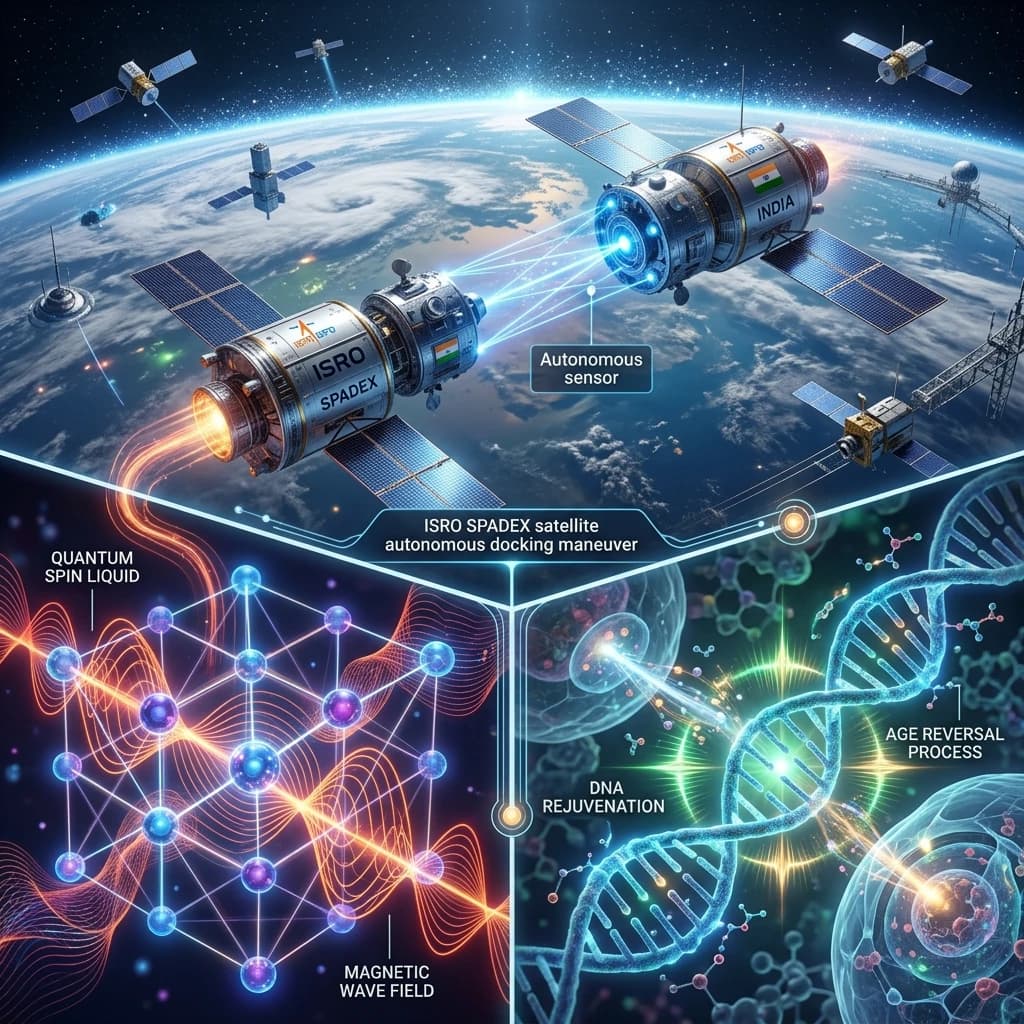
Autonomous Space Docking, Room-Temperature Quantum Spin Liquids, and Epigenetic Age Reversal
Autonomous Space Docking, Room-Temperature Quantum Spin Liquids, and Epigenetic Age Reversal Three early August 2026 breakthroughs each eliminate a previous technical barrier that was preventing a fie…