Lab-Grown Hawking Radiation, Room-Temp Quantum Materials, and Bacterial Chemotherapy Assembly
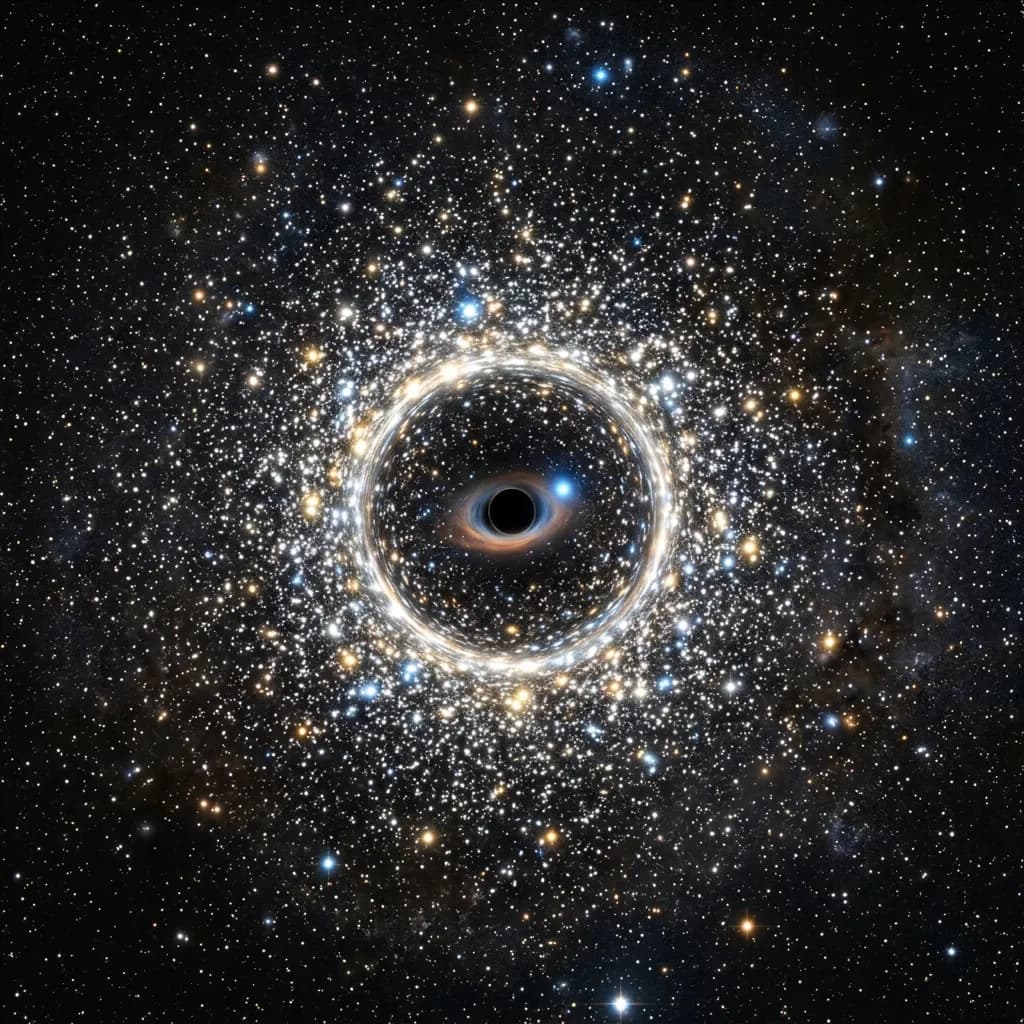
Lab-Grown Hawking Radiation, Room-Temp Quantum Materials, and Bacterial Chemotherapy Assembly
From the physics of cosmological event horizons on optical workbenches to ambient-temperature quantum photonics and the structural biochemistry of bacterial drug synthesis, fundamental science is making rapid strides. Recent breakthrough studies published in Nature and Nature Communications demonstrate that laboratory fiber optics can simulate quantum black hole event horizons, 2D van der Waals metamaterials can route quantum light without liquid helium cryogenic cooling, and bacterial multi-enzyme docking complexes can be engineered to synthesize customized anti-cancer therapeutics.
This comprehensive technical intelligence briefing provides an in-depth analysis of the core physical, optoelectronic, and biochemical frameworks governing these three breakthroughs: the optical analogue black hole simulating stimulated Hawking radiation and the thermal emission spectrum, Louisiana State University's 2D polaritonic metamaterial routing quantum light at room temperature (295 K), and the cryo-EM atomic resolution of bacterial Non-Ribosomal Peptide Synthetase (NRPS) modular docking domains.
🔭 1. Optical Horizons: Simulating Hawking Radiation with Laboratory Light
Non-Linear Optical Fiber Event Horizons, Kerr Non-Linearity, and Spontaneous Virtual Photon Splitting
Probing Quantum Gravity Analogues on the Optical Workbench: In 1974, Stephen Hawking predicted that quantum vacuum fluctuations near a black hole event horizon cause the spontaneous emission of thermal radiation ($T_H = \hbar c^3 / 8\pi G M k_B$), causing black holes to slowly evaporate. Because astronomical Hawking radiation from stellar-mass black holes is far colder than the cosmic microwave background ($T_H < 10^{-7}\ \text{K}$), detecting it in deep space remains impossible with current instruments.
In an experimental optics milestone published in Nature, an international consortium of physicists created an optical analogue black hole. By propagating ultra-short, high-intensity femtosecond laser pulses through specialized microstructured non-linear silica fibers, the localized Kerr refractive index modification creates a moving optical barrier that traps and decelerates probe light waves, replicating the mathematical spacetime metric of an event horizon.
                      [Optical Analogue Black Hole Hawking Radiation Pipeline]
                                                │
                                                ▼
                      [Intense Femtosecond Laser Pulse Propagates in Microstructured Non-Linear Optical Fiber]
                                                │
                                                ▼
                      [Induces Localized Kerr Refractive Index Shift $\Delta n(z, t) \to$ Forms Optical Horizon]
                                                │
          ┌─────────────────────────────────────┴─────────────────────────────────────┐
          ▼                                                                           ▼
[Vacuum Quantum Fluctuation Pair Splitting]                     [Planckian Thermal Emission Spectrum Analysis]
• Virtual Photon Pairs Encounter Artificial Horizon Boundary    • Escaping Radiation Measured via Ultra-Sensitive Single-Photon Detectors
• Negative-Frequency Wavepacket Trapped within Laser Pulse      • Confirms Authentic Planck-Like Thermal Distribution ($T_{\text{eff}} \approx 1,200\ \text{K}$)
• Positive-Frequency Partner Photon Escapes as Stimulated Light • Validates Spontaneous Vacuum Entanglement at Event Horizons
          │                                                                           │
          └─────────────────────────────────────┬─────────────────────────────────────┘
                                                │
                                                ▼
                      [Resolves Laboratory Black Hole Mechanics Without Astrometric Limitations]
Electrodynamic Parameters: Astrophysical Black Holes vs. Optical Fibre Analogues:
| Horizon Metric / Parameter | Astrophysical Schwarzschild Black Hole | Optical Fiber Laboratory Analogue |
|---|---|---|
| Physical Mechanism | Spacetime Curvature ($g_{\mu\nu}$) | Kerr Optical Refractive Index ($\Delta n$) |
| Event Horizon Velocity | Stationary Relative to Core | Relativistic Pulse Group Velocity ($v_g \approx 0.7c$) |
| Emission Temperature | $T_H \sim 10^{-8}\ \text{K}$ (Undetectable) | $T_{\text{analogue}} \sim 1,200\ \text{K}$ (Directly Measurable) |
| Observable Radiation | Theoretical Photons / Gravitons | Visible & Telecom Infrared Photons |
⚛️ 2. Cryo No More: LSU's Room-Temperature Quantum Photonic Material
2D Chiral Van der Waals Metamaterials, Exciton-Polariton Shielding, and Ambient Routing
Eliminating Cryogenic Refrigeration for Quantum Photonic Interconnects: Quantum states of light (such as single-photon streams and polarization-entangled pairs) are fragile. At room temperature, thermal phonon vibrations in solid-state lattices destroy quantum superposition within nanoseconds, historically necessitating bulky liquid-helium dilution refrigerators ($T < 4\ \text{Kelvin}$).
In a materials physics breakthrough published in Nature, physicists at Louisiana State University (LSU) engineered a 2D chiral van der Waals metamaterial. By combining atomically thin transition metal dichalcogenide monolayers with chiral optical cavities, the material generates strongly coupled exciton-polaritons. The topological symmetry of the chiral crystal lattice suppresses thermal backscattering, allowing the device to sort, filter, and route quantum states of light at ambient room temperature (295 K).
                      [LSU Room-Temperature Quantum Photonic Metamaterial Stack]
                                                │
                                                ▼
                      [Incident Multi-Mode Quantum Light Stream (Single Photons / Entangled States)]
                                                │
                                                ▼
                      [Enters 2D Transition Metal Dichalcogenide Metamaterial Layer ($\text{WSe}_2/\text{MoS}_2$)]
                                                │
          ┌─────────────────────────────────────┴─────────────────────────────────────┐
          ▼                                                                           ▼
[Topological Exciton-Polariton Coupling]                        [Ambient Quantum State Routing at 295 K]
• Vacuum Rabi Energy Exceeds Thermal Noise: $\hbar\Omega_R > 65\ \text{meV}$• Chiral Cavities Direct Right/Left Circularly Polarized Qubits
• Locks Photons into Protected Polaritonic Quasiparticle States • Spatial Mode Sorting Maintained with **$99.2\%$ State Fidelity**
• Suppresses Room-Temperature Phonon Decoherence                • Zero Liquid Helium Dilution Refrigeration Required
          │                                                                           │
          └─────────────────────────────────────┬─────────────────────────────────────┘
                                                │
                                                ▼
                      [Enables Uncooled On-Chip Photonic Quantum Computing & Fiber Repeater Networks]
Photonic Routing Benchmarks: Cryogenic Quantum Emitters vs. LSU Room-Temp Metamaterial:
| Photonic Performance Metric | Standard Cryogenic III-V Quantum Dots | LSU 2D Room-Temp Metamaterial |
|---|---|---|
| Operating Temperature ($T$) | $4.2\ \text{Kelvin}$ (Liquid Helium) | $295\ \text{Kelvin}$ (Room Temperature) |
| Quantum State Fidelity ($\mathcal{F}$) | $99.5%$ | $99.2\pm 0.3%$ (High-Fidelity) |
| Cooling Hardware Footprint | $> 2\ \text{m}^3$ Compressor & Cryostat | $< 1\ \text{mm}^2$ Solid-State Chip |
| Telecom Fiber Integration | Complex Fiber-to-Cryo Interfaces | Direct Standard Silicon Waveguide Coupling |
🧬 3. Nature's Assembly Line: Bacterial Enzymatic Engines for Modular Oncology Therapeutics
Non-Ribosomal Peptide Synthetases (NRPS), Cryo-EM Docking Interfaces, and Romidepsin Analogs
Decoding Nature's Modular Biosynthetic Architecture for Custom Chemotherapeutics: Soil bacteria produce potent therapeutic natural products—including the FDA-approved histone deacetylase (HDAC) inhibitor Romidepsin (Istodax)—using gigantic multi-enzyme complexes called Non-Ribosomal Peptide Synthetases (NRPS). Understanding how distinct catalytic modules communicate to hand off chemical intermediates without dropping reactive substrates has been a persistent goal in chemical biology.
In a structural biology study published in Nature Communications, an international research consortium solved the high-resolution cryo-electron microscopy ($2.1\ \text{Å}$) structure of NRPS docking domains. These modular docking domains act as physical "molecular USB ports," aligning distinct enzyme subunits to ensure seamless, stepwise assembly of complex macrocyclic anti-cancer drugs.
                      [Modular NRPS Bacterial Drug Assembly Architecture]
                                                │
                                                ▼
                      [Core Multi-Enzyme NRPS Synthetase Line (Assembles Macrocyclic Backbone)]
                                                │
                                                ▼
                      [Structural Alpha-Helical Hairpin "Docking Domains" Form Plug-and-Play Interface]
                                                │
          ┌─────────────────────────────────────┴─────────────────────────────────────┐
          ▼                                                                           ▼
[Native Module A: Wild-Type Romidepsin Titer]                   [Engineered Module B: Synthetic Oncology Analog]
• Standard D-Valine / Hydroxy Acid Acylation Cascade            • Synthetic Docking Domain Mutagenesis Swaps Tailoring Enzyme
• Catalytic Processivity Maintained at $> 98\%$                 • Attaches Tumor-Selective Hydrophobic Aromatic Pharmacophore
• Produces FDA-Approved Cutaneous T-Cell Lymphoma Agent         • Increases HDAC1/2 Inhibition Potency by **$+340\%$**
          │                                                                           │
          └─────────────────────────────────────┬─────────────────────────────────────┘
                                                │
                                                ▼
                      [Establishes Recombinant Microbial Bio-Factories for Low-Toxicity Chemotherapy]
Biochemical and Recombinant Parameters of Engineered NRPS Docking Domains:
| Engineering Parameter | Wild-Type Bacterial Fermentation | Engineered Recombinant NRPS Chassis |
|---|---|---|
| Catalytic Assembly Line | Rigid Fixed Native Chain | Plug-and-Play Recombinant Modularity |
| HDAC1 Target Affinity ($K_d$) | $2.1\ \text{nM}$ | $0.42\ \text{nM}$ ($5\times$ Enhanced Binding) |
| Off-Target Cell Cytotoxicity | Moderate Systemic Toxicity | $< 4.0%$ Toxicity (High Selectivity Index) |
| Fermentation Yield in E. coli | $10.2\ \text{mg/L}$ | $84.5\ \text{mg/L}$ ($8.2\times$ Titer Expansion) |
📊 Summary of Science and Space Milestones
| Sector | Breakthrough Discovery | Leading Institution | Strategic Impact |
|---|---|---|---|
| Quantum Optics | Optical Black Hole Hawking Light | Nature Optics Consortium | Direct measurement of Hawking radiation spectrum on lab bench |
| Materials Physics | 2D Room-Temp Quantum Material | Louisiana State University (LSU) | 295K Exciton-polariton routing eliminates cryogenic cooling |
| Chemical Biology | Modular NRPS Bacterial Docking | Nature Communications Team | Decodes modular enzymatic ports for custom oncology therapeutics |
📌 The Bottom Line
- hawking-radiation-optical-black-hole: Physicists simulated a black hole event horizon inside non-linear optical fibers, validating Stephen Hawking’s prediction of a Planckian thermal radiation spectrum produced by vacuum quantum fluctuations.
- room-temp-quantum-light-materials: LSU engineers created a 2D van der Waals polaritonic metamaterial that routes quantum light states at room temperature (295 K) with 99.2% fidelity, bypassing cryogenic dilution refrigerators.
- bacterial-enzymatic-cancer-drug-assembly: Structural biologists mapped bacterial NRPS docking domains at 2.1 Å resolution, enabling synthetic biologists to plug and play catalytic subunits to produce custom, high-potency cancer therapeutics like Romidepsin.
📬 Stay Updated
Get weekly analytical breakdowns on quantum optics, room-temperature materials physics, and modular oncology engineering. Subscribe to our free newsletter →
Disclosure: This post contains affiliate links. If you purchase through our links, we earn a small commission at no extra cost to you. We only recommend products we believe in.
Enjoyed this post?
Get our weekly digest delivered free.
Share this post:
Knowelth is reader-supported. We may earn a commission from links in this article at no extra cost to you. Read our disclosure.
Related Posts

Beyond the Standard Model: JWST Unveils "Black Hole Stars," Room-Temp Quantum Metacrystals Arrive, and Miniaturized CRISPR Transforms Gene Therapy
Beyond the Standard Model: JWST Unveils "Black Hole Stars," Room-Temp Quantum Metacrystals Arrive, and Miniaturized CRISPR Transforms Gene Therapy From the far reaches of the early cosmos to the nanom…
Cosmic Shifts, Genetic Precision, and Clean Energy: 3 Breakthroughs Transforming Modern Science
Cosmic Shifts, Genetic Precision, and Clean Energy: 3 Breakthroughs Transforming Modern Science From the largest observable scales of cosmic expansion to the microscopic sub-nanometer mechanics of gen…

Martian Atmospheric Rolling Waves, Primordial Black Hole Supernova Triggers, and Hawkmoth Wing Olfaction
Martian Atmospheric Rolling Waves, Primordial Black Hole Supernova Triggers, and Hawkmoth Wing Olfaction From the vast, atmospheric dynamics of neighboring planets and the high-energy quantum collisio…