New York Enacts Data Center Moratorium, Australia Mandates Energy Offsets, and Ollama Raises $65M Series B
New York Enacts Data Center Moratorium, Australia Mandates Energy Offsets, and Ollama Raises $65M Series B
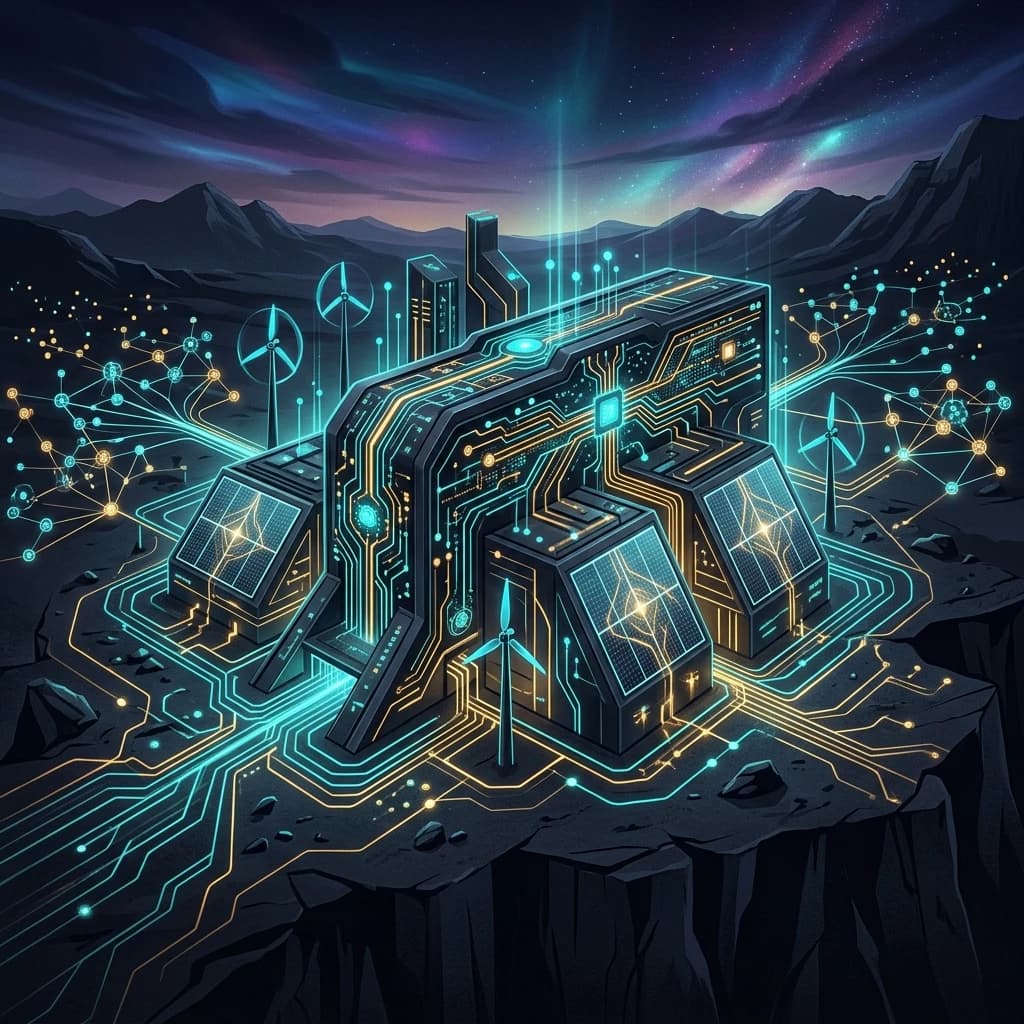
Mid-July 2026 brings a structural realignment: AI infrastructure growth is colliding with physical constraints that no amount of capital can immediately overcome. New York Governor Hochul signs a one-year moratorium on new data centres consuming ≥50MW — the first US state to halt hyperscale expansion — triggering a Generic Environmental Impact Statement over grid stability, water use, and household utility cost socialisation. Australia follows 24 hours later with a policy that inverts the problem: mandatory energy underwriting (data centres must generate new renewables equal to their draw) and an explicit rejection of copyright exemptions for AI training ("scraping is theft"). And against this backdrop, Ollama closes a $65M Series B (Theory Ventures lead, Benchmark + 8VC + YC), reaching 8.9M monthly active developers and 85% Fortune 500 adoption — proof that "local-first inference" is now an enterprise-grade alternative to cloud APIs.
⚡ New York's 50MW Moratorium — Grid Capacity as the New Scaling Limit
The AI Data Centre Energy Crisis
How much power frontier AI actually consumes:
| Facility Type | Power Draw | US Household Equivalent | Cooling Water (daily) |
|---|---|---|---|
| Standard hyperscale cloud region (pre-AI) | 50–100 MW | 40,000–80,000 homes | ~1–3M gallons |
| AI-optimised GPU cluster (Nvidia Blackwell) | 100–500 MW | 80,000–400,000 homes | ~3–15M gallons |
| Planned frontier AI mega-campus (2026–2028) | 500–2,000 MW | 400,000–1.6M homes | 15–60M gallons |
| New York State's total grid capacity | ~35,000 MW | — | — |
A single 2GW AI mega-campus would consume 5.7% of New York State's entire grid capacity. Five such facilities would consume 28% — pushing the state's grid to capacity just for AI cooling.
Key facts about New York's power grid constraints:
- Con Edison (New York City utility) is already running at 95–98% capacity on summer peak days
- New York's offshore wind buildout (25 GW by 2035) is behind schedule — current installed: ~1.1 GW
- Transmission upgrades needed to move power from upstate hydro to NYC data centres: 10+ years of permitting
- Average household electricity rate in NY: $0.24/kWh (5th highest in US) — already strained
The Moratorium — Legal Structure and Industry Impact
Executive Order details:
| Element | Detail |
|---|---|
| Signed by | Governor Kathy Hochul |
| Date | July 14, 2026 |
| Threshold | New facilities consuming ≥50 MW of electricity |
| Duration | 1 year (with extension possible pending GEIS results) |
| Exemptions | Existing approved facilities; hospitals; universities; research labs; <50MW facilities |
| Mandate | Department of Public Service conducts Generic Environmental Impact Statement (GEIS) |
| Outcome target | "Data Center Community Investment Framework" — local host benefit agreements |
What the GEIS must assess:
- Grid stability: cumulative impact of all approved + pending facilities on NYISO reliability margins
- Water consumption: aggregate cooling water use vs watershed capacity (Hudson, Delaware basins)
- Environmental justice: whether low-income communities bear disproportionate impact (heat, noise, truck traffic)
- Rate impact: modelling household utility bill increases from data centre load growth through 2030
Industry consequences — where hyperscalers will now go:
| Alternative Location | Grid Advantage | Renewable Availability | Risk |
|---|---|---|---|
| Virginia (Loudoun County) | Large existing infrastructure | Limited renewables (coal-heavy grid) | Also near saturation |
| Ohio (Columbus area) | Cheap legacy coal power | Moderate renewables | Similar grid pressure building |
| Texas (ERCOT) | Massive grid; direct generator access | Wind + solar abundant | Grid stability (ERCOT isolated) |
| Quebec, Canada | Surplus hydroelectric power | Near-zero carbon; abundant | Cross-border latency + tax |
| Iceland | Geothermal; near-infinite renewables | 100% renewable; water abundant | Transatlantic cable latency |
🇦🇺 Australia's Energy Underwriting + Copyright Position — A Coherent Alternative
The Energy Underwriting Requirement
Australia's policy (announced July 15, 2026) — key provisions:
| Provision | Requirement | Implementation Timeline |
|---|---|---|
| New data centres (≥10 MW) | Must legally underwrite new renewable generation capacity equal to their annual draw | 2027 standards, mandatory by 2028 |
| Existing large facilities | Must demonstrate 50% renewable sourcing by 2027; 100% by 2030 | Phased |
| Water consumption | Maximum litres per MWh cooling ratio defined; liquid-cooling mandated for new builds | 2027 |
| Location restrictions | Cannot be within 5km of critical water catchment areas | Immediate |
| Community benefit agreements | Mandatory negotiation with local councils before construction approval | Immediate |
Why energy underwriting is smarter than a moratorium: New York's moratorium stops building. Australia's underwriting requirement accelerates renewable energy buildout — every megawatt of new AI compute must be paired with a megawatt of new clean generation. This turns hyperscale data centres from grid burdens into renewable energy catalysts.
Australia is uniquely positioned:
- Solar irradiance among the world's highest (most of the continent)
- Offshore wind potential: 2,200 GW (vs current ~5 GW installed)
- Natural gas export revenue funds the energy transition
- Low population density allows large land-use solar + wind projects without community conflicts
The Copyright Stance — Creator-Protective Outlier
What AI labs wanted from Australia (lobbied for): A "text and data mining" (TDM) exception to Australian copyright law — similar to the one in the UK and EU's CDSM Directive — that would allow AI training on any publicly accessible content without licence or payment.
PM Albanese's July 15 statement:
"The unauthorised scraping of artists' and creators' work to train AI models is, in plain terms, theft. Australia will not be creating TDM exceptions that benefit corporations at the expense of our artists."
The legal framework Australia will implement instead:
- Mandatory licensing: AI companies must negotiate licence agreements with content creators for training data
- Opt-in by default: No Australian-hosted content may be used for AI training without explicit rights clearance
- Provenance tracking: AI companies must maintain verifiable records of all training data sources
Comparison to other jurisdictions:
| Jurisdiction | Copyright Approach for AI Training | Creator Protection Level |
|---|---|---|
| United States | Existing fair use (ongoing litigation) | Low |
| European Union | TDM exception (opt-out possible for creators) | Medium |
| United Kingdom | Proposed TDM exception (paused after creator backlash) | Medium-Low |
| Japan | Broad TDM exception (any purpose) | Very Low |
| Australia | Mandatory licensing (no exception) | Highest |
💻 Ollama $65M Series B — Local Inference Enters the Enterprise
Why Local Inference Is Growing
The three enterprise drivers of local AI inference:
| Driver | Cloud API Problem | Local Inference Solution |
|---|---|---|
| Data privacy / sovereignty | Patient records, financial data cannot leave the network | Model runs on-premise; data never leaves |
| Regulatory compliance | GDPR, HIPAA, FedRAMP prohibit some data from cloud processing | On-premise = full compliance; no cloud transfer |
| Cost at scale | GPT-5.5 API at $12/M tokens × 100M tokens/day = $1.2M/day | Local model: one-time hardware cost, ~$0.02/M tokens effective |
| Latency-sensitive applications | Cloud API round-trip: 300–1,500ms | Local inference: 30–80ms (10× faster) |
Ollama's growth metrics:
| Metric | Value |
|---|---|
| Monthly active developers | 8.9 million |
| Fortune 500 adoption | 85% |
| Total capital raised | $88M ($23M Series A + $65M Series B) |
| Series B lead investor | Theory Ventures |
| Co-investors | Benchmark, 8VC, Y Combinator, Pace Capital |
| Models supported | 150+ (Llama 4, Qwen 2.5, Gemma 3, Mistral, Phi-4, DeepSeek V4, etc.) |
| Primary hardware targets | M4 MacBook Pro (96GB unified memory), NVIDIA RTX 4090 (24GB), NVIDIA RTX 5090 (32GB) |
What models run locally on consumer hardware (2026):
| Model | Parameters | VRAM Required | Hardware Capable | Token Speed |
|---|---|---|---|---|
| Llama 4 Scout (8B active MoE) | 17B total | 12 GB | RTX 4070 / M3 MacBook | 45 tok/s |
| Mistral Medium | 22B | 14 GB | RTX 4070 Ti / M3 Pro | 35 tok/s |
| Gemma 3 27B | 27B | 18 GB | RTX 4090 / M3 Max | 28 tok/s |
| Llama 4 Maverick (17B active) | 400B total | 40 GB | RTX 5090 / M4 Max | 18 tok/s |
| DeepSeek V4 (37B active MoE) | 600B total | 64 GB | M4 Max (128GB) / dual RTX 5090 | 12 tok/s |
The hybrid inference architecture (Ollama's Series B focus): Rather than pure local vs pure cloud, Ollama is building a dynamic router that:
- Classifies each inference request by: data sensitivity, latency requirement, model size needed
- Routes sensitive/low-latency requests → local model
- Routes complex/large-model requests → cloud API
- Manages the handoff transparently (developer writes one API call; routing is automatic)
This hybrid approach means enterprises don't need to choose — they get local privacy + cloud capability simultaneously, with cost optimisation as a bonus.
📌 The Bottom Line
- new-york-50mw-data-center-moratorium: Gov. Hochul, July 14; ≥50MW threshold; 1-year halt; GEIS (grid stability, water, environmental justice, rate impact); a single 2GW mega-campus = 5.7% of NY grid; Con Edison 95-98% summer peak; wind buildout behind schedule (1.1 GW of 25 GW target); alternatives: Texas ERCOT (isolated grid, wind+solar), Quebec hydro (surplus, near-zero carbon), Iceland geothermal.
- australia-mandatory-ai-energy-copyright: Energy underwriting: new ≥10MW builds must generate new renewables equal to draw (turns data centres into renewable catalysts); water + location + community agreement requirements; copyright: "scraping is theft" (PM Albanese quote); mandatory licensing (opt-in default) + provenance tracking; highest creator protection of any major jurisdiction (US=low, EU=medium, Japan=very low, Australia=highest).
- ollama-65m-series-b-local-inference: $65M Series B (Theory Ventures + Benchmark + 8VC + YC); 8.9M MAU, 85% Fortune 500, 150+ models; privacy/compliance/cost ($12/M tokens cloud vs $0.02/M effective local)/latency (300-1500ms → 30-80ms) drivers; hardware frontier: DeepSeek V4 MoE (600B, 37B active) runs on M4 Max 128GB at 12 tok/s; Series B focus: hybrid dynamic router — classify by data sensitivity+latency → route local or cloud transparently.
📬 Stay Updated
Get the best of AI & technology delivered to your inbox every week. Subscribe to our free newsletter →
Disclosure: This post contains affiliate links. If you purchase through our links, we earn a small commission at no extra cost to you. We only recommend products we believe in.
Enjoyed this post?
Get our weekly digest delivered free.
Share this post:
Knowelth is reader-supported. We may earn a commission from links in this article at no extra cost to you. Read our disclosure.
Related Posts

System 2 AI Architectures, NVIDIA's $500B Infrastructure Alliance, and Industrial Physical AI Scale-Up
System 2 AI Architectures, NVIDIA's $500B Infrastructure Alliance, and Industrial Physical AI Scale-Up The artificial intelligence ecosystem is undergoing a fundamental structural transformation this …

AI's Frontier Shift: Autonomous Bio-Design, 0.42nm Semiconductors, and the EU AI Act Governance Horizon
AI's Frontier Shift: Autonomous Bio-Design, 0.42nm Semiconductors, and the EU AI Act Governance Horizon The artificial intelligence landscape has reached a decisive turning point where digital intelli…
OpenAI Astra's Lean Proofs, Google's Gemini Robotics ER 2, and the EU AI Act's Article 50 Enforcement
OpenAI Astra's Lean Proofs, Google's Gemini Robotics ER 2, and the EU AI Act's Article 50 Enforcement The first week of August 2026 marks a watershed moment across the entire spectrum of artificial…