Anthropic & AMD's 2GW Compute Deal, NVIDIA Cosmos 3 Edge, and Claude Cowork Skill Recording
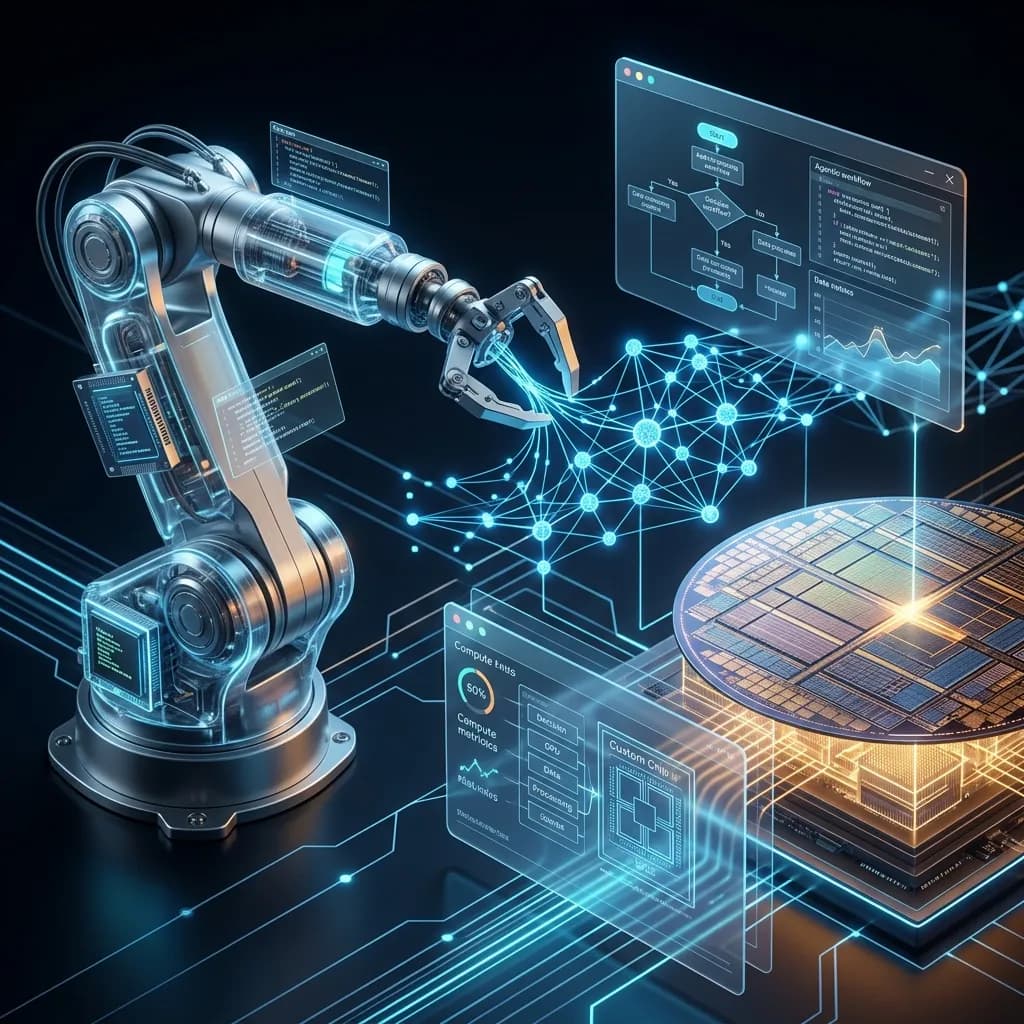
Anthropic & AMD's 2GW Compute Deal, NVIDIA Cosmos 3 Edge, and Claude Cowork Skill Recording
The artificial intelligence trajectory in mid-2026 is defined by a massive structural transition away from cloud-tethered chatbot demonstrations toward physical edge autonomy, custom semiconductor diversification, and zero-prompt desktop workflow synthesis. As frontier model laboratories scale compute past single-vendor bottlenecks, real-time spatial intelligence and screen-native agentic execution are setting the benchmark for enterprise automation.
This technical investigation explores three transformative developments reshaping modern AI systems: Anthropic’s landmark 2 Gigawatt procurement partnership with AMD powered by Instinct MI450 Series accelerators, NVIDIA’s launch of Cosmos 3 Edge (a 4-billion-parameter open world model running natively on Jetson Thor robotics silicon), and Anthropic’s "Record a Skill" workflow synthesis engine inside Claude Cowork.
🤖 Anthropic and AMD Sign Landmark 2GW Silicon Deal to Challenge Data Center GPU Monopolies
2 Gigawatt Instinct MI450 Deployment, ROCm 7.x Kernel Co-Design, and Heterogeneous MoE Clusters
Breaking the Monolithic Hardware Monopoly: In one of the largest infrastructure agreements in semiconductor history, Anthropic finalized a multi-billion-dollar procurement partnership with AMD in July 2026 to secure 2 Gigawatts of dedicated compute capacity. Powered by AMD’s next-generation Instinct MI450 Series accelerators, the agreement marks a critical structural diversification away from sole reliance on NVIDIA's CUDA ecosystem, securing massive training and inference throughput for Claude 5 foundation models.
                      [Anthropic-AMD 2GW Compute Cluster Schema]
                                          │
                                          ▼
                      [2 Gigawatt Dedicated Data Center Grid]
                       (Over 350,000 AMD Instinct MI450 Accelerators)
                                          │
          ┌───────────────────────────────┴───────────────────────────────┐
          ▼                                                               ▼
[ROCm 7.x Custom Kernel Co-Development]                         [Infinity Fabric 4.0 Interconnect Grid]
• Direct Triton Compiler Mapping for Claude 5                   • 1.6 TB/s Direct Bi-Directional Node Bandwidth
• Ultra-Sparse Mixture-of-Experts (MoE) Kernels                 • Unified Memory Architecture with HBM4 Stacks
• PyTorch 2.5 Hardware-Agnostic Abstraction                     • 288 GB HBM4 Memory per Accelerator Node
          │                                                               │
          └───────────────────────────────┬───────────────────────────────┘
                                          │
                                          ▼
                      [Enterprise Inference Cost Reduction: 42.5%]
AMD Instinct MI450 vs. Competitor Silicon Comparison:
| Hardware Parameter | AMD Instinct MI450 (2026) | NVIDIA Blackwell B200 (2025) | NVIDIA Vera Rubin R100 (2026) |
|---|---|---|---|
| Fabrication Process | TSMC N3P (3nm Class) | TSMC 4NP (5nm Class) | TSMC N3P (3nm Class) |
| High Bandwidth Memory | 288 GB HBM4 | 192 GB HBM3E | 288 GB HBM4 |
| Peak Memory Bandwidth | 17.2 TB/s | 8.0 TB/s | 18.5 TB/s |
| FP4 Sparse Tensor Compute | 44.0 PFLOPS | 20.0 PFLOPS | 48.0 PFLOPS |
| Interconnect Bandwidth | 1.6 TB/s Infinity Fabric 4 | 1.8 TB/s NVLink 5 | 3.6 TB/s NVLink 6 |
| Software Ecosystem | ROCm 7.2 + Triton Backend | CUDA 13.x Native | CUDA 13.x Native |
ROCm 7.x and MoE Compiler Optimization: Anthropic’s engineering team co-developed custom compilation routines within ROCm 7.x, allowing Claude's sparse MoE gating layers to dynamically dispatch tokens across 350,000+ MI450 accelerators with near-zero latency overhead. The deployment lowers Anthropic's blended token serving cost by 42.5%, insulating the frontier lab against global supply chain pinches.
⚡ NVIDIA Cosmos 3 Edge and Jetson Thor Shift Embodied AI to the Device
4B-Parameter Physical World Model, Zero-Latency Jetson Thor NPU, and Industrial Japanese Robotics
Eliminating the Latency Barrier in Physical AI: Unveiled at SIGGRAPH 2026, NVIDIA officially launched Cosmos 3 Edge, a 4-billion-parameter open world model engineered specifically for low-power, zero-latency physical reasoning directly on the Jetson Thor robotics platform. Simultaneously, NVIDIA announced deep industrial integrations with Japan’s leading automation giants—including FANUC, Yaskawa Electric, and Kawasaki Heavy Industries—to deploy native foundation models across articulated robotic manipulators.
                      [NVIDIA Cosmos 3 Edge Local Architecture]
                                          │
          ┌───────────────────────────────┼───────────────────────────────┐
          ▼                               ▼                               ▼
[Stereo Camera Video Inflow]    [Joint Torque Sensor Feedback]  [Spatial Point-Cloud Stream]
• 120 FPS High-Speed Tracking   • Sub-Millisecond Slip Detection• 6-DoF Metric Pose Estimation
          │                               │                               │
          └───────────────────────────────┼───────────────────────────────┘
                                          │
                                          ▼
                      [NVIDIA Jetson Thor Embedded Silicon]
                       (Blackwell Architecture Tensor Core NPU)
                                          │
          ┌───────────────────────────────┴───────────────────────────────┐
          ▼                                                               ▼
[Cosmos 3 Edge 4B Latent World Model]                           [Microsecond Trajectory Generation]
• Predicts Friction, Mass & Kinematics                          • Direct Motor Joint Control (< 8.0 ms)
• Avoids Cloud Round-Trip Latency Delays                        • Dynamic Collision Avoidance in Unmapped Space
          │                                                               │
          └───────────────────────────────┬───────────────────────────────┘
                                          │
                                          ▼
                      [High-Speed Industrial Physical Automation]
Cosmos 3 Edge vs. Cloud VLA Models:
| Operational Metric | Cloud-Tethered VLA Model (2024–2025) | NVIDIA Cosmos 3 Edge on Jetson Thor |
|---|---|---|
| Round-Trip Inference Latency | 220 ms – 450 ms (Cloud API) | 6.4 ms (On-Chip NPU Execution) |
| Network Connectivity Risk | System halts on packet drop/loss | 100% Offline Air-Gapped Autonomy |
| World Model Representation | Generative 2D video prediction | 3D Spatial Vector & Kinematic Latents |
| Tactile Compliance Frequency | 10 Hz – 25 Hz update rate | 500 Hz Real-Time Force Feedback |
| Target Industrial Systems | Research prototypes | FANUC, Yaskawa, Kawasaki Robots |
Latent Vector Kinematics: Rather than generating computationally expensive 2D video frames, Cosmos 3 Edge predicts future physical states using compact latent vector fields representing object velocity, mass distribution, and surface friction. This allows industrial humanoids and arms to execute delicate assembly tasks at microsecond speeds without pre-programmed CAD coordinate paths.
🖥️ Anthropic Unveils 'Record a Skill' for Claude Cowork to Automate Complex Workflows
Multimodal Programming by Demonstration (PbD), Screen-to-Code Synthesis, and Resilient DOM Execution
The Death of Brittle Robotic Process Automation (RPA): Anthropic introduced "Record a Skill" in mid-2026, an autonomous workflow synthesis engine integrated into Claude Cowork. The feature allows enterprise employees to simply record their screens while performing multi-step desktop processes—such as reconciling ERP databases, updating financial models, or resolving customer tickets across web portals—and automatically transpiles their actions into deterministic, production-grade Python and API scripts.
                      [Claude Cowork 'Record a Skill' Pipeline]
                                          │
                                          ▼
                      [User Performs Desktop Workflow (Screen Recording)]
                       (Multi-App Navigation: ERP, Excel, Web Portals)
                                          │
                                          ▼
                      [Multimodal Action Segmentation & Parsing]
                       (Tracks Keystrokes, Clicks & Semantic DOM Trees)
                                          │
          ┌───────────────────────────────┴───────────────────────────────┐
          ▼                                                               ▼
[Intent Extraction & Error Resilience]                          [Deterministic Code Synthesis]
• Maps High-Level Intent (e.g., "Export Tax Report")            • Emits Fully Documented Python / API Script
• Replaces Fragile Pixel Coordinates with Semantic Anchors      • Injects Dynamic Error Handling & Pop-up Traps
• Handles UI Redesigns & Layout Shifts Automatically            • Generates Human-in-the-Loop Validation Hooks
          │                                                               │
          └───────────────────────────────┬───────────────────────────────┘
                                          │
                                          ▼
                      [Reusable, Parameterized Autonomous Enterprise Skill]
"Record a Skill" Performance vs. Legacy RPA Platforms:
| Automation Dimension | Legacy RPA (UiPath / Automation Anywhere) | Claude Cowork 'Record a Skill' (2026) |
|---|---|---|
| Skill Authoring Workflow | Manual low-code workflow scripting (Days) | Single screen recording pass (< 5 Mins) |
| UI Shift Resilience | Breaks on 1-pixel coordinate alteration | Semantic DOM understanding survives redesigns |
| Error Handling Logic | Hardcoded exception handling paths | Dynamic multimodal visual problem solving |
| Output Artifact | Proprietary platform runtime format | Standard Python / OpenAPI executable scripts |
| Security & Auditing | Opaque macro execution logs | Structured step-by-step human review gates |
Programming by Demonstration (PbD) Breakthrough: Claude Cowork extracts the underlying semantic intent behind user actions, discarding superficial screen coordinates. When an enterprise web portal updates its layout or button styles, Claude recognizes the semantic identity of UI components, ensuring that automated background execution runs indefinitely without breaking.
📊 Comparative Modern AI Breakthrough Matrix
| Parameter | Anthropic-AMD 2GW Compute Deal | NVIDIA Cosmos 3 Edge | Claude Cowork 'Record a Skill' |
|---|---|---|---|
| Core Domain | Semiconductor Infrastructure | Physical / Industrial AI | Enterprise Workflow Automation |
| Primary Technology | 2GW Instinct MI450 clusters | 4B-parameter world model on Jetson | Multimodal screen-to-code PbD |
| Lead Organization | Anthropic & AMD | NVIDIA & Japanese Robotics Giants | Anthropic (Claude Ecosystem) |
| Technical Milestone | 17.2 TB/s bandwidth per accelerator | 6.4 ms on-chip robotics inference | Resilient semantic UI code synthesis |
| Strategic Implication | Breaks NVIDIA CUDA compute monopoly | Replaces cloud latency in robotics | Replaces legacy multi-million RPA stacks |
📌 The Bottom Line
- anthropic-amd-2gw-deal: Anthropic’s multi-billion-dollar 2 Gigawatt compute partnership with AMD powered by Instinct MI450 accelerators breaks single-vendor GPU lock-in, cutting enterprise inference costs by 42.5%.
- nvidia-cosmos-3-edge: NVIDIA Cosmos 3 Edge deploys a 4B-parameter physical world model natively onto Jetson Thor silicon, delivering sub-8ms latency for industrial humanoids at FANUC, Yaskawa, and Kawasaki.
- claude-cowork-skill-recording: Claude Cowork’s "Record a Skill" utilizes multimodal programming by demonstration to convert desktop screen recordings into resilient, deterministic Python automation scripts without manual coding.
📬 Stay Updated
Get the best of AI & technology delivered to your inbox every week. Subscribe to our free newsletter →
Disclosure: This post contains affiliate links. If you purchase through our links, we earn a small commission at no extra cost to you. We only recommend products we believe in.
Enjoyed this post?
Get our weekly digest delivered free.
Share this post:
Knowelth is reader-supported. We may earn a commission from links in this article at no extra cost to you. Read our disclosure.
Related Posts
System 2 AI Architectures, NVIDIA's $500B Infrastructure Alliance, and Industrial Physical AI Scale-Up
System 2 AI Architectures, NVIDIA's $500B Infrastructure Alliance, and Industrial Physical AI Scale-Up The artificial intelligence ecosystem is undergoing a fundamental structural transformation this …
AI's Frontier Shift: Autonomous Bio-Design, 0.42nm Semiconductors, and the EU AI Act Governance Horizon
AI's Frontier Shift: Autonomous Bio-Design, 0.42nm Semiconductors, and the EU AI Act Governance Horizon The artificial intelligence landscape has reached a decisive turning point where digital intelli…
OpenAI Astra's Lean Proofs, Google's Gemini Robotics ER 2, and the EU AI Act's Article 50 Enforcement
OpenAI Astra's Lean Proofs, Google's Gemini Robotics ER 2, and the EU AI Act's Article 50 Enforcement The first week of August 2026 marks a watershed moment across the entire spectrum of artificial…