AMD Launches MI400 Chips, Meta Scales 5GW Supercluster, and EU AI Act GPAI Rules Take Effect
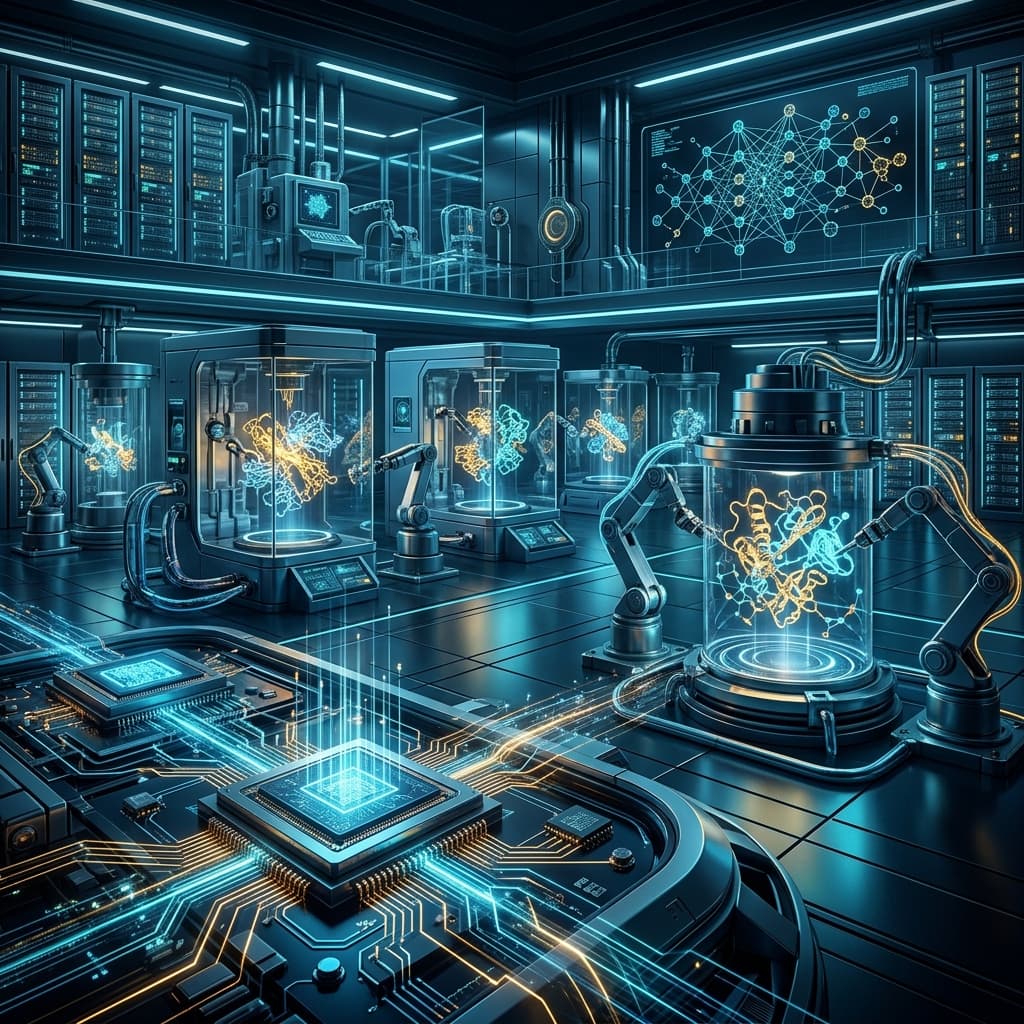
AMD Launches MI400 Chips, Meta Scales 5GW Supercluster, and EU AI Act GPAI Rules Take Effect
The artificial intelligence landscape is witnessing a convergence of massive infrastructure scaling, unprecedented hardware competition, and mandatory global regulatory compliance. As hyperscalers push data center power requirements into the multi-gigawatt threshold, semiconductor designers are pushing physical limit barriers, even as governments formalize binding rules for frontier models.
🤖 AMD Launches Instinct MI400 and Helios Rack Solution to Challenge NVIDIA
Advanced Micro Devices (AMD) officially unveiled its flagship Instinct MI400 series accelerators alongside the gigawatt-scale Helios rack solution, marking a pivotal escalation in the battle for AI silicon dominance. Built on TSMC's cutting-edge 2-nanometer process node and utilizing the new CDNA 5 architecture, the MI400 series represents AMD’s most aggressive bid yet to displace NVIDIA in high-density enterprise data centers and sovereign AI deployments.
The flagship MI455X accelerator features an unprecedented 432 GB of ultra-fast HBM4 memory, delivering a massive leap in memory bandwidth and compute density compared to prior generations. Designed specifically for training and serving multi-trillion parameter reasoning models, the MI455X aims directly at reducing the cost-per-token for AI inference workloads. AMD also introduced the MI430X variant, tailored for sovereign AI hubs and high-performance computing (HPC) environments where specialized precision modes and localized data security are paramount.
Central to AMD’s enterprise strategy is the Helios rack-scale platform, an integrated liquid-cooled infrastructure solution capable of packaging hundreds of MI400 accelerators into unified high-speed clusters. By integrating open Ethernet-based Ultra Ethernet Consortium (UEC) networking directly into the rack fabric, AMD is addressing the bandwidth bottlenecks that have traditionally plagued large-scale GPU deployments. The Helios platform allows hyperscalers to deploy modular, multi-megawatt compute blocks with reduced thermal resistance and optimized power efficiency.
Industry analysts emphasize that AMD’s hardware push comes at a critical juncture as cloud providers seek alternative suppliers to mitigate supply chain risks and compute costs. With hyperscale capital expenditure continuing to break records, the availability of a viable, software-compatible alternative to NVIDIA’s architecture could rebalance the economics of AI infrastructure for the next generation of frontier foundation models.
⚡ Meta Expands Project Hyperion into a 5-Gigawatt AI Supercluster
Meta has officially expanded its massive infrastructure initiative, dubbed "Project Hyperion," into a planned 5-gigawatt (GW) AI supercluster campus in Louisiana, representing an investment exceeding $50 billion. The scale of the project underscores the relentless energy requirements driven by next-generation foundation models, transitioning data center engineering from megawatt-scale facilities into regional energy power plants.
To support the immense power density of 5 gigawatts—equivalent to the power consumed by millions of homes—Meta is pioneering behind-the-meter energy procurement strategies, combining dedicated nuclear, natural gas, and renewable energy resources. The facility incorporates advanced liquid cooling systems capable of managing thermal loads from ultra-dense server racks, alongside co-packaged optics (CPO) networking fabrics to maintain sub-microsecond latency across hundreds of thousands of interconnected GPUs.
The scale of Project Hyperion reflects a broader shift toward "AI factories"—facilities built from the ground up purely to train and run real-time inference for multimodal reasoning agents and physical AI models. Rather than distributing workloads across fragmented nodes, Meta’s unified cluster design aims to eliminate distributed network latency during large-scale pre-training runs.
However, the sheer magnitude of Project Hyperion has ignited intense debate among utility providers and environmental regulators regarding grid stability and clean energy allocation. As tech giants compete to secure gigawatt-level energy capacity, local grid operators are forced to re-evaluate load-balancing frameworks, highlighting how physical infrastructure availability has become the primary bottleneck in the global AI race.
⚖️ EU AI Act Reaches Enforcement Phase for General-Purpose AI Models
As the August 2, 2026 legal deadline arrives, key provisions of the European Union’s landmark AI Act come into full force, introducing mandatory compliance obligations for General-Purpose AI (GPAI) model providers and synthetic media transparency. While full high-risk system obligations will take effect in subsequent phases, this enforcement milestone marks the end of self-regulatory oversight for foundation model developers operating within the European market.
Under the newly active rules, developers of GPAI models must compile and maintain detailed technical documentation detailing model training methodologies, algorithmic structure, and energy consumption metrics. Crucially, providers are legally required to comply with EU copyright directives and publish comprehensive summaries of the data content used to train their systems, granting rights holders clearer avenues for infringement claims.
Furthermore, Article 50 transparency requirements mandate explicit disclosures whenever users interact with AI agents or synthetic content. Any AI-generated text, audio, image, or video output must contain machine-readable watermarks and metadata tagging to combat deepfakes and automated disinformation campaigns across digital platforms. Non-compliance carries strict financial penalties, with fines enforced directly by the newly operational European AI Office.
While legal experts note that compliance costs will place an operational burden on emerging AI startups, global tech firms have spent months aligning their data pipelines to satisfy EU standards. The enforcement of these rules sets a clear global precedent, establishing a legally binding benchmark that could influence regulatory frameworks in North America and Asia-Pacific.
📌 The Bottom Line
- amd-mi400: AMD’s 2nm CDNA 5 architecture and Helios rack solution challenge NVIDIA's AI hardware dominance with 432 GB HBM4 memory and high-density liquid cooling.
- meta-hyperion-5gw: Meta scales Project Hyperion into a $50B, 5-gigawatt AI supercluster campus in Louisiana to power next-generation foundation models.
- eu-ai-act-enforcement: Binding EU AI Act rules take effect, mandating technical documentation, copyright transparency, and content labeling for all General-Purpose AI models.
📬 Stay Updated
Get the best of AI & technology delivered to your inbox every week. Subscribe to our free newsletter →
Disclosure: This post contains affiliate links. If you purchase through our links, we earn a small commission at no extra cost to you. We only recommend products we believe in.
Enjoyed this post?
Get our weekly digest delivered free.
Share this post:
Knowelth is reader-supported. We may earn a commission from links in this article at no extra cost to you. Read our disclosure.
Related Posts
The Agentic Era: Multimodal Video, Autonomous Execution, and Quantum Convergence
The Agentic Era: Multimodal Video, Autonomous Execution, and Quantum Convergence As we progress through the second half of 2026, the artificial intelligence sector is undergoing a profound paradigm sh…
Frontier Governance, Autonomous Cloud Labs, and Strategic Hardware Alliances: Redefining the AI Landscape
Frontier Governance, Autonomous Cloud Labs, and Strategic Hardware Alliances: Redefining the AI Landscape Artificial intelligence is undergoing a foundational pivot in mid-2026, transitioning from rea…
Agentic Model Architectures, In-House Custom Silicon, and the Commercial Acceleration of Embodied AI
Agentic Model Architectures, In-House Custom Silicon, and the Commercial Acceleration of Embodied AI The artificial intelligence ecosystem is undergoing a structural paradigm shift, moving beyond prom…